





 Portuguese
  English
  Spanish
  6 min of reading
  46 comments


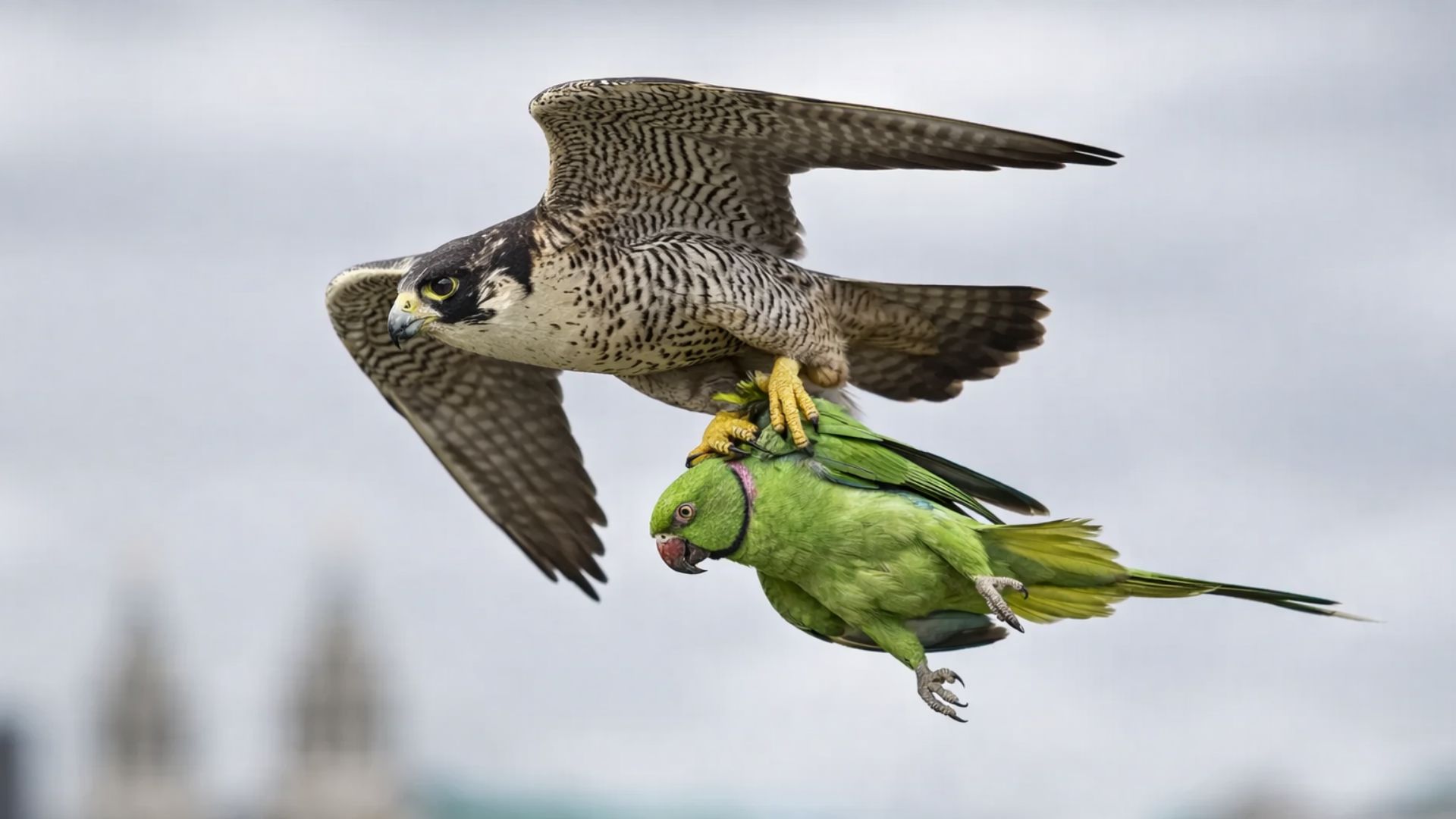


The Recovered Predator Became a Central Piece of British Urban Wildlife and Started to Capture Exotic Birds That Multiplied in Parks and Neighborhoods. Diet Recorded by Cameras in Nests Helps Measure Changes in Prey Abundance. Competition for Cavities, Noise, and Human Presence Are on the Same Board.
The return of the peregrine falcon to the urban skies of the UK has ceased to be just a conservation story to gain a new chapter, more unexpected and with a direct impact on the everyday life of parks and residential neighborhoods.
By settling in buildings, bridges, and cathedrals, these predators began to capture, among other prey, the rose-ringed parakeet, a non-native bird that has multiplied in metropolitan areas and today competes for food, space, and nesting cavities with local species.
The result is a rare scene for the public: a recovered predator, adapted to the city, putting pressure on a noisy and highly visible invader.
-
He started running at 66 years old, broke records at 82, and is now a subject of study for having a metabolic age comparable to that of a 20-year-old, in a case that is intriguing scientists and inspiring the world.

-
Oldest tree on the planet reappears after 130 years of searches: Wattieza, 385 million years old, was 10 meters tall and had no leaves or seeds; Gilboa fossils in New York solved the mystery in 2007.

-
A 48-square-meter house assembled in hours with 4,000 bricks made of recycled plastic that does not absorb moisture, has natural thermal insulation, and costs less than 90,000 reais in a complete kit.

-
Luciano Hang revealed that Havan’s air fleet has already accumulated more than 20,000 landings, 10,000 flight hours, and 6 million kilometers traveled, and he says that without the planes, the company would never have grown so quickly.

Peregrine Falcons in the Cities and the Return of the Predator


The relationship is not limited to the act of hunting.
For researchers monitoring urban falcons through live streams and cameras installed near nests, the diet of these predators serves as a sort of ecological thermometer.
By recording what reaches the claws of adults and the beaks of chicks, university teams and observation groups can see changes in the relative abundance of urban birds and map how species like the rose-ringed parakeet fit into food networks that did not exist before their expansion.
The peregrine falcon is one of the most well-known raptors in the world, but its constant presence in British cities is the result of a gradual recovery after periods of sharp decline.
In the UK, institutions like the RSPB attribute the historical decline of the peregrine to persecution and poisoning by pesticides, in a scenario that drastically reduced breeding and nest success.
With legal protection and improved environmental conditions, the predator returned to occupy territories and found in urban centers a set of advantages that, at first glance, seem contradictory: height for nesting, structures reminiscent of rocky cliffs, and a continuous supply of prey, especially pigeons and other medium-sized birds.
The Invasive Rose-ringed Parakeet and Its Growth in Parks
In this environment, the rose-ringed parakeet has become part of the scenery.
It is a species native to regions of Africa and South Asia, which has established itself in the wild in several countries, with significant populations in the southeast of England and the London area.
The official British non-native species portal, maintained by the Non-native Species Secretariat (NNSS), describes the parakeet as a bird that can cause significant damage, including to crops, and draws attention to the impacts associated with its presence outside its area of origin.
At the same time, being a charismatic bird of intense color and strong vocalization, it has become a symbol of “exotic wildlife” in parks, fueling public debate about what coexistence is, what ecological pressure is, and what management means.
Cameras in Nests and the Menu That Became an Indicator
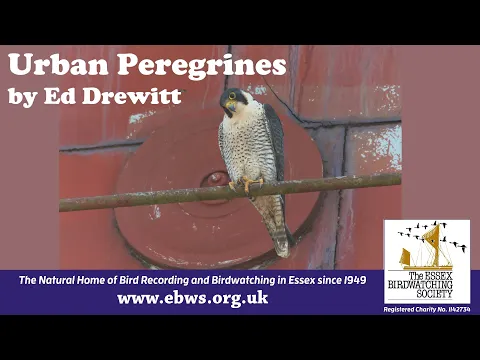
The idea that urban falcons can “show” the advance of the parakeet has gained strength with detailed monitoring conducted by researchers and observers in various British cities.
In one of the most publicly visible studies on urban diet, teams linked to King’s College London and the University of Bristol analyzed prey brought to the nests of falcons monitored by live streams and systematic observations over successive breeding seasons.
By comparing what was captured at different times, the study recorded significant variations in the composition of prey, especially in London, where the proportion of pigeons in the diet decreased and was partially replaced by other birds, including parakeets.
The numbers are treated as a snapshot of that monitored context, not as a universal rule for the entire city.
Still, the record is valuable because it links a non-native, highly visible, and expanding species to a predator that has become stable enough to be monitored in dozens of urban locations.
What was once perceived as “a bunch of parakeets in the park” now has an additional reading: the invader has entered the menu of a hunter that already dominates the vertical landscape of the city.
Competition for Cavities, Nesting, and Tension with Natives
This pressure occurs in a space where competition for cavities and nesting sites becomes a recurring topic.
Rose-ringed parakeets use holes in trees and structures to reproduce, exactly the type of resource contested by native birds that depend on hollows and cavities, as well as by other animals that utilize these shelters.
Media outlets and monitoring organizations cite concerns about the displacement of smaller species in certain areas, as well as the potential for conflict with human activities in gardens and parks.
Meanwhile, the presence of peregrines and other urban raptors creates an additional risk component for any bird that concentrates in flocks and makes predictable use of routes and perches.
How Hunting Works in the Urban Environment

The hunting of the peregrine falcon is not a casual spectacle; it responds to the ecology of a city that offers an abundance of prey and strategic attack points.
The species is known for its swift flights and high-speed dives, and benefits from urban “corridors” that channel moving birds.
When parakeets gather in trees in parks, with daily movements between resting and feeding areas, they also become potential targets, especially in zones where falcons already maintain established territories.
Scientific Monitoring and Public Debate
The aspect that draws researchers’ attention is the usefulness of monitoring to understand patterns that would otherwise remain invisible.
Cameras in nests and broadcasts followed by volunteers allow for high-frequency recording of which species are captured and at what times, creating comparable series between cities.
This is not just about observing a predator “doing its work,” but transforming a natural behavior into organized evidence about changes in the urban environment, including the presence of non-native species in increasingly wider areas.
This type of monitoring also helps refine the public debate, which often alternates between romanticizing the parakeet as “a tropical touch” and demonizing it as a “pest.”
By showing that the invader has already occupied the role of prey in urban food webs, the record shifts the focus to a more concrete reality: introduced species do not remain isolated; they compete, adapt, find predators, and change the routines of other species, even when they seem merely a colorful element in the landscape.
City, Conservation, and Non-native Species in the Same Scenario
For park managers and environmental agencies, the story of the urban peregrine falcon serves as a practical reminder of how the city can favor both the recovery of predators and the expansion of non-natives.
Verticality offers nesting sites for falcons; green areas and human feeding sustain high densities of pigeons and other birds; and gardens with feeders and old trees create opportunities for parakeets to settle and spread.
When these factors intersect, the recovered predator begins to interact with the invader that has grown precisely in the environment shaped by humans.
At the same time, the presence of the falcon is not an “automatic solution” for the parakeet, because the predator’s goal is to survive and reproduce, not to control populations.
What the city reveals, more clearly, is that the return of a top predator on a local scale shifts the balance of risk: very abundant and confident birds may become more frequent prey, and this is reflected in what reaches nests monitored by cameras and volunteers.
If the menu of urban falcons has become an involuntary indicator of the expansion of the rose-ringed parakeet, to what extent can recovered predators in cities help reorganize the coexistence between native and non-native species without direct human intervention?








Y que pasara cuando se aburran de los balcones????
Que triste y horrible lo que hacen, todo esa maldad es del único invasor es el humano. Cuando es una novedad y por puro capricho llevan animales exoticos., y cuando se aburren se deshacen como cual quier cosa. El único **** que es invasor es el Humano!!!
Barulhentos o seu traseiro seu ****
Você vom certeza não foi gerado