





 Portuguese
  English
  Spanish
  4 min of reading
  18 comments


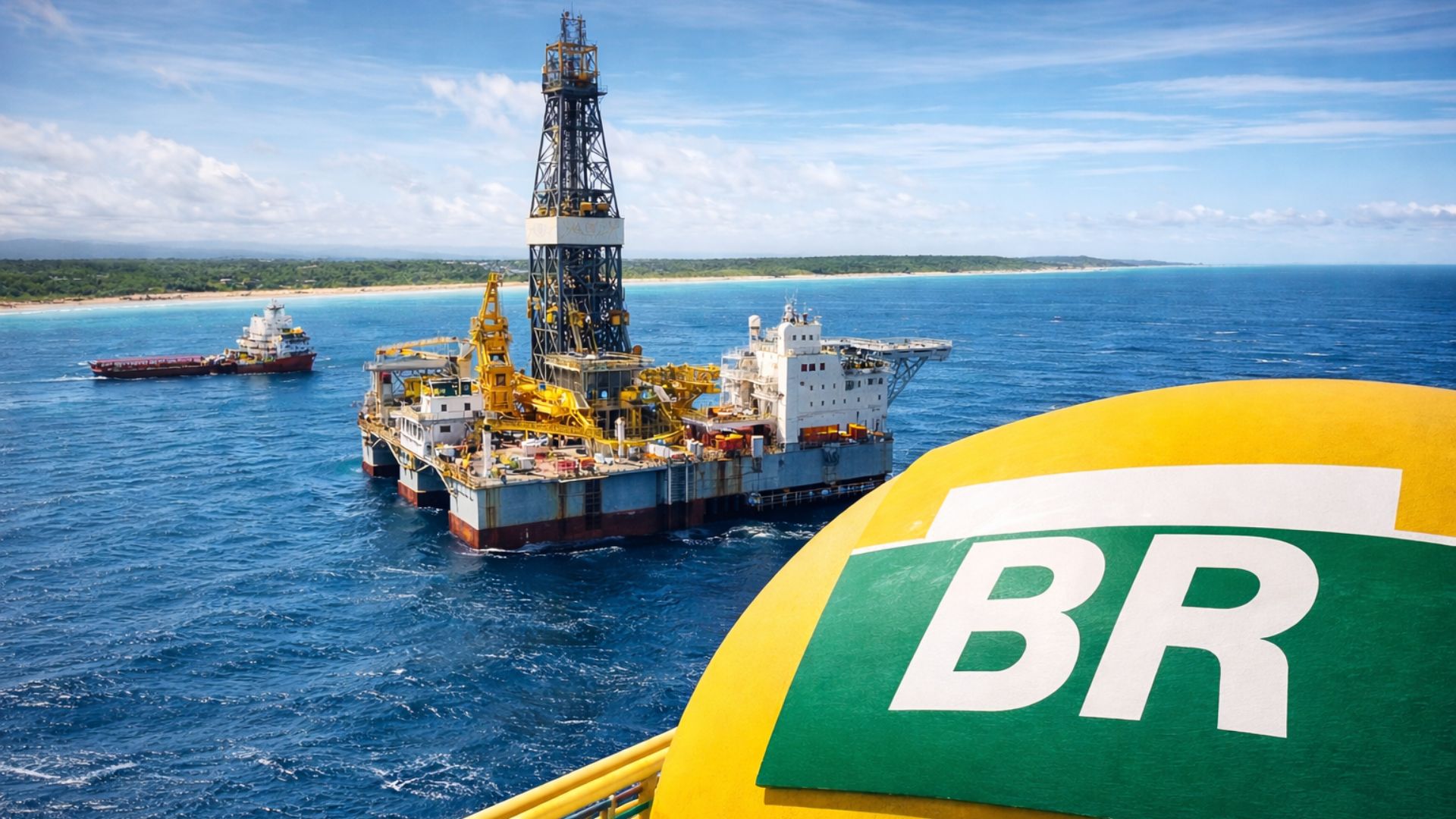


Exploration Advances on the Brazilian Coast with Billion-Dollar Investments, Deep-Water Drilling, and Expectations to Increase Oil Production, Strengthening Energy Security and Brazil’s Strategic Role in the Sector
Petrobras confirmed in December 2025 on its OFFICIAL WEBSITE the drilling of more than 700 wells on the Equatorial Margin, considered today to be the most promising new exploratory frontier in Brazil. Located along the coastline between Amapá and Rio Grande do Norte, the region may hold up to 6.2 billion barrels of oil, according to technical studies widely cited by industry experts.
According to an article published by Correio do Estado this Sunday (28), at the outset, the progress draws attention for the possible impact on national oil production and the strategic role that the area will play in the country’s energy planning. This is a move that repositions Brazil on the global stage, while potentially reinforcing energy security and expanding long-term investment potential.
Equatorial Margin Emerges as a New Strategic Frontier for Petrobras
The Equatorial Margin stands out as one of the most relevant regions for Brazil’s energy future. The area encompasses extensive stretches of deep and ultra-deep waters that have yet to be significantly explored, unlike mature basins such as Campos and Santos.
-
A study confirms that the natural gas sector will reduce greenhouse gas emissions in Brazil by 0.5% and accelerate the energy transition by 2026.

-
Petrobras implements a severe adjustment and confirms a 55% increase in the price of aviation kerosene with a proposal for installment payments for the companies.

-
The rise in oil prices could ensure an extra revenue of R$ 100 billion for the Federal Government, indicates a recent economic study.

-
Naturgy begins an investment of R$ 1.6 million to expand the gas network in Niterói and benefit thousands of new residences and businesses.


Geological studies indicate that the Equatorial Margin has high potential for oil accumulation, attracting interest not only from Petrobras but also from major international companies. This scenario enhances the strategic importance of the region, especially in the context of energy transition and the search for secure supply sources.
Petrobras’ Experience Strengthens Exploration in the Equatorial Margin
Petrobras’ operations in the Equatorial Margin are the result of decades of accumulated experience in complex environments. The state-owned company utilizes technologies developed throughout its history in established sedimentary basins such as Sergipe-Alagoas, Campos, and pre-salt areas.
So far, Petrobras has drilled more than 700 wells in the region, a number that demonstrates the technical maturity of the project. Each stage follows strict protocols for operational safety, environmental control, and efficiency, essential factors to ensure the viability of future oil production.
Oil Barrrels Drive Global Interest in the Equatorial Margin
The estimated potential of up to 6.2 billion barrels of oil positions the Equatorial Margin among the country’s most promising areas. This significant volume reinforces comparisons with recent discoveries in nearby regions such as Guyana, French Guiana, and Suriname.
The geological similarities increase the area’s attractiveness, indicating that the barrels of oil in the Equatorial Margin may meet the quality standards required by the international market. For Brazil, this represents an opportunity to boost exports, create skilled jobs, and strengthen the production chain of the energy sector.
Oil Production and Environmental Responsibility Go Hand in Hand
According to information released by Petrobras, all activities in the Equatorial Margin adhere to rigorous technical and environmental standards. The company states that exploration is conducted responsibly, with continuous monitoring and the adoption of technologies that reduce operational risks.
The anticipated oil production in the region aligns with the company’s sustainability guidelines. The goal is to balance economic growth, energy security, and environmental protection, a central challenge for the oil and gas industry in the current landscape.
Billion-Dollar Investments Expand Oil Production in Brazil
The 2050 Strategic Plan and the 2025-2029 Business Plan of Petrobras foresee investments of around US$ 3 billion in the Equatorial Margin over the next five years. The funds will be allocated to drilling 15 new wells, as well as expanding the necessary infrastructure for future operations.
These investments play a fundamental role in expanding national oil production, reducing dependence on mature areas and diversifying Petrobras’ exploratory portfolio. Additionally, they strengthen Brazil’s competitiveness in an increasingly competitive global market.
Oil Barrels Strengthen Energy Security and National Planning
The barrels of oil estimated in the Equatorial Margin are also strategic for long-term energy planning. Robust reserves enable greater predictability in formulating public policies and attracting private investments.
The availability of these barrels of oil contributes to ensuring internal supply, especially in a context of growing energy demand. At the same time, it enhances the country’s capacity to respond to fluctuations in the international market.
Equatorial Margin Marks a New Phase for Petrobras in Oil Production
As activities progress, the Equatorial Margin can solidify as a key piece in Petrobras’ strategy. The region represents a new phase of oil production in Brazil, complementing already consolidated areas and expanding the state-owned company’s exploratory frontiers.
The expectation is that the results achieved over the next decade will significantly contribute to the sustainable growth of the sector. Technological innovation, governance, and long-term planning are central pillars of this process.
Petrobras’ advance in the Equatorial Margin, with over 700 wells drilled and the potential for billions of barrels of oil, reinforces the strategic relevance of the region for the country’s energy future.
The initiative expands oil production, strengthens energy security, and positions Brazil more competitively on the global stage. By betting on a new exploratory frontier, Petrobras combines technical expertise, robust investments, and a commitment to rigorous environmental standards.








Matéria irresponsável e mentirosa.
Não procede. Primeiro poço chamado de MORPHO está sendo perfurado nesse momento.
Tem que mostrar em quais Estados esses 700 poços foram perfurados … A taxa de sucesso da Petrobrás é de cerca de 1 poço comercial para cada 5 perfurados. Onde estão esses 140 poços comerciais. Ou os 700 foram dinheiro jogado fora ?
Foi bem rápido para criticar a Petrobras, baseado numa informação sem pé nem cabeça.