





 Portuguese
  English
  Spanish
  3 min of reading
  1 comment





Even With Good Salary, Brazil Faces Decline in Pilot Training, Mass Retirements, and Migration of Professionals, Creating a Bottleneck That Threatens the Expansion of Aviation, New Routes, and the Cost of Airfare
The Brazilian aviation industry lives a paradox: while the number of passengers grows and new routes emerge, pilot training does not keep pace with the industry’s expansion. The result is a bottleneck that is starting to worry companies, regulators, and professionals.
This scenario is not exclusive to Brazil. Europe, Asia, and the Middle East are already facing a shortage of pilots, driven by the recovery of air traffic after the pandemic and the retirement of a significant portion of the workforce.
Nearly 120 years ago, Alberto Santos Dumont showed the world that flying was possible. Today, the challenge is not in technology, but in who occupies the seats in the cockpit.
-
IPTU exemption for seniors in 2026: see how to secure the benefit.

-
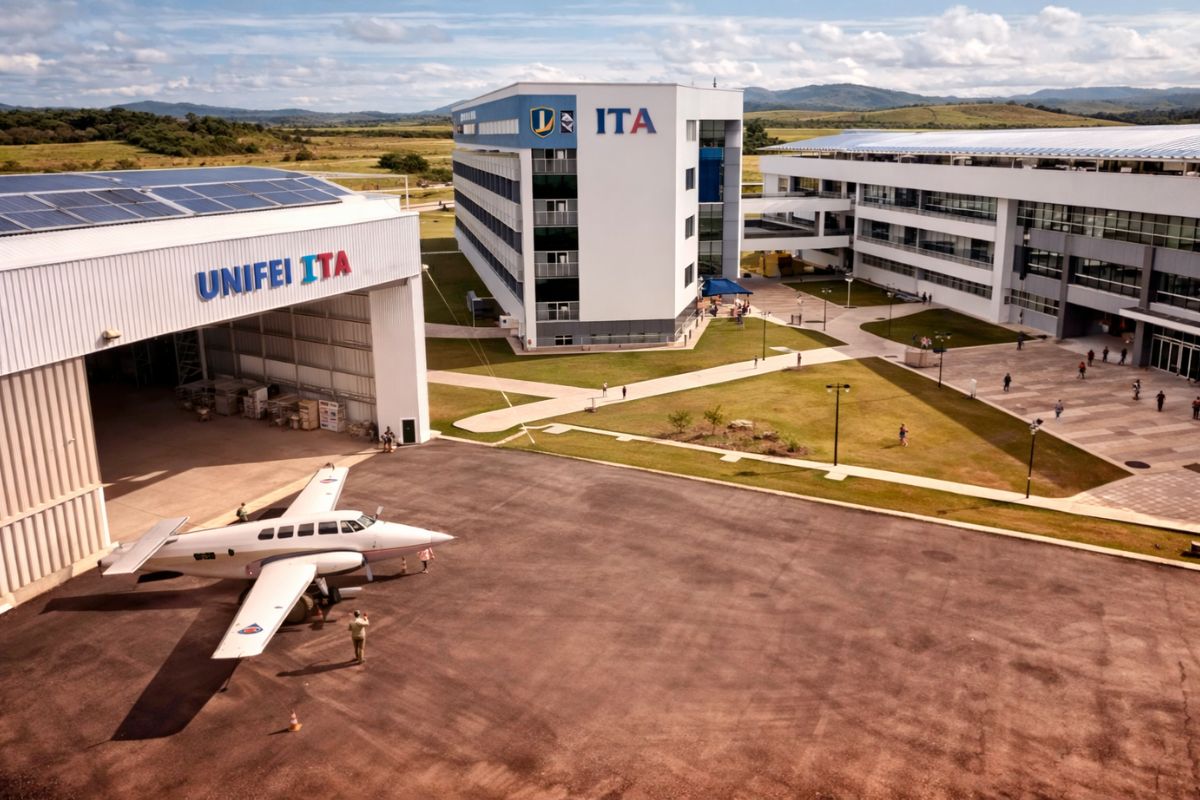
The institute that trained the greatest aerospace engineers in Brazil has just opened its first campus outside São Paulo after 75 years: ITA Ceará will have R$ 445 million, new courses in energy and systems, and classes are expected to start in 2027.
-
Luciano Hang, owner of Havan, goes to Juiz de Fora after the tragedy in February, brings R$ 1 million, hands out R$ 2,000 cards, and donates up to R$ 15,000 to victims in the region.

-
The Brazilian passport allows legal residence in dozens of countries without the need for a prior visa, and most Brazilians are unaware that they can apply for residency directly upon arriving in nations in South America, Africa, and even Europe.


Aviation Growth Pressures Training
With more than 100 million passengers recorded in ten months in Brazil, airlines are expanding flights and routes. This advancement demands more pilots and co-pilots to keep operations running.
According to industry estimates, about 35% of current professionals are expected to retire in the coming years. A major manufacturer projects a global need for approximately 660,000 new commercial pilots by 2040.
In Latin America, the projected demand is for 37,000 professionals. In Brazil, companies have already opened up to three selection processes in a single year to try to address the shortfall.
Flight of Professionals and Internal Deficit
As demand grows, Brazilian pilots are being recruited by foreign companies.
More competitive salaries, economic stability, and safety lead many to work abroad, especially in the Middle East and Asia.
Data from the National Civil Aviation Agency show a decline in the issuance of licenses. In 2015, there were nearly 5,300. Between 2020 and 2025, the number remained below 4,000.
Today, the country has about 25,000 pilots. Experts estimate a training deficit of around 25% compared to the market needs.
High Cost Hinders New Pilots
Training begins in small aircraft, requiring at least 43 flight hours for a private pilot license. Each hour can cost up to R$ 1,000, increasing the initial investment.
To reach a professional level, costs can exceed R$ 400,000, in addition to a university degree, advanced English, and specific training.
Remuneration can present significant differences, influenced by factors such as experience level, type of aircraft operated, and size of the hiring airline.
Still, the average salary of a regular airline pilot hovers around R$ 7,789.05 per month, with figures ranging from R$ 7,576.32 to R$ 17,836.59, potentially exceeding R$ 30,000 monthly.
This amount deters many candidates and prolongs their career paths. Despite the difficulties, the moment is filled with opportunities.
For those who can overcome financial barriers, aviation continues to offer a global career, excitement, and growing demand.









Sério, é sempre o mesmo papo, mas na real, hoje ninguém mais quer esse trabalho de ****, na verdade a única coisa boa é o voo, o resto e só aborrecimento e insegurança, foi se o tempo que um piloto era alguém, hoje e tratado como mais um e sua responsabilidade não vale absolutamente nada para os empregadores. Sou piloto comercial habilitado mas não vivo disso, já em estou com mais de 50 anos, as vezes penso em reabilitar minhas carteiras, mas aí penso bem e desisto, pois não vale a pena mesmo.