





 Portuguese
  English
  Spanish
  4 min of reading
  25 comments


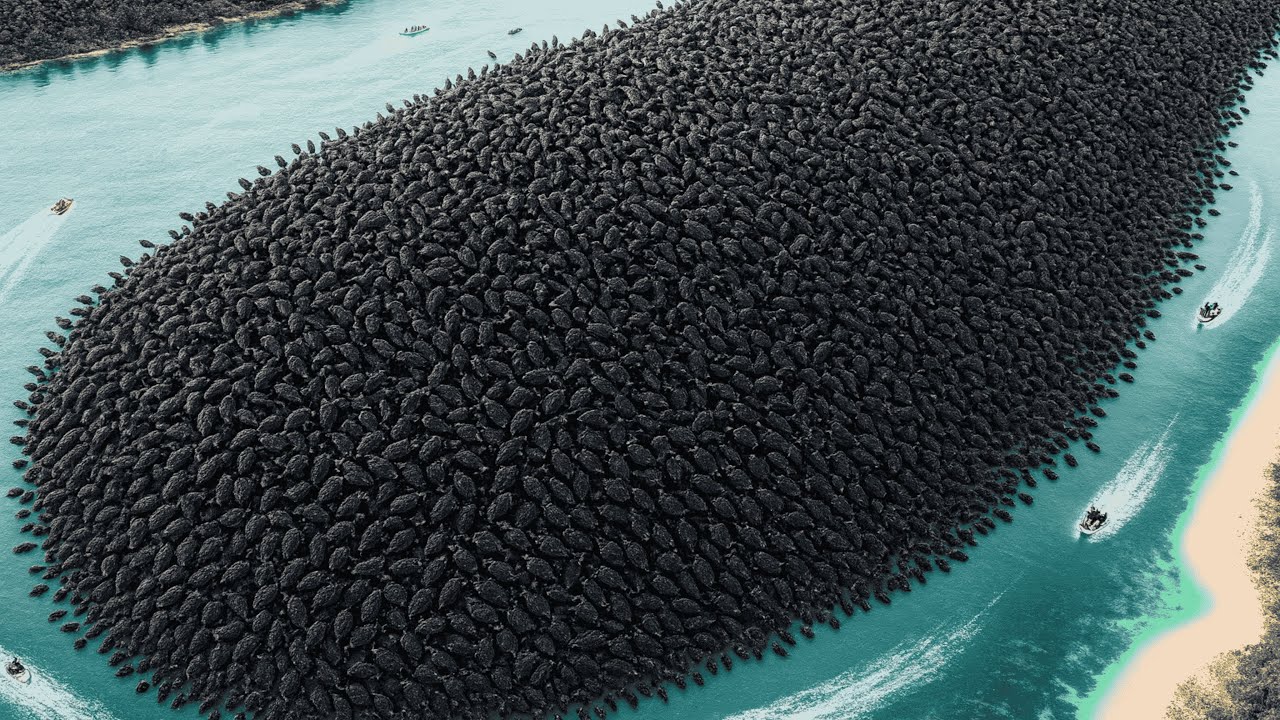


Spread Across Sewers And Buildings, These Animals Are Adapting To Extreme Environments Created By Humans. Scientists Use This Phenomenon To Understand Accelerated Biological Changes.
For decades, rats have been seen only as pests associated with trash, dirt, and disease. But as large cities have grown and become increasingly extreme environments, these rodents have taken on a new role: as model organisms to study accelerated evolution in real-time. In metropolises like New York, Paris, and Chicago, scientists have found that urban rats are not just survivors — they are biologically changing to adapt to the pressures of urban life.
The City As An Extreme Environment
Modern cities combine factors rarely found together in nature: constant high temperatures, heat islands caused by asphalt and concrete, chemical pollution, permanent noise, and irregular abundance of artificial food.

For many species, this set is inhospitable. For rats, it has become an intense field of natural selection.
-
More than 20,000 positions could be opened, and thousands of technicians are starting to be trained in Brazil, as the expansion of data centers creates an urgent race for professionals to keep the internet, cloud, and artificial intelligence running 24 hours a day.

-
China approves the 15th Five-Year Plan 2026-2030 to become a global power: prioritizes brain implants, 6G with AI, humanoid robots, flying cars, quantum technology, and nuclear fusion, while strengthening defense and the economy.

-
HONOR X80i arrives with a massive 7,000 mAh battery, a 120 Hz AMOLED display with a brightness of 6,500 nits, and the new Dimensity 6500 Elite chip, promising up to 22 hours of video playback and impressive performance in casual gaming.

-
Xiaomi TV Stick HD 2 is announced with Google TV and dual-band Wi-Fi, offering 38% superior performance, HDR10+, Dolby Atmos, a quad-core chip, Mali-G31 GPU, 1 GB RAM, and support for 1080p at 60 Hz.


Research shows that urban rats live under very different pressures than rural populations. They face frequent exposure to rodenticides, contact with heavy metals, industrial waste, and more aggressive thermal variations. Each of these conditions serves as an evolutionary filter, favoring more resilient individuals and eliminating the rest.
Resistance To Poisons: An Unintentional Experiment In Evolution
One of the most impactful findings involves genetic resistance to anticoagulant rodenticides, used for decades in urban control.
In several cities, entire populations of rats have developed mutations that drastically reduce the effectiveness of these poisons. It is not a matter of learning or habit: it is heritable genetic change.
Genomic studies have identified variations in genes linked to blood coagulation and toxin metabolism, something that does not appear as frequently in rats outside urban centers. For scientists, this is a clear example of accelerated natural selection, driven directly by human actions.
Surviving The Heat Of Urban Islands
Another growing challenge is extreme heat. In many metropolises, the average temperature can be several degrees higher than in surrounding rural areas. Urban rats show signs of physiological adaptation to these conditions, with adjustments in metabolism, behavior, and activity patterns.
Researchers have observed that rats in hot cities tend to be more active during the deep night, utilize more extensive underground networks, and explore microenvironments created by human infrastructure, such as tunnels, sewer systems, and building foundations. These strategies reduce thermal stress and increase chances of survival.
Urban DNA: Isolated Populations Within The Same City
One of the most curious findings is that rats from different neighborhoods can be genetically distinct, even when living just a few kilometers apart. Wide streets, channelized rivers, avenues, and areas without green cover act as barriers, creating almost isolated populations.
This allows scientists to observe something rare: microevolution happening within a single city. By comparing genomes of rats from different districts, researchers can trace how urbanization fragments habitats and accelerates genetic divergences in just a few generations.
Why Rats Became Key Players In Urban Science
The scientific interest in urban rats goes beyond mere curiosity. They offer a unique opportunity to study:
– how evolution responds quickly to extreme environments;
– how pollutants and toxins shape the genome;
– how opportunistic species become dominant in human landscapes.
Unlike many threatened animals, rats are abundant, easy to monitor, and live exactly where humans concentrate their activities. This makes them biological indicators of urban impact, revealing invisible effects of modern life.
What This Says About The Future Of Cities
The evolution of rats is not just a story about rodents. It points to a larger scenario: cities are becoming evolutionary forces in themselves. Species that can adapt quickly thrive; those that cannot disappear.
By studying rats, scientists gain clues about how other forms of life — including insects, birds, and small mammals — may respond to urban advancement and climate change.
Ultimately, these rodents show that evolution is not a slow and distant process, but something that can happen before our eyes, on the streets we walk every day.
Urban rats, disliked by many, have become one of the clearest examples of how life finds ways to survive and transform, even in the most hostile environments created by humans.








É só criar um veneno potente tbm. Do jeito que as coisas vão, para acabar com a humanidade, eles vão deixar a **** negra voltar, e dizer que foi inevitável, que nem a COVID, para exterminar sem culpas.
Eu não mato rato,uma vez apareceu um aqui no quintal da minha casa,chamei o vizinho e pedi pra que ele pegasse ele e soltasse ele na esquina de casa,mas matar NÃO,e ele fez uque pedi,acho um absurdo essas ratoeiras com uma cola, que o rato entra alí e não consegue sair mais fica agonizando,se mutilando, Misericórdia isso devia ser PROIBIDO sinceramente,eles são criação de DEUS,se Deus criou, é pq.tem seu valor,e são vidas,esse é meu pensamento.E Acho eles Lindos🩷🐭🩵
Então durma c eles e contamine-se já que gosta tanto kkkkk.
Yes I agree….they are God,s creatures, just like ourselves.
Aqui na minha cidade aparece muito ratos inclusive roel até o fio da minha máquina de lavar; chumbinho eles chegavam mais perto, lembrei que minha mãe sempre usava racomim Soft. Mato eles com racomim e chumbinho misturado. Não fica um.