





 Portuguese
  English
  Spanish
  3 min of reading
  1 comment


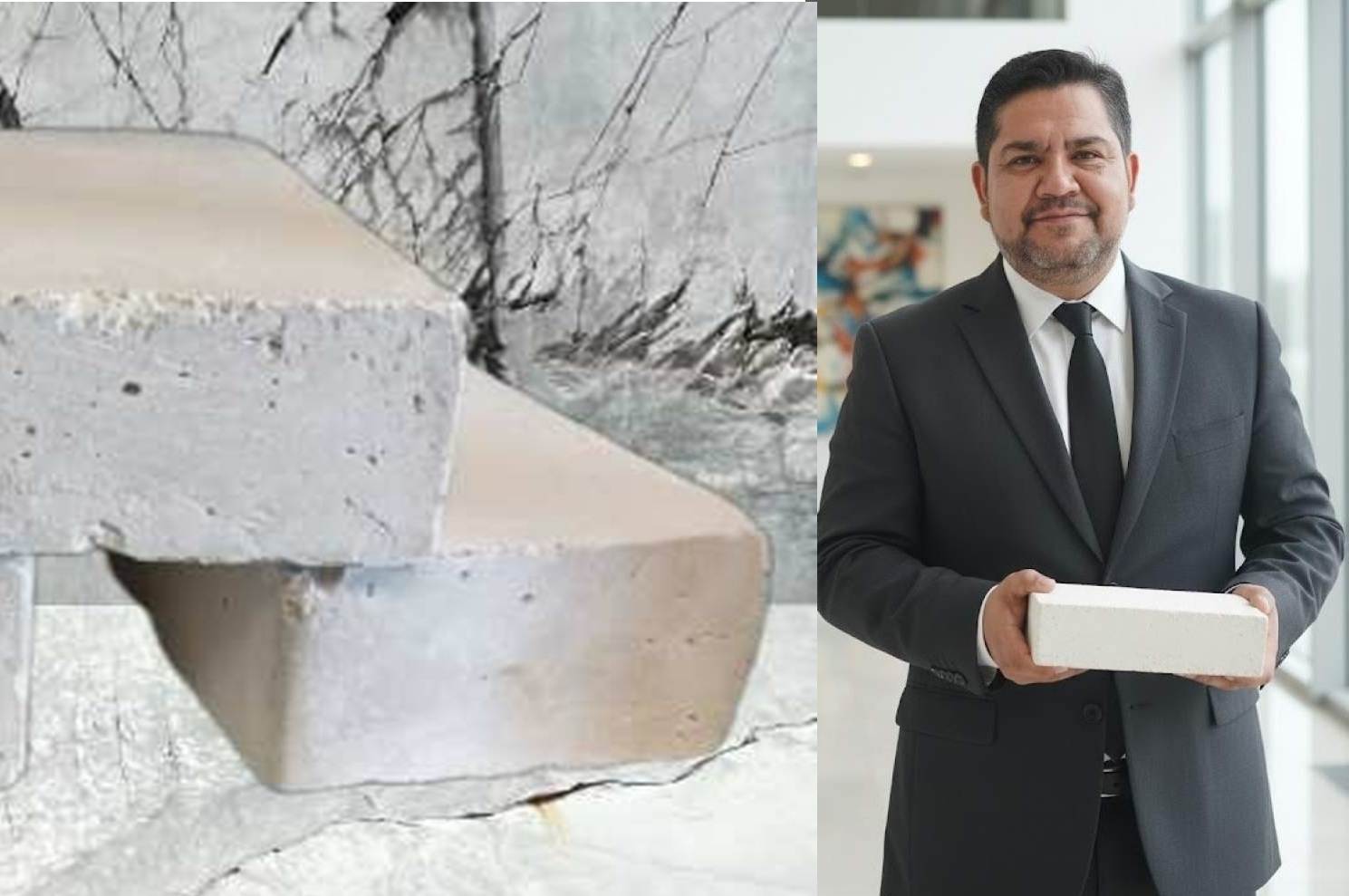


Researchers from the Autonomous University of Coahuila Create a Brick with 60% of Marble Waste That Surpasses Mexican Standards of Resistance and Can Reduce Costs, Environmental Impacts, and Disposal Problems
Researchers from the Faculty of Engineering at the Autonomous University of Coahuila in Mexico are developing a brick that uses 60% of waste from the marble industry and exceeds the structural resistance standards defined by national regulations.
The material emerges as an alternative to reduce environmental impacts associated with the extraction, processing, and disposal of ornamental stone, a sector that generates large volumes of waste and directly affects communities near landfills.
Environmental Impact and Current Scenario
The construction industry uses a large portion of materials extracted from the Earth’s crust.
-
How the terraforming of Mars can transform the planet: artificial aerosols can increase the temperature by up to 35°C in 15 years, creating conditions for liquid water.

-
Scientists drilled nearly 8,000 meters into the ocean floor above the fault that caused the 2011 tsunami in Japan and discovered that a layer of clay 130 million years old was responsible for making the wave much worse than any model had predicted.

-
Thousands of years after causing the largest eruption of the Holocene, one of the world’s largest supervolcanoes is rebuilding itself beneath the sea south of Japan, receiving new magma and alarming scientists with its transformation.

-
China has activated a magnet 700,000 times more powerful than the Earth’s magnetic field that operates for over 200 consecutive hours while consuming little energy, and now the world wants to know what Beijing plans to do with this technology in 2026.


This process requires the extraction and processing of rocks and industrial minerals through open-pit mining, an activity that modifies the natural landscape, alters the topography, causes soil erosion, and contributes to noise and air pollution.
Additionally, during the production of construction materials, there is high energy consumption and intense use of powdery materials. This increases the presence of suspended particles and amplifies waste generation.
Mexico is among the largest producers of ornamental stone alongside China and India.
The annual production exceeds 750,000 tons, with up to 20% of that volume turning into waste during the industrial process.
This discarded material is not regulated, which exacerbates environmental impacts and poses health risks to residents living near landfills.
Development of the Marble Powder Brick
In order to address this issue, researchers began studying the reuse of waste in the construction industry. The initiative resulted in the creation of a brick composed of residual marble powder (up to 60%), cement, artificial sand, superplasticizer, and water.
The cement acts as a binder and ensures cohesion in the mix. The artificial sand contains a higher amount of calcium oxide, which reacts with water to form calcium carbonate, responsible for improving the mechanical performance of the bricks.
The superplasticizer reduces the volume of water and increases the workability of the mix, enhancing the compressive strength.
Researchers report that the compressive strength of the marble powder bricks exceeds the minimum limits defined by Mexican standards for use as a structural element in masonry.
Advantages of Using Marble Powder
The developed bricks offer a series of benefits:
- 60% of the raw material comes from waste.
- Manufacturing can take place directly at the construction site, reducing costs.
- The strength exceeds that indicated by Mexican standards.
- The absorption is lower than that of fired clay bricks.
- The density is higher than that of common partitions.
- The improvements result in higher quality housing and enhance the living conditions of the end user.
According to Dr. Nicolás Moreno, the use of marble powder reduces management problems in quarries and the marble industry, decreases waste volume, reduces CO2 generation associated with the production of other bricks, improves the visual aspect of landfills, and mitigates health problems caused to populations near these sites. He emphasizes that proper utilization contributes to the conservation of natural resources.
The article is authored by Dr. Armando Nicolás Moreno, professor and researcher at the Faculty of Civil Engineering at the Autonomous University of Coahuila.










Fui diagnosticada com doença de Parkinson há quatro anos. Por mais de dois anos, dependi da levodopa e de vários outros medicamentos, mas, infelizmente, os sintomas continuaram piorando. Os tremores se tornaram mais perceptíveis e meu equilíbrio e mobilidade começaram a declinar rapidamente. No ano passado, por desespero e esperança, decidi experimentar um programa de tratamento à base de ervas da NaturePath Herbal Clinic.
Sinceramente, eu estava cética no início, mas, poucos meses após o início do tratamento, comecei a notar mudanças reais. Meus movimentos ficaram mais suaves, os tremores diminuíram e me senti mais firme ao caminhar. Incrivelmente, também recuperei grande parte da minha energia e confiança. Tem sido uma experiência transformadora. Me sinto mais eu mesma novamente, melhor do que me sentia há anos. Se você ou um ente querido está lutando contra a doença de Parkinson, recomendo muito que você considere a abordagem natural deles. Você pode visitar o site deles em www. naturepathherbalclinic .com