





 Portuguese
  English
  Spanish
  5 min of reading
  1 comment


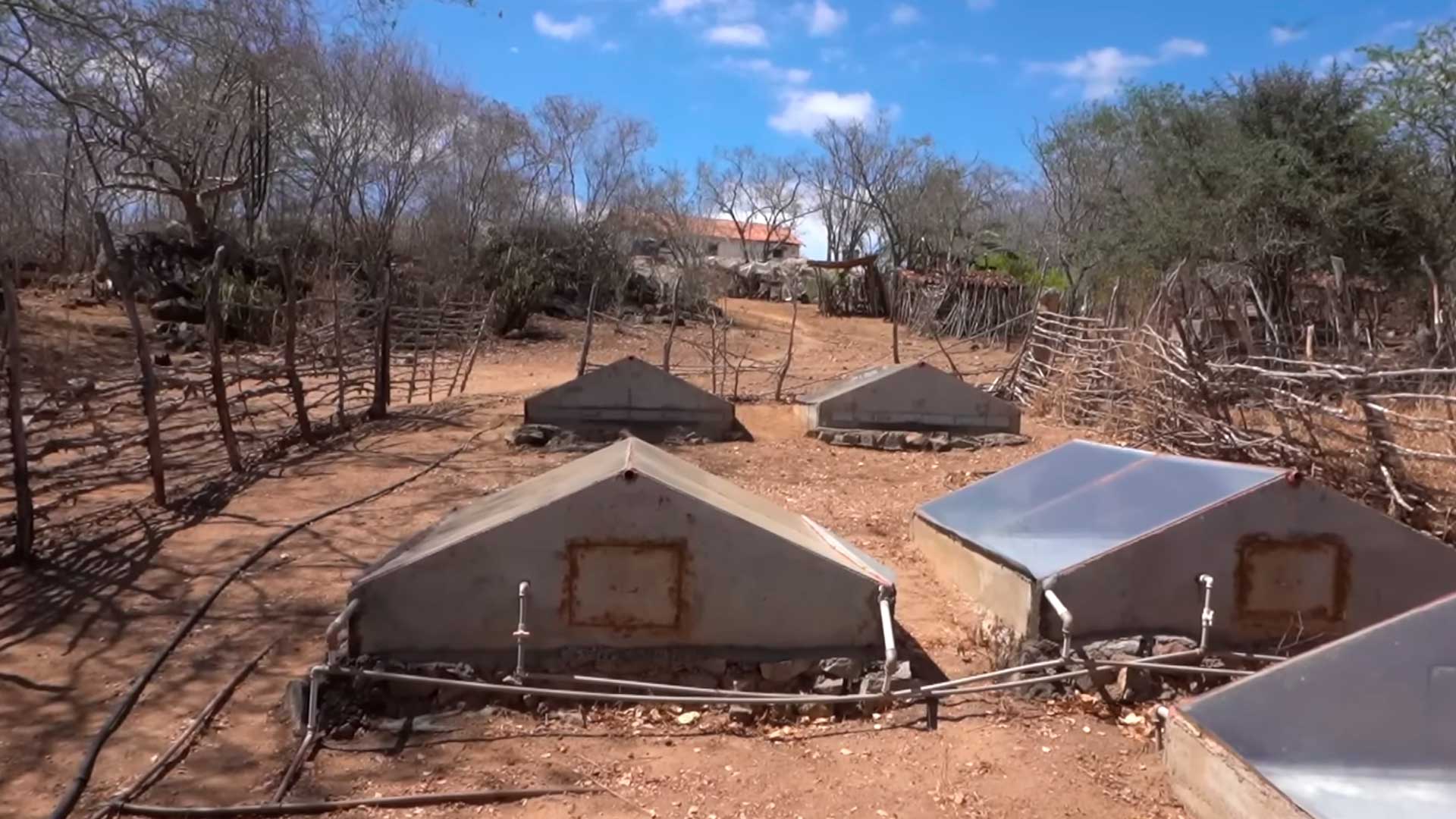


Social Technology Developed at UEPB Uses Solar Distillation to Transform Salty Well Water into Drinking Water and Already Serves Hundreds of Families in the Interior of the Northeast
The scarcity of water in the Paraíba semiarid region continues to be one of the main factors hindering rural production and affecting the daily lives of remote communities, where seeking water can mean time, cost, and insecurity. In recent years, researchers linked to the State University of Paraíba have put into operation a low-cost alternative that uses solar energy to make salty well water potable.
The project is known as solar desalinator and functions like a simple greenhouse made of glass, cement, and canvas, replicating the natural cycle of evaporation and condensation. According to institutional publications from UEPB, the equipment has already been installed in dozens of communities, with numbers reaching about 200 units and direct service varying from over 100 to around 200 families, according to the latest data released.
In practice, the proposal aims to reduce dependence on emergency measures, such as irregular water supply from tank trucks, and increase the autonomy of small farmers. The technology is the result of extension and research activities that began in 2010 and are associated with actions involving community participation, according to the university itself.
-
With a cost per shot close to zero, the DragonFire laser could change naval warfare in 2027 and provide British ships with nearly unlimited defense against drones.

-
A British startup creates tires that generate electricity in electric vehicles when passing over potholes, speed bumps, and cracks.

-
Scientists have created robots made with living cells that have their own nervous system, swim on their own, explore the environment, and self-organize without any genetic engineering, and now they want to do the same with human cells.

-
Students create a solar-powered ambulance that operates without a plug, without fuel, and still keeps medical equipment running in remote areas.

In addition to the social impact, the topic gained national visibility and reinforced the debate on how public universities can generate applicable solutions in everyday life without relying on complex infrastructure. In 2025, UEPB highlighted the project on its portal and mentioned progress in different municipalities and neighboring states.
How the Solar Desalinator Works and Why It Serves Human Consumption
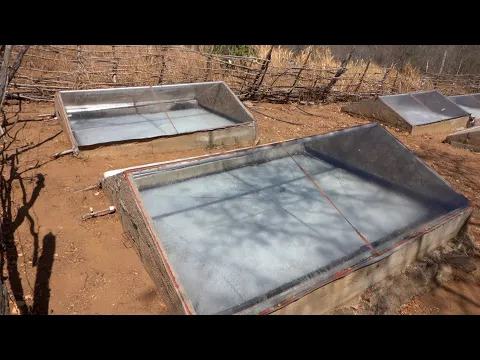

The solar desalinator receives salty water from wells in a structure covered with glass, where the sun’s heat accelerates evaporation. The steam condenses on the surface of the glass and flows through channels to a separate reservoir, now containing water free of dissolved salts.
UEPB reports that inside the equipment, the temperature can reach about 70 degrees, which contributes to the solar distillation process and helps to deliver water suitable for consumption. The salt that does not evaporate remains on the canvas and can be removed with simple maintenance performed by the families themselves.
In regions where the salinity of the well water is high, the university cites values reaching several grams of salt per liter, far exceeding the limit considered potable. The team emphasizes that the solar desalinator is designed to be easy to install, easy to maintain, and cheap, precisely to enable use in dispersed rural areas.
Where the Technology Has Already Been Installed and Why the Number Exceeded 200 Units
In an update published by the UEPB Graduate Studies and Research Office, the university listed municipalities in Paraíba with dozens of units installed, as well as records in Pernambuco and Ceará. Summing the quantities disclosed in this list, the total exceeds 200 units, reinforcing the figure mentioned in reports about the project.
Another institutional publication, from November 2025, states that the project currently benefits about 200 families and has installed approximately 200 desalination units in Paraíba cities and outside the state, with estimated costs ranging from 3,000 to 4,000 reais per complete equipment, depending on the location.
Awards, Partnerships, and the Evolution to the Third Version of the Equipment
The solar desalinator developed at UEPB gained national recognition by winning the Banco do Brasil Foundation Award for Social Technology in 2017, in the water and environment category, according to a publication from the university itself. UEPB also emphasized that the award gathered hundreds of finalist proposals.
In the history disclosed in 2025, the university notes that research began in 2010 and that the first constructions on a larger scale outside the academic environment occurred starting in 2012, with funding and subsequent expansion to other regions. The same update mentions various funding and support over time, including projects with public and institutional resources.
UEPB also attributes part of the progress to the extension model involving community participation, engaging students, cooperatives, and local organizations, which facilitates the multiplication of constructive knowledge. In practice, this helps turn the equipment into a social technology that is more replicable in rural areas.
In addition to academic fronts, civil society initiatives have also played a role in increasing access, such as fundraising campaigns to build units in specific communities, mentioned in the content about the topic.
The debate about the evolution of the model is also present in recent texts that describe structural improvements and adjustments to increase daily production per unit under real sunlight conditions, although results vary by location and solar incidence. In an institutional update, UEPB cites production that can reach approximately 16 liters per day in a unit, reinforcing the focus on human consumption and the simplicity of the system.
The Bet on a Mobile Solar Desalinator and the Challenges of Scale
One of the next steps mentioned in reports about the topic is the search for a mobile format, designed for regions with more unstable soil, which can enhance the adaptation of the equipment to different terrains. The idea, according to texts discussing the project, is to maintain the same operating principle with a lighter and more flexible structure.
Another recurring challenge is ensuring that the technology arrives with adequate training and maintenance, preventing abandonment of the equipment over time. UEPB states that training and support materials help farmers build and care for the system, reducing external dependence and granting more autonomy to communities.
In the background, the discussion revolves around scale and public priority, as the semiarid region has been coping with emergency solutions for decades. The solar desalinator enters as a local and sustainable alternative, but still needs continuous support to reach more communities and consolidate replication networks.
Do you think that simple technologies like this should receive more investment than large works and emergency actions? Should the government prioritize solutions that do not depend on expensive operations, or does that not solve the problem definitively? Leave your comment with your opinion and tell us if the university is doing the role that should be that of the State.








Modelos mais simples e portáteis podem ser oferecidos por nossa empresa Sitimi Labs Inovação em parcerias com a UFPB e junto com o nosso Projeto CISTERNAS INTELIGENTES – MAIS ÁGUA LIMPA E POTÁVEL-ODS6.
Façam contato: Whatsapp 21 98266 3798.
Eduardo Monte