





 Portuguese
  English
  Spanish
 4 min of reading
  0 comments



Created Since December 6, 2025, RN’s BRL 500 Aid for Young Adults Leaving the Socio-Educational System Seeks to Reduce Recidivism and Ensure Social Reintegration.
On December 6, an initiative from the Government of Rio Grande do Norte began to resonate beyond the state by addressing one of the most fragile points of the Brazilian socio-educational system: the institutional abandonment experienced by youths shortly after the end of internment or semi-liberty measures. According to information released by state agencies and confirmed by local journalistic sources, the state established a monthly financial aid of BRL 500 aimed at adolescents and young adults who are former inmates of the socio-educational system, creating a formal mechanism for transitioning from judicial measures to life in freedom.
The measure was structured under the Socio-Educational Care Foundation of Rio Grande do Norte (Fundase/RN) and represents a significant shift in the traditional logic of the system. Until then, most young people left the units without any direct financial support, relying solely on their families — if they existed — or informal survival networks.
RN’s BRL 500 Aid Targets the Most Critical Period After Leaving the Socio-Educational System
Studies from the socio-educational system itself indicate that the first months after discharge are the most sensitive. It is during this period that most cases of recidivism, school dropout, and return to environments of extreme vulnerability occur. The program from Rio Grande do Norte is precisely designed to address this “institutional void.”
-
Airfare prices may rise with increasing fuel costs, and the government is considering urgent measures to avoid a direct impact on the wallets of Brazilians.

-
Chocolate prices soar nearly 15% and become a luxury item for Easter 2026, with increases surpassing inflation and changes in Brazilian consumption habits.

-
The Federal Revenue issues a good alert for Brazilian taxpayers: 60.9% are already using the pre-filled tax return, automatic refunds via Pix reach millions, and the government plans for a fully automated income tax in the coming years.

-
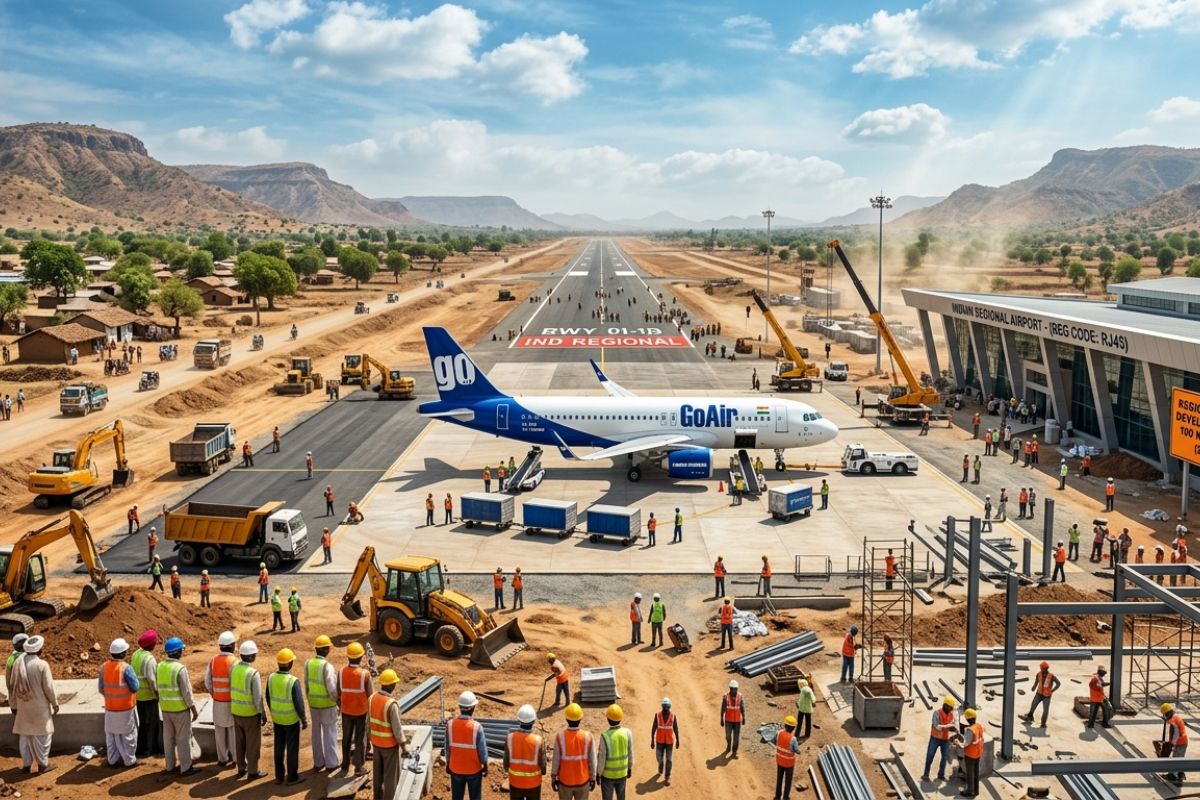
India announces a plan of $3.06 billion to bring aviation to forgotten regions: 100 new airports, $1.07 billion in subsidies, and regional routes guaranteed for 10 years, from 2026 to 2036, away from the centers.



The monthly aid of BRL 500 serves as a temporary financial support, not as a permanent income.
The amount aims to cover basic expenses — transportation, food, school supplies — allowing the young adult to maintain educational ties or participate in training activities without the immediate pressure to generate informal income.
Who Can Receive the Aid for Young Adults in Rio Grande do Norte
The program is aimed at adolescents and young adults who have completed socio-educational measures outlined in the Statute of Children and Adolescents (ECA), especially internment and semi-liberty. To access the benefit, the young adult must formally agree to post-measure monitoring conducted by Fundase.
Among the criteria adopted are the maintenance of school ties, participation in educational or training activities, and continuous technical monitoring. The aid may be granted for up to six months, with the possibility of extension based on the evaluation of the responsible team.
The program’s logic makes it clear that the benefit is not automatic or welfare-oriented. It is conditioned on the young adult’s adherence to an individual social reintegration plan, which includes educational goals and psychosocial support.
Fundase and Technical Monitoring Structure the Public Policy
Differently from purely financial programs, the model adopted by Rio Grande do Norte combines income transfer with technical monitoring.
Fundase/RN acts as the central axis of the policy, coordinating teams that monitor school attendance, participation in activities, and the evolution of the individual plan.

This structure attempts to avoid a common mistake in transition policies: the isolated transfer of resources without institutional support. By linking the aid to monitoring, the state seeks to ensure that the money fulfills its strategic function and does not get lost in a context of social instability.
Why the BRL 500 Aid Represents a Change in the Socio-Educational System
Historically, the Brazilian socio-educational system has concentrated efforts during the enforcement of the measure, leaving the subsequent phase practically uncovered. The result was the creation of a predictable cycle: leaving without support, returning to vulnerability, new infractions.
By creating specific aid for the post-measure phase, Rio Grande do Norte formally acknowledges that the state’s responsibility does not end with the young adult’s release.
This is an interpretation aligned with the National System of Socio-Educational Care (Sinase), which provides for actions of social reintegration but is rarely implemented in a concrete manner.
Expected Social Impact and National Debate
Although the number of beneficiaries is still limited, the program is already provoking debate among public managers and experts in social policies. The expectation is that the measure will reduce recidivism and strengthen school retention, two critical indicators in monitoring young adults.
If the results are positive, the model from Rio Grande do Norte could serve as a reference for other states facing similar difficulties, especially in regions with high rates of youth vulnerability.
The BRL 500 aid does not solve, on its own, the structural problems of the Brazilian socio-educational system. But by recognizing that post-measure abandonment is part of the problem, Rio Grande do Norte takes a rare step: it transforms the transition into a formal public policy.
And you, reader: can temporary financial support combined with technical monitoring be the missing link to reduce recidivism, or does Brazil still insist on viewing the end of the measure as the end of the state’s responsibility?








-

-

-

-

-

-

24 pessoas reagiram a isso.