





 Portuguese
  English
  Spanish
 5 min of reading
  0 comments


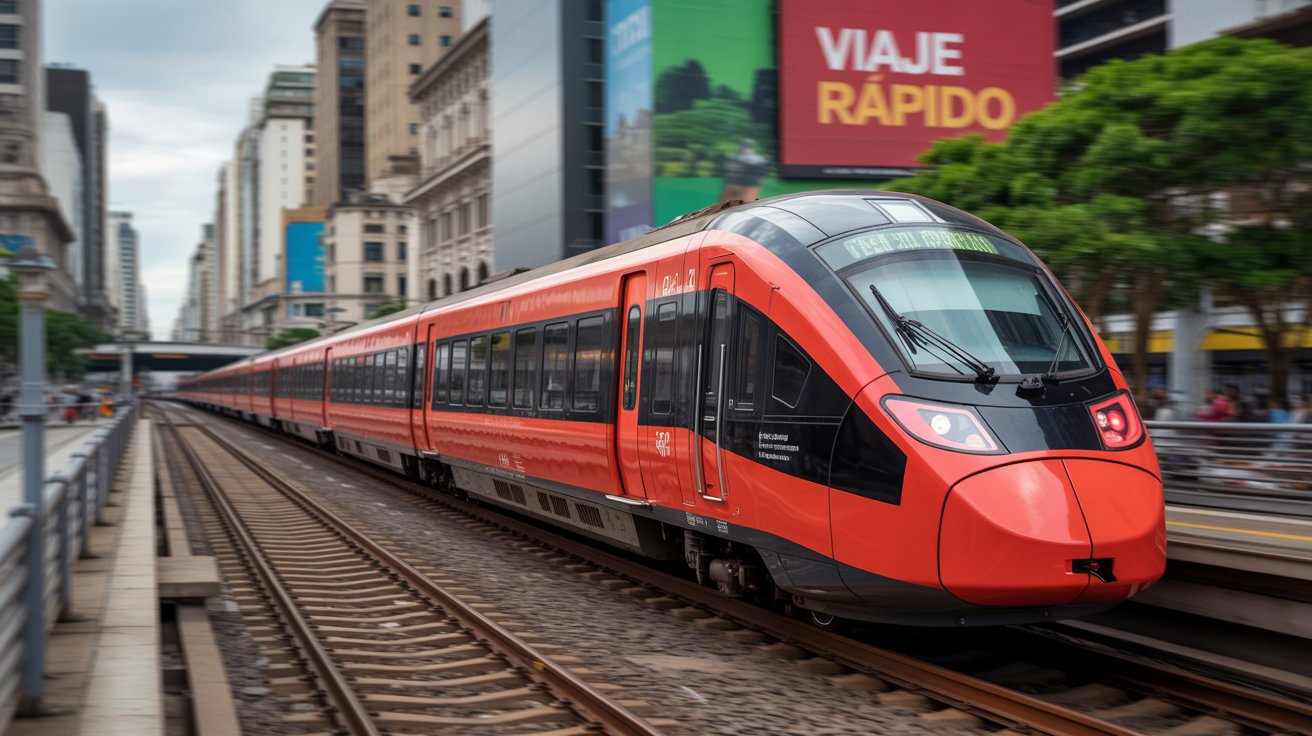
Movement in São Paulo Involves Strategic Changes to the High-Speed Train That Promises to Connect Major Cities, Transforming the Urban Mobility Landscape and Impacting Billion-Dollar Investments with Developments That Go Far Beyond Infrastructure.
The Government of São Paulo is evaluating a possible change in the project of the high-speed train that will link the capital city to Jundiaí and Campinas, a project estimated at over R$ 8.5 billion, with a delivery forecast for 2031.
According to the State Investment Partnerships Secretariat, the change under consideration involves transferring the boarding and disembarking station in the capital from the current proposal, the Barra Funda station, to the Água Branca station, both located in the western zone of São Paulo.
This change could transform Água Branca into one of the main mobility hubs of the state, connecting metropolitan lines and intercity train services, and bringing more comfort and efficiency to passengers, as stated by the Secretariat.
-
“No one will make us change the Pix,” says Lula after the US report.

-
He started running at 66 years old, broke records at 82, and is now a subject of study for having a metabolic age comparable to that of a 20-year-old, in a case that is intriguing scientists and inspiring the world.

-
Oldest tree on the planet reappears after 130 years of searches: Wattieza, 385 million years old, was 10 meters tall and had no leaves or seeds; Gilboa fossils in New York solved the mystery in 2007.

-
A 48-square-meter house assembled in hours with 4,000 bricks made of recycled plastic that does not absorb moisture, has natural thermal insulation, and costs less than 90,000 reais in a complete kit.

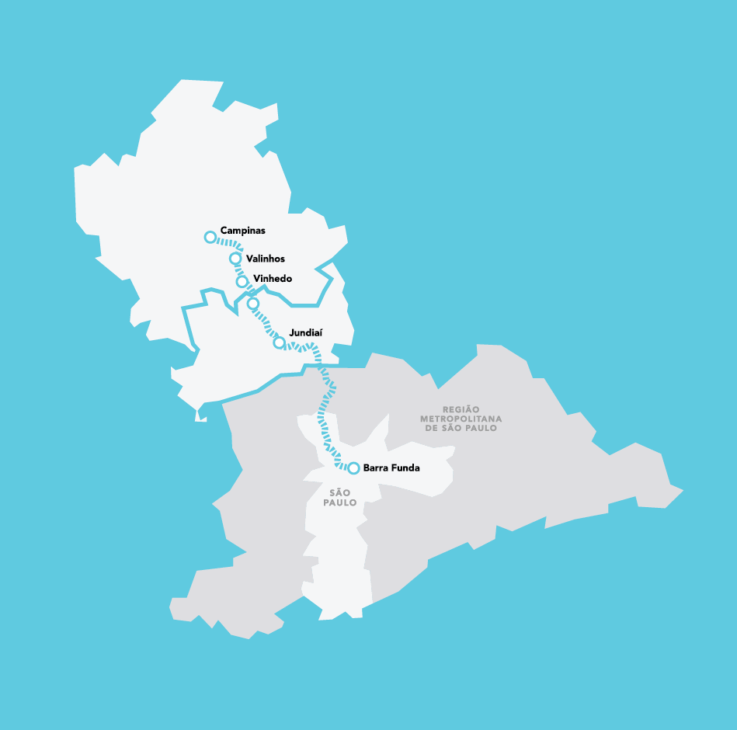
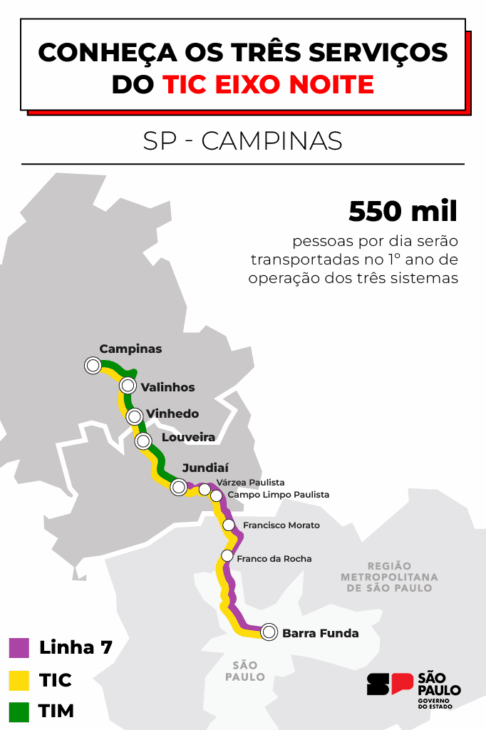
The Intercity Train Project Northern Axis (TIC), the official name of the initiative, plans to construct a line with 101 kilometers, connecting São Paulo, Jundiaí, and Campinas through an express route that should take only 64 minutes between the capital and Campinas.
In December 2024, the state government signed the financing contract with the National Bank for Economic and Social Development (BNDES), securing R$ 6.4 billion for the start of construction.
In total, over R$ 8.5 billion will be invested by the state in the project.
Additionally, in March 2025, an investment of R$ 1.3 billion was announced to expand the Água Branca station, with works scheduled to be carried out by the TIC Trains concessionaire, responsible for the train’s implementation.
This expansion includes the creation of platforms for another intercity train that will connect São Paulo to Sorocaba, also in the interior of São Paulo, and integration with various lines of the São Paulo Metropolitan Trains Company (CPTM) and the São Paulo Metro.
The relocation of the CPTM Line 8-Diamond is planned, along with the connection of Água Branca to CPTM Lines 7-Ruby and 9-Emerald and Metro Lines 3-Red and 6-Orange, strengthening intermodality in the capital’s transport system.
The administration of Tarcísio de Freitas, governor of the state from the Republicans, promises to deliver the first phase of the changes at the Água Branca station in the second half of 2026, signaling progress in the region’s mobility infrastructure.
Legal Challenges and Advances in the Project
However, the project is not free from legal and administrative challenges.
In 2024, the Justice temporarily suspended the concession of the Intercity Train between São Paulo and Campinas.
The decision was motivated by a lawsuit from the Railway Workers Union, which pointed out irregularities in the public-private partnership (PPP) announcement responsible for the concession, requesting that the process be halted until the questions were clarified.
Despite this initial suspension, the São Paulo Court of Justice (TJ-SP) revoked the preliminary injunction, allowing the contract between the state government and the concessionaire to proceed, maintaining the project’s schedule.
The billion-dollar high-speed train, which promises to revolutionize mobility between important cities in the state, is under development, but with some uncertainties regarding the location of the main station in the capital and the next steps of the judicial process.
It is worth highlighting that the project is part of a larger strategy to modernize the railway transport system in the state, reducing travel time, traffic on highways, and promoting more sustainable transport.
The line, with three main stations, represents one of the largest transportation infrastructure projects in São Paulo in recent years, with the potential to significantly impact the regional economy, the real estate market, and the quality of life for the population.
Economic and Social Impacts of the High-Speed Train
According to experts, the Intercity Train is expected to promote urban development and strengthen economic integration between connected cities, as well as expand transportation options for thousands of workers, students, and tourists.
However, it is essential to monitor the evolution of studies for the station change and the judicial decisions to understand whether the schedule will be maintained or face delays.
So far, there is no defined forecast for the conclusion of the analyses regarding the swapping of Barra Funda station for Água Branca, nor for possible impacts on the progress of the works.
The São Paulo government emphasizes the importance of choosing a station that provides greater operational efficiency and a better user experience, which would motivate the change to Água Branca due to its strategic location and integration with other lines.
Additionally, the expansion of Água Branca station will bring urban improvements and easier access, contributing to the transformation of the region into a true multimodal transport hub.
Another point to be observed is the progress of the works related to the line that will connect São Paulo to Sorocaba, already anticipated to operate on the platforms being planned at Água Branca, demonstrating the government’s intention to expand the high-speed railway network in the state.
Sustainability and Job Creation
With the growing demand for faster and more sustainable transport alternatives, the high-speed train represents a solution that can alleviate heavy traffic on highways and reduce pollutant emissions, aligning with the state’s environmental goals.
The project is also expected to create thousands of direct and indirect jobs during construction, boosting the regional and state economy.
Even though the project is at an advanced stage, the complexity of the infrastructure, legal aspects, and the need for integration among different modes require strict monitoring to avoid surprises that could delay or alter initial plans.
According to experts in transportation and urban mobility, choosing the right station is crucial to ensure system efficiency, passenger comfort, and the economic viability of the train.
Will Água Branca station really be the best alternative for the future of fast transport between São Paulo, Jundiaí, and Campinas?
Do you think this change in the project can benefit the mobility of São Paulo residents or bring more complications? Share your opinion!







Seja o primeiro a reagir!