





 Portuguese
  English
  Spanish
  5 min of reading
  0 comments


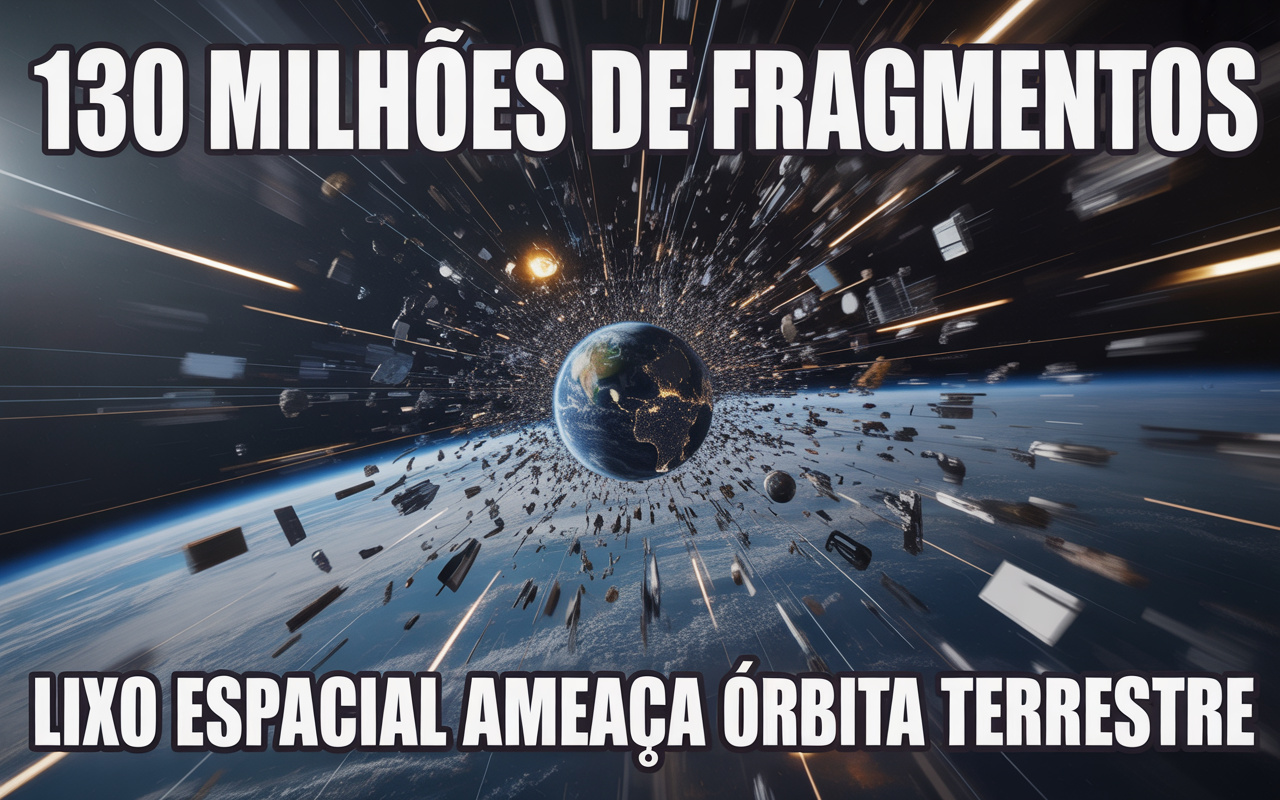
Satellites Reveal That More Than 120 Million Pieces Of Space Debris Orbit The Earth At 28,000 Km/H, Threatening GPS, Internet, Climate, And Space Missions.
The Earth’s orbit, once seen as a practically infinite and safe space for the expansion of human technology, is becoming one of the most congested and dangerous environments ever created by civilization itself. Consolidated data from space agencies show that today there are over 130 million pieces of space debris spinning around the planet. Most of them travel at speeds exceeding 28,000 kilometers per hour, enough energy to destroy entire satellites in collisions lasting just a few seconds.
The problem has ceased to be theoretical. It directly affects communications, navigation systems, climate monitoring, scientific missions, and even the safety of astronauts aboard the International Space Station. Near-Earth space has officially entered a phase of critical saturation.
What Is Considered Space Debris And Why Is It Growing So Fast
Space debris is any artificial object that remains in orbit without any active function. This includes decommissioned satellites, rocket parts, solar panels, screws, fragments from collisions, and even microscopic paint chips released over decades.
-
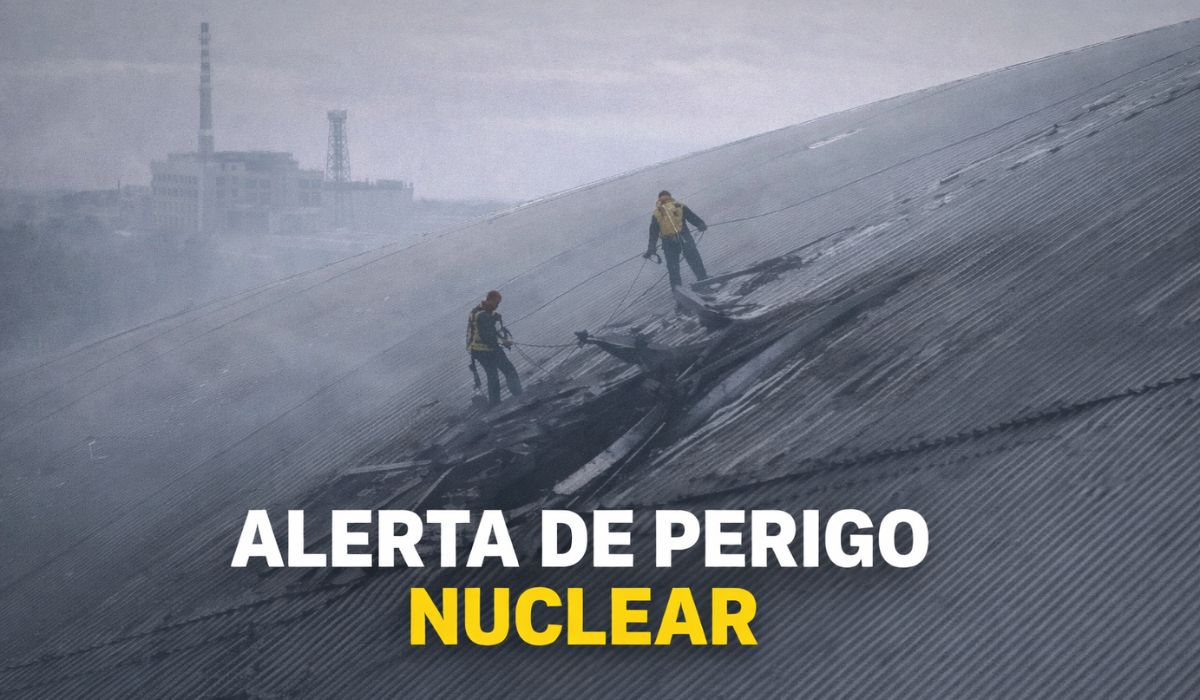
The gigantic steel shell built to contain Chernobyl for a century has been pierced by a drone, exposing a critical system and creating a hole that could cost over 500 million euros to repair.
-
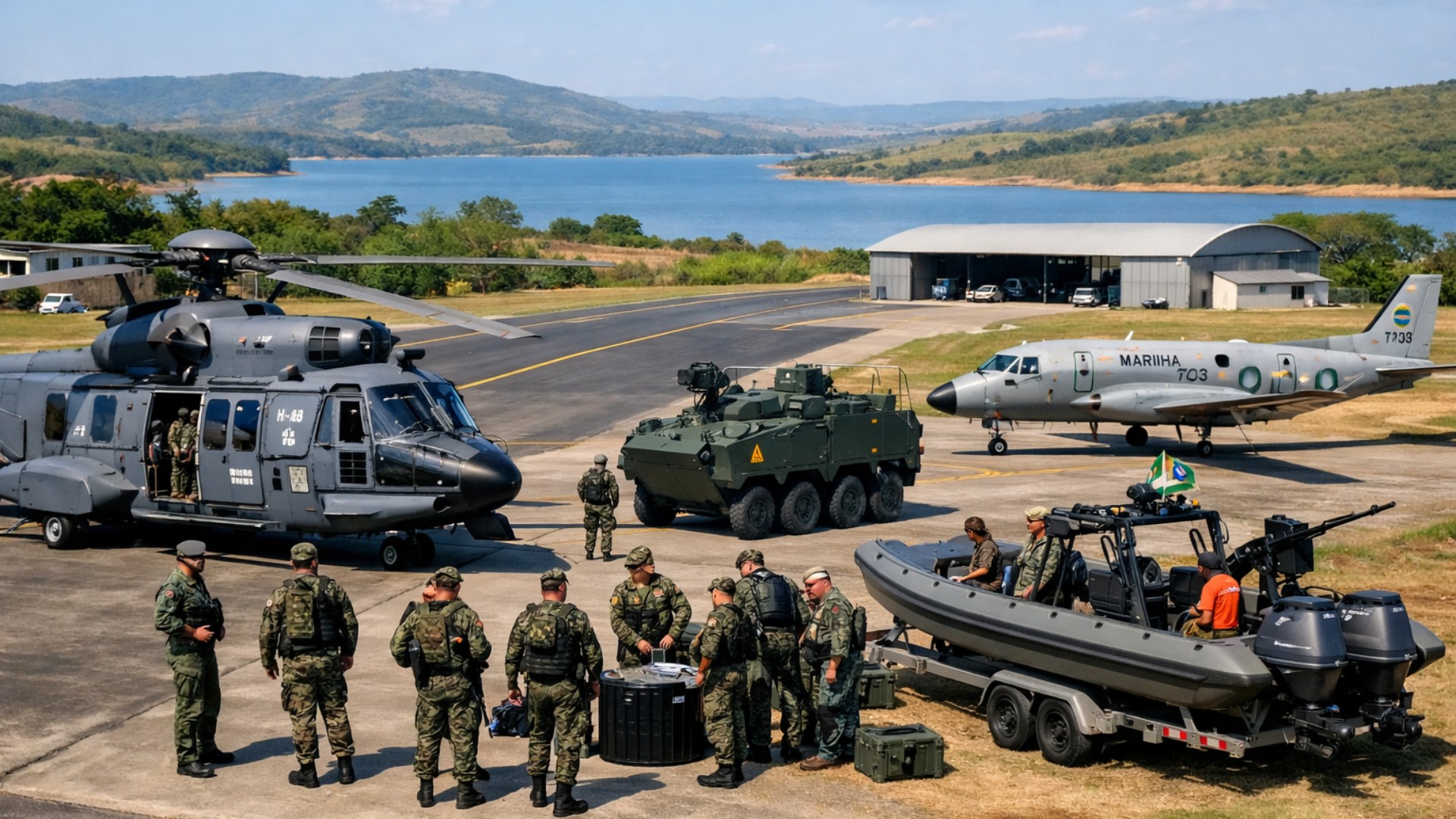
Brazilian Navy reaches a new level by taking over an airport with a 1,600-meter runway used by 1,800 military personnel and autonomous attack drone testing.
-
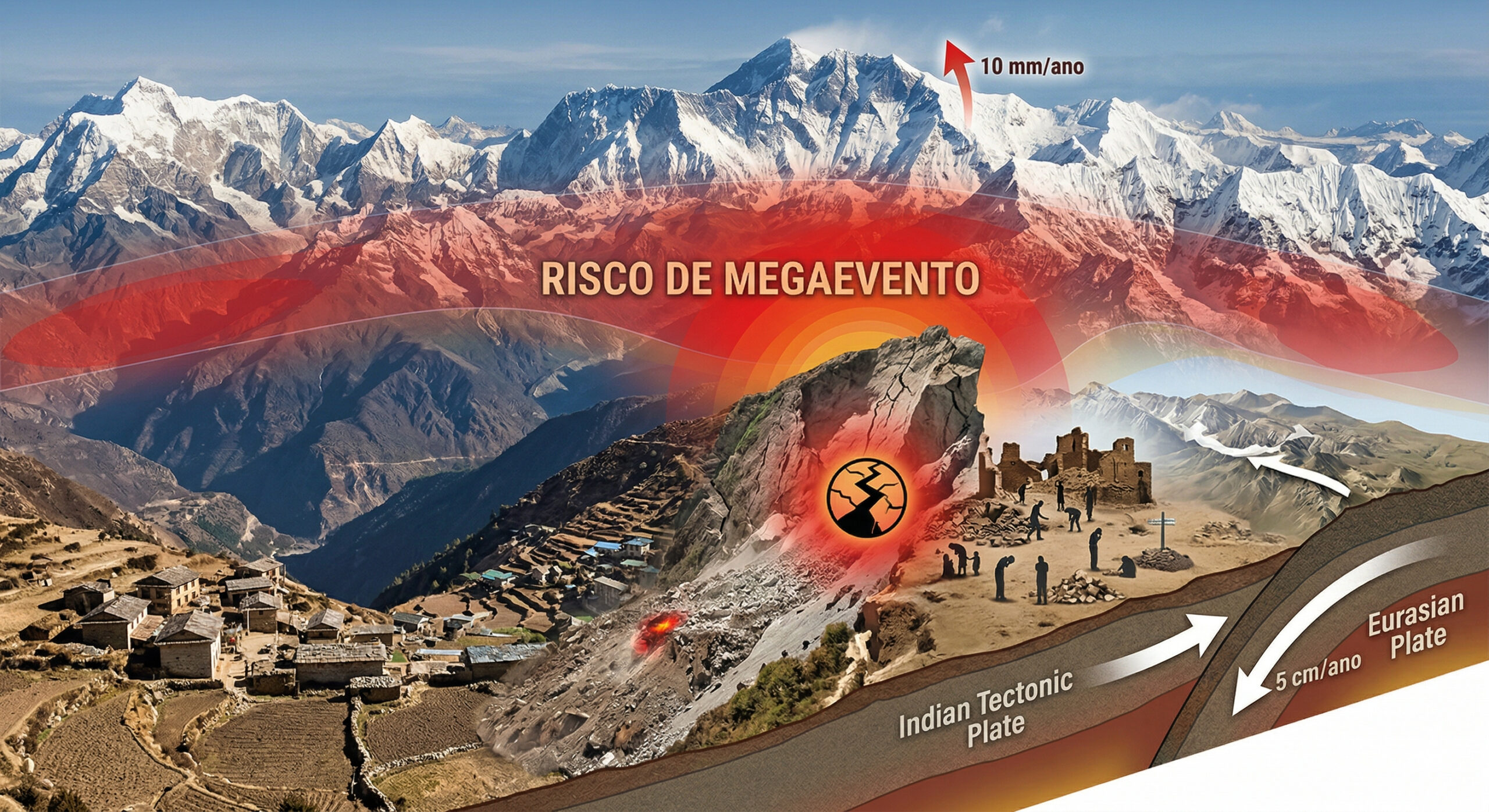
The Himalayas continue to grow to this day, with tectonic plates advancing 5 cm per year, mountains rising up to 10 mm annually, and the 2015 earthquake that killed 9,000 people may have increased the risk of an even larger seismic mega-event.
-
At an altitude of 400 km by astronauts from the International Space Station, Paris transforms at night into a golden mesh so precise that it reveals the outline of the Seine River, avenues, and entire neighborhoods like a luminous map drawn over the Earth.


According to combined estimates from NASA, ESA (European Space Agency), and independent orbital tracking centers, only about 36,000 objects are large enough to be monitored individually by radar.
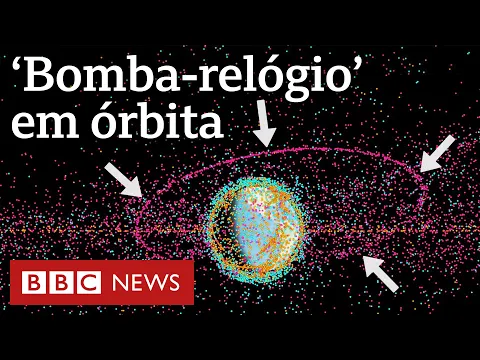

The rest: more than 130 million fragments are too small for constant tracking, but large enough to cause catastrophic damage.
The accelerated growth of this number is linked to three main factors: the explosion of commercial launches, the fragmentation of old satellites, and military tests with anti-satellite weapons conducted over the past few decades.
Orbital Velocity: Why Even A Screw Becomes A Weapon
In low Earth orbit, objects move at speeds close to 7.8 km per second, equivalent to about 28,000 km/h. In this condition, even a fragment of a few centimeters carries kinetic energy comparable to that of an artillery projectile.
A collision between two objects in orbit is not only destructive; it is multiplying. When a satellite is hit, it fragments into hundreds or thousands of new debris, each becoming an independent threat.
This chain reaction effect is known as the Kessler Syndrome, a scenario in which successive collisions make certain orbits practically unusable.
Satellites At Risk: Communications, GPS, And Climate In The Line Of Fire
A large part of modern infrastructure depends directly on satellites. GPS systems, financial transactions, satellite internet, weather forecasting, wildfire monitoring, air and maritime traffic control, and even power grids rely on data from space.

A single impact on a global positioning satellite can cause navigation errors on a continental scale. The loss of weather satellites compromises forecasts of hurricanes, droughts, and extreme events, directly impacting millions of people.
Technical reports indicate that currently, satellite operators perform thousands of evasive maneuvers each year to avoid collisions with tracked debris. Each maneuver consumes fuel and reduces the lifespan of the equipment.
The International Space Station Has Had To Divert Several Times
The International Space Station, which orbits at an altitude of about 400 km, is located in one of the most congested areas of near-Earth space. Since its inauguration, the ISS has carried out several emergency maneuvers to avoid collisions with space debris.
In some instances, astronauts had to shelter in ready-to-evacuate return capsules in case of impact that could breach the station’s structure. Even fragments smaller than one centimeter can puncture panels and compromise vital systems.
These incidents reinforce that the problem is not a future concern. It is already present and active.
The Explosion Of Commercial Satellites And Megaconstellations
In recent years, the number of satellites launched by private companies has grown exponentially. Megaconstellations with thousands of units aimed at global internet and Earth observation have completely changed the orbital dynamics.

Although many of these satellites are designed to re-enter the atmosphere at the end of their lifespan, technical failures, collisions, and loss of control increase the risk that they become new permanent debris.
Recent studies indicate that if the current pace of launches continues without a global mitigation system, the number of dangerous objects in orbit may double in a few decades.
Technologies To Remove Space Debris Are Still Limited
Several solutions are being studied to deal with space debris. Among them are orbital nets, robotic arms, ground-based lasers to alter trajectories, and satellites “collectors” capable of capturing debris and bringing it to atmospheric re-entry.
The problem is scale and cost. Removing a few large objects is already expensive and technically complex. Dealing with millions of small fragments is a challenge that still lacks a viable practical solution on a large scale.
Additionally, there are legal hurdles. Many debris belong to specific countries or companies, and international space law is still limited in authorizing direct interventions.
The Risk Of Making Certain Orbits Unusable
Experts warn that if nothing is done, some orbital bands may become too dangerous for safe operations. This would directly affect future launches, scientific missions, and even planetary defense against asteroids.
The loss of safe access to near-Earth space would have profound consequences for the global economy, science, and international security. The space that today sustains much of modern life may turn into a hostile environment created by human activity itself.
Space Has Become A Mirror Of Earth’s Challenges
The accumulation of space debris reflects a pattern already known on solid ground: technological advancement outpacing the ability to manage the environment. The difference is that in space, errors propagate at extreme speeds and for decades.
Satellites confirm that Earth’s orbit has reached a critical point. The challenge now is not just technological, but also political, economic, and strategic. Controlling space debris has ceased to be a science fiction issue and has become a basic condition for maintaining the functioning of the modern world.








-

-

-

-

-

-

16 pessoas reagiram a isso.