





 Portuguese
  English
  Spanish
  5 min of reading
  0 comments


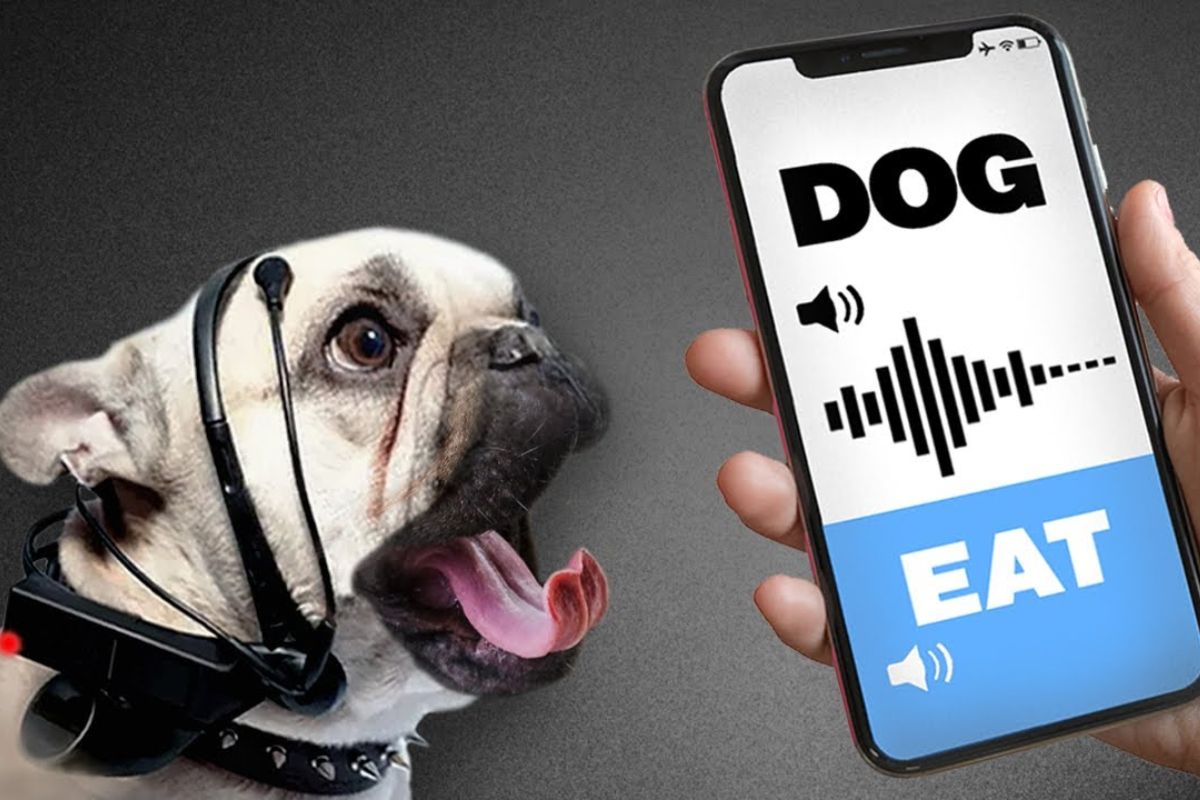
Based on Barks, Signals, and Sensors Attached to the Collar, Scientists Bet That a Device Can Bring Humans and Dogs Closer by Translating Pre-Recorded Phrases and Emotional States. The Promise Reminds Us of Movies but Also Raises Questions About Accuracy, Privacy, and Interpretation, Especially When Artificial Intelligence Becomes a Real-Time Intermediary.
The coexistence between humans and dogs spans millennia, dating back to the domestication of wolves by nomadic hunter-gatherers at least 15,000 years ago. Despite this closeness, communication remains limited, and scientists admit that often it’s just a matter of “guessing” what the animal wants.
Now, the idea of “translating” animal language is back at the center of the debate because scientists and developers are already showcasing a device and apps that analyze barks, attempt to interpret emotions, and reproduce preset phrases. The promise is great, but the accuracy of the translation and the risk of misreading remain the most sensitive point when artificial intelligence comes into play.
From Wolves to Dogs, and the Problem of Truly Understanding

The origin of the human-dog relationship is ancient but still surrounded by uncertainties: archaeology and genetics provide contradictory evidence about where and by whom the wild predators were first domesticated.
-
While NASA resumes its path to the Moon, Elon Musk pushes SpaceX for a new leap towards Mars, millions of satellites, and a trillion-dollar scale, and Brazil emerges along the way as a billion-dollar market, regulatory pressure, and a space trump card with Alcântara.

-
Super El Niño gains strength in new forecasts and could cause droughts, floods, and extreme global heat, making 2027 the hottest year in history.

-
An invisible phenomenon in Antarctica on a continental scale reveals a direct impact on the polar climate by showing that penguin droppings release ammonia, form bright clouds, and raise an unexpected scientific curiosity about the balance of the icy atmosphere.

-
A rare phenomenon of silent electric flashes in trees on the east coast of the United States intrigues researchers, confirms a century-old suspicion, and raises concerns about invisible environmental impacts.

The consensus in the narrative is that the partnership began with wolves approaching human communities and starting to fulfill objectives like protection and hunting.
Even with thousands of years of interaction, the obstacle remains: barks sound the same to us, and everyday signals from the dog are not always obvious.
It is in this void that scientists are trying to fit a device capable of mapping patterns and returning “meanings” in comprehensible phrases.
What These Translators Promise by Analyzing Barks

Some mentioned solutions act as a dog-to-English translator, analyzing barks and returning predetermined phrases like “I’m very angry right now” or “let’s play.”
The narrative itself acknowledges the limit: if barks sound the same to the human ear, the promise depends on how the system decides to differentiate emotion, intention, and context.
There is also a small device that attaches to the collar, described as capable of analyzing the animal’s emotions and reproducing pre-recorded phrases, bringing the idea of a “talking collar” closer.
In common, the proposals sell the sensation of conversation, but they still do not demonstrate an open translation of what the dog “would say” without a script.
The Boldest Leap: Brain Waves and Complete Phrases

A project called “No More Barks” appears as the most ambitious in the narrative: instead of just hearing barks, the proposal reads brain waves and translates them into a human speech equivalent, reproduced through a speaker.
The promise includes simple words like “I’m tired” to complete sentences, with future plans for bidirectional communication so that the dog can also “understand” the human.
Here, the technical dilemma becomes ethical: the more the device promises to replace human interpretation with artificial intelligence, the greater the risk that the owner will make decisions based on a misreading.
The narrative also cites the intention to remove any censorship, which reinforces the appeal but also broadens the responsibility for how the message is interpreted.
When Technology Can Save Lives, and Not Just Amuse
The strongest argument is not curiosity, but emergency.
The narrative describes the hypothesis of an owner falling ill at home without being able to ask for help, with only the dog nearby.
The dog may bark, but neighbors might think it’s boredom or “pigeons at the window.” In this scenario, a device that allows the dog to trigger an alert could reduce delays.
The case of the pig Lulu illustrates the same logic: when the owner fell ill, Lulu went out, lay down in the road pretending to be dead, got up to check on her owner’s condition, and returned to the spot until a driver stopped.
The driver was led to the house and called an ambulance. The story doesn’t prove translation but supports why scientists insist on reducing misunderstandings in critical situations.
The Vest from Georgia Institute of Technology and Practical Communication
The narrative cites a team from the Georgia Institute of Technology that created a computerized vest for dogs with a mechanical lever.
The idea is simple and operational: the dog pulls the lever, and the equipment reproduces a clear message, reducing the risk of someone misinterpreting the behavior.
An example phrase is straightforward: “my human needs you come with me.”
Rather than guessing barks, the vest transforms a trainable gesture into a standardized help request, bringing scientists closer to the goal of useful communication without relying on “emotional translation” in real-time.
Why Speaking Like a Human is Different, Even with Artificial Intelligence
The narrative reminds us of a biological limit: speaking like humans requires specific organs and precise coordination of vocal cords, larynx, mouth, nasal cavities, jaw, tongue, and palate.
Birds can imitate sounds, but for most species, this is not feasible. Furthermore, there is a cognitive layer: it’s not enough to produce sounds; thoughts must be organized to converse.
Still, scientists have already observed alternative pathways.
The gorilla Coco was trained to express feelings in a more human-like manner, with over a thousand signs and an understanding of around 2,000 spoken English words, also stating that she knew how to tell jokes.
In another example, the dog Stella uses a device with buttons to express simple desires, supported by a program called hunger for words.
Pop Culture, Real Products, and the Boundary Between Promise and Gimmick
The idea of “talking to animals” has also been pushed by pop culture.
The narrative recalls the talking dogs from Up, released in 2009, and draws a parallel with technological predictions that seemed absurd in 1985, when Back to the Future imagined self-lacing shoes.
In 2016, Nike launched 89 pairs of this type of shoe, showing that some “fantasies” become products.
On the other hand, not everything is just a prototype or science. In 2010, Google presented a “Google Translator for Animals” as an April Fool’s prank, promising to recognize common phrases from cats and other animals.
The reminder serves as a warning: not every announced translation is real, and the public often confuses demonstration, marketing, and applied science.
If a device said your dog is in pain or asking for help, would you trust the translation of barks made by artificial intelligence or would you require another form of confirmation?










-

-

-

-

-

-

18 pessoas reagiram a isso.