
Phenomenon recorded on the east coast confirms century-old suspicion and exposes impacts on vegetation and energy infrastructure
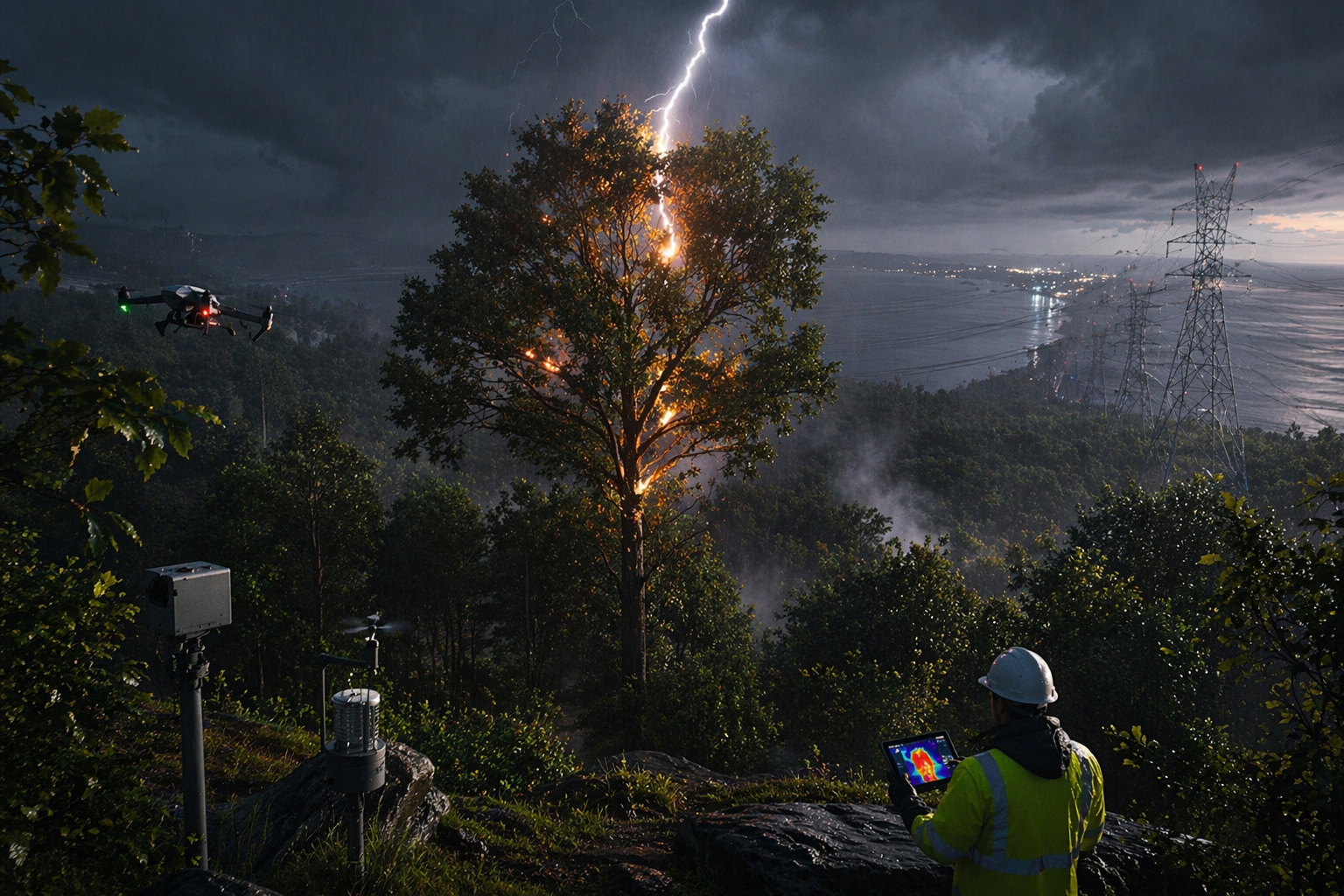
A phenomenon investigated for nearly a century has finally been confirmed after recent records of electric flashes in trees on the east coast of the United States.
The data collected throughout 2025 and released in 2026 show that leaves can undergo silent combustion.
This discovery highlights that the interaction between charged atmosphere and dense vegetation represents a critical factor for environmental balance and energy security.
-
14-Year-Old Girl Develops Solar-Powered Water Purification System for India, Eliminating Need for Electricity or Chemicals

-
Forgotten Canadian Machine Harnessed Waterfall Power to Supply Mines with Compressed Air for 70 Years Without Motors or Electricity
-
Berries, Strawberries, and Blueberries Could Transform Agriculture in Northeastern Brazil, New Tests Reveal

-
Danish Resident Discovers Six Viking Gold Bracelets Weighing 762.5 Grams, Third Largest Gold Treasure in Denmark


Silent electric phenomenon threatens forest health
Low-intensity electric flashes directly hit the tree canopies and compromise their structural integrity.
This process causes slow internal combustion, reduces carbon absorption capacity, and affects climate balance.
The natural regeneration of forests decreases and compromises the ecological stability of the affected regions.
This scenario increases the risk of underground fires, which arise without visible signs and hinder monitoring teams’ actions.
Scientific evidence confirms ancient theory
Studies conducted throughout 2025 in coastal forests of the United States identified anomalous patterns of electromagnetic radiation.
These patterns coincide with heat spots in tree trunks and reinforce the scientific hypothesis.
Atmospheric electricity accelerates the oxidation of plant tissues and makes the phenomenon observable.

Researchers identified determining factors for the occurrence of flashes:
- Soil with high concentration of conductive minerals, which facilitates electric circulation.
- High air humidity, which intensifies silent discharges.
- Metallic residues in the cellular structures of trees, resulting from atmospheric pollution.

Direct impacts on electrical networks and the energy sector
The data obtained have strategic relevance for the energy sector, especially in areas with dense vegetation.
Transmission companies anticipate electrical failures and reduce operational losses based on these studies.
The behavior of air ionization around the canopies allows for improved monitoring systems and increased network efficiency.
New remote sensing technologies expand operational control and make infrastructure more resilient.
This knowledge broadens the understanding of electricity outside traditional systems and serves as an indicator of real risk.
Environmental consequences of silent combustion
Continuous exposure to electric discharges causes cellular degradation in trees and weakens their mechanical structure.
The capacity for transpiration and thermal regulation decreases and directly affects the local microclimate.
The fauna that depends on these ecosystems also suffers impacts and loses environmental balance.
Experts indicate mitigation measures to address the problem:
- Mapping areas with high electromagnetic vulnerability.
- Use of thermal sensors to detect slow internal combustion.
- Reforestation with species of lower electrical conductivity.
Scientific advances point to new paths
The advancement of remote sensing and artificial intelligence enhances the monitoring of these phenomena on a global scale.
Governments and institutions monitor electric discharges in real time and improve environmental policies.
The integration of plant biology and electrical engineering creates new technological solutions aimed at prevention.
The understanding of natural electricity evolves and strengthens environmental and energy security.
Investment in basic science proves essential to transform this invisible phenomenon into an environmental protection tool, but how prepared are we to deal with natural risks that we cannot see?