





 Portuguese
  English
  Spanish
  5 min of reading
  0 comments


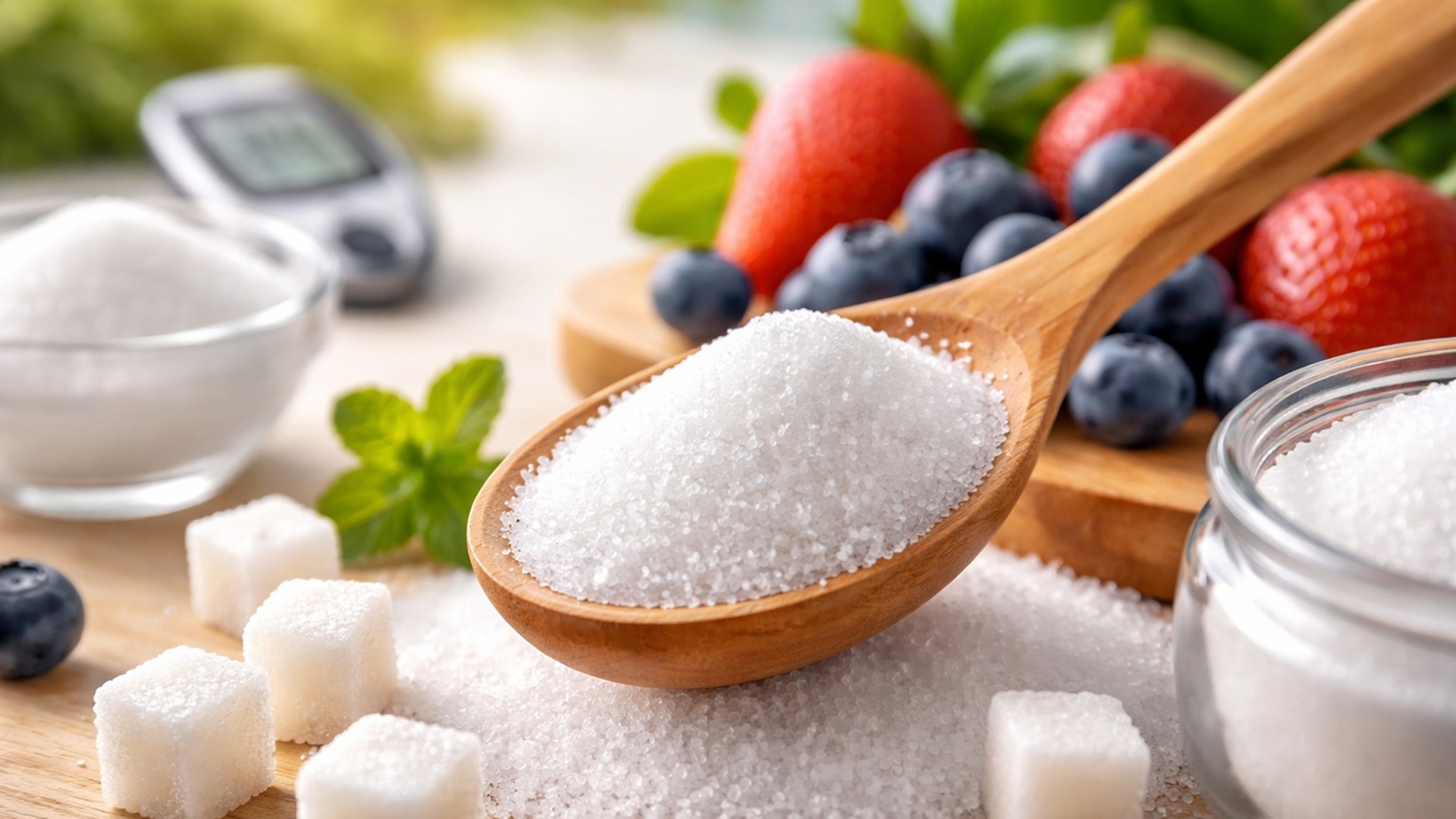
Advances In Bioengineering Allowed To Increase Tagatose Production To Conversion Rates Of Up To 95%, Opening The Way For A Sweetener With A Taste Equivalent To Sugar, Lower Intestinal Absorption, Reduced Caloric Value And Potential Impact On Regulatory Policies And The Global Food Market
The advancement announced in 2025 by researchers at Tufts indicates that tagatose, a rare sugar, can be produced at scale with a taste similar to that of sucrose, low glycemic impact, and reduced caloric value, meeting public health demands linked to the rise of diabetes and obesity.
Global interest in low glycemic index sweeteners has intensified as the rising rates of diabetes and obesity have begun redefining public health priorities. Artificial alternatives, previously dominant, face increased scrutiny regarding long-term metabolic effects and inconsistent regulatory evaluations.
With the decline of confidence in synthetic compounds, the attention of the scientific and industrial sector has turned to natural molecules with more favorable biochemical profiles. However, most available candidates fail to replicate the taste and functionality of sucrose in broad food applications.
-
With a cost per shot close to zero, the DragonFire laser could change naval warfare in 2027 and provide British ships with nearly unlimited defense against drones.

-
A British startup creates tires that generate electricity in electric vehicles when passing over potholes, speed bumps, and cracks.

-
Scientists have created robots made with living cells that have their own nervous system, swim on their own, explore the environment, and self-organize without any genetic engineering, and now they want to do the same with human cells.

-
Students create a solar-powered ambulance that operates without a plug, without fuel, and still keeps medical equipment running in remote areas.


Few natural sweeteners come close to these characteristics, and those that do are often expensive or chemically unstable during food processing.
Commercial adoption on a large scale remains rare, leaving a gap between nutritional research and the food industry.
Structural Requirements And Economic Limits Of The Sector
At the heart of the challenge are three structural requirements considered essential: the compound must be sweet, safe, and scalable. Simultaneously meeting these criteria has proven difficult, limiting product reformulation despite regulatory incentives and market pressure.
Natural sugars with low metabolic impact generally appear in minimal amounts in available sources.
Isolation in significant volumes is complex, and until recently, none of these compounds had surpassed the economic threshold necessary for large-scale use.
In this context, tagatose, for years treated as a scientific curiosity, began to receive renewed attention. The molecule, once relegated to nutritional footnotes, emerged as a relevant candidate following advances in bioengineering announced in 2025.
Tagatose And The Review Of Nutritional Labeling Rules
In December 2023, the FDA issued a supplemental response confirming that tagatose must be listed as added sugar on nutritional labels.
At the same time, it allowed the declaration of a reduced energy value of 1.5 kcal per gram, instead of the standard 4 kcal per gram.
The decision was based on the recognition that metabolically distinct sugars do not contribute the same energy load as traditional carbohydrates.
The policy was described as provisional, valid until new specific regulations are developed.
The agency indicated that the discretion applied to tagatose could be reviewed as new data on safety, nutrition, and consumer behavior become available. The regulatory sector, therefore, remains in transition.
Clinical Evidence On Absorption And Glycemic Control
A peer-reviewed analysis from 2018 pointed out that only 20% of tagatose ingested orally is absorbed in the small intestine. The remainder goes to the large intestine, where it is fermented, resulting in minimal impact on blood glucose levels.
Clinical trials conducted between 2018 and 2023, involving diabetic and pre-diabetic participants, recorded reductions in HbA1c and fasting blood glucose. Doses of 7.5 to 15 grams, administered three times a day, produced statistically significant glycemic improvements in long-term studies.
The data also indicated additional effects, such as increased HDL cholesterol and reduced VLDL and LDL concentrations. These results were associated with mechanisms such as inhibition of intestinal disaccharidases and greater hepatic glycogen storage.
Other proposed mechanisms include the stimulation of glucagon-like peptide-1 (GLP-1) secretion, contributing to appetite modulation. The evidence has been summarized in clinical reviews and specialized coverage, reinforcing the metabolic potential of the compound.
From Scientific Validation To Industrial Challenges
Despite the established scientific basis, tagatose has faced historical obstacles to industrial adoption. The compound occurs only in small quantities in natural sources such as dairy and fruits, making extraction inefficient.
Previous methods of chemical synthesis required multiple reaction steps and had limited yields. Early commercial initiatives, including projects by Arla Foods and SweetGredients, were discontinued due to unviable margins and supply constraints.
These hurdles kept tagatose out of the mass market, despite the growing interest in alternatives to traditional sugar. Overcoming these limitations depended on a different productive approach.
Bioengineering With E. Coli And High Conversion Rates
A team from Tufts University presented a new productive route, published in the journal Cell Reports Physical Science. The group genetically modified the bacterium Escherichia coli to convert glucose into tagatose.
The process utilizes a sequence of two enzymes. The first, a selective phosphatase for galactose-1-phosphate, was isolated from a slime mold and initiates the conversion of glucose to galactose.
Then, a second bacterial enzyme transforms galactose into tagatose. The researchers described the pathway as an inversion of the typical metabolic process used in galactose degradation.
According to the team, the approach achieved conversion rates of up to 95%, surpassing the 40 to 77% observed in previous processes. The result repositions tagatose as a viable candidate from a productive standpoint.
Nik Nair, a biological engineer who led the study, stated that the modified bacterium acts like small factories capable of producing the compound with high efficiency, paving the way for new scale evaluations.
Scalability, Costs And Commercial Uncertainties
Despite the laboratory performance, scalability remains a central challenge. The method still needs to be tested in an industrial environment, with consistent analysis of costs and operational stability.
Investments in bioreactors, optimization of raw materials, and purification steps will be crucial for full commercial implementation. So far, no major multinational food company has confirmed large-scale launches.
The market shows signs of interest but still grapples with uncertainties regarding economic viability and return on investment. The transition from laboratory to industry remains under evaluation.
Clinical Tolerability And Regulatory Monitoring
The clinical tolerability of tagatose continues to be monitored. At doses above 30 grams, some individuals reported gastrointestinal disturbances such as bloating and diarrhea, attributed to fermentation in the colon.
These effects have been described as dose-dependent and generally short-lived but raise questions about consumer experience and labeling requirements. The regulatory response remains cautious.
Both the FDA and the World Health Organization consider tagatose safe for human consumption within current guidelines, maintaining ongoing monitoring.
Outstanding Issues About Market And Long-Term Effects
The future regulatory strategy is still undefined. The FDA acknowledged limitations in the data available on emerging alternative sugars and delayed the publication of a unified labeling guideline.
Among the pending issues are the impacts of large-scale adoption on the glucose supply chain, long-term metabolic effects in non-diabetic populations, and consumer acceptance.
Additional research investigates possible prebiotic effects, interactions with the microbiome, and the role of tagatose in functional food formulations. These studies are expected to guide future sector decisions.
Meanwhile, the combination of clinical evidence, productive advances, and regulatory adjustments positions tagatose as one of the most observed cases in the current debate over sugar substitutes, even with challenges still open and data being consolidated.








-

-

-

-

-

-

53 pessoas reagiram a isso.