





 Portuguese
  English
  Spanish
  9 min of reading
  3 comments


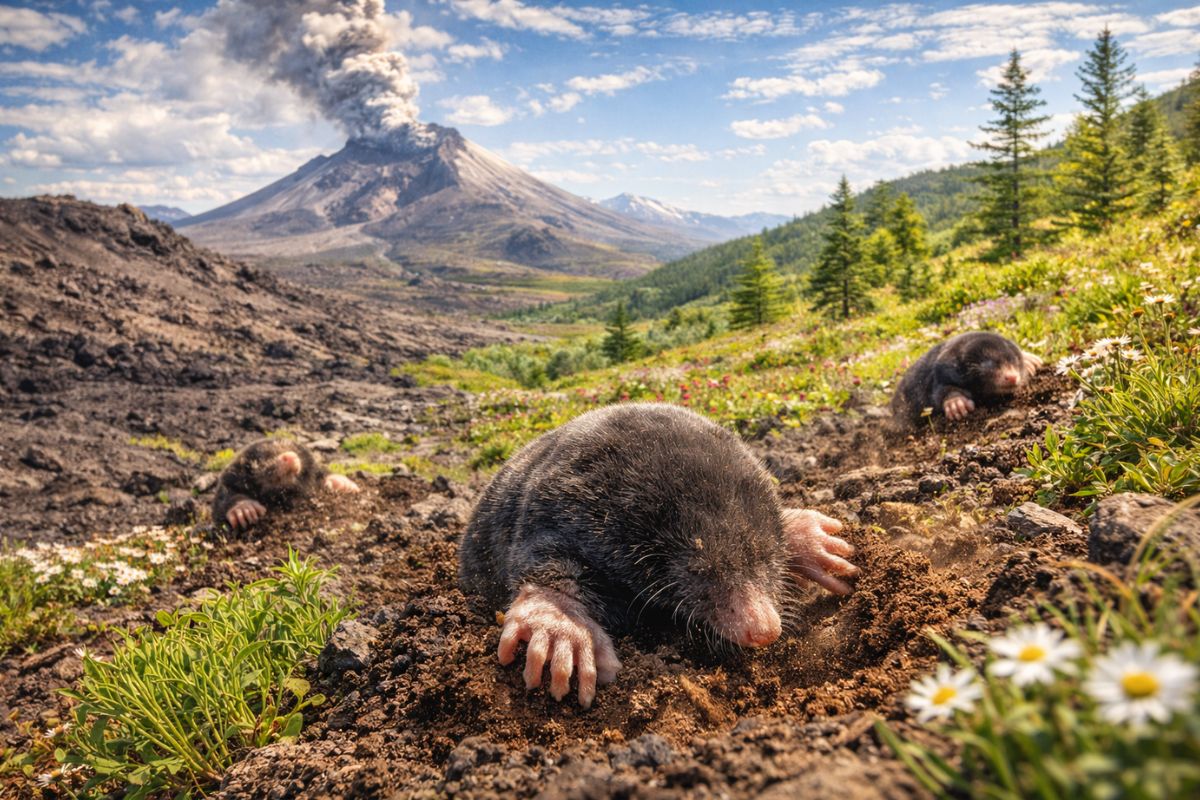


On Mount St. Helens, Scientists Released Moles in a Devastated Volcano and Showed How Ecological Engineers and Natural Engineering Can Accelerate Ecosystem Recovery.
When the eruption of Mount St. Helens devastated more than 600 square kilometers in 1980, many experts believed that area would take hundreds of years to recover. Nevertheless, a group of researchers decided to test a radical idea: release moles in a devastated volcano for just 24 hours, let them do what they do best, and measure the impact on the soil, water, and the return of life. What seemed like an almost invisible detail turned out to be one of the most instructive cases of natural engineering ever documented.
The lateral blast, the summit collapse, and the ash cloud transformed the northern slopes of Mount St. Helens into a true biological desert. There were no remaining plants, insects, fungi, or visible microorganisms. The soil was so burned and dried that reports from 1980 and 1981 spoke of centuries of waiting for the return of a functional ecosystem. Forty years later, however, that same volcanic slope shows around 70 to 75 percent recovery compared to the pre-1980 condition, and part of this acceleration directly relates to the quiet work of the moles.
When the Volcano Wiped Out All Life

On the morning of May 18, 1980, Mount St. Helens, in Washington state, erupted in one of the most destructive volcanic events in modern U.S. history.
-
The gigantic steel shell built to contain Chernobyl for a century has been pierced by a drone, exposing a critical system and creating a hole that could cost over 500 million euros to repair.

-
Brazilian Navy reaches a new level by taking over an airport with a 1,600-meter runway used by 1,800 military personnel and autonomous attack drone testing.

-
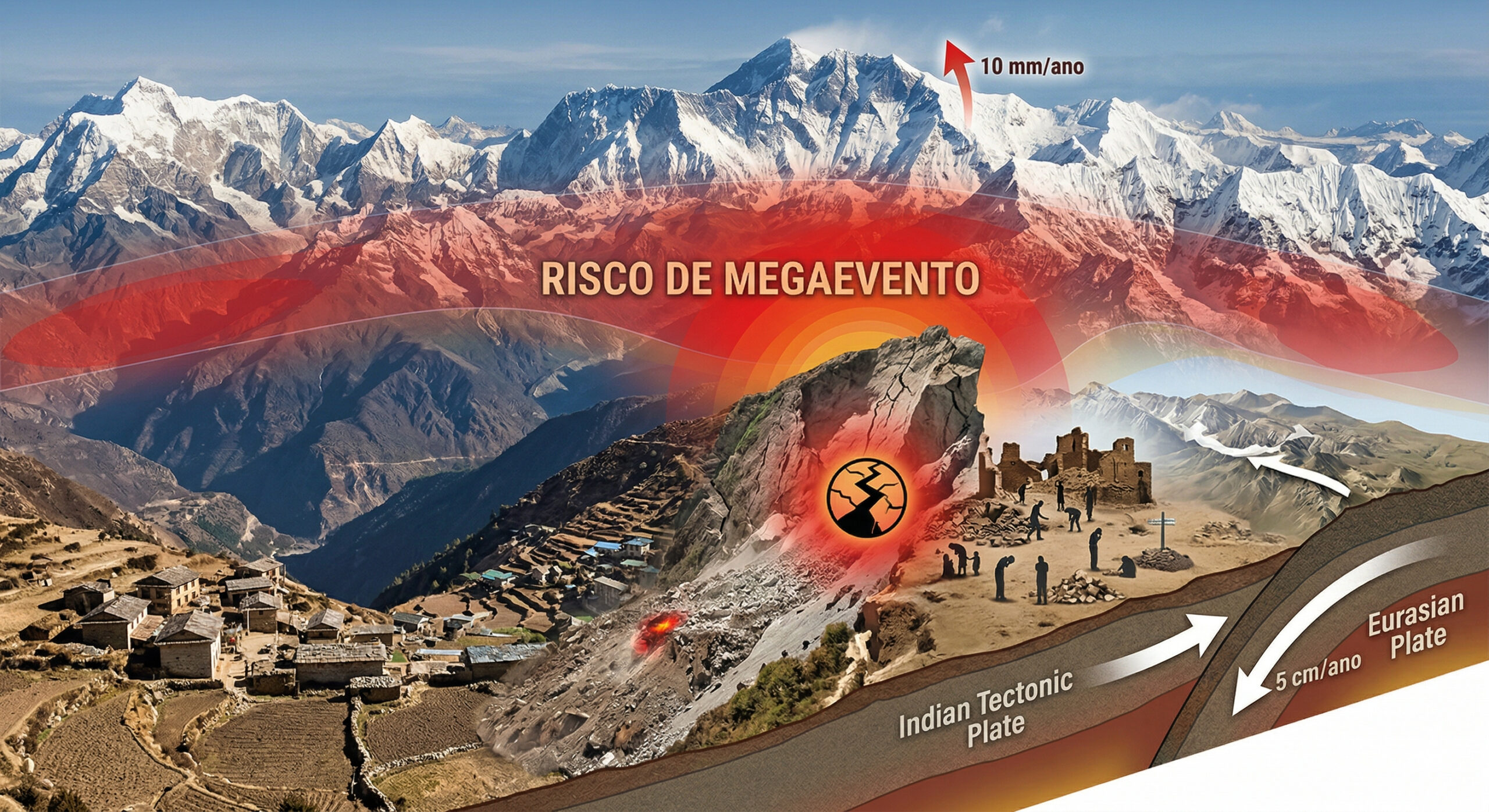
The Himalayas continue to grow to this day, with tectonic plates advancing 5 cm per year, mountains rising up to 10 mm annually, and the 2015 earthquake that killed 9,000 people may have increased the risk of an even larger seismic mega-event.
-
At an altitude of 400 km by astronauts from the International Space Station, Paris transforms at night into a golden mesh so precise that it reveals the outline of the Seine River, avenues, and entire neighborhoods like a luminous map drawn over the Earth.

A magnitude 5.1 earthquake destabilized the north flank, releasing billions of tons of rock and soil in a landslide that reached speeds of nearly 1,200 km/h.
Shortly thereafter, the exposed magma chamber generated a lateral blast with superheated gases, fragmented rocks, and ash that exceeded 1,000 km/h.
The devastation was total. More than 600 square kilometers of forest were wiped out, millions of trees fell in the same direction, and the mountain’s summit was replaced by a huge horseshoe-shaped crater.
Ash reached the stratosphere, darkened the sky in multiple states, crossed the border into Canada, and, along with mud and debris flows, destroyed homes, bridges, and highways.
The human toll was tragic: 57 dead, hundreds of kilometers of compromised roads, and economic losses above 1 billion dollars.
For ecologists, however, the most alarming impact was in what was not seen. The northern slopes, especially the so-called pumice plain, were described as a “biological desert.” Extreme heat incinerated all vegetation, wiped out networks of fungi, soil bacteria, and even insects.
Reports from the U.S. Forest Service and universities such as Washington and Oregon indicated that this would be one of the rare places on the planet where everything, from the soil to the food chain, had been wiped out all at once.
Six Years Later, An Unexpected Rebirth
Six years later, when research teams returned to a small area of the north slope, something did not match the pessimistic forecasts.
In the very heart of the zone directly impacted by the blast and the scorching ash, more than 40,000 trees and young plants had sprouted, forming a much denser green mosaic than expected.
This vegetation did not appear randomly. Grasses, shrubs, and seedlings connected in continuous green islands, creating the basic structure of a developing ecosystem.
Just a few meters ahead, in areas with the same thickness of ash, the same rainfall, and the same time elapsed, the scene remained gray, flat, and practically lifeless.
The landscape seemed divided between awakened plots and still dormant ones, prompting scientists to revise their recovery estimates.
One detail stood out in the long-term records: in areas where vegetation advanced faster, there were constant signs of the presence of small digging rodents.
They were the same creatures often treated as pests in farms and pastures, now reclassified as possible catalysts for the rebirth of that devastated volcano.
Why Choose Moles in a Devastated Volcano

The “moles” in the experiment were, in fact, North American digging rodents (gophers) weighing between 0.1 and 0.3 kilograms.
They spend almost their entire lives underground, with small eyes, subtle hearing, and short yet extremely powerful front paws. They were not born to see, but to dig, opening tunnels that can extend for dozens of meters.
A single adult animal can push between 200 and 230 kilograms of soil per month, turning over deep layers, cutting roots, and reorganizing the physical structure of the terrain. In crops and pastures, this is a problem.
They gnaw on the roots of young plants, causing the death of crops and can cause soil collapses that break legs of livestock, overturn tractors, and damage small foundations.
Not surprisingly, in many states in the U.S., these animals are classified as pests, and control through trapping or poisoning is legal and frequent.
But researchers at Mount St. Helens asked the reverse question. If an entire ecosystem needs to be “tilled” to come back to life, who better to do that work than moles in a devastated volcano, animals used to constantly turning over the soil? The logic was not to plant trees or forcibly rebuild the forest. The goal was to restore, above all, the function of the soil.
There was another essential point. These rodents were not exotic species brought in from outside. They were already survivors of the disaster.
The deep burrows served as natural shelters during the eruption, protecting individuals who neither died nor migrated and who carried with them something even more valuable than their own bodies: an entire micro-ecosystem.
On their fur and claws, they carried spores of fungi and soil bacteria. In their digestive systems, fragments of plants and microbial communities.
And mainly, mycorrhizal fungi, which form a symbiotic network with roots and help plants absorb water and minerals in soils that are extremely poor in nutrients.
In a volcanic ash plain, these fungi are literally the difference between death and the possibility of life.
The 24-Hour Experiment That Awoke the Soil
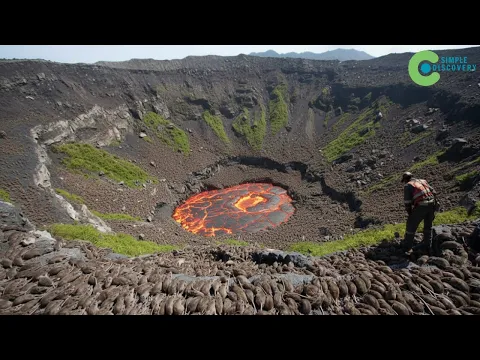

In the formal experiment, teams from the U.S. Forest Service and partner universities captured dozens to over a hundred digging rodents on the south slope of Mount St. Helens, a region less damaged by the eruption.
They then released these animals in fenced experimental plots on the north slope, precisely where the soil was made up only of dry ash and hardened pumice.
Each plot received a few individuals, but the total number was sufficient to generate a measurable effect. Within the first hours, the soil began to be disturbed, with layers of ash and pumice mixed, opening the first voids for air circulation and moisture retention.
The scientists determined that 24 hours would be enough to observe initial differences. When they returned to collect the animals and collect samples, almost nothing seemed different to the naked eye. But the data told a different story.
The soil in the plots with moles in a devastated volcano was much more disturbed than in the adjacent control plots.
After rains, moisture sensors recorded that this soil retained water much more effectively, while areas without rodents remained dry and loose, allowing water to drain almost immediately.
Furthermore, in just one day, the animals had already enriched the soil with their droppings. Because they feed on vegetation, their feces are rich in nitrogen, phosphorus, and potassium, essential elements for plant life.
Nitrogen increases green biomass, phosphorus supports roots and flowering, and potassium helps regulate water balance.
In just a few hours, small islands of nutrients emerged over the volcanic powder, creating points where microorganisms and symbiotic fungi could settle and pave the way for the first plants.
How 40,000 Trees Sprouted Where There Was Only Ash
In the first year after the intervention, the microbial density of the soil rose enough to allow roots to penetrate the ash layer.
Pioneer species, such as grasses, weeds, and lupines, began to appear preferentially in areas where the soil had been “awakened” by the animals’ tunnels and droppings.
The lupine, in particular, played a key role. This plant is capable of fixing nitrogen from the air, enriching nutrient-poor soils.
Not coincidentally, the most active patches of lupine coincided with areas already disturbed by moles in a devastated volcano, transforming volcanic ash into a substrate capable of sustaining other forms of life.
Over the next six years, the green spots expanded, connected, and formed an increasingly stable vegetation structure. The plants brought back the insects. The insects attracted birds. Small mammals returned.
The food chain, which had been completely destroyed, began to reconnect from the bottom up. Over time, even larger animals, such as elk, returned to the area, trampling the soil, grazing, dispersing seeds, and further enriching the environment with their waste.
Studies published up to 2024 show that the differences between plots with rodent intervention and control plots remain clear even after more than 40 years.
The recovery of the ecosystem around Mount St. Helens is estimated to be approximately 70 to 75 percent of the pre-1980 condition, although it has not yet returned to the original state of primeval forest. A single day of mole activity left a mark that has lasted decades.
Other Natural Engineers: Beavers and Volcanic Islands
The case of moles in a devastated volcano is just one example of how animals can accelerate the recovery of destroyed landscapes. In other disasters, different species take on the role of “ecological engineers.”
In Colorado, extreme wildfires in 2020 turned entire mountain ranges into charred strips, with thick, murky streams where the water seemed to have “died,” devoid of fish or insects. Aerial views, however, showed almost intact green patches in the middle of the burned area.
When scientists reached these points, they found a clear pattern: all islands of resilient vegetation were within or adjacent to beaver territories.
There, the dams retained water, kept the soil moist, and the vegetation alive. Basin areas with beavers exhibited plant survival rates two to three times higher than areas without dams, and, after the fire, became starting points for recovery, with grasses and willows quickly returning while the surrounding area remained dry and barren.
So much so that humans began to imitate beaver dams to restore water levels, and the animals themselves returned, further accelerating the process.
On the volcanic island of Surtsey, off the coast of Iceland, the story is different. There, the rule was precisely not to intervene. Formed between 1963 and 1967, the island emerged without soil, freshwater, microorganisms, or any vegetation.
With strict protection against human actions, Surtsey became a natural laboratory where mosses, lichens, and fungi were the first colonizers, followed by seabirds and seals, which brought seeds and nutrients.
Decades later, there are still completely bare patches alongside stable green spots, showing that nature recovers at its own pace, slowly, unevenly, and durably, even without direct help from animal engineers.
What Moles in a Devastated Volcano Teach About Restoring Ecosystems
Mount St. Helens, Colorado forests, Surtsey Island. In all these scenarios, the message repeats itself. Nature is not powerless and does not start from scratch; what engineering animals do is anticipate processes that would happen much more slowly.
Moles and beavers do not create life from nothing but act as catalysts that awaken the soil, retain water, bring nutrients, and open pathways for plants and microorganisms to rebuild the foundations of the food chain.
At the same time, studies make it clear that nature also knows how to recover without human intervention. Even in areas without rodents at Mount St. Helens, life returned, just 10 to 30 years later. In Surtsey, complete biological communities emerged without planting or introduction of species.
This raises an important question for those considering environmental restoration today: when is it worth intervening and accelerating the process, and when is it better to take a step back and let ecological dynamics do the work, slower but with great stability.
After learning the story of the moles in a devastated volcano, do you think that in the face of an environmental disaster, we should prioritize active interventions with “natural engineers” or more often adopt the strategy of waiting and observing the recovery pace of nature itself?







Se tudo ficou devastada, o que elas comeram naqueles anos após o desastre?
Deveríamos priorizar intervenções ativas com “engenheiros naturais”.
A natureza é muito resiliente e os animais são os verdadeiros arquitetos da vida