





 Portuguese
  English
  Spanish
  4 min of reading
  0 comments


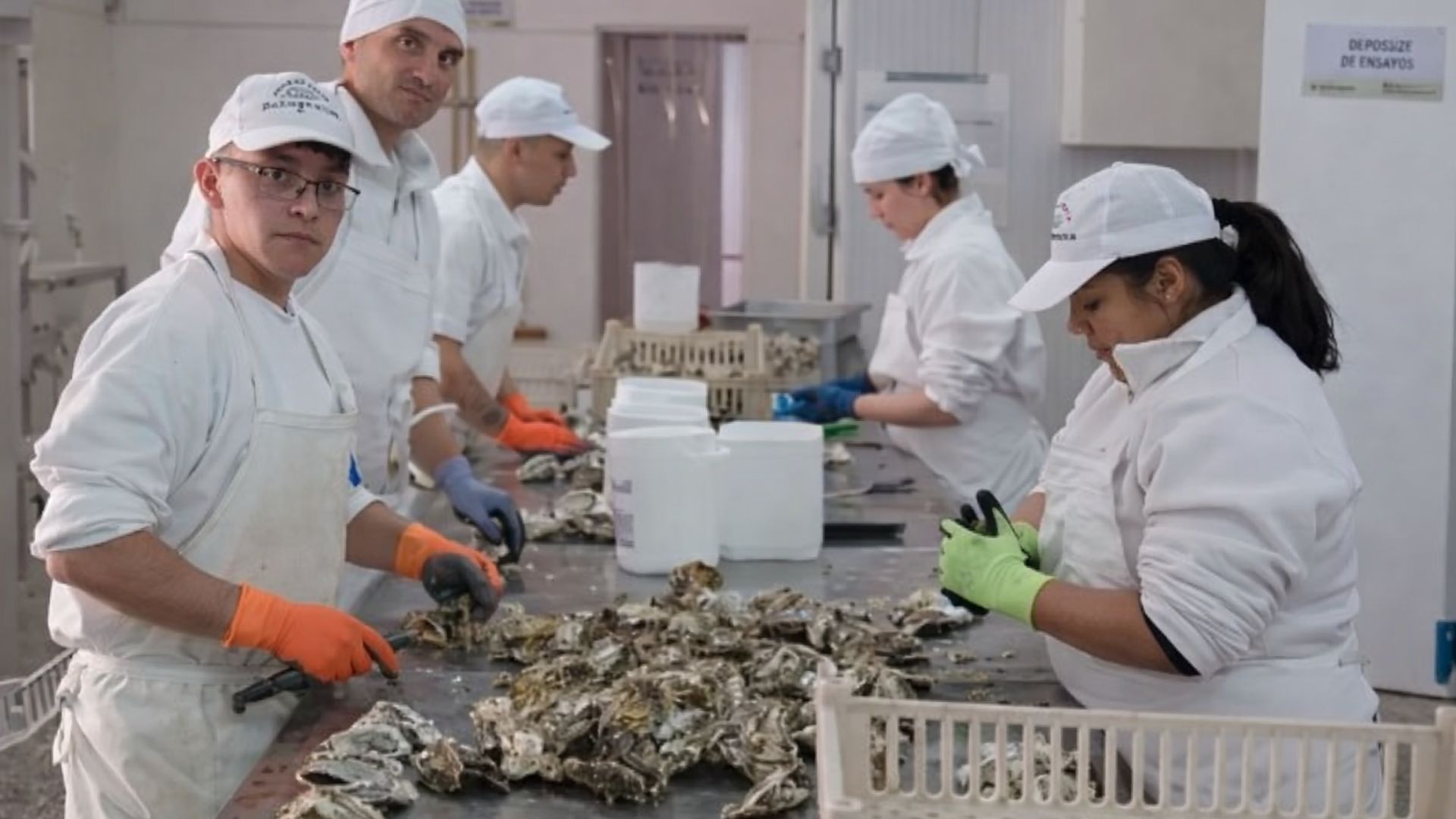
Scientists From CONICET and the National University of South Advance in Creating the First Argentinian Oyster Sauce Made With Invasive Pacific Oyster.
Project is 90% complete, taking place on a pilot scale in Bahía Blanca and using raw material from an area certified by SENASA, focusing on sanitary safety and traceability.
Researchers from the National Scientific and Technical Research Council of Argentina (CONICET) and the National University of South (UNS) have advanced in the development of the first oyster sauce produced in the country, using Pacific oyster, an invasive species that has spread along the southern coast of Buenos Aires province.
The project is conducted in partnership with the company Cultivo Ostras SAS and has reached its final stage, with about 90% progress, according to those responsible.
-
The gigantic steel shell built to contain Chernobyl for a century has been pierced by a drone, exposing a critical system and creating a hole that could cost over 500 million euros to repair.

-
Brazilian Navy reaches a new level by taking over an airport with a 1,600-meter runway used by 1,800 military personnel and autonomous attack drone testing.

-
The Himalayas continue to grow to this day, with tectonic plates advancing 5 cm per year, mountains rising up to 10 mm annually, and the 2015 earthquake that killed 9,000 people may have increased the risk of an even larger seismic mega-event.

-
At an altitude of 400 km by astronauts from the International Space Station, Paris transforms at night into a golden mesh so precise that it reveals the outline of the Seine River, avenues, and entire neighborhoods like a luminous map drawn over the Earth.


The initiative aims to replace imports of a condiment established in the international market, while creating a utilization route for an organism associated with environmental and social impacts in coastal areas.
The production takes place on a pilot scale in Bahía Blanca and relies on raw material collected from a zone certified by the NATIONAL SERVICE OF SANITARY AND AGRO-FOOD QUALITY (SENASA), focusing on sanitary safety and traceability.
Pacific Oyster and Effects on the Coast of Buenos Aires


The Pacific oyster, identified in technical publications as Magallana gigas, is described as an exotic species of Asian origin that established itself on the Bonaerense coast since 1982, with initial records linked to the region of Bahía San Blas, in the district of Patagones.
Without natural predators in the area and favored by local conditions, the species expanded and began to alter intertidal environments and compete with native organisms.
In some stretches of the coast, the proliferation also affects public use of the beaches.
Media outlets and institutional statements associate the increase in shells on the sand with risks of cuts for bathers and discomfort in tourist destinations in southern Buenos Aires, such as Pehuen Có and Monte Hermoso, as well as mentioning pressure on relevant ecosystems, such as the estuary of Bahía Blanca.
In this context, the research group began to treat the abundance of the mollusk as a resource that could be directed towards a formal supply chain, without losing sight of sanitary and regulatory requirements.
The proposal relies on a management logic: removing biomass from the environment and, instead of discarding it, transforming it into a product with added value.
How Science Transforms the Invasive Species Into Product
The condiment being developed is oyster sauce, traditional in Asian cuisines and generally obtained through processes that concentrate extracts from the mollusk with salt and stages of cooking and technological adjustment.

In Argentina, the proposal is to create a national version with local raw materials, on a pilot industrial scale, using the invasive oyster.
The leadership of the work brings together different areas and institutions. Information released by CONICET points out the participation of:
The scientific direction is attributed to researcher Sandra Botté, from CONICET, and specialist Eder Dos Santos, also linked to CONICET, in work that combines bioprocesses, engineering, and biological analyses.
Public funding appears in local reports associated with FITBA 2023, a support program for technology-based projects in Buenos Aires province.
SENASA, Traceability, and Sanitary Safety in Production
A central point of the project is the origin of the oysters used in the processing.
According to those responsible, collection occurs exclusively in an area classified and certified by SENASA as suitable for human consumption, in the so-called Bivalve Mollusk Production Zone of Southwestern Buenos Aires.
The mentioned range extends from Los Pocitos to San Blas, in the district of Patagones.
This delimitation allows associating the final product with sanitary controls and a traceability system, a step considered decisive for any advancement towards industrial licensing and marketing on a larger scale.
At the same time, the extraction in larger volumes is treated as a possible local tool for containing the species, reducing the available biomass at critical points.
Still, the materials disclosed on the subject avoid presenting industrialization as a unique solution to the environmental problem, focusing instead on the proposal for responsible use and control.







-

-

-

-

-

-

347 pessoas reagiram a isso.