





 Portuguese
  English
  Spanish
  3 min of reading
  0 comments


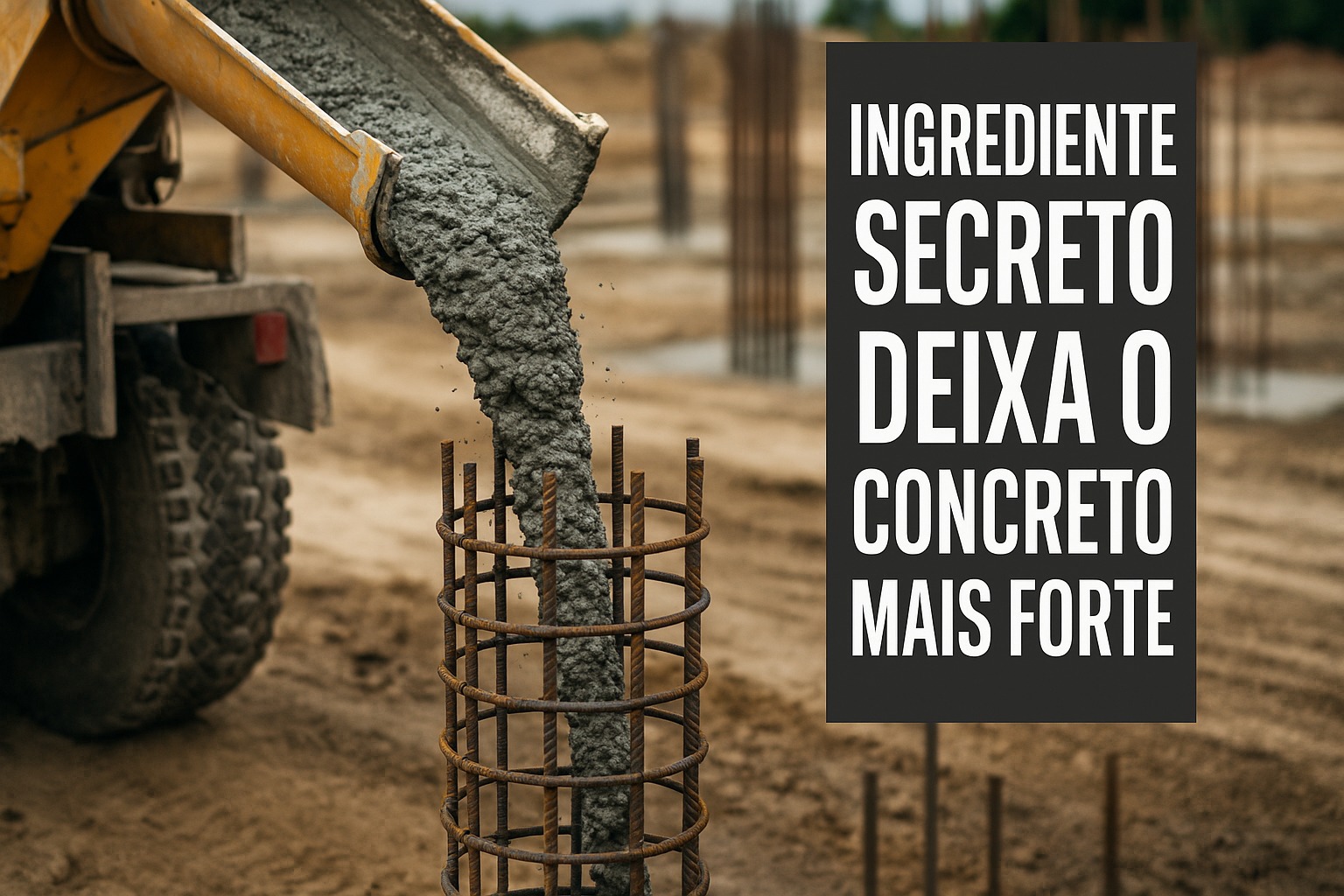
University of Saskatchewan Study Evaluates How Partial Replacement of Cement with Biochar Can Strengthen Concrete, Reduce Environmental Impacts, Reuse Discarded Biomass, and Transform Traditional Practices in Canadian Construction Over the Years
In Canada, the feeling that the year is divided between winter and construction comes up in many conversations. The routine involves sidewalk repairs, road work, and the construction of houses and apartments. Almost everything depends on cement, as it is the base of the concrete used in nearly every modern structure.
This intense use of cement has significant environmental consequences. The material accounts for about eight to ten percent of global greenhouse gas emissions.
Therefore, researchers at the College of Engineering at the University of Saskatchewan are studying the possibility of replacing part of the cement with biochar. The idea is to create a more sustainable solution.
-
China creates hypersonic engine that can make planes and missiles fly more than 6 times the speed of sound with less weight, more range, and without system change.

-
Mysterious object on Mars divides NASA and Harvard after Curiosity image reignites suspicions about what was really found on the planet.

-
Giant structures 14 meters beneath Egypt are revealed by satellites and expose a millennia-old secret buried in Buto.

-
Children have been making clay pieces for 15,000 years in Southwest Asia, and fingerprints preserved on 142 ornaments helped archaeologists prove this.

The Potential of Biochar as a Partial Substitute
Biochar is a lightweight, carbon-rich powder. It is produced when plant residues are burned in an environment with low oxygen levels.
The process involves biomass that would typically not be suitable for food. Ravi Patel, a Ph.D. student at the university, explains that the team uses flax or wheat straw because these materials often go forgotten in the fields.
The proposal is simple: swap part of the cement for biochar and observe the performance of the resulting concrete.
Additionally, this swap helps to retain the carbon that was already stored in the plant material. This can reduce the environmental impact of the construction sector.
The team tested different amounts of biochar in the mix. First, they assessed the samples’ resistance to stresses and wear common in real construction sites.
Then, the researchers took the material for analysis at the Canadian Light Source, a national research center at the university.
The Analysis of Microstructure and the First Results
In the advanced laboratory, the researchers investigated the microstructure of concrete with biochar.
The goal was to understand how the material behaves internally because this directly influences durability.
The results were striking. The concrete with biochar showed greater resistance and lower porosity.
Therefore, the material can better withstand adverse conditions that occur over the years.
This finding encourages further testing and confirms that reducing cement use does not compromise performance.
One interesting point is that the team managed to identify internal patterns that explain this improvement.
Furthermore, biochar appears to integrate well with the concrete matrix, which is essential to ensure stability and safety.
Assessment of Concrete Performance Over the Years
Now, the group is preparing to investigate the behavior of this concrete in the long term. Patel notes that the current study analyzed samples for up to 56 days.
However, real structures remain active for decades. It is necessary to observe how biochar behaves after one or two years because this analysis will determine if the idea can be used on a large scale.
This stage will be crucial to understand how biochar helps to strengthen concrete over time.
New Cement? Environmental Benefits and Impact on Construction
The project could change practices in the construction industry. The production of concrete could become more environmentally friendly as it reuses plant waste that would otherwise go to landfills.
Additionally, the greater durability could reduce future maintenance costs.
For Patel, this contribution holds special value. He states that the research aims to give something positive back to society and the environment.
This motivation reinforces the importance of the study and shows how innovation can help combat climate change.
With information from Scitechdaily.






Seja o primeiro a reagir!