





 Portuguese
  English
  Spanish
 5 min of reading
  0 comments


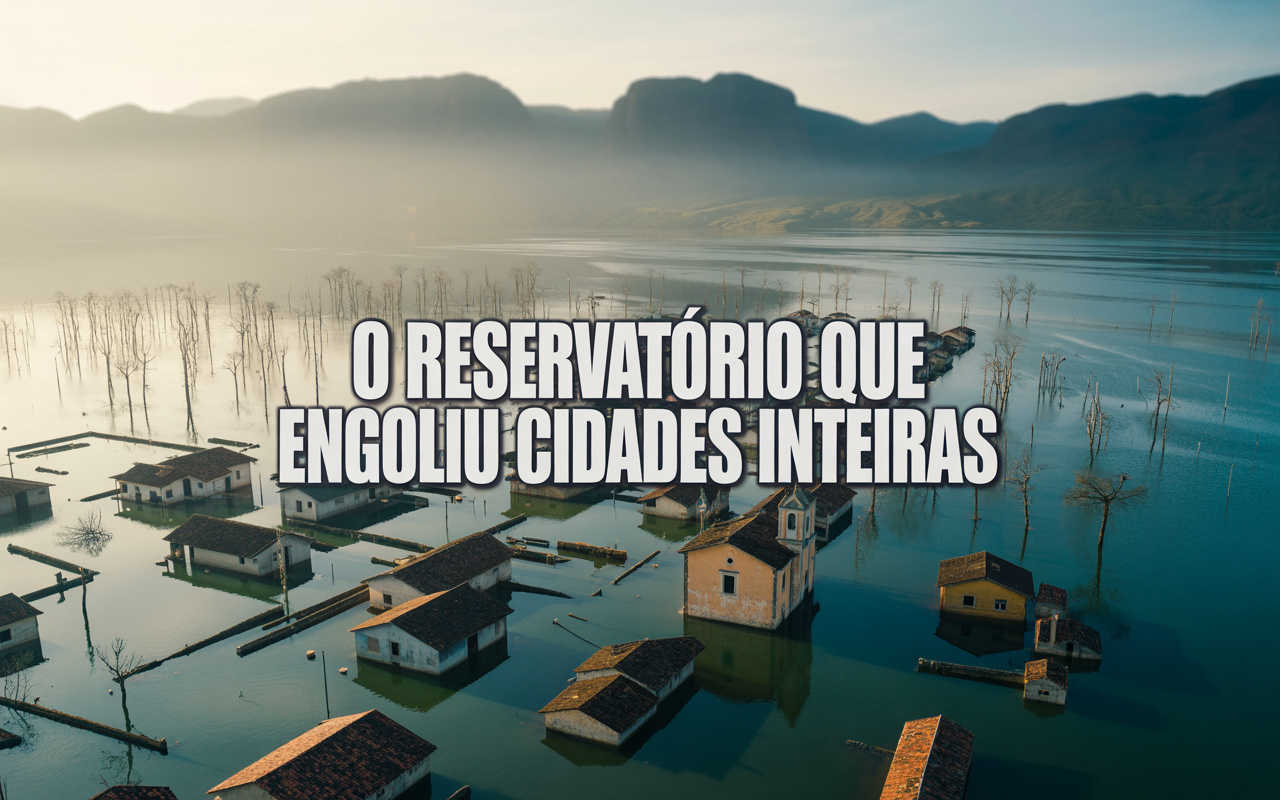
Serra da Mesa Reservoir Flooded Cities, Displaced Thousands of People and Created the Largest Artificial Lake in Brazil by Volume, Forever Changing the Map of the Goiás Interior.
When the water began to rise in the Tocantins River Valley at the end of the 1990s, residents of rural villages, isolated hamlets, and old farms witnessed one of the most profound geographical transformation processes ever recorded in the Brazilian Midwest. The filling of the Serra da Mesa Hydroelectric Plant reservoir not only generated energy for a crucial part of the country. It also created the largest artificial lake in Brazil by volume, with an impressive 54.4 billion cubic meters, reconfiguring the territory, submerging entire communities, and altering landscapes that had existed for centuries.
The vastness of the reservoir is so great that today its waters occupy areas of various municipalities in Goiás, forming a wide and irregular body of water that extends over approximately 1,784 km². The scale is so monumental that the lake has dimensions comparable to some Brazilian capitals and rivals, in extent, small island states. But more than numbers, Serra da Mesa is a landmark of how a project can redesign human, economic, and environmental life in remote regions.
The Technical Grandeur of One of the Largest Hydroelectric Projects in the Country
Built by the former Furnas Centrais Elétricas, the Serra da Mesa Hydroelectric Plant required a monumental dam on the Tocantins, measuring about 1,500 meters long and over 150 meters high. When completed, the dam formed the largest Brazilian reservoir by usable volume, surpassing major projects like Itaipu and Sobradinho, which, despite having larger water mirror extensions, store less water.
-
These living root bridges and ladders are over 700 years old and help indigenous people survive in one of the rainiest regions in the world.

-
From sertanejo star to international investor: Ana Castela invests millions in a mansion in the USA, creates a themed accommodation in Orlando, and shows that the “boiadeira” also wants to grow away from the stage.

-
The 10 most stunning motorhomes in the world: a $3 million trailer with a rooftop nightclub and garage for a Ferrari, “palaces on wheels” with Italian marble, private cinema, and five-star hotel luxury for billionaires.

-
Trump wanted to spend $400 million on the White House, but the courts prohibited the million-dollar construction.


The size of the reservoir was specifically planned to allow for more stable operation during periods of extreme drought, a hallmark characteristic of the Midwest and northern Goiás. The gigantic volume acts as a sort of buffer, ensuring regularity in turbine flows even during years of severe drought. This strategic storage transformed Serra da Mesa into a key component of the national electric system.
The filling process, which began at the end of 1996, took months to reach operational level. During this period, entire cities were relocated, and homes needed to be rebuilt away from the advancing waters. As the reservoir grew, mountainous areas, valleys, plains, and ancient riverbeds disappeared beneath a bluish surface that today covers the horizon.
Submerged Cities and Communities: The Human Impact and Inevitable Displacement
The formation of the lake forced the displacement of thousands of people. Some left homes inherited from previous generations, established rural properties, small businesses, and areas where they had built their entire lives. Villages like São José da Serra, rural areas near the municipality of Niquelândia, and several riverside communities were partially or totally submerged.
For many families, the change was marked by mixed feelings: on one hand, the emotional impact of leaving their territory; on the other, the promise of new structural conditions, planned resettlements, and economic opportunities that arose later, especially with the arrival of sport fishing tourism.
Still, the process of geographical transformation left deep marks. When the reservoir reached its full level, vast forested areas disappeared, historic trails ceased to exist, and old farms became memories preserved only in accounts and municipal documents.
The Formation of a New Ecosystem and the Birth of a Giant Lake
With an inundated area equivalent to the size of the entire city of São Paulo, Serra da Mesa gave rise to a set of aquatic microenvironments that directly influenced the regional fauna and flora. The immense water surface increased local humidity, modified rainfall regimes, and attracted migratory bird species.
The fish population also reorganized. The lake became a habitat for native and adapted species, such as tucunaré, piau, corvina, and traíra. This process gave rise to one of the largest sport fishing hubs in Brazil, boosting lodges, boats, and an entire tourism chain. Today, many municipalities that were previously seldom visited have begun to receive fishermen from all over the country.
The new aquatic environment also created unique conditions. The lake has depths exceeding 60 meters at several points, forming submerged cliffs, flooded valleys, and areas with high nutrient content — characteristics that attract researchers, divers, and specialists in lacustrine ecosystems.
The Lake That Transformed the Economy and Redrew the Interior of Goiás
In addition to energy and tourism, Serra da Mesa inaugurated a new cycle of territorial occupation. Areas that were previously dry and subject to constant droughts gained permanent access to water, benefiting activities such as irrigation, fish farming, and leisure. Municipalities like Uruaçu, Niquelândia, and Minaçu began to see the lake as an economic asset, creating new neighborhoods, condominiums, and expansion zones linked to water tourism.
This territorial reconfiguration even altered the geographical perception of the region. For those living nearby, the reservoir became a landmark for spatial orientation. Roads began to be planned taking into account the presence of water, and many routes had to be redone because entire areas disappeared beneath the lake.
At the same time, the project sparked important discussions about sustainable development, environmental compensation, and the challenges of maintaining a giant reservoir in balance with the regional ecosystem. These topics continue to be present in the scientific and political agenda of the region.
An Inland Sea in the Heart of the Cerrado
Today, those who visit the Serra da Mesa reservoir find a scene that few would imagine in the interior of Brazil: an inland sea of deep blue waters that extends as far as the eye can see. Mountain cliffs, islets, hilltops, and rock formations emerge like small peninsulas. It is a new territory, shaped by engineering, geography, and decisions that forever transformed the map of Goiás.
And unlike the dry hinterland that existed before the flooding, the lake brought permanent access to water, new economic opportunities, and a landscape heritage that today defines the identity of the entire surrounding area.
From a project that was born to feed the national electric system, an environment emerged that united engineering, geology, social memory, and nature — a monumental body of water that continues to influence the lives of thousands of people.









-

Uma pessoa reagiu a isso.