





 Portuguese
  English
  Spanish
  4 min of reading
  0 comments


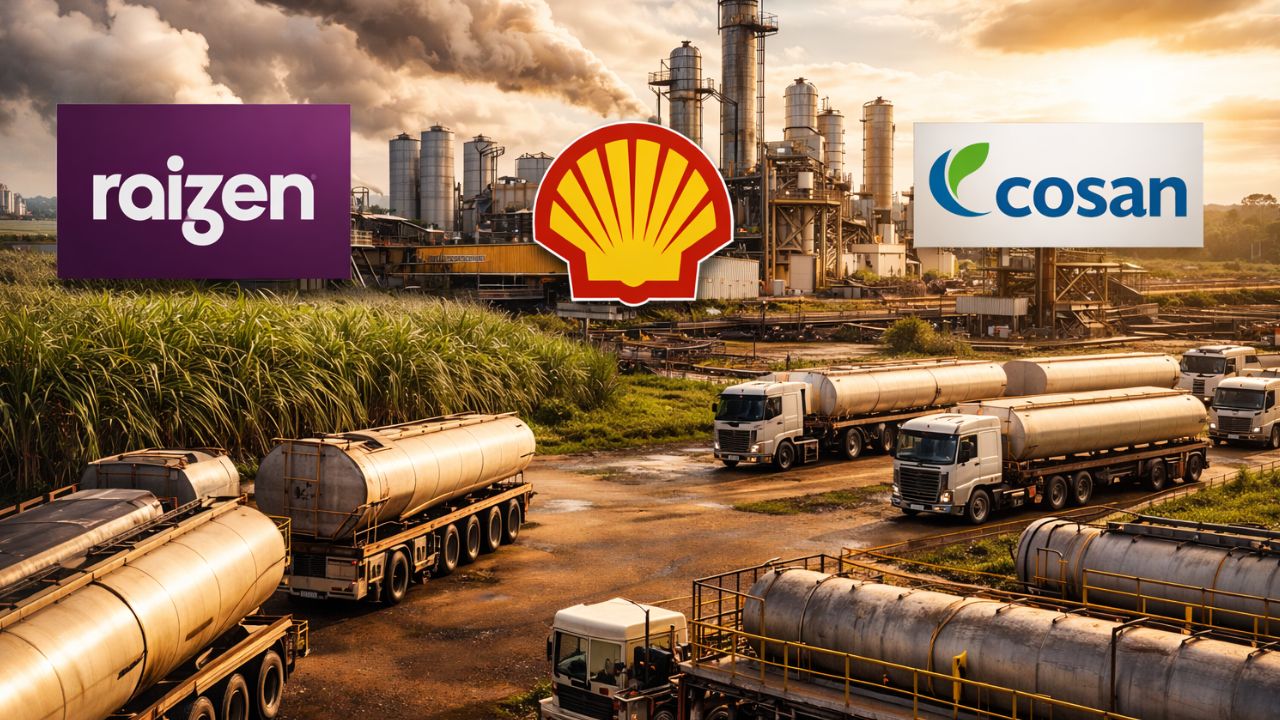
Shell Negotiates To Take Greater Control Of Raízen After Impasse With Cosan. Billion-Dollar Crisis In The Sugar, Ethanol, And Fuel Sector.
The energy giant Shell may assume a more dominant role in Raízen, the Brazilian producer of sugar, ethanol, and fuel distribution, after the collapse of negotiations for joint capitalization with Cosan.
The potential change in control comes after months of talks between the company’s partners, who were seeking a plan to alleviate the company’s high indebtedness. The discussions gained urgency after Raízen warned in February about uncertainties regarding the continuity of its operations.
According to sources close to the process, negotiations between Shell and Cosan were halted this week. As a result, the British oil company began discussing directly with banks and creditors alternative ways to strengthen the financial structure of Raízen, one of the largest global ethanol producers.
-
Petrobras evaluates suspension of sales to distributors and considers canceling the cooking gas auction following guidelines from the Federal Government.
-
Lula reveals a masterstroke by Petrobras to undo a deal made by Bolsonaro, which involves the return of an important refinery that currently produces less than half of what was expected and makes Brazil dependent on international diesel.
-
A study confirms that the natural gas sector will reduce greenhouse gas emissions in Brazil by 0.5% and accelerate the energy transition by 2026.

-
Petrobras implements a severe adjustment and confirms a 55% increase in the price of aviation kerosene with a proposal for installment payments for the companies.


The company faces financial difficulties after successive losses and a significant increase in its debt in recent quarters. In addition, adverse weather conditions and wildfires have affected sugar production and reduced milling volumes.
See more: Bioenergy Gains Strength In The National Congress With Orplana Leading The IPA
See more:
Raízen, Joint Venture Between Shell And Cosan, Faces Financial Pressure
Founded in 2011, Raízen is the result of a joint venture between Shell and Cosan, both of which hold equal stakes of 44% in the company. The model has always been viewed as one of the largest partnerships in the energy and biofuels sector in Brazil.
However, the current scenario has brought significant challenges. The company has accumulated a net debt of approximately R$ 55.3 billion at the end of December, pressured by high investments and below-expected results.
In addition to producing sugar and ethanol, the company has a wide distribution network for fuel, which is considered one of the most valuable areas of the business.
In this context, shareholders and creditors have begun to seek alternatives to prevent worsening the financial crisis.
Shell Promises To Invest Billions In Raízen
Even with the impasse in negotiations, Shell has indicated its willingness to invest R$ 3.5 billion in Raízen. The amount was confirmed by the company’s CEO in Brazil, Cristiano Pinto da Costa.
The executive stated that the company remains committed to strengthening the financial structure of the sugar and biofuels producer.
The initial expectation was that Cosan would match the investment, contributing a similar amount to ensure balanced recapitalization.
However, sources indicate that the Brazilian holding may not be able to match the contribution proposed by Shell.
Cosan May Have Diluted Stake In Raízen
If the investment is made only by Shell, Cosan‘s stake in Raízen could be reduced. This would occur because a new capital injection tends to alter the shareholding proportion among partners.
The degree of this dilution, however, will depend on one important factor: how much of the company’s debt will be converted into shares during negotiations with creditors.
This type of operation is common in financial restructuring processes, as it reduces liabilities and strengthens the company’s capital.
Thus, the future control of the company may change depending on the final structure of the agreement.
Investors Prioritize Raízen’s Fuel Business
During negotiations, Cosan presented an alternative to raise around R$ 6.3 billion with private equity funds linked to BTG Pactual and other investors.
The proposal anticipated that a large portion of this capital would be directed to the fuel distribution segment of Raízen.
This interest is not coincidental. The distribution arm is considered more liquid and predictable in terms of revenue, especially compared to the agricultural production of sugar and ethanol, which depends on weather conditions and the international market.
However, sources claim that Shell did not agree to this structure, contributing to the end of negotiations.
Crisis At Raízen Raises Alarm In The Sugar And Fuel Sector
The situation of Raízen draws attention in the market because the company is one of the largest global producers of ethanol and a major supplier of sugar.
In 2024, the company produced approximately 3.16 billion liters of ethanol, consolidating its strategic position in the renewable energy sector.
Even so, the increase in debt, combined with high costs and extreme weather events, has pressured the company’s results.
In February, the company warned of a “significant uncertainty” about its ability to continue operating, prompting shareholders and creditors to seek solutions.
Future Of Raízen Still Depends On New Negotiations
For now, there are no new meetings scheduled between Shell, Cosan, and the other parties involved in the restructuring of Raízen.
Still, sources state that negotiations may resume if all parties find a viable capitalization model.
In the meantime, Shell continues dialoging with banks and creditors to assess possible pathways to ensure the continuity of the producer of sugar, ethanol, and fuel.
The outcome of these discussions could redefine the company’s control and alter the balance among the main players in the Brazilian energy and sugar-energy sectors.








-

-

2 pessoas reagiram a isso.