





 Portuguese
  English
  Spanish
  11 min of reading
  1 comment


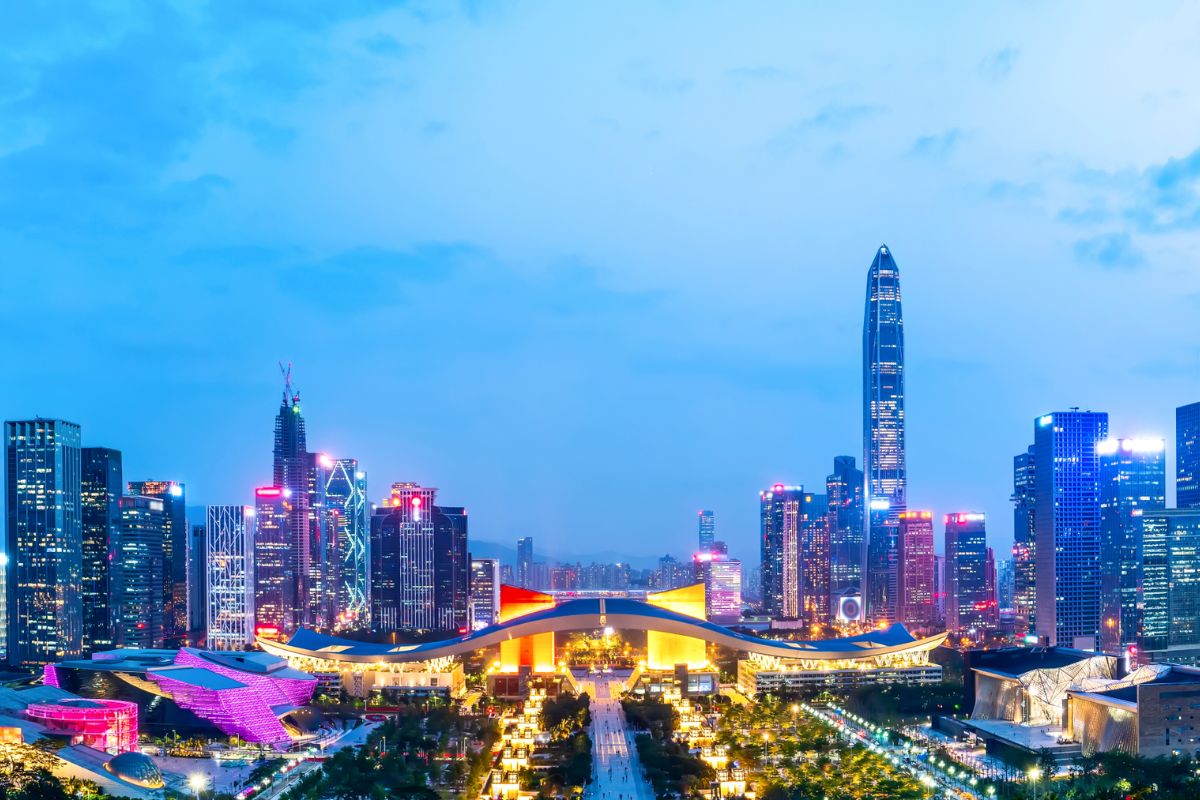


In Shenzhen, Drone Deliveries, Xiaomi and Huawei Electric Cars, Hyper-Organized Subway, Payments with the Palm of Your Hand and Synchronized Lights in Skyscrapers Transform the Former Fishing Village into the Most Radical Showcase of Chinese Modernity and Already Inspires Urban Strategies in Western Countries
Shenzhen appears to many Brazilians as a change in technological reality. In just a few kilometers, the city brings together drones delivering food in tree-lined parks, electric cars from local brands competing for space with silent buses, a subway that seems like a science fiction set, and lights that synchronize dozens of buildings at the same time in the heart of the civic center. For visitors, Shenzhen is the physical proof that the future is already integrated into everyday life.
About forty years ago, the area where Shenzhen is located was described as a fishing village. Transformed into China’s first special economic zone, the city has grown to nearly 17 million inhabitants and was chosen as an urban laboratory for long-term policies. Giants like BYD, Huawei, and Xiaomi were born or consolidated in Shenzhen, helping to create the image of the “Chinese Silicon Valley” that now dominates the perception of those who arrive.
From Fishing Village to Laboratory of the Chinese Strategy

Shenzhen is presented by residents as the result of a state project that aims decades ahead, not short electoral cycles.
-
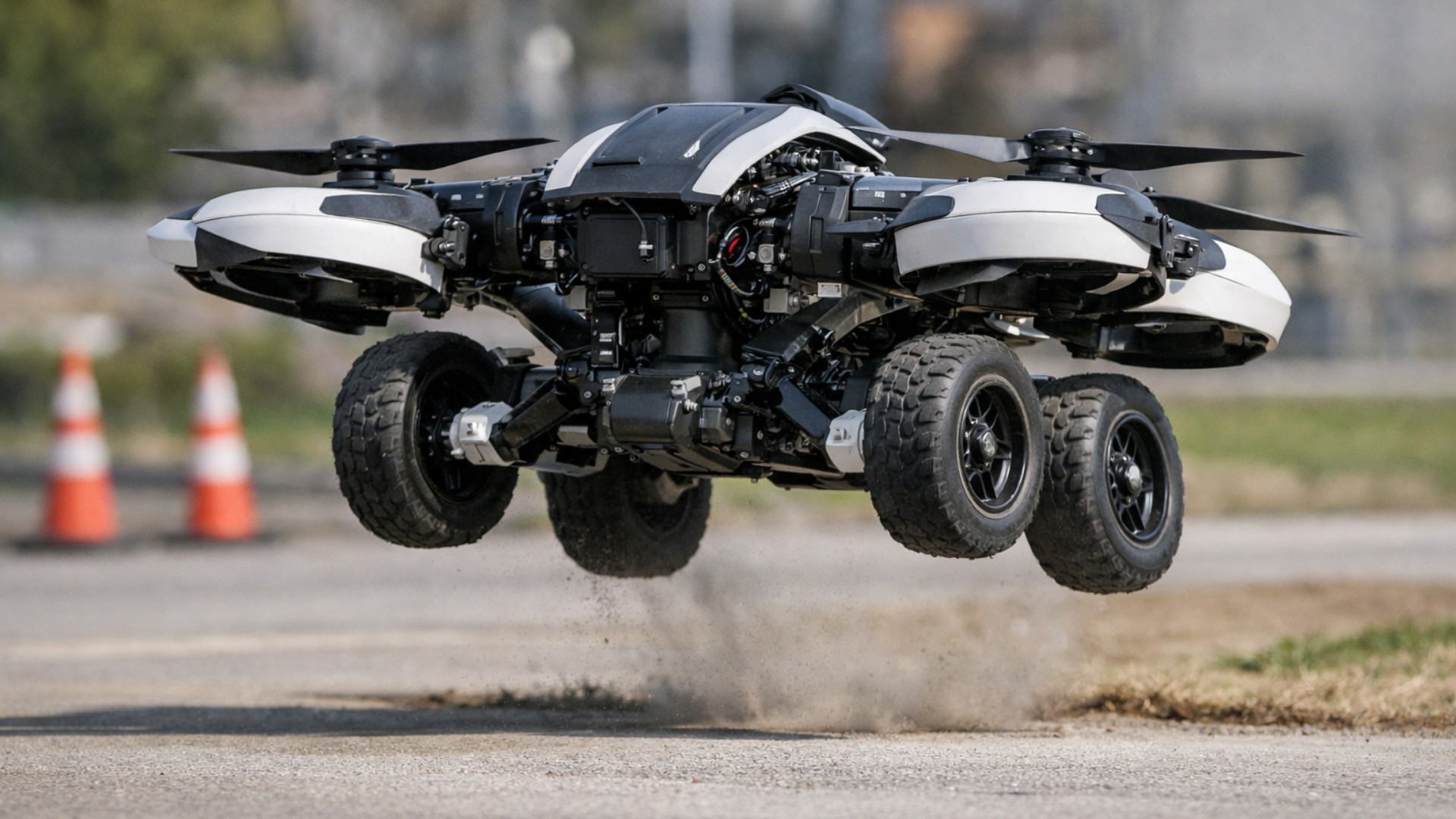
Researchers in the U.S. have created a flying robot that transforms into a land vehicle while still in the air. The technology, based on aerodynamic transition, converts landing into a scene worthy of Transformers and redefines mobility between sky and ground.
-
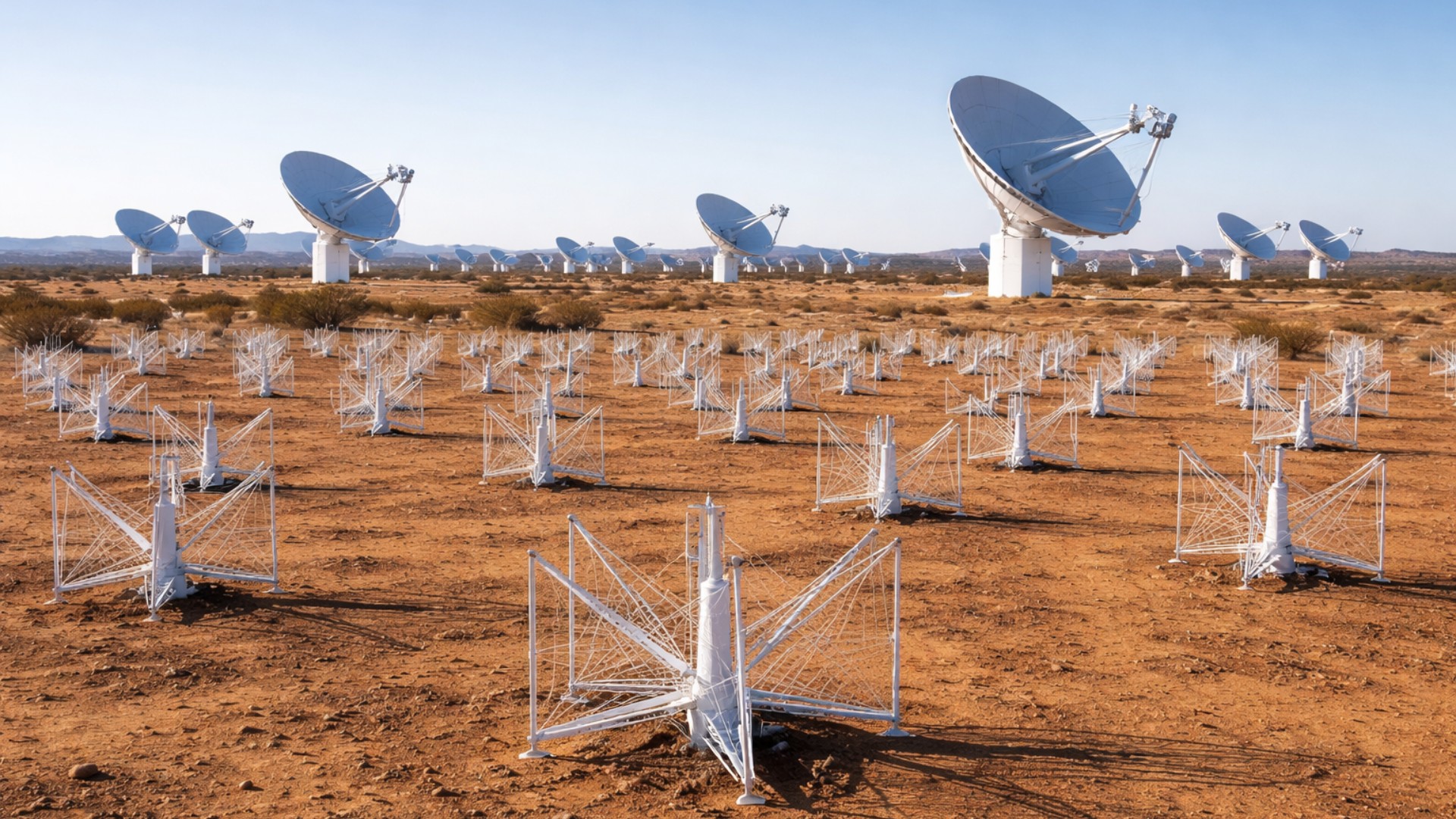
Spread across two continents, with 197 parabolic antennas in South Africa, 131,000 2-meter antennas in Australia, and a range of up to 150 km, the SKA begins to “listen” to the Universe on an unprecedented scale and accelerates the search for black holes, primitive galaxies, and nearly invisible radio signals.
-
Goodbye batteries: a new sensor created by Japanese scientists uses sweat as an energy source and points to a promising path for more sustainable devices, with greater autonomy and less need for frequent recharging.

-
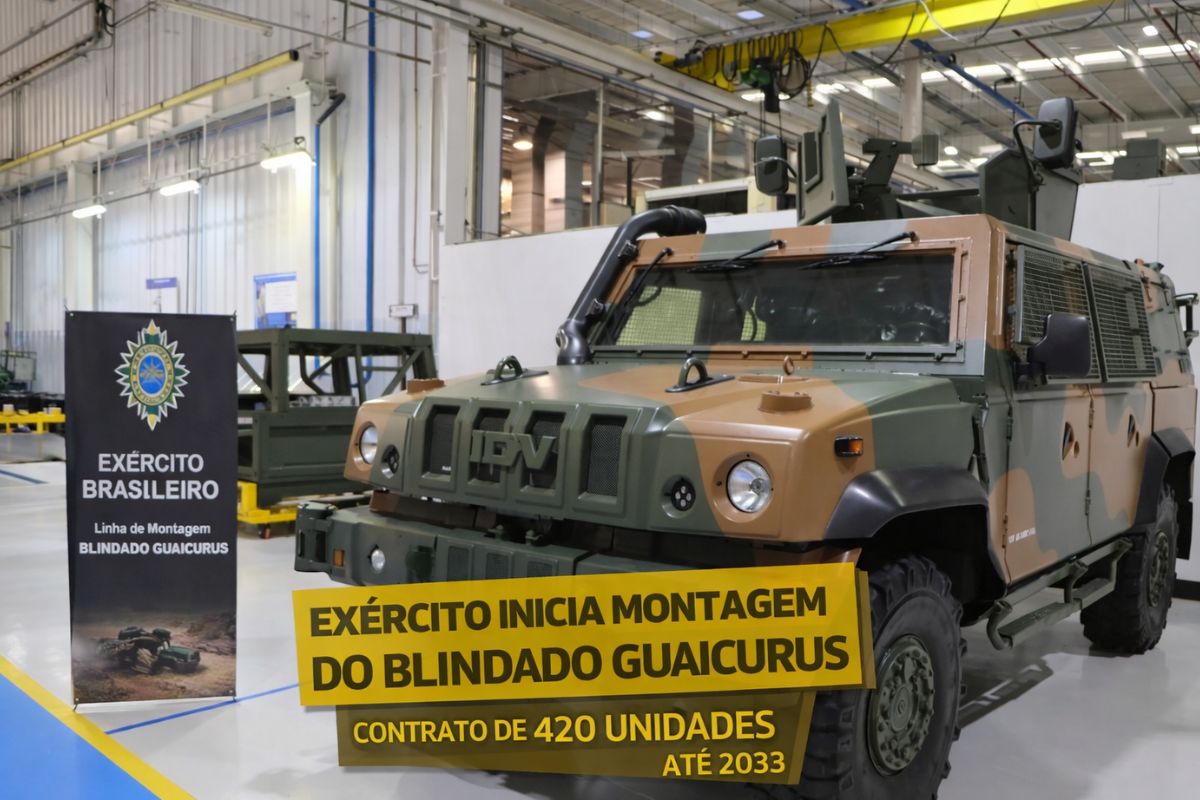
The Brazilian Army inaugurated the assembly line for the Guaicurus armored vehicle with a contract for 420 units by 2033, and the same vehicle has already been tested in combat in Afghanistan and Lebanon by European armies.

Residents report structured plans up to 2049, with intermediate goals for 2029 and 2035, in a concept synthesized in the so-called “Chinese Dream,” directly alluding to the “American Dream” that marked the last century.
In the recent past, products “made in China” were associated with low quality and disposable electronics.
Today, China itself jokes about that past by naming an industrial plan “Made in China,” aimed precisely at climbing the value chain through innovation, proprietary technology, and global brands.
Shenzhen is the stage where this industrial repositioning appears most visibly, in corporate buildings, in the cars on the streets, and in public infrastructure.
Food Deliveries by Drones in Park Surrounded by Skyscrapers

One of the most concrete symbols of the futuristic routine in Shenzhen is food deliveries by drones.
In a park by a bay, identified by residents as Talent Park, a yellow station from the company Meituan serves as a physical pickup point.
There, the user places an order through the app, tracks the drone’s journey in real-time on a map, and a few minutes later sees the device land on a nearby platform.
Visitors’ accounts indicate times of about 20 to 30 minutes between the order and pickup, in line with traditional delivery, but with a different logistics: the drone lands, leaves standardized boxes on an elevated structure, and an automated system directs the correct volume according to the client’s code.
The process includes reusing boxes and waste control, reinforcing the idea of technology associated with sustainability.
The scene is set in the middle of a large grassy park, with a view of glass skyscrapers and a cultural center under construction with architecture resembling a landed spacecraft.
The combination of extensive green areas, water, corporate towers, and drones operating in commercial routines synthesizes the Chinese vision of development that integrates nature and high urban density.
Superapps, Alipay, WeChat, and an Almost Cashless Economy
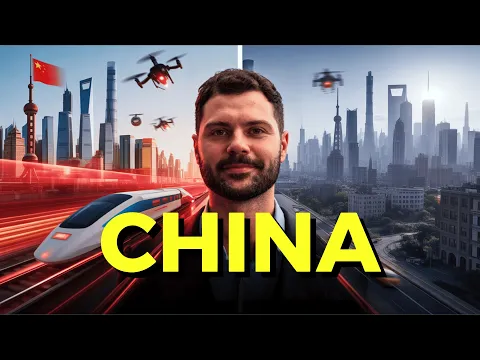

If Shenzhen impresses with its landscape, what stands out more in daily life is its digital structure.
In practice, the city operates on superapps like Alipay and WeChat, which consolidate payments, transportation, reservations, and services.
According to a Brazilian resident, “what takes ten different apps in Brazil can be solved here in one or two.”
On Alipay, the user pays for the bus by presenting a QR code at the turnstile, buys train tickets, reserves flights, exchanges currency, manages bank accounts, and requests rides through an app.
The individual transport service is operated by Didi, a Chinese company that owns 99 in Brazil, fully integrated into the local ecosystem.
WeChat, described as an “expanded WhatsApp,” combines messaging, sending and receiving money, purchasing insurance, buying tickets, and booking attractions like the Forbidden City.
These apps operate not only in Shenzhen but in other major Chinese cities and in centers like Hong Kong and Singapore, reinforcing the idea of a regional standard.
The result is that, in Shenzhen, practically no one uses cash.
From street coffee to the subway, through robot stores and large shopping malls, everything is paid through QR codes or commands within superapps.
Payment with the Palm of Your Hand: Biometry at the Convenience Store Checkout
In one of the scenes that most symbolize Shenzhen’s technological leap, a Brazilian registers the enrollment and use of palm payment at a national convenience store chain.
The system, called iPalm and integrated with WeChat, links the biometry of the palm of the hand to the user’s bank account.
The process is described as simple for those who already have a phone number and account in China: the attendant registers the user in a few moments, and on the next purchase, the customer just places their hand on a reader next to the checkout.
The recognition is immediate, and payment is confirmed without a card, phone, or password.
For some visitors, this scene encapsulates Shenzhen as a showcase of a future where identity, banking, and consumption merge into a single digital layer operated by large platforms.
At the same time, it raises discussions about privacy and the degree of trust needed in relation to the financial system and the state, although this does not explicitly appear in residents’ speech.
Xiaomi and Huawei Electric Cars as Industrial Business Cards
The Chinese industrial transformation appears directly on the streets of Shenzhen. One of the first scenes observed by visitors is the massive presence of electric cars, identified by green plates, alongside a smaller number of combustion vehicles, with blue plates.
The fleet includes taxis, urban buses, and silent delivery vans.
Xiaomi, known in Brazil for cell phones and small appliances, operates a dedicated car dealership in Shenzhen.
There, 100% electric sports models are displayed alongside televisions, portable batteries, and other product offerings from the brand, reinforcing its identity as a “full technology company.”
A visitor compares one of the models to a European sports car visually and raises the question: “would you buy one of these in Brazil?”.
In the same area, a Huawei store showcases high-end electric SUVs and sedans.
In one of the launches, the back seat offers a screen that takes up nearly the entire internal width, similar to a portable cinema.
The estimated price, in direct conversion, is compared by a Brazilian to the price of a Toyota Corolla in Brazil, reinforcing the perception that Chinese brands have begun to compete in the mid and high segments of the market.
The fact that companies that started in consumer electronics are now producing high-end vehicles is seen as a symbol of how Shenzhen has helped China climb the technological ladder in just a few years.
Parks, Cleanliness, and Organization as Visible Urban Policy
Beyond embedded technology, Shenzhen impresses with its physical infrastructure.
In Talent Park, extensive lawns, ponds, walking paths, and communal areas spread among corporate and residential towers.
The landscape contrasts with the stereotype of a dense, gray megacity.
Visitors report that they find it hard to see litter on the ground, and cleaning staff circulate continuously, even cleaning park benches on weekends.
The idea that “public space is a collective responsibility” appears both in the functioning of public power and in everyday behavior, according to reports.
Even in indoor areas of shopping malls and stations, the standard repeats. Bathrooms, corridors, and food courts are described as very clean and organized, reinforcing the perception that investment in maintenance is a central part of the city model.
Robots in Cleaning, the Subway, and Even in Coffee-Making
Automation appears in small details and large gestures.
In subway stations in Shenzhen, the floor is cleaned by autonomous robots that continuously move through the corridors.
In front of robotics stores, cleaning robots move around like a living showcase of applied technology.
Inside a store specialized in robots, visitors find mechanical arms, small autonomous vehicles, humanoid robots, and a coffee shop operated entirely by a machine.
The customer places the order via Alipay, and a robotic arm prepares and serves the drink, with movements designed to be aesthetically pleasing.
The final price of the coffee is compared to low values in reais.
Shenzhen, in this context, functions as a permanent showroom of automation, where children and adults interact with robots in a playful but also natural way, as if they were a routine part of the urban environment.
Security, Cameras, and a Recent Change in the Sense of Risk
Another recurring aspect of reports about Shenzhen is security.
Residents and foreigners claim that there has been a noticeable change in the last 10 years, with a reduction in thefts in major cities like Beijing, attributed to the intense increase in cameras and monitoring systems.
In Shenzhen, almost every relevant public space seems to have visible cameras: entrances and exits of stations, walkways, intersections, and internal areas of shopping malls.
Electric motorcycles are often left with keys in the ignition, and some people leave their phones on the table in cafes to hold a place, a behavior unimaginable in various Brazilian and European cities.
In the subway, entry is made through turnstiles with X-rays, which limits access with weapons and explosives.
The combination of broad surveillance, controlled infrastructure, and intense use of digital means generates a heightened sense of security, even if sustained by a high level of monitoring.
Synchronized Light Show Transforms the Civic Center into a Digital Panel
One of the strongest points of the visual impact of Shenzhen is the light show that takes over the civic center at night.
In the place where residents obtain documents like RG and CPF, the city hall coordinates presentations in which all surrounding buildings light up synchronously, creating gigantic animations in the urban sky.
Visitors describe effects reminiscent of fire, water, and waves of light that “come out” of one building and “enter” another, as if the entire facade were a continuous screen.
At times, letters and numbers appear in monumental scale, composing messages visible from long distances.
A Brazilian who has visited about 60 countries claims to have never seen anything like it in New York, London, Dubai, or large European capitals.
For him, the center of Shenzhen, with all the buildings connected in a single light show, is the ultimate expression of an urban project designed to impress on a city-wide scale.
City in Layers: Futuristic Subway, Subterranean Walkways, and Controlled Climate
Shenzhen also stands out for its layered construction.
Above, wide streets, tall buildings, bike lanes, and pedestrian flows coexist with cars and silent electric scooters.
Below, underground tunnels connect blocks beneath busy avenues, integrating pedestrian walkways, commercial areas, and subway stations.
In one of these passages, there is a climbing wall installed under a road, in a climate-controlled space that also serves as a shopping center and access to the subway.
For visitors, it is strange to see such a sports facility in a mere underground connection between sides of a road.
The hot and humid climate of the region makes air conditioning ubiquitous in stores, passages, and stations.
The infrastructure of Shenzhen is designed to maintain the flow of people at different levels of the city, reducing conflicts between pedestrians, bicycles, scooters, and cars while offering climatic comfort most of the time.
Shenzhen Subway: Organized Lines, Digital Payment, and Scenic Architecture
The Shenzhen subway synthesizes several aspects of the city.
Entry is made via QR codes generated in superapps, without the need for physical tickets or recharges at machines.
The registration is done once, and the system automatically deducts the fare for subsequent rides.
On the platforms, lines are organized by markings on the ground.
Visitors report that the organizational standard resembles Japan, with people waiting behind defined lines, protected by glass doors that only open when the train arrives.
Even during busy times, boarding and unboarding occur with less pushing than in major Western capitals.
The architecture of some stations attracts attention for high ceilings, metal structures, and lighting reminiscent of science fiction movie sets.
For those used to old subways, the Shenzhen system reinforces the perception that China has chosen public transport as a showcase of its modernity.
Climate Resilience, Typhoons, and Mass Communication with the Population
Shenzhen is in a region subject to strong typhoons. Residents report having faced three events in a few months, including the most intense in the last ten years. In such situations, alert systems are triggered by the government, sending text messages advising the population to avoid beaches, slopes, and risk areas.
There are also constant campaigns about dengue, advising citizens not to leave standing water. These actions are disseminated via SMS, illuminated panels, and digital platforms, in a combination of technology and traditional communication.
The same digital infrastructure that facilitates payments and transportation is used to coordinate rapid responses to climate risks, reinforcing Shenzhen’s role as a laboratory for a highly connected city model managed by data.
Reflections on Shenzhen, Planning, and the Contrast with Brazil
At the end of a day circulating through Shenzhen, a Brazilian visitor summarizes the feeling with an uncomfortable comparison: about 30 years ago, the Chinese economy was smaller than Brazil’s; today, the city that was a fishing village has become one of the most modern in the world, while Brazil is still discussing basic issues of infrastructure and planning.
The phrase attributed to former leader Deng Xiaoping, “it doesn’t matter if the cat is black or white, as long as it catches mice,” is used as a metaphor for China’s pragmatic approach.
Instead of prolonged ideological debates about labels, the focus has been directed toward visible results in transportation, housing, industry, and technology.
The comparison suggests that Shenzhen is not just a spectacle of lights, robots, and electric cars, but a reminder of how long-term policies, continuous investment, and coordinated execution can transform a city in just a few decades.
Conclusion: What Shenzhen Teaches the World and the Question That Remains
Shenzhen presents itself as a dense synthesis of the Chinese strategy: a territory that combines a special economic zone, industrial hub, superapp laboratory, showcase of electric cars, high-standard subway, camera-based security, and urban spectacles designed to impact global perception.
At every corner, the city reaffirms the message that the future there has ceased to be a promise and has turned into routine.
For Brazil and other countries, Shenzhen serves as both a mirror and a provocation.
The city shows that it is possible to combine high density, quality infrastructure, integration between nature and concrete, strong state participation, and aggressive action from private technology companies.
At the same time, it raises debates about privacy, balance of powers, and a development model that is still not fully resolved.
As a reader, the central question is less about whether Shenzhen should be copied literally and more about what lessons can be adapted.
How could elements like long-term planning, prioritizing public transport, digital integration of services, and promoting a high-tech industry be incorporated into Brazilian and Western cities in a democratic and sustainable way?
To wrap up, here’s a question for you to comment: which aspect of Shenzhen would you like to see implemented in your city first, and what do you think really prevents that from happening today?





O Povo chinês se morassem no brasil isso aqui ja seria potencia mundial a muito tempo pq eles saberiam usar os recursos que tem aqui eles tem mais capacidade inteligencia e nao sao corruptos e **** iguais os bostileros que adoram uma folia de carnaval Qi 83 e adoram feriados o povo BR nao gosta de trabalhar essa é a verdade, tambem nao lutam por nada nem pela própria liberdade o xandao faz o que quer o povo dormindo