





 Portuguese
  English
  Spanish
  5 min of reading
  0 comments



Living Above 5,000 Meters, Sherpas Carry Extreme Loads and Reveal a Unique Altitude Biology, with a Metabolism Adapted to Conditions That Challenge the Limits of the Human Body.
Few people know, but the Himalayas are home to one of the most impressive natural experiments in human biology. Thousands of meters above sea level, the air is thin, the partial pressure of oxygen drops drastically, and the temperature fluctuates between freezing and hostile. For most people, it’s an environment that causes headaches, nausea, dizziness, intense fatigue, and in severe cases, pulmonary or cerebral edema. However, for the Sherpas of Nepal and the Khumbu region, this scenario is everyday life.
Although the world associates Sherpas with mountaineering and Everest, what makes this people fascinating for science is not only their culture but the fact that they have developed, over generations, physiological adaptations to altitude not observed in Western climbers, no matter how trained they are. What happens in the bodies of Sherpas is not simply “breath” — it is a combination of genetics, metabolism, blood circulation, and cellular biology.
Extreme Altitude, Oxygen, and the Physiological Challenge
Starting from 2,500 meters of altitude, the partial pressure of oxygen begins to drop enough to provoke symptoms in unacclimatized individuals. At Everest Base Camp, at about 5,300 meters, the available oxygen is approximately half of that at sea level. While it seems like a physical detail, this changes everything.
-
The world consumes 50 billion tons of sand per year and no one is monitoring it: the UN warns that the second most used resource on the planet after water is running out and has even created an international mafia.

-
With a length of 211 meters, a double iron hull, and propulsion by sails, paddles, and a screw propeller simultaneously, the Great Eastern was the largest ship on the planet and ultimately laid the first successful transatlantic telegraph cable.

-
A truck driver spent 21 years building a 15-meter replica of New York using balsa wood, cardboard, and regular glue; the work, featuring hundreds of thousands of buildings, has become an attraction in a museum in the city itself.

-
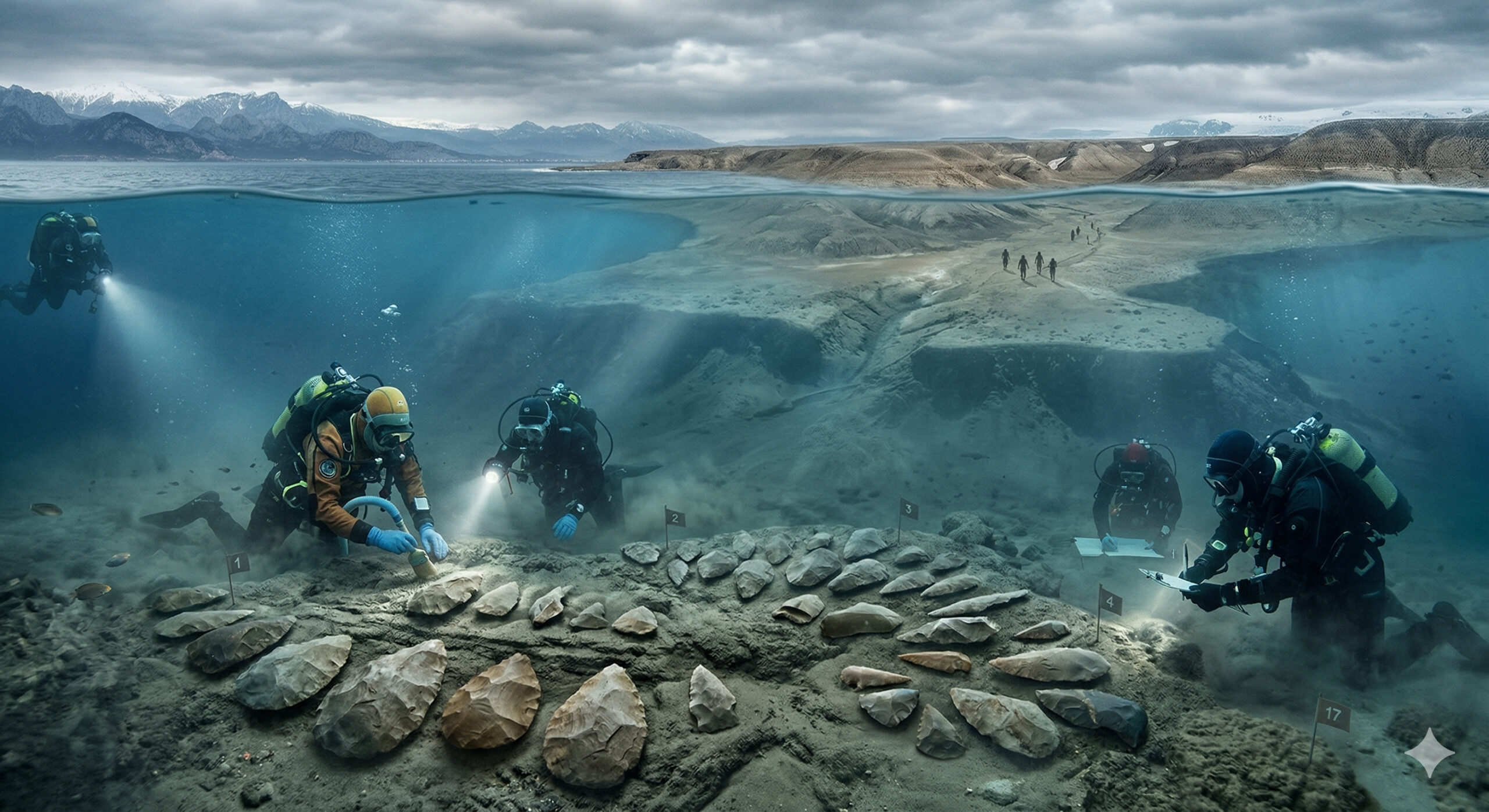
More than 138 stone tools found on the seabed between Turkey and Europe reignite the hypothesis of a lost land bridge from the Ice Age that may have been used by humans to cross continents.



When there is little oxygen, the human body triggers an emergency response: it increases ventilation, accelerates the heart, and produces more red blood cells to transport oxygen. However, this strategy has its limits. Many climbers report loss of appetite, insomnia, irritability, and a drastic reduction in muscle strength. The musculature begins to consume its reserves, metabolism changes, and cognitive ability diminishes.
What intrigues scientists is that Sherpas show fewer of these effects. Studies conducted by European and Asian universities indicate that they have an unexpected physiological advantage: they can maintain cellular energy production more efficiently even with hypoxia — the technical term for low oxygen concentration.
Sherpas, Metabolism, and Mitochondrial Efficiency
While Western athletes need to spend weeks acclimatizing to avoid suffering on the way up Everest, Sherpas grow up in villages situated between 3,000 and 4,500 meters. Many live, work, and herd yaks above 5,000 meters, something unimaginable for most of the world’s population.
Research from University College London and Kathmandu University indicates that Sherpas exhibit a striking difference in how their cells produce energy. What seems to be at play is mitochondrial efficiency — the mitochondria are structures responsible for producing ATP, the body’s “energy currency.” In hypoxia, human mitochondria tend to produce energy less efficiently, accumulating byproducts and generating greater oxidative stress. However, in Sherpas, mitochondrial performance remains more stable.
Another relevant point involves microcirculation. Studies suggest that Sherpa blood transports oxygen more effectively not by having more red blood cells, but by distributing oxygen more evenly to the tissues. This is counterintuitive, as Western athletes and climbers attempt to increase hematocrit to improve performance. Among Sherpas, this excessive increase does not happen. The hypothesis is that their bodies avoid overly “thick” blood, reducing cardiovascular risks at altitude.
Genetics, EPAS1, and the Tibetan Enigma
Although the term “Sherpa” is associated with Nepal, geneticists have identified convergences with Tibetan populations that also live at extreme altitudes. One of the genes that attracted the most attention is EPAS1, which plays a role in hypoxia regulation. It influences how the body responds when there is little oxygen, modulating hemoglobin production and other physiological adaptations.
This gene does not act alone — physiology is multifactorial — but its presence reinforces one point: Sherpa acclimatization is not just cultural or athletic; it involves a process of selection over thousands of years on the Tibetan plateau and in the Himalayan region. This does not turn Sherpas into “superhumans,” but it shows that the human body is capable of profound adaptation to extreme environments.
Culture, Work, and an Ancestral Relationship with the Mountains
Long before guiding expeditions on Everest, Sherpas lived in areas where almost nothing grows, and where survival depends on herds and trade. The lifestyle requires covering long distances, climbing steep valleys, carrying supplies, and dealing with extreme cold. The culture based on Buddhist monasteries, rituals, and respect for the mountains creates a bond that goes beyond biology and extends into the symbolic realm.
It is in this scenario that something curious occurs: for the average Sherpa, walking above 5,000 meters is not a sporting act, but a task within their daily routine. This means that the adapted physiology finds support in habits built since childhood. Children grow up playing, running, and helping with tasks that require movement and altitude. This environment produces a type of natural training that cities never replicate.
Mountaineering, Everest, and the Comparison with Western Athletes
Since the first ascent of Everest in 1953, the presence of Sherpas has been decisive. They fix ropes, prepare camps, transport loads, and choose routes. Many ascend and descend dangerous sections multiple times during the season, while Western climbers make a single attempt with long breaks.
This operational difference reveals another remarkable aspect: endurance. Altitude not only reduces oxygen, but modifies muscle metabolism, impairs glucose utilization, and increases fat consumption as an energy source. Scientific literature shows that Sherpas can preserve muscle performance with less tissue degradation, while Western athletes often lose lean mass and report intense muscle pain.

There are no definitive numbers to explain the limits of this performance, as each expedition involves logistics, weather, acclimatization, and risk. But there is a consensus: when comparing the performance of Sherpas with elite sea-level climbers, the Himalayan group exhibits less physiological stress for the same task.
What Science Still Does Not Know — and Why It Matters
Although there are relevant studies, much data is still incomplete. There is no absolute consensus on the exact origin of all adaptations, as they involve genetics, environment, culture, and even epigenetics — mechanisms that modulate gene expression over a lifetime.
There is also an ethical debate. Western science has often described Sherpas solely by their physical performance, ignoring cultural and historical complexities. Today, researchers seek integration among physiology, anthropology, and population studies to avoid reductionisms.
What makes the subject so fascinating is that it reveals something about our species: humans are not only cognitively adaptable but biologically so. While cities, technologies, and medicine have shaped a more comfortable world, peoples like the Sherpas remind us that Homo sapiens can naturally withstand extreme environments.
In the end, the question that arises is simple yet profound: if a group can thrive in an environment with almost no oxygen, what else is the human body capable of — and how many adaptations do we still not know?






Seja o primeiro a reagir!