





 Portuguese
  English
  Spanish
  4 min of reading
  15 comments


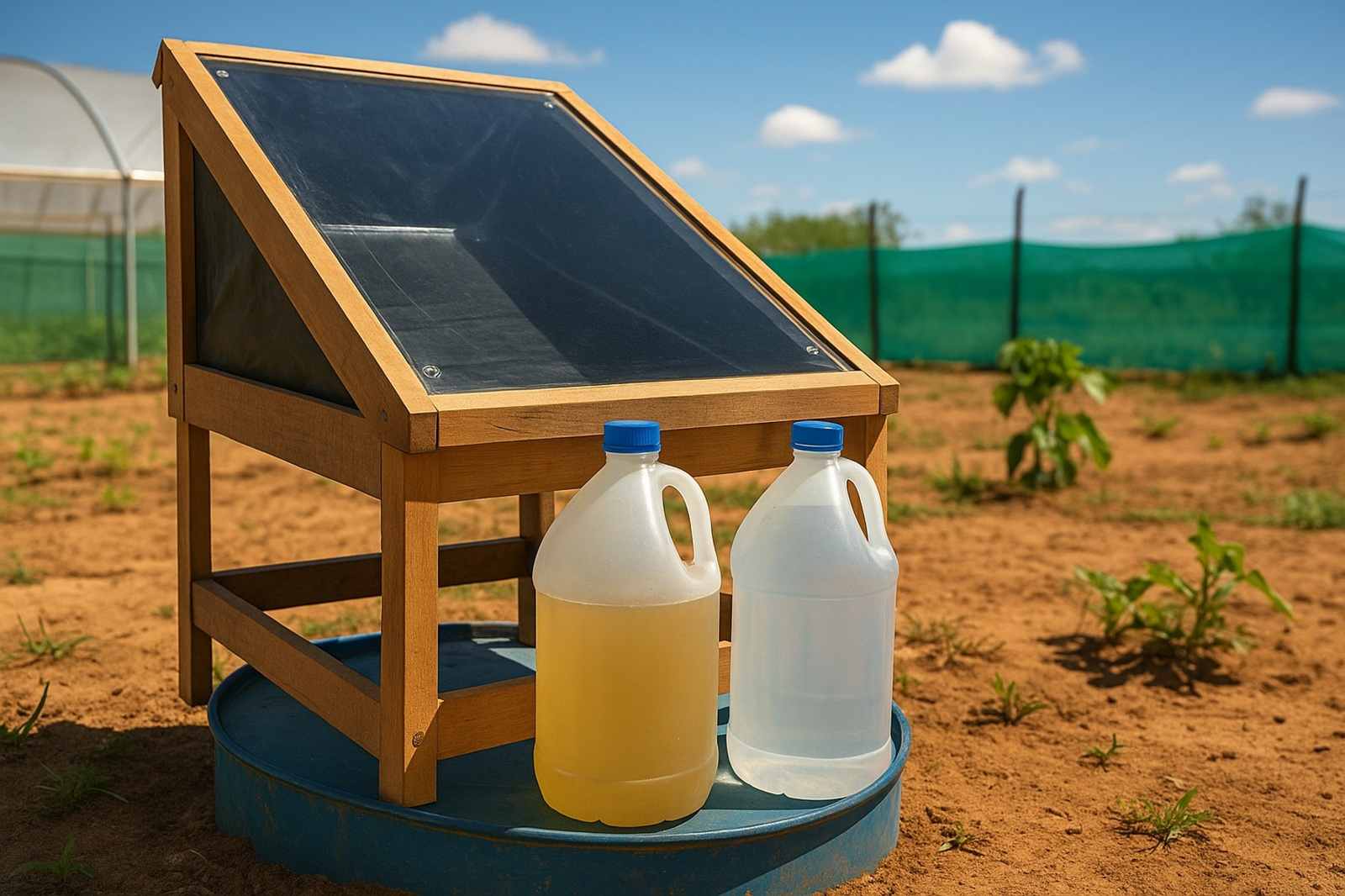


Desalination Solution Created by Researchers at the State University of Paraíba Transforms Brackish Water into Potable Resource, Providing Up to 16 Liters Daily for Families in Cariri Living Under Severe Water Scarcity.
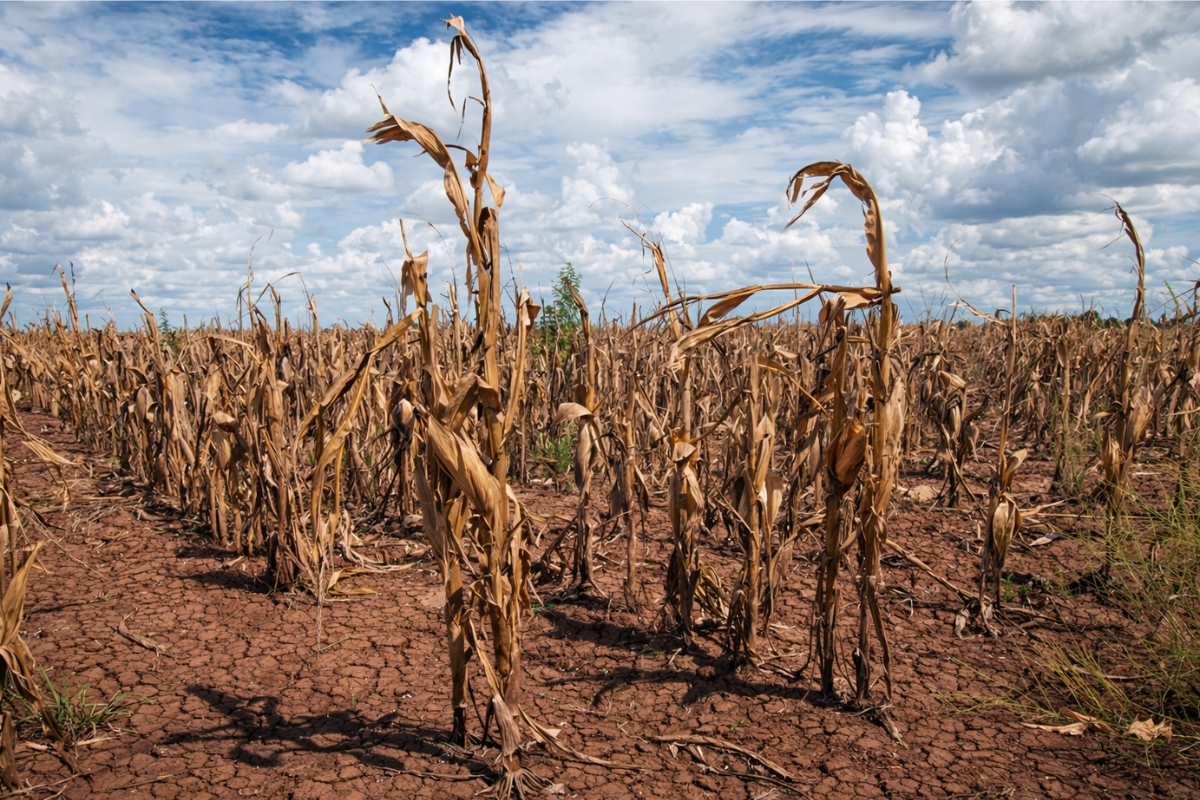
In the aridity of the Cariri region, water is treated as a precious resource, more valuable than gold. The region is among those that receive the least rainfall in the country, and this year, more than half of the cities in Paraíba have declared a state of emergency.
A report from Rede Paraíba showed that the town of Caraúbas is on this list, and for residents like Reginaldo, every drop is heavy with resistance and dreams.
He describes that water is essential in all aspects of local life, and as such, no waste is tolerated.
-
The most feared warplane of the United States is over 70 years old, carries 32 tons of explosives, flies 14,000 kilometers nonstop, and has just been sent to the United Kingdom amid escalating tensions with Iran.

-
Satellites and radars revealed, beneath 2 kilometers of ice in Antarctica, a lost world the size of Wales, with rivers, valleys 1,200 meters deep, and plateaus sculpted by water, frozen for 34 million years, when the continent had temperate forests and was part of a supercontinent that included South America.
-
A 2 kg exoskeleton with an 800-watt motor and artificial intelligence that predicts movements in 2 milliseconds reduces the load on the legs by up to 30 kg, increases strength by 40%, and allowed an 84-year-old woman to climb mountains without falling behind.

-
The Senna Tower in Balneário Camboriú is using stakes considered unique in the world that go down 40 meters and are driven 5 meters into the hardest rock on the planet, with technology approved by the same engineer who designed the Burj Khalifa.

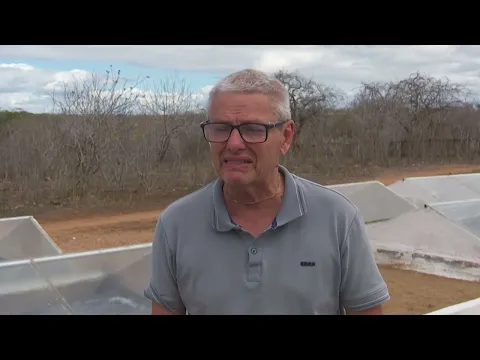
According to him, brushing teeth with just a glass of water is part of the routine, because scarcity has always marked the region and has imposed even more challenging times.
Brackish Water and Underground Challenges
There is water underground, but accessing it requires overcoming deep layers of rock. Even when a well is drilled, the result does not always meet human needs.
In Reginaldo’s family’s case, the first drilling served only the animals because the water was too salty.
The salt level remains high, making it unsuitable for human consumption. Testing of the liquid drawn directly from the well confirms the problem: the taste is intensely salty.
According to technical measurements, this water contains 7 g of salt per liter, while the limit for it to be considered potable is a maximum of 5 g per liter.
Around the house, practically everything that exists today has been earned through great hardship. Before, as the family recalls, only the dwelling remained, with no additional structure to speak of. However, the change began when an academic initiative arrived, bringing a concrete alternative.
University Research Creates Local Solution
The transformation began in a project at the State University of Paraíba. Since 2010, a team of students and researchers had been working to develop a simple, easy-to-install device with accessible maintenance and low cost. The goal was to create a technology that could be adopted without depending on sophisticated inputs or external equipment.
The result is small structures that function as greenhouses capable of transforming brackish water into fresh water. Each unit produces up to 16 L per day, generating a high-quality resource for consumption. For Reginaldo and the community, the effect feels like a miracle amid the surrounding scarcity.
How the Desalination Unit Works
The construction uses materials available in the region, such as glass, cement, and tarpaulin. The water drawn from the well supplies the little house, which absorbs the intense heat from the sun in the Caatinga. The internal temperature reaches 70ºC, causing the vapor to rise and condense on the glass roof. The liquid flows down the side channels and comes out ready to drink, while the salt remains accumulated in the tarpaulin. Then, it’s just a matter of cleaning the material to restart the process. For every 50 L of brackish water, the system produces 16 L of fresh water.
Currently, about 200 families in Paraíba have already adopted the desalination unit. There are no additional costs for continuous use, but the creators recommend that the first units be built with supervision or training to avoid common mistakes during the initial stages.
Water Quality and Social Impact
Residents describe the produced water as excellent. Many visitors consider its taste even better than mineral water.
Even on cloudy days, production continues to meet domestic needs. The sense of relief is evident among the beneficiary families, who now see the resource as a factor of change in their daily lives.
The next step of the research is to find ways to utilize the accumulated salt after purification. Meanwhile, in the house of dona Rosinete and Reginaldo, hope has taken hold. They express a desire for their children to stay in the region, working with technologies appropriate to the reality of the semi-arid.
For them, agroecology, food production, animal husbandry, and preservation of local culture go hand in hand.
Nothing is separate, neither the plants, nor the animals, nor the people, nor the accents. Everything is part of the identity they wish to keep alive.




Água temos e muita, é só usar as tecnologia e tirar o povo da mendicância..
O governo Federal que tanto presa pela educação tem a responsabilidade de dá há essas mentes brilhante que pesquisa incentivos concreto sê não perderemos eles para outros países sérios que valoriza essas pessoas..
“preza” investimento na educação ONDE ? só o estado do Piauí METADE de alguns municípios SÃO ANALFABETOS ! além de Sergipe, Alagoas, Pernambuco, gestão PT há quase 20 ANOS nesses estados !
SEM PANDEMIA ! CORTOU VERBAS p educação taí nas fontes DESINFORMADO ! DÚVIDAS ? PESQUISA nas fontes FICA A DICA ! com absurdo IMPOSTOS q pagamos ! ROMBO nos correios, Inss ADIVINHA quem é o presidente do INSS ? E quem vai pagar esses ROMBOS ? NÓS TRABALHADORES 😡
ACORDA hein DESINFORMADO !
Vamos deputados e senadores doar um pouco de que vcs ganham pra ajudar essas pesquisas. Porque esse mes foi cortado as verbas das universidades pra ajudar os senhores políticos com 60 bilhões de verbas parlamentares. É uma vergonha