





 Portuguese
  English
  Spanish
  4 min of reading


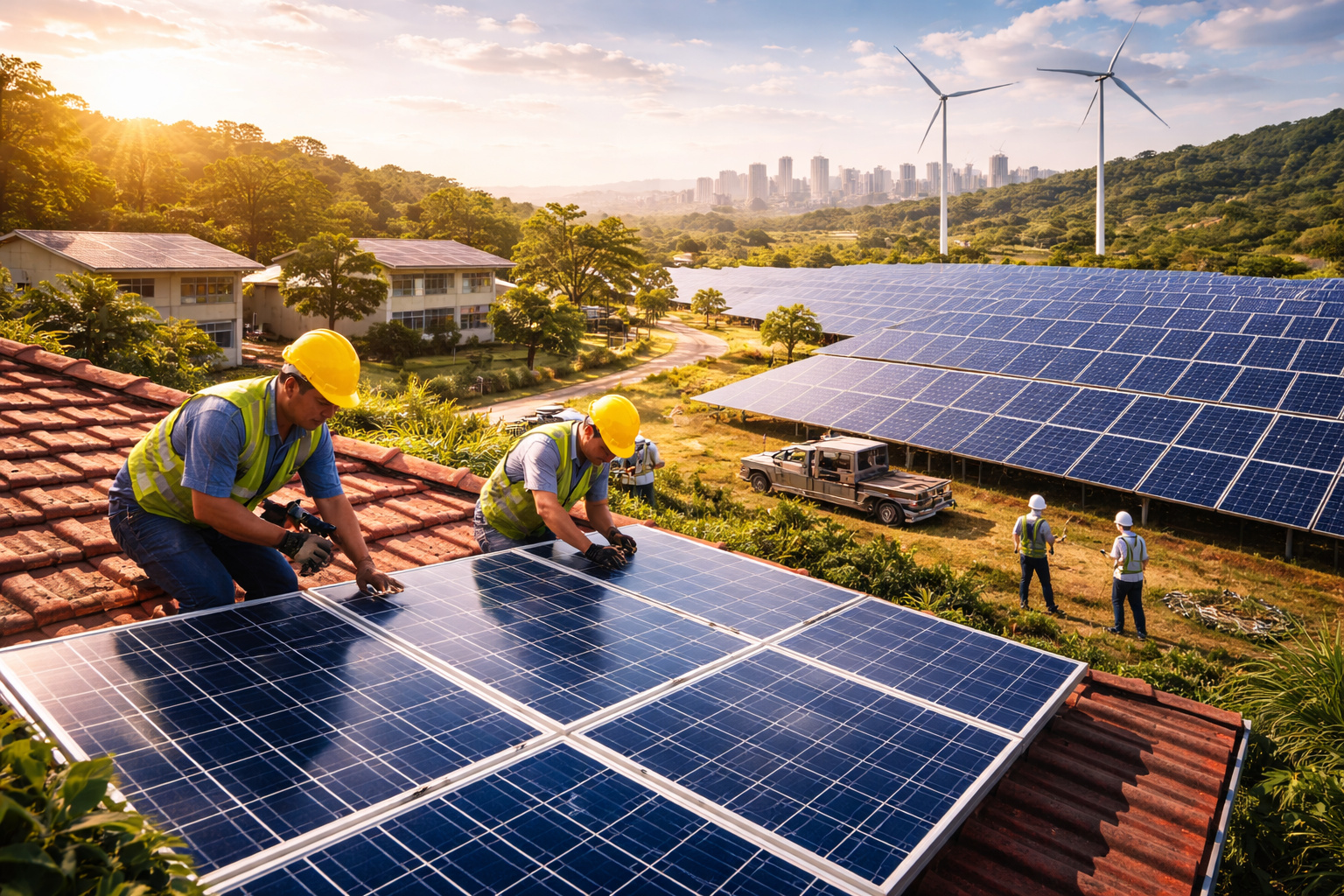
The solar energy is rapidly advancing in Brazil and is beginning to transform not only the country’s energy matrix but also the job market. In the coming years, the sector is expected to create thousands of new jobs, accompanying the accelerated growth of photovoltaic technology. According to the magazine Mundo Elétrico, solar energy could reach 33% of the national matrix by 2030, consolidating itself as one of the pillars of Brazil’s energy transition.
Moreover, the number of direct and indirect jobs in the sector could increase by up to 157% during the same period. This progress demonstrates that solar energy has already surpassed the novelty stage and is now integrating into the country’s productive routine.
Why Solar Energy Generates So Many Jobs
The photovoltaic sector offers opportunities at all stages of the process. From module manufacturing to system installation and equipment maintenance, almost everything relies on skilled labor.
-
While Brazil wants to end the 6×1 work shift, the president of Argentina wants 12 hours for his workers, increasing political tension in the country.

-
The village where two rivers run side by side without mixing in Santarém and Alter do Chão reveals some of the most beautiful freshwater beaches on the planet.
-
Mars is accelerating, and scientists have discovered that the planet’s day is getting shorter, revealing surprising signs of internal activity.

-
Artemis 2 is set to launch on April 1 at 7:24 PM to orbit the Moon with four astronauts, but a class X solar flare and coronal mass ejection could interfere with communications and threaten the launch.


As the model grows in a decentralized manner, companies and professionals spread across the country. This decentralized effect creates jobs in urban centers, small municipalities, and rural areas.
Additionally, solar energy benefits areas that traditionally have few formal job openings. Regions in the Northeast, for example, receive a large portion of the projects and lead both generation and hiring.
Accelerated Expansion of Solar Energy in Brazil
The solar energy gained ground in the Brazilian matrix in just over a decade. Previously, the country relied almost exclusively on hydropower and thermal plants. Now, the sun is starting to share the spotlight with these sources.
According to data from the electricity sector, the country already exceeds millions of consumer units generating their own energy. This movement shows that solar energy is no longer a distant alternative and has reached broad access in society.
The growth also reflects technological advancements that increased the efficiency of panels and reduced transmission losses. Thus, the energy produced on the consumer’s rooftop reaches the consumption point directly.
Reasons That Attract New Consumers
The decision to install solar systems is no longer motivated solely by cost savings. Various factors drive adoption in residences, businesses, industries, and rural properties.
Firstly, the installation cost has significantly dropped in recent years. More efficient equipment allows small areas to generate more energy, making the investment viable for various profiles.
At the same time, specific lines of credit have multiplied. Private banks and public programs offer longer terms and competitive interest rates, enabling installments that often replace the electricity bill.
Finally, recurring energy inflation helps make solar energy a financial protection mechanism against future increases.
Solar Energy and National Development
The expansion of the photovoltaic sector creates benefits that go beyond job generation. Municipalities and states collect new taxes, production chains strengthen, and microenterprises emerge to meet technical demands.
Solar energy also improves the quality of supply in remote areas. Rural properties, schools, and health posts utilize isolated systems when the electrical grid does not reach, reducing diesel expenses and increasing energy autonomy.
Moreover, distributed generation reduces the need to build long transmission lines. This change decreases environmental impacts and alleviates the national electrical system.
Market Outlook Until 2030
Experts say Brazil is just at the beginning of a prolonged growth cycle. As technology becomes cheaper and more popularized, new business models are expected to emerge.
Shared solar communities, condominiums with centralized generation, and associations of rural producers are already starting to organize. These initiatives democratize access and create more jobs in planning, engineering, and operation.
According to industry studies, the demand for qualified professionals will continue to rise, especially in technical courses, electrical engineering, and field maintenance.
Solar Energy and Sustainability
The growth of solar energy contributes to the reduction of greenhouse gas emissions and strengthens the transition to a clean matrix. Each installed system reduces dependence on thermal plants and limitations during drought periods.
At the same time, the sector strengthens environmental education by bringing consumers closer to energy production. The population starts to monitor its monthly generation and internalizes more efficient consumption practices.
Thus, solar energy offers social, economic, and environmental gains, aligned with national climate commitments.
According to the Mundo Elétrico magazine, the participation of solar energy in the Brazilian matrix could reach 33% by 2030, driven by falling prices, credit, and technological expansion.
Data from sector entities indicates that job generation in the sector could grow by 157%, as new investments consolidate in the country.
This movement positions solar energy as one of the engines of the Brazilian economy, transforming the consumer’s relationship with electricity production.
Thus, solar energy will continue to expand job opportunities, driving innovation and strengthening national infrastructure, signaling a more efficient, cleaner, and more accessible energy future for millions of Brazilians.









Seja o primeiro a reagir!