





 Portuguese
  English
  Spanish
  5 min of reading
  2 comments


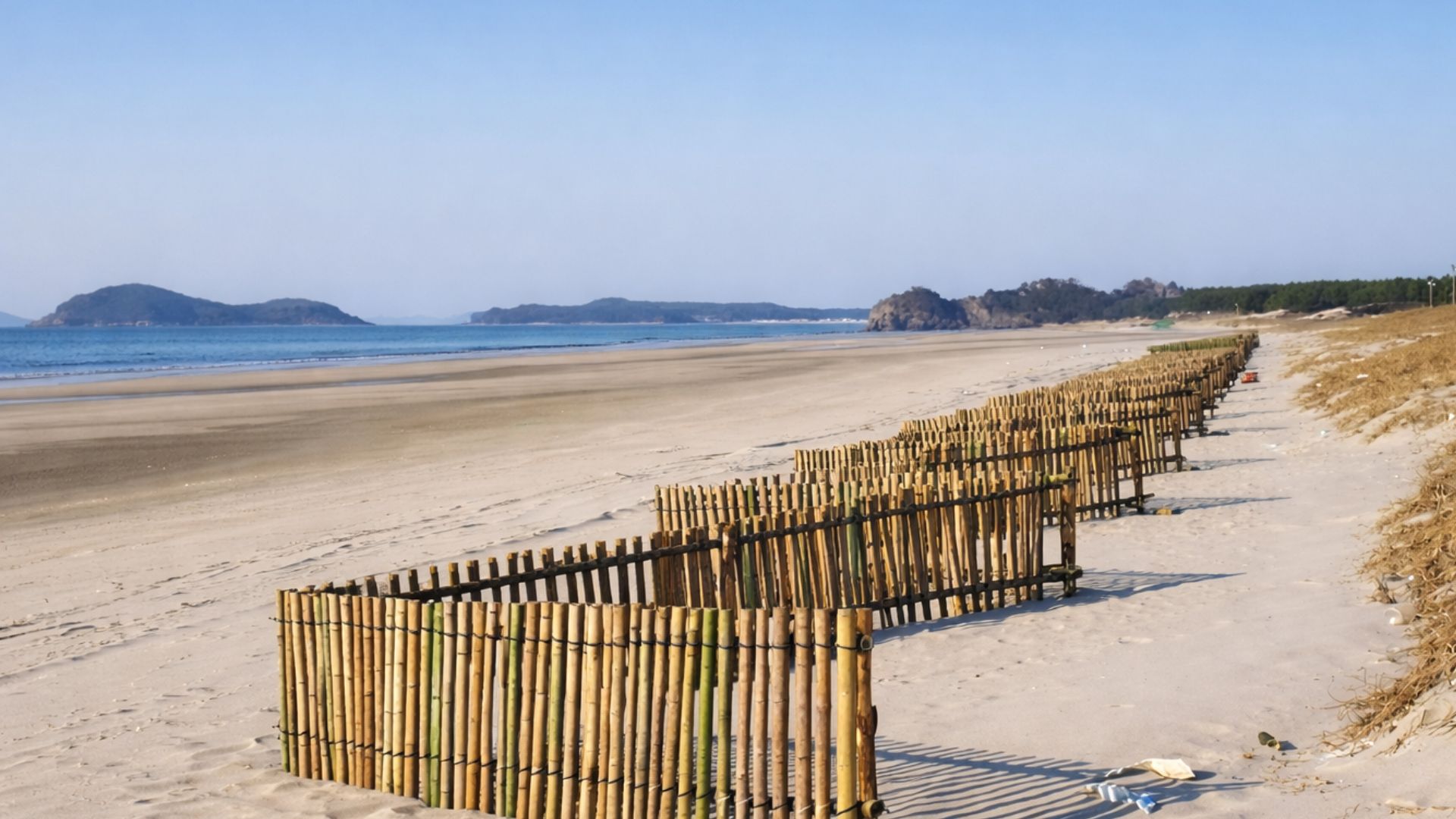


Bamboo Fences Installed Along The South Korean Coast Help Retain Sand Carried By The Wind And Rebuild Dunes That Function As Natural Barriers. Official Measurements Point To Kilometers Of Structures And Large Volumes Of Sediment Accumulated, With Recovery Of Typical Vegetation In Previously Degraded Areas.
On The West Coast Of South Korea, A Simple-Looking Intervention Has Been Used As A Tool For Coastal Restoration And Protection: Kilometers Of Bamboo Fences Installed Along The Sandy Strip To Capture Sediments Carried By The Wind And Rebuild Dunes That Function As Natural Barriers Against Extreme Events.
According To The Korea National Park Service, Linked To The Ministry Of Environment, the Strategy Applied In Taeanhaean National Park Restored Dune Areas In Degraded Spots And Accumulated A Large Volume Of Sand, With Results Measured In Fence Length And Sediment Deposition.
The Fences, Described As Bamboo Structures About 1.2 Meters Tall Constructed In A Zigzag Pattern, Are Positioned To Reduce Wind Speed Near The Ground And Cause The Moving Sand To Deposit In Place.
-
How an innovative city combines high technology, well-being, and sustainability to become the largest reference in clean energy on the planet.
-
Couple buys 1846 church in ruins for R$ 660,000, invests R$ 3.2 million in renovations, transforms it into a millionaire mansion, and even preserved a historic cemetery with over 300 graves.

-
He started running at 66 years old, broke records at 82, and is now a subject of study for having a metabolic age comparable to that of a 20-year-old, in a case that is intriguing scientists and inspiring the world.

-
Oldest tree on the planet reappears after 130 years of searches: Wattieza, 385 million years old, was 10 meters tall and had no leaves or seeds; Gilboa fossils in New York solved the mystery in 2007.


By “Holding” This Material, the Technique Gradually Helps Recompose The Topography Of The Dunes, Which In Coastal Environments Usually Act As A Buffer Between The Sea And The Inland, Protecting Adjacent Areas From Storm Surges, High Tides, And Storms.
Taeanhaean National Park And Coastal Dune Restoration

The Scale Of The Project Draws Attention Due To The Numbers.
According To The Announcement By The Korea National Park Service Cited In A Report By Asia Economy, the Total Length Of The Sand Fences Installed In The Park Reaches Approximately 10.7 Kilometers.
In The Same Material, the Volume Of Sand Deposited And Retained Thanks To The System Is Estimated At About 78,900 Cubic Meters, An Amount Presented As Equivalent To 4,641 25-Ton Trucks.
The Data Places The Initiative Among The Coastal Actions Of Low Visual Impact With The Largest Scale Ever Reported In A Single Conservation Unit Of The Country, Combining Light Engineering With The Natural Dynamics Of Sediment Transport.
How Bamboo Fences Capture Sand And Rebuild Dunes
The Choice Of Bamboo And A “Permeable” Design Is Linked To The Way Dunes Form.
In Sandy Coastlines, The Wind Carries Grains From The Beach Inland; When It Encounters Obstacles, It Loses Energy And Drops The Sand.
Bamboo Fences Act As This Controlled Obstacle, Creating Deposition Points That, Over Time, Connect, Raise The Surface, And Rebuild The Dune As A Continuous Structure.
The Zigzag Pattern Cited By The Korea National Park Service Helps To Expand The Capture Area And Distribute The Deposition, Preventing The Accumulation From Concentrating Only In A Line And Becoming Unstable.
What Caused The Degradation Of The Dunes In The Region

The Project Was Described As A Response To Decades Of Degradation.
The Report Indicates That, Since The 1970s, Coastal Dunes In The Taeanhaean Region Have Suffered Damage Associated With Accelerated Erosion And Changes In The Sedimentary System, Mentioning Changes In Wave Directions Influenced By Artificial Structures, Sand Extraction, And Reduced Fluvial Sediment Supply.
When This Balance Is Broken, The Dune No Longer Recompiles Naturally At A Speed Sufficient To Keep Up With The Energy Of The Coast, And The Sandy Strip Becomes More Vulnerable To Rapid Retreats And Impacts On Coastal Habitats.
Dunes As Natural Barriers Against Storms And Storm Surges
In This Context, Restoration Is Not Treated Merely As Landscaping.
Dunes Are Considered Natural Barriers Because They Dissipate Energy From The Wind And Waves Reaching The Beach, Besides Storing Sand That Can Be Redistributed During Storm Events.
By Reconstituting This “Stock” Of Sediments, Coastal Management Aims To Reduce Damage To Public Use Areas, Trails, And Access, And Also To Protect Ecosystems That Depend On This Transition Between Sand And Vegetation.
Dune Vegetation And Coastal Ecosystem Recovery
Another Highlighted Result Is The Biological Response Of The Environment After The Physical Recovery Of The Land.
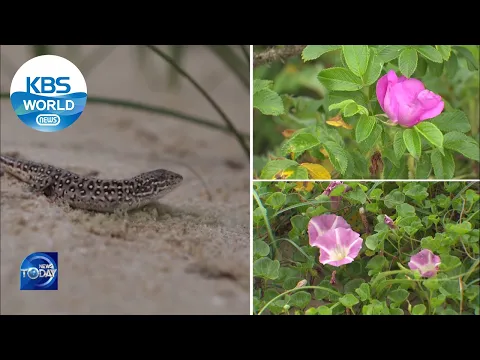
The Material Mentions That Ten Species Of Dune Plants Naturally Colonized The Restored Areas, Forming A More Stable Dune Ecosystem.
This Point Is Relevant Because Vegetation Functions As Structural Reinforcement Of The System Itself: Roots Help Secure The Sand, And The Vegetative Cover Reduces Wind Erosion, Creating A Cycle Where The Reconstructed Dune Sustains Itself With Less Intervention.
Volunteers, Restored Areas, And Project Numbers

The Scale Of The Work Also Connects To The Human Effort Mobilized.
The Korea National Park Service, As Reported, Conducted Ongoing Actions With Participation From Employees And Over A Thousand Volunteers, Focusing The Restoration On 14 Areas Of Degraded Coastal Dunes Within The Park, Including Locations Cited As Gijipo And Sambong.
The Total Area Of Dune Plant Habitat Secured By This Set Of Interventions Is Presented As 65,750 Square Meters, Equivalent To Nine Soccer Fields, A Way To Measure The Gain Of Functional Space For The Coastal Ecosystem.
Discreet Infrastructure And Sediment Management Along The Coast
In Addition To Recompiling Already Damaged Dunes, The Initiative Is Described As Part Of A Continuity Policy.
The Same Report Indicates That The Park Service Planned To Maintain The Work, Including Restoration Actions In Additional Areas And A Program To Expand Dune Recovery In Marine And Coastal Parks In The Country By 2025.
These Deadlines Appear As Administrative And Management Goals, While The Physical Logic Of The Method Remains Dependent On The Natural Rhythm Of The Wind, The Availability Of Sand, And The Maintenance Of Structures In More Exposed Sections.
International Interest In Such Solutions Is Growing Because They Exploit Existing Processes Rather Than Trying To Replace Them With Rigid Barriers.
In Sandy Coastlines, The Central Issue Typically Is The Sediment Balance: When More Sand Exits The System Than Enters, Erosion Dominates; When There Are Mechanisms To Retain And Redistribute The Material, The Beach And The Dune Gain The Capacity To Recover After Extreme Events.
Bamboo Fences, In This Sense, Operate As A “Discreet Infrastructure,” Able To Guide The Natural Transport Of Sand To Where It Is Needed, While Also Providing A Path For Vegetation To Reestablish Itself And Maintain The Structure Over Time.
If Kilometers Of Bamboo Fences Can Capture Sand And Rebuild Dunes That Protect An Entire Coast, What Other Sandy Coastlines Could Benefit From Similarly Simple Solutions Before Resorting To Heavy Construction?






78,9 m³ es una cantidad de arena ****. Cabe en tres camiones.
78,900 e não 78,9