





 Portuguese
  English
  Spanish
  5 min of reading
  0 comments


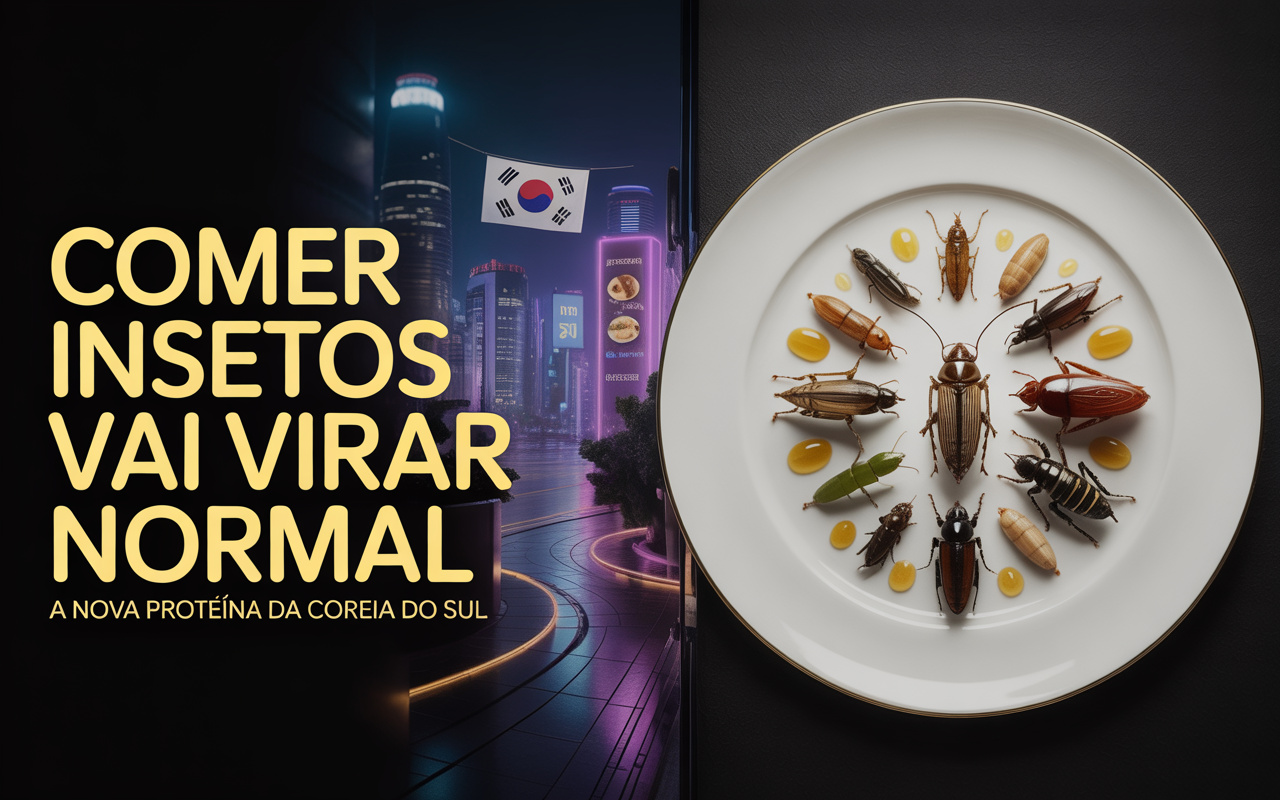
With 10 Insects Approved for Human Consumption and a Market Already Moving Up to US$ 150 Million Per Year, South Korea Advances in Alternative Protein.
South Korea has become one of the most advanced countries in the world in regulating insect protein for human consumption. While much of the West is still debating whether the idea is acceptable, the Asian country has officially approved 10 species of insects as food, created strict sanitary rules, structured an industrial chain, and moves an annual market estimated between US$ 120 million and US$ 150 million, even with average consumption still below 100 grams per person per year.
This paradox reveals the central point of South Korea’s strategy: it is not about immediately replacing the main protein on the plate, but about turning insects into high-value functional ingredients, focused on supplements, protein drinks, capsules, energy bars, and longevity-focused foods.
Sanitary Regulation Put South Korea at the Global Forefront
The turning point began within the state itself. The government started treating insects as novel food, requiring toxicological, nutritional, and food safety studies before any commercial approval. The control is carried out by the Ministry of Food and Drug Safety (MFDS), equivalent to Anvisa in Brazil.
-
The water that almost everyone throws away after cooking potatoes carries nutrients released during the preparation and can be reused to help in the development of plants when used correctly at the base of gardens and pots, at no additional cost and without changing the routine.

-
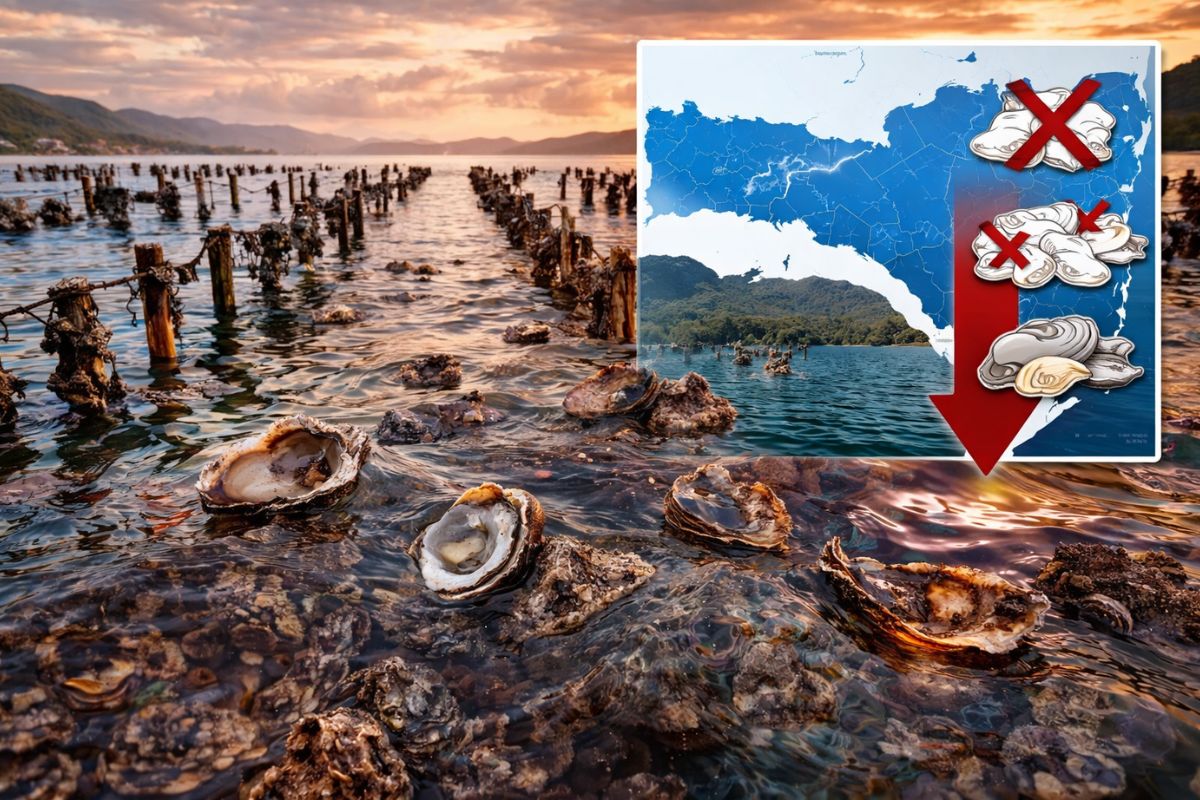
The sea water temperature rose from 28 to 34 degrees in Santa Catarina and killed up to 90% of the oysters: producers who planted over 1 million seeds lost practically everything and say that if it happens again, production is doomed to end.
-
An Indian tree that grows in the Brazilian Northeast produces an oil capable of acting against more than 200 species of pests and interrupting the insect cycle, gaining ground as a natural alternative in soybean, cotton, and vegetable crops.

-
The rise in oil prices in the Middle East is already affecting Brazilian sugar: mills in the Central-South are seeing their margins shrink just as ethanol gains strength.


Only after this technical scrutiny were insects legally allowed to be marketed for human consumption. This strictness has turned the country into a global reference in entomophagy regulation.
The 10 Approved Species and the Silent Industrial Advancement
Among the approved insects are crickets, mealworms (beetle larvae), silkworm pupae, and other species raised in controlled environments. All have become part of production chains that serve small laboratories to large functional food industries.
Today, South Korean insects rarely appear whole on a plate. The vast majority is transformed into:
– protein flours
– extracts
– concentrated powders
– capsules
– ingredients for energy drinks
– bases for gym snacks
This model reduces cultural rejection and facilitates the commercial insertion of alternative protein.
A Market That Already Moves Up to US$ 150 Million Per Year
Even with individual consumption still low, the market has grown rapidly due to the high price per kilogram of the processed product. Unlike beef or chicken, insect protein is not sold as cheap commodity, but as:
– functional supplement
– premium protein
– nutraceutical ingredient
– product associated with health and physical performance
This explains why, with little physical volume, the sector has already reached up to US$ 150 million per year just in the South Korean domestic market.
Why Average Consumption Is Still Below 100 Grams Per Person
The figure seems low, but it reflects a strategic choice. South Korea has not tried to force an abrupt cultural change. Consumption is mainly concentrated in: athletes, the elderly, people in rehabilitation, supplement consumers, and the functional food audience.
In other words, it is a high-value niche consumption, not a mass popular product. Even so, in industrial terms, this already represents up to 3,000 tons per year directly aimed at human consumption.
The Logic Behind the Bet on Insects as Functional Food
The approved insects have a protein content between 55% and 75%, as well as high concentrations of:
– iron
– zinc
– vitamin B12
– essential amino acids
– functional fatty acids
From a biochemical point of view, they rival the best traditional animal proteins. For a country with a high life expectancy and a rapidly aging population, this becomes a public policy for preventive nutrition.
Environmental Impact as a Pillar of the Food Strategy
The approval of insects was not only due to nutritional concerns. The South Korean government considers this sector a direct tool for reducing emissions and environmental pressure. Compared to traditional livestock, insect farming presents:
– up to 90% less CO₂ emissions
– minimal water consumption
– virtually zero use of agricultural land
– reusing organic waste as food
– extremely short production cycles
In practice, each ton of protein generated by insects replaces part of the protein obtained from highly emitting chains.
The Role of FAO in the Global Legitimization of Entomophagy
South Korea’s advancement occurs in tune with studies from the FAO, which since the 2010s has indicated insects as one of the main solutions for global food security in the 21st century.
FAO reports point to insects as alternatives for:
– reducing the use of grains in feed
– combating malnutrition
– diversifying protein sources
– mitigating climate impacts
The South Korean strategy follows exactly this international roadmap.
Agribusiness, Biotechnology, and Startups Drive the Sector
The sector is not dominated only by large industries. There is a growing ecosystem of:
– functional protein startups
– vertical biofactories
– nutraceutical laboratories
– university research centers
– food techs accelerators
This environment drives constant innovation in texture, flavor, digestibility, and commercial application of insects.
Insects Do Not Replace Meat, but Change the Logic of the Protein Chain
A common mistake is to imagine that insects will “replace the barbecue.” In practice, what they are replacing is part of the high-cost protein in industrial formulas, reducing dependence on:
– imported soy
– fishmeal
– high-priced concentrated proteins
This has a direct effect on the costs of the food industry and aquaculture.
Food Security and Nutritional Sovereignty as Background
South Korea imports a large part of its agricultural inputs. By developing alternative protein in a controlled environment, the country reduces its vulnerability to:
– global logistical crises
– trade wars
– fluctuations in soy prices
– extreme climate events
Insects are treated as a strategic asset for food sovereignty.
Why South Korea Became a Global Laboratory for Alternative Protein
Few countries simultaneously possess:
– high urban density
– aging population
– tradition in biotechnology
– strong industrial policy
– extreme sanitary rigor
– high purchasing power
This makes South Korea a true laboratory for the future of functional food on the planet.
From Cultural Repulsion to Silent Industrial Normalization
What stands out is that the advancement occurred away from the spotlight. Without massive campaigns, without cultural imposition, without social shock. Insect protein entered through the back door of the industry:
– first in laboratories
– then in supplements
– next in gyms
– and now on the shelves of functional products
Today, millions of South Koreans consume insects without even realizing it, mixed into shakes, capsules, and energy bars.
What This Model Signals for the Rest of the World
The future of protein does not only walk through lab-grown steaks. It also goes through extremely efficient, silent, and invisible organisms to the end consumer.
South Korea has not turned the insect into a typical dish. It has turned the insect into the invisible infrastructure of modern nutrition.










-

-

-

-

-

11 pessoas reagiram a isso.