





 Portuguese
  English
  Spanish
  6 min of reading
  1 comment





The Tallest Statue In The World Impresses With 240 M In Height Including The Base, Thousands Of Tons Of Steel And Bronze And Engineering Capable Of Withstanding Extreme Winds And Earthquakes.
The Statue of Unity, in India, is not just a grand monument. It is a landmark of contemporary structural engineering, a work that combined steel, bronze, and concrete on a scale never before applied in monumental sculptures. Inaugurated in 2018, in the state of Gujarat, the construction immediately became a world record, surpassing by dozens of meters established statues such as the Spring Temple Buddha (128 m, China) and the Ushiku Daibutsu (120 m, Japan). In total, it stands at 240 meters tall including the pedestal, enough for the top of the structure to tower over mid-sized skyscrapers and be visible for miles around.
The statue honors Sardar Vallabhbhai Patel, a central figure in unifying Indian territory after independence. However, the global fascination comes not from political symbolism, but from the physical, logistical, and industrial numbers required to erect a bronze human figure larger than the Statue of Liberty (which stands at 93 meters including its pedestal). India has taken civil engineering to a level that has rarely been explored: that of mega-anatomical reproduction.
Statue of Unity: Structural Engineering On An Extreme Scale
The structural base of the statue uses approximately 18,500 tons of steel, a material responsible for maintaining rigidity and transferring loads to the pedestal.
-
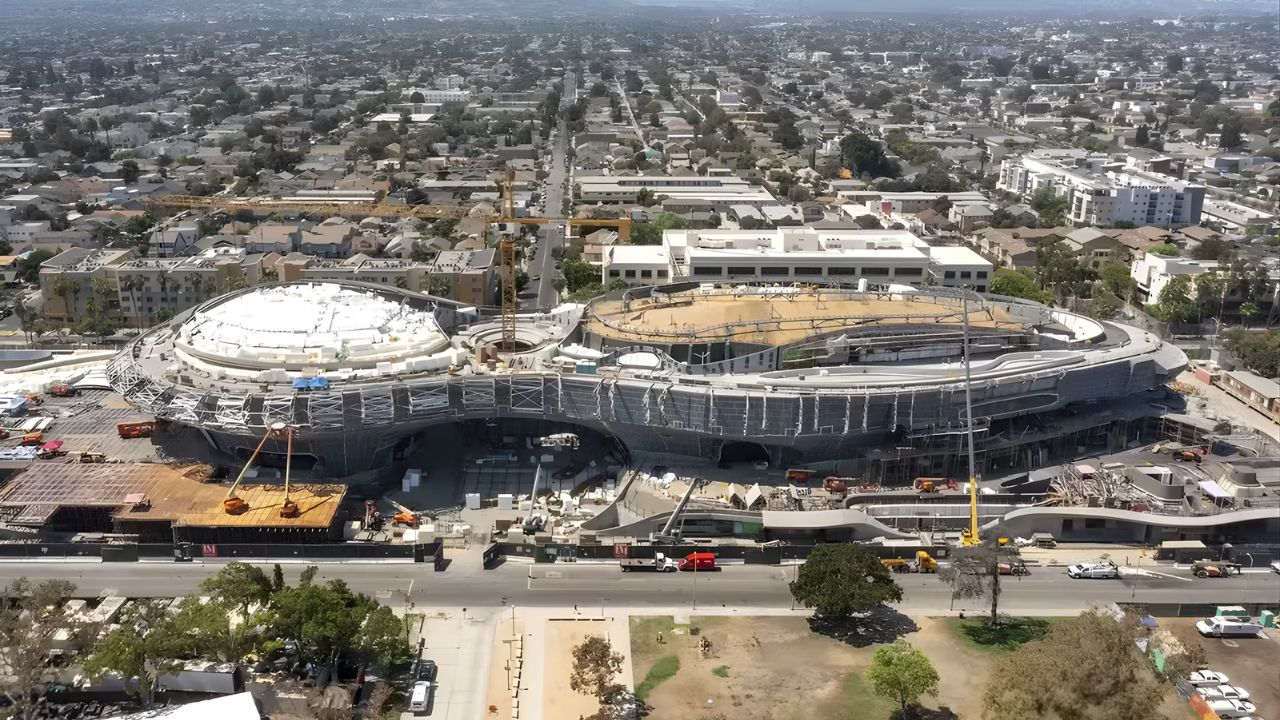
Created by George Lucas with over $1 billion, a futuristic museum in the shape of a spaceship with 1,500 curved panels is about to open in Los Angeles and will house one of the largest private collections of narrative art in the world.
-
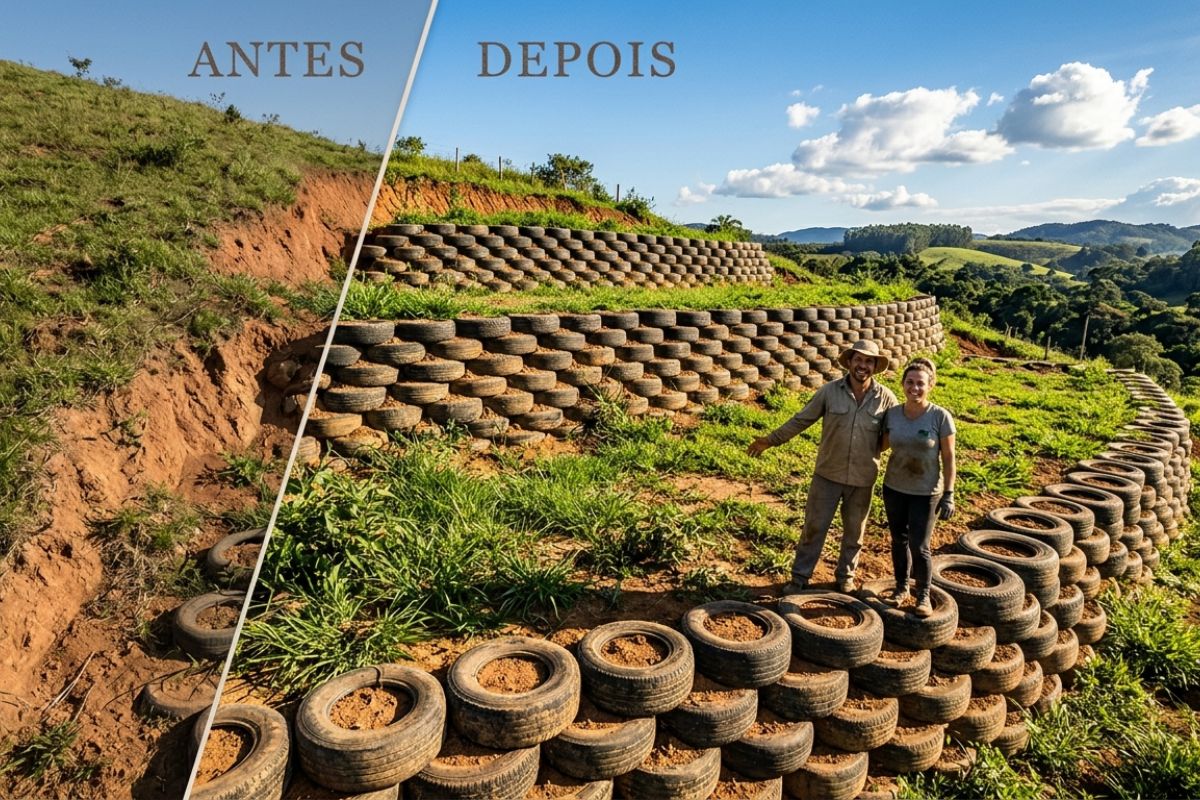
Couple shows how they built a retaining wall on their property using 400 old tires: sloped land turned into plateaus, tires are aligned, filled, and compacted with layers of soil, with grass helping in support and at almost zero cost.
-
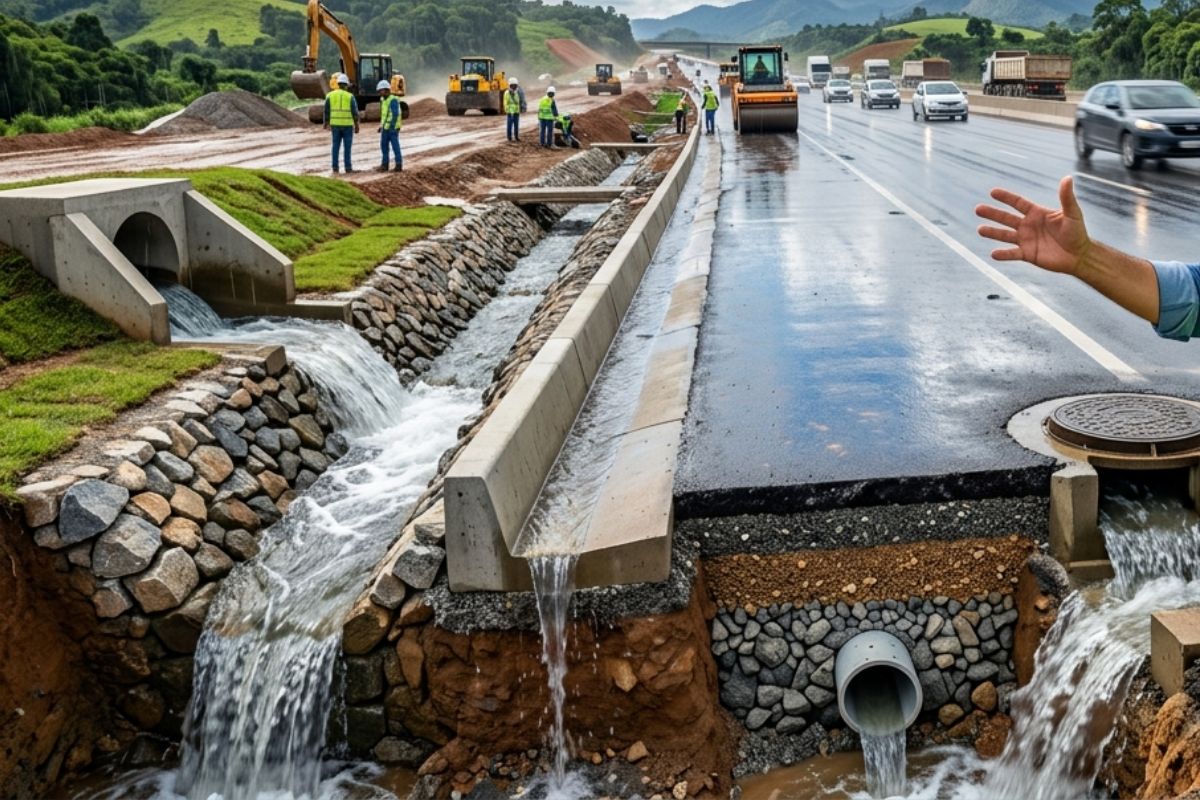
Engineer explains drainage during the rainy season: the difference between surface water and deep water, ditches, gutters, and water outlets on the road, as well as drains and drainage mattresses, to prevent erosion, aquaplaning, and flooding at the construction site today.
-
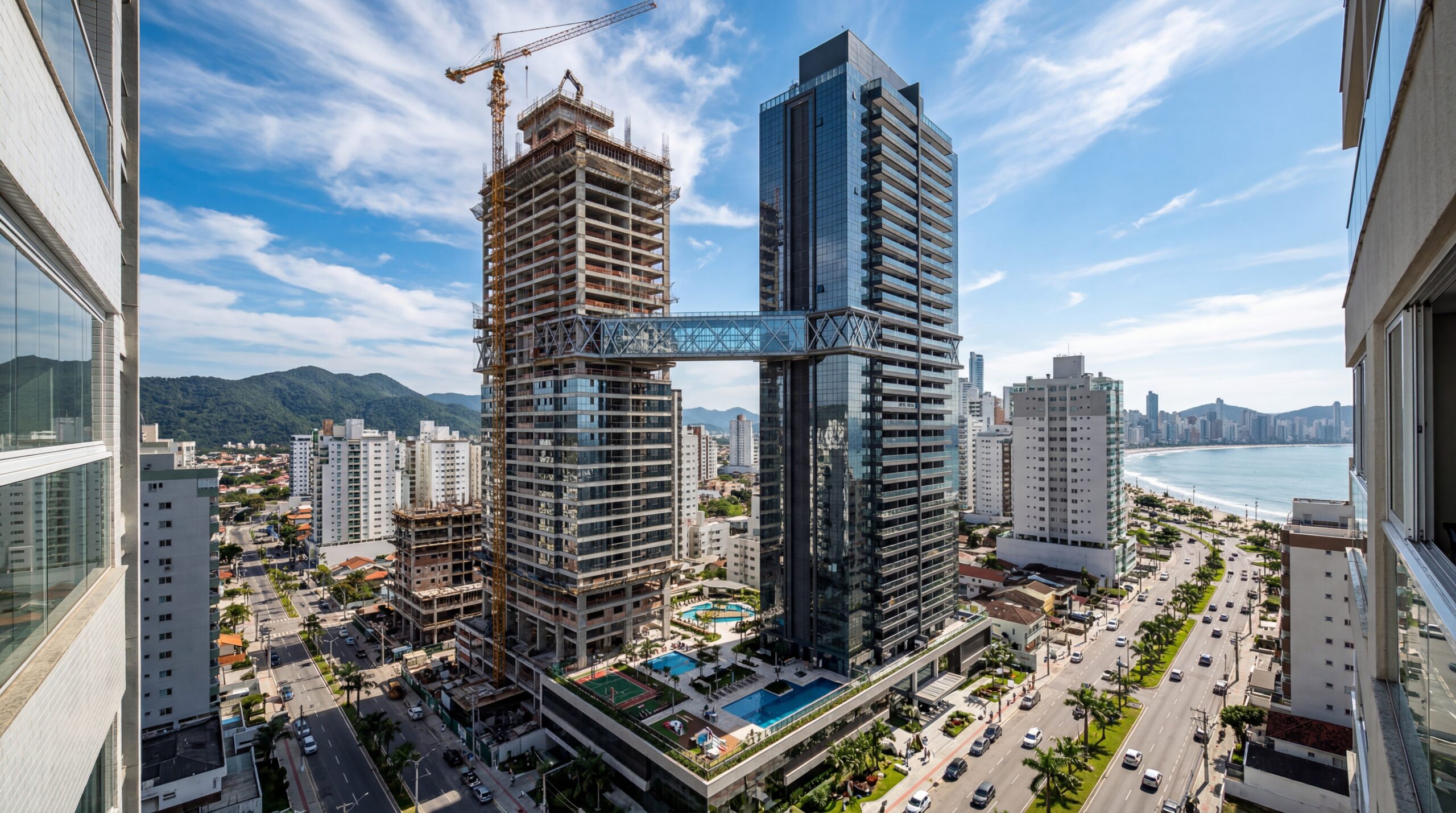
With 55 floors, 177 meters in height, a 15-meter walkway between the twin towers, ventilated facade, and 6,300 m² of leisure space, Ápice Towers already has one tower completed and another nearly at the top.

The original intention of the engineers was to ensure safety against winds of up to 180 km/h and seismic events of up to magnitude 6.5, as the western region of India is close to the Indo-Australian plate, with a history of tremors.

This volume of structural steel rivals industrial works, such as bridges or telecommunications towers. But steel alone did not explain the dimension. The statue required 6,500 m³ of concrete in the central core, equivalent to more than 1,000 standard concrete mixer trucks.
The concrete serves as stabilizing mass to prevent twists and vibrations which, in a 240-meter statue, would be amplified.
The solution found for the outer form was the bronze cladding, which allowed for the reproduction of anatomical details visible from dozens of meters in altitude. About 1,700 tons of bronze were used, distributed across hundreds of panels installed piece by piece.
To prevent thermal deformation and vibrations, the plates underwent casting processes and surface treatment with alloys containing tin and zinc, enhancing corrosion resistance.
Logistics And Construction In Remote Location Of The Tallest Statue In The World
The Statue of Unity was built on the banks of the Narmada River, near the Sardar Sarovar Dam, in a region difficult to access.
The logistics involved transporting steel profiles, bronze molds, and heavy equipment along roads that needed to be expanded and strengthened. Many parts of the exterior cladding were manufactured in China and shipped by sea to Mundra Port, then completing the journey by land to Gujarat.
Construction took more than 40 months of continuous work, mobilizing around 3,000 direct workers including welders, structural engineers, bronze specialists, transportation teams, and crane operators.
The pedestal, approximately 58 meters tall, required deep foundations to withstand the total weight of the structure and the hydrological regime of the Narmada River, which has significant seasonal variations.
Aerodynamics And Stability Of The Tallest Statue In The World
It is not trivial to keep a human structure of this scale stable in the wind. Airflow over large vertical surfaces can induce vibrations and transverse loads.
To avoid damage and unwanted movements, the design utilized aerodynamic analysis in wind tunnels, testing gust speeds and directions. Most of the human body shapes were slightly smoothed to reduce critical areas of aerodynamic stall.
Furthermore, the pedestal was modeled to concentrate mass at the base and reduce the upper structural projection, improving the overall behavior of the center of gravity. The integration between the pedestal and the internal concrete core acts as a single resistant body, a solution similar to civil towers and telecommunications platforms.
Comparison With Other Giant Monuments
The Statue of Unity has caused a reordering of the world ranking of monumental sculptures. For comparison:
- Statue of Unity: 240 m (including base)
- Spring Temple Buddha (China): 128 m
- Ushiku Daibutsu (Japan): 120 m
- Statue of Liberty (USA): 93 m including pedestal
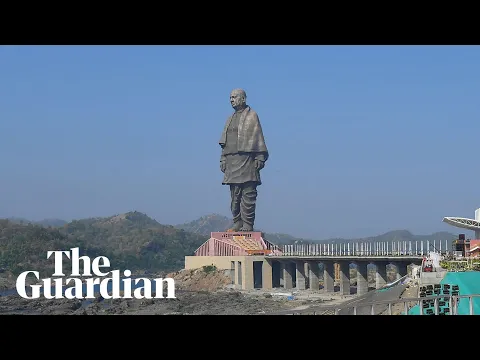

Based on these numbers, the Indian statue is practically double the height of ancient statues and repeats a modern pattern: monumentality as an instrument of national identity.
The Interior Of The Statue: Elevators, Viewing Platform And Vertical Structure
Instead of being solid, the Statue of Unity is hollow and functional. The sculpture contains internal elevators that take visitors to the observatory located at chest level, approximately 153 meters above the ground. The internal area of the core serves as an observation tower and also as a maintenance corridor for structural inspections.
This type of solution is common in skyscrapers, but uncommon in sculptures, which reinforces the hybrid nature of the project.
The planned accessibility includes environmental control, fire protection systems, independent power, and internal communication.
Territorial Integration And Tourism
Since its inauguration, the Narmada region has undergone logistical and urban transformations. Access routes, visitation areas, information centers, and tourism infrastructure have been created. The statue has become a focal point for attraction and also an internal geopolitical vector, as it reinforces the process of building Indian national identity.
The tourism impact is significant: even before the stabilization of international flows, the monument was already among the most visited attractions in the country. At certain times, visitation surpassed traditional monuments, showing that monumental engineering and cultural tourism can coexist.
The construction cannot be analyzed without context. Sardar Vallabhbhai Patel is one of the central figures in the process of unifying India after 1947, and a political symbol for different internal currents. His selection as a monumental figure connects engineering, politics, and territorial identity.
Thus, the statue has also sparked debates about expenditures, priorities, and meanings. Regardless of ideological lens, the fact remains: the physical and technological impact of the work.
Why Do Engineers Find The Work Fascinating?

The answer lies in the rare combination of factors:
Giant Anthropometry — reproducing the human body accurately at 240 meters requires complex morphological studies.
Interaction Between Steel, Concrete, And Bronze — three materials with different elastic moduli and thermal coefficients must work together.
Population Scale Of The Surrounding Environment — the statue had to be integrated into a real human and geographical ecosystem, not isolated.
Geotechnical And Seismic Challenges — the region has a history of earthquakes, which necessitates higher specifications.
Hybrid Concept (Monument + Visit-able Interior) — it is not just a statue, nor just a building, it is a fusion of both.
Few works in the world combine all these elements. That is why the Statue of Unity has become a case study in structural engineering and architecture schools, alongside dams, towers, and bridges.
The Statue of Unity remains one of the rare examples of monumental engineering in the 21st century. India not only erected a statue: it raised a geopolitical symbol clad in 1,700 tons of bronze, stabilized by 18,500 tons of steel, and anchored in 6,500 m³ of concrete, equivalent to a habitable skyscraper with an internal observatory.
If monumental works of the past used stone, marble, and manual sculpture, India has taken the tradition of monumentality into the industrial realm.
And in doing so, it has secured its place on the global engineering map as the country that houses the largest statue ever built by humanity, consolidating a work that is unlikely to be surpassed in scale anytime soon.
Important Editorial Note: In 2023, a team colleague published material on the theme “How The Tallest Statue In The World Was Built: The Mega Project Stands Over 182 M In Height, discussing the landmark from a historical and descriptive perspective. Here, the focus is distinct: emphasizing industrial scale, structural volumes, and heavy engineering parameters and the base of the structure that is often not highlighted by most major portals.









Novo modelo de estátua pro veio da Avan ,em 2026