





 Portuguese
  English
  Spanish
  6 min of reading
  1 comment


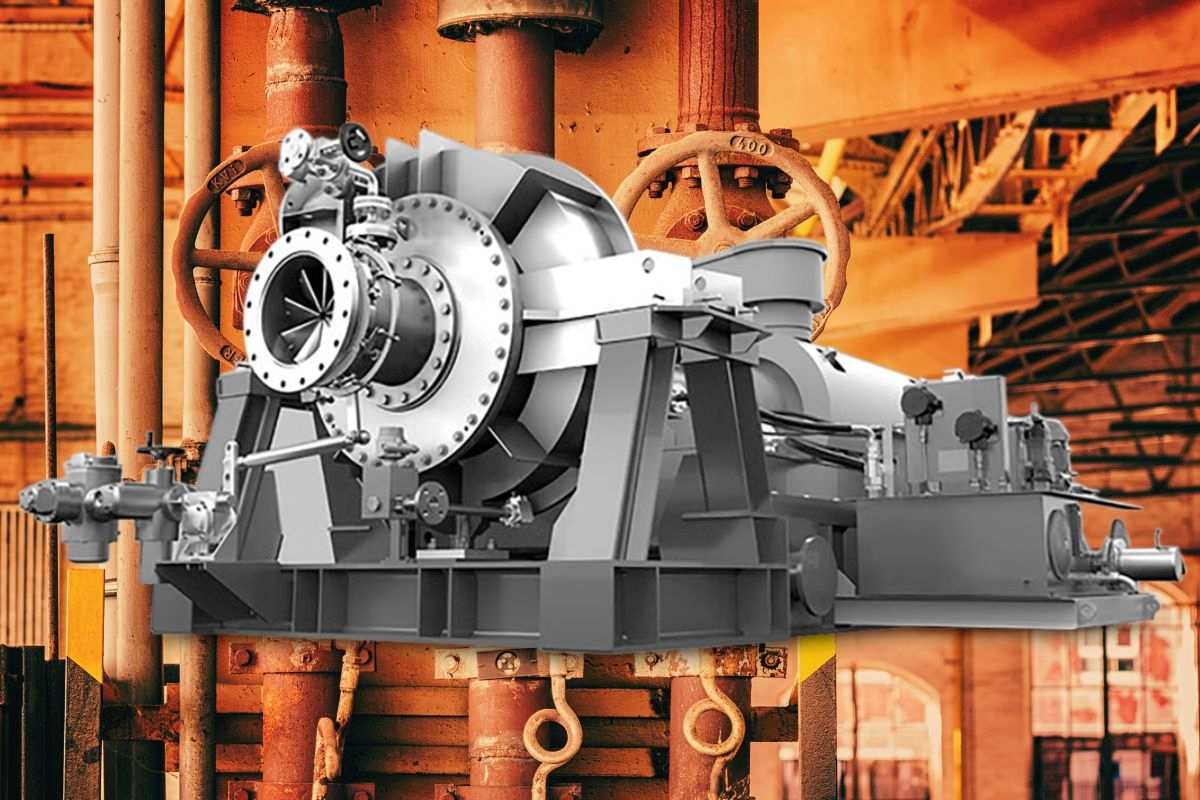

Skyven Technologies Developed The Arcturus, An Industrial Heat Pump That Produces Steam Up To 215 °C, Works Without Initial Investment And Reuses Waste Heat To Cut Costs And Emissions In Factories Of Various Sectors
A Texas startup bets on a solution that promises to change the way factories generate steam for their processes. Skyven Technologies develops an industrial heat pump system called Arcturus, capable of producing clean steam using waste heat from industrial processes.
The company claims that this technology delivers steam at a lower cost than traditional gas boilers while reducing emissions and improving energy efficiency.
In the outskirts of Dallas, a discreet building shows only a small column of steam rising to the sky. Inside, the company tests the Arcturus in a demonstration facility.
-
How the terraforming of Mars can transform the planet: artificial aerosols can increase the temperature by up to 35°C in 15 years, creating conditions for liquid water.

-
Scientists drilled nearly 8,000 meters into the ocean floor above the fault that caused the 2011 tsunami in Japan and discovered that a layer of clay 130 million years old was responsible for making the wave much worse than any model had predicted.
-
Thousands of years after causing the largest eruption of the Holocene, one of the world’s largest supervolcanoes is rebuilding itself beneath the sea south of Japan, receiving new magma and alarming scientists with its transformation.

-
China has activated a magnet 700,000 times more powerful than the Earth’s magnetic field that operates for over 200 consecutive hours while consuming little energy, and now the world wants to know what Beijing plans to do with this technology in 2026.

The machine harnesses waste heat, raises its temperature and produces steam that meets the requirements of various industrial lines. This proposal seeks to offer a viable alternative for industries that heavily depend on fossil fuel-fired boilers.
Steam generation represents a significant portion of industrial emissions. A large part of this steam meets processes that operate between 100 and 200 °C.
Skyven targets exactly this temperature range, offering a more efficient output aligned with climate goals.
The Dimension Of The Industrial Challenge
Industrial heat accounts for just over 20% of global CO₂ emissions. Many of these emissions come from the burning of fossil fuels in boilers that provide steam.
In several sectors, extreme heat production has no easy electrification alternatives. However, a large portion of factories uses steam at moderate temperatures, a more favorable scenario for technologies like Arcturus.
In the United States alone, there are about 39,000 industrial boilers in operation. Many operate solely to produce steam for purposes such as sterilizing medicines, pasteurizing food, drying cellulose, curing wood, or cleaning chemical parts.
These boilers remain familiar solutions, efficient from an operational perspective and hard to replace in regions where natural gas remains cheap.
Clean industrial heating projects, which include heat pumps and thermal batteries, still represent few real installations.
This occurs because high initial costs, complex adaptations, and risk aversion hinder rapid adoption.
Skyven attempts to break this barrier through a straightforward strategy: reduce operational costs and offer the technology without initial investment for the customer.
How The Arcturus Works
The Arcturus does not resemble compact household equipment. The machine resembles a technical room filled with pipes, metal chambers, and compressors that operate in sync.
The demonstration requires the use of hearing protection, as the compressors spin at around 15,000 revolutions per minute. Inside the facility, the Arcturus operates alongside a conventional gas boiler and a heater that serves as a source of waste heat.
The operation involves four main stages. First, the heat exchanger transfers thermal energy to a water circuit, which enters at 67 °C and exits at around 92 °C.
Then, this hot water enters a vacuum chamber. The reduction in pressure lowers the boiling point, allowing the water to quickly transform into low-pressure steam.
In the next stage, this steam passes through four cascade compressors. Each stage further increases the pressure and temperature. When the process ends, the steam reaches the necessary conditions to supply the factory’s network.
The final stage consists of directing this steam to the industrial system, just as a traditional boiler would.
In the demonstration version, the Arcturus produces steam at about 105 °C with up to 1 megawatt thermal power. In real projects, power increases to the range of 10 to 15 MWt. The machine uses water as the working fluid, which eliminates concerns about toxicity or flammability and offers significantly lower environmental impact.
Efficiency And Performance Of The Technology
The efficiency numbers show an important contrast. A typical gas boiler has a coefficient of performance close to 0.83. An electric resistance heater reaches a COP close to 1. Industrial heat pumps can achieve COPs of 2 or more, depending on the conditions.
The Arcturus achieves a COP between 2.1 and over 8, varying according to the temperature of the waste heat and the final steam temperature. Skyven mentions a typical value of 2.7 for standard applications, but measurements at the demonstration center reached averages of 6.5, with the potential to reach 8.
When a heat pump produces several times more useful heat per unit of energy than gas, even if electricity costs more per kilowatt-hour, the generated steam can be cheaper than that from boilers. This is a central economic argument to convince cost-focused sectors.
Another relevant point is that the Arcturus can generate steam up to approximately 215 °C. This range surpasses common limits of other commercial heat pumps and expands the number of industrial processes that can migrate to electrification.
Installation And Integration With Real Factories
The integration of the Arcturus follows a straightforward logic. The equipment connects in parallel to the existing boiler. The boiler remains available as a backup. Production does not stop and it is not necessary to redo the steam network. The installation can begin with a fraction of the demand and increase over time.
This format reduces risks and facilitates the start of operations. As the financial model works like energy as a service, there is no initial investment. Skyven covers the costs of engineering, construction, and equipment.
The customer pays only for the steam generated. If the system does not meet the agreed performance, the supplying company also loses. This logic helps reduce resistance from conservatively industrial sectors.
The Trajectory To The Creation Of Arcturus
The founder of Skyven, Arun Gupta, did not plan to develop heat pumps at first. He worked with digital projectors at Texas Instruments and began studying industrial emissions after getting involved with reports and advanced research from the U.S. Department of Energy.
Initially, Gupta bet on solar thermal energy. He installed collectors and control systems but faced high costs due to the insulated piping needed in large factories. During this time, a motorcycle accident temporarily put him in a wheelchair.
Nonetheless, he continued to develop his ideas at home and later in a small maker space in Dallas.
Being around engineers and industrial managers showed that factories prefer solutions that reduce costs per ton produced, not visually striking technologies.
This realization led Skyven to abandon the solar component and focus on mechanical vapor recompression. Thus, Arcturus was born, which harnesses waste heat and returns that heat in the form of useful steam.
A Technology With Broad Impact Potential
Electrifying low and medium industrial heat is one of the fast tracks to bring factories closer to climate goals.
The adoption of heat pumps adds to the expansion of renewable energy and the interest of major brands in reducing emissions in their supply chains. Skyven is already demonstrating results in sectors such as dairy, where decarbonization solutions have reduced thousands of tons of CO₂ without industrial downtimes.
In addition to the environmental impact, the technology improves energy resilience. By multiplying useful heat per unit of electricity, the total demand for primary energy decreases.
The reduced dependence on gas lowers exposure to the international market. In power grids with excess renewable energy, the heat pump can operate at strategic times, functioning as a form of thermal storage.
The replacement of gas boilers reduces local pollutant emissions. Communities near industrial hubs, especially in working-class neighborhoods, can gain cleaner air. However, there are challenges. Not all factories have sufficient waste heat, and some units may have space or infrastructure limitations.
Possible Paths For The Future
The potential of the technology grows when various elements work together. Industrial heat pumps recycle waste heat.
Renewable electric grids reduce environmental impact. Innovative financial models eliminate investment barriers. Stable public policies ensure incentives for clean heating.
If these pieces align, factories can turn sustainability into a competitive advantage. Lower costs, reduced emissions, and greater energy predictability make the industrial environment more efficient.
That is exactly what Skyven aims to achieve with a machine of pipes and compressors installed in an industrial park in Texas, converting waste heat into cleaner and more accessible steam.










My company evaluated Skyven’s steam generating heat pump technology and I will post this here to save people from wasting their time with this company. They send in a team of smooth talking salesman with no technical background that will literally tell you everything is free: ~$40M capital costs to build the system, no cost maintenance, and nearly $0.01/kwhour electricity to operate the massive electrical load of the heat pump. They will literally tell you anything you want to hear to enter into a “feasibility” study. The fact of the matter is that if you use a realistic electricity price, the projects are completely unfeasible from an economic standpoint. They presented us a financial model that was so complicated no one understood it and, quite frankly, that was probably intentional because of all the asinine assumptions being made.
From a technical standpoint, I am not sure they have any plan to actually build or implement one. They have no one there with any hands on industrial facility experience – just smart kids making spreadsheets on the theory of heat pumps.
Don’t waste your time with this company. There is nothing here.