





 Portuguese
  English
  Spanish
  4 min of reading
  0 comments


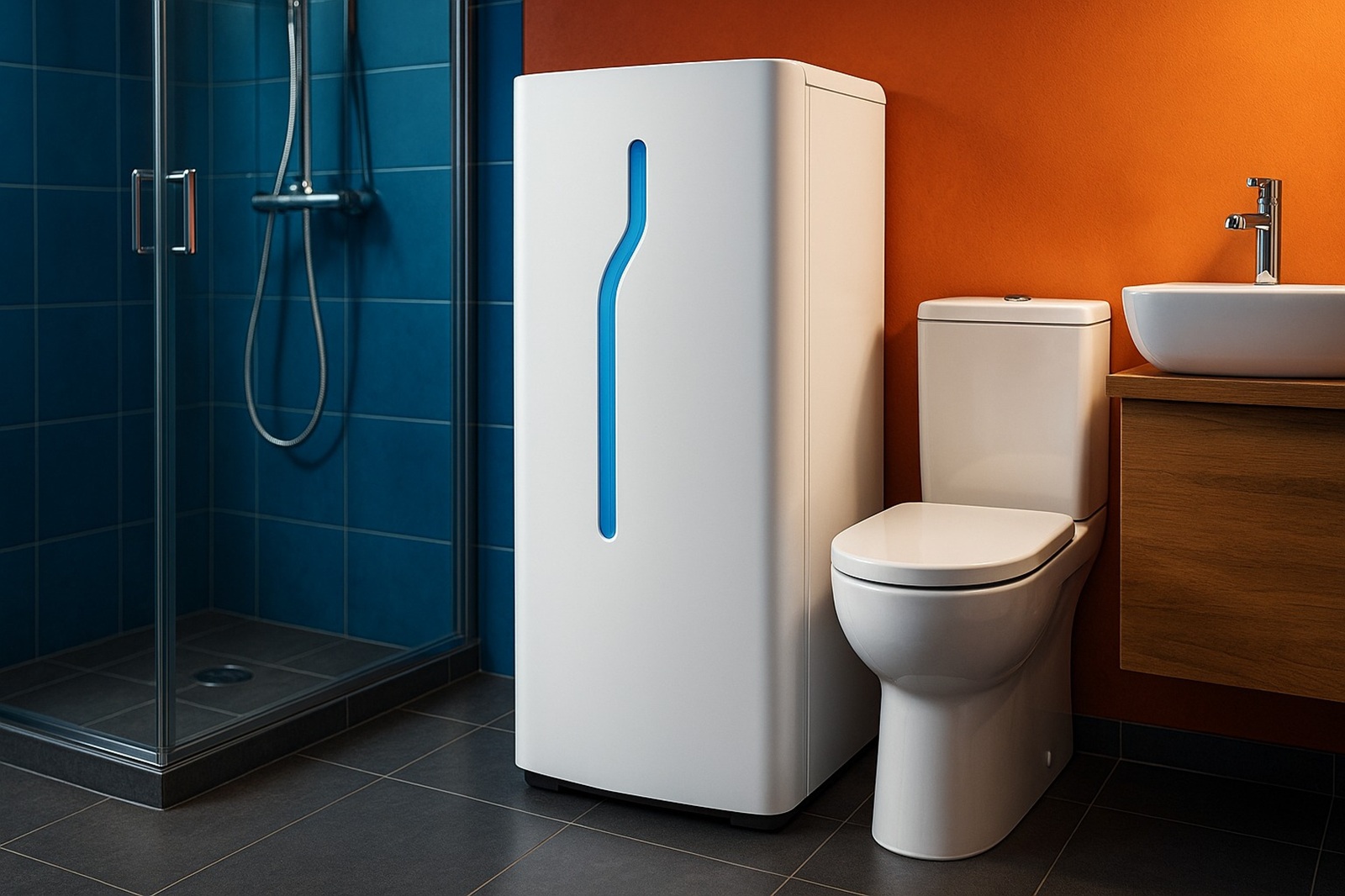
Dutch Startup Develops Technology That Purifies Gray Water Without Filters, Saves Energy, Works Discreetly and Is Already Present in More Than 50 Countries
The growing concern over water scarcity drives solutions that seek to reduce waste within homes. The Dutch startup Hydraloop emerges in this scenario by creating a system capable of recovering water from showers and sinks to reuse it within the same building.
The proposal meets an urgent demand as using potable water to flush toilets is no longer sustainable. With each use, ten liters are wasted in a cycle that could be more efficient.
The traditional consumption logic needs to change. In European households, around 30% of the daily volume goes directly to the toilet.
-
How the terraforming of Mars can transform the planet: artificial aerosols can increase the temperature by up to 35°C in 15 years, creating conditions for liquid water.

-
Scientists drilled nearly 8,000 meters into the ocean floor above the fault that caused the 2011 tsunami in Japan and discovered that a layer of clay 130 million years old was responsible for making the wave much worse than any model had predicted.
-
Thousands of years after causing the largest eruption of the Holocene, one of the world’s largest supervolcanoes is rebuilding itself beneath the sea south of Japan, receiving new magma and alarming scientists with its transformation.

-
China has activated a magnet 700,000 times more powerful than the Earth’s magnetic field that operates for over 200 consecutive hours while consuming little energy, and now the world wants to know what Beijing plans to do with this technology in 2026.

When considering that this water does not need to be potable, the quest for technological solutions stops being a trend and becomes a necessity.
Hydraloop bets on this transformation by offering equipment that treats water without requiring structural changes in the home.
Technology Integrated with Smart Homes
Arthur Valkieser, founder and CEO of Hydraloop, believes that the answer to the future of water lies in domestic purification. The company develops devices that clean water without resorting to chemicals and without using filters.
The technology operates through multiple stages, combining sedimentation, flotation, ultraviolet disinfection, and biological treatment.
The process delivers water suitable for filling the toilet’s flush tank or supplying the washing machine.
The Hydraloop 300 model has been designed for families and works even in homes without major adjustments. For already installed bathrooms, the Hydraloop Concealed version offers a compact solution. The system stays hidden behind the toilet and operates quietly, allowing water reuse to happen almost invisibly in daily life.
This integration transforms how homes relate to their own consumption. Instead of discarding shower water right after use, the resident begins to redirect it to activities that do not require potable water. This change reduces waste and increases the utilization of an increasingly rare resource.
The Value of Gray Water
The European Union regulates the use of so-called gray water very strictly. It comes from sinks, showers, and bathtubs and has low contamination, quite different from black water that comes from toilets or kitchens.
Although it cannot be consumed, this water serves domestic functions that do not require total purity.
Each liter reused prevents the use of a liter of potable water. Therefore, cities in water crisis, such as Barcelona, Cape Town, and Los Angeles, are beginning to adopt this type of system on a larger scale.
The solution goes beyond homes and reaches hotels, gyms, and public buildings, which also benefit from reuse.
In this expanding market, Hydraloop competes with other companies. FGWRS, based in Monaco, operates in commercial installations.
Graytec, in Sweden, develops its own systems still in the improvement phase. Innovation is advancing, but mass adoption remains the main challenge.
Costs, Amortization, and Environmental Impact
The initial investment to install a domestic unit starts at €3,200. The assessment of the price depends on the local reality.
In places where water tariffs are high or where stricter restrictions exist due to drought, the financial return occurs more quickly. However, direct savings are not the only argument. The reduction in environmental impact offers a value that is not only expressed in euros.
Another noteworthy point is energy savings. The treated water leaves the equipment at a temperature close to 20°C, requiring less effort from washing machines to reach the necessary heating level.
According to internal estimates, a family can save up to 600 kWh per year with this functionality. Considering that the Hydraloop system itself consumes about 200 kWh annually, the final balance remains positive for both the environment and the wallet.
International Growth and Practical Results
Hydraloop has moved beyond the experimental phase and has established a presence in more than 50 countries. The technology appears in projects in the Netherlands, the United Arab Emirates, Australia, and the United States. In some cases, the system has already been incorporated into newly constructed homes. In others, installation took place in older buildings seeking water efficiency.
Dubai offers a striking example. The city relies on desalination, which involves high costs and significant emissions.
The use of Hydraloop integrates new housing developments that prioritize sustainability. In the Netherlands, pilot communities report reductions in potable water consumption reaching 45% per household.
These results indicate the transformative potential of the system when applied at scale. The model drives a change that transcends technology and reaches everyday habits.
Paths to a Sustainable Water Future
Reusing water at home also implies adopting a new mindset. The transition to more circular housing requires regulations that encourage the installation of such systems in future constructions. Tax incentives and awareness campaigns help broaden the reach of the solution.
Reuse can reduce the demand for potable water, decrease the volume of wastewater, utilize the residual heat from used water, and strengthen water self-sufficiency in the face of droughts or supply interruptions. In addition, each household becomes a small hub of sustainability, educating through practice.
The future of water does not solely depend on large infrastructure or desalination plants. It passes through every shower, every flush, and every choice within homes. Solutions like Hydraloop show that investing in reuse systems is not just rational. Given the current scenario, it has become urgent.









-

Uma pessoa reagiu a isso.