





 Portuguese
  English
  Spanish
  3 min of reading
  0 comments


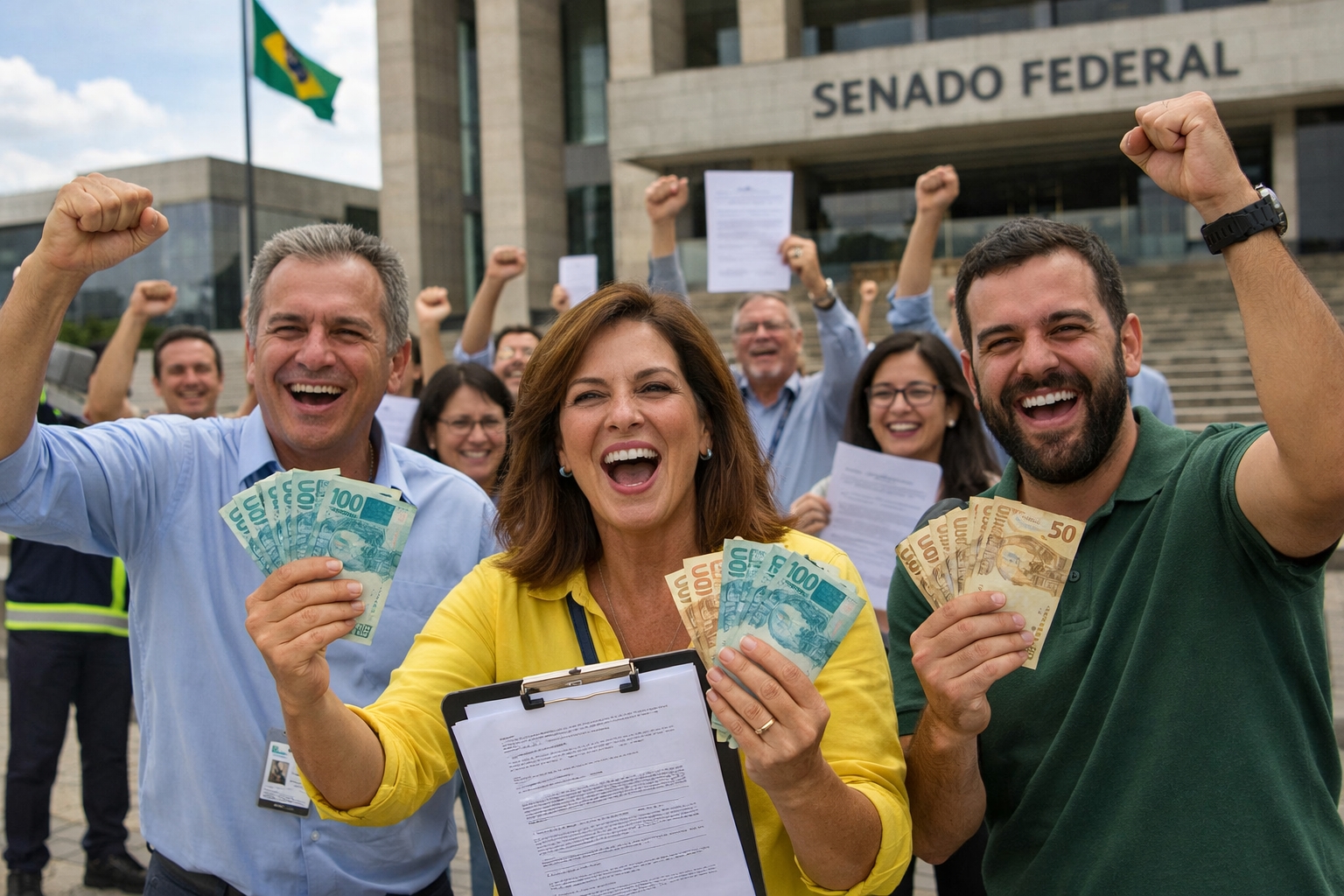
Historical Victory for Public Servants! Senate Approved the “Descongela Já” and Authorizes States and Municipalities to Recognize and Pay Retroactive Amounts.
There’s hot news in Brasília: a group of public servants may be closer to seeing a retroactive payment linked to benefits that were frozen during the pandemic. The Senate approved a bill that reopens the door to recognize — and, in some cases, pay — amounts from the period when the counting of service time was frozen at the height of Covid-19.
Unexpected Retroactive Payment for Public Servants: What the Senate Approved, in Practice
The Senate Plenary approved, on December 16, 2025, PLP 143/2020, with 62 votes in favor, 2 against, and 2 abstentions. Now, the text goes for the approval of President Luiz Inácio Lula da Silva.
The proposal alters the Complementary Law 173/2020 — the one that, during the health crisis, imposed restrictions and suspended counts linked to functional benefits to curb public spending.
-
The institute that trained the greatest aerospace engineers in Brazil has just opened its first campus outside São Paulo after 75 years: ITA Ceará will have R$ 445 million, new courses in energy and systems, and classes are expected to start in 2027.

-
Luciano Hang, owner of Havan, goes to Juiz de Fora after the tragedy in February, brings R$ 1 million, hands out R$ 2,000 cards, and donates up to R$ 15,000 to victims in the region.

-
The Brazilian passport allows legal residence in dozens of countries without the need for a prior visa, and most Brazilians are unaware that they can apply for residency directly upon arriving in nations in South America, Africa, and even Europe.

-
Petrobras sends a message to Brazilian truck drivers after fuel collapse and reveals plan to have 100% domestic diesel.

What Benefits Are Included
The project authorizes the recognition (and potential payment) of advantages for time of service that were “frozen” during the period from May 28, 2020, to December 31, 2021. The list includes salary increases, bonuses, additional payments, one-third vacation pay, and equivalent mechanisms.
In other words: it’s not a new advantage. It’s the resumption — and the possibility of regularizing amounts — of rights already foreseen but interrupted during that period of the pandemic.
Attention: Who May Be Entitled to the Retroactive Payment
Here’s the point that avoids confusion: the retroactive payment is not automatic and does not apply to “everyone in Brazil” equally.
The text makes it clear that the authorization depends on the state, the Federal District, or the municipality having declared a state of public calamity due to Covid-19 and having budget available for it.
In other words: the law opens the possibility, but who executes (or not) are the federative entities themselves, within fiscal limits and local rules.
What Changed in the Text: It Is Not Limited to Statutory Servants
During the processing, the rapporteur, Senator Flávio Arns, adjusted the wording to change “to public servants” to “to the personnel framework.” In translation: the change now also encompasses public employees hired under the CLT, in addition to permanent ones.
What Dorinha and Arns Said with Real Speech, No Guesswork
Senator Professor Dorinha Seabra, the author of the proposal, defended the logic of the project by reminding that life — and work — did not stop during the pandemic: “People worked, there was no ‘break’ in people’s lives.”
Rapporteur Flávio Arns was direct in explaining the thesis: “There is no creation of any additional expenditure, there is no impact because all of this was already foreseen (…) It is a matter of justice to officially unfreeze (…)”.
In the report and discussions, Arns also argued that the mechanism prevents “pushing” costs onto the Union and conditions any retroactive payment to the budgetary capacity of the entity itself, to preserve fiscal responsibility and legal certainty.
Was There Resistance? There Was, and the Reason Was Budget and Election Pressure
Not everyone was comfortable with the idea. Senator Oriovisto Guimarães warned of the risk of political pressure in an election year and questioned whether states would have the budget to cover everything: “In an election year, states will want to, will pay, and will become more indebted. The servants deserve it, but does the state have the conditions?”.
This discussion even came up before the final vote when the Senate postponed the analysis of the text. With the Senate’s approval, the PLP goes for the approval of President Lula.
If it becomes law, the discussion shifts from “Brasília” to “each government”: states, the Federal District, and municipalities will need to verify the situation of the declared calamity, budget, and impact on personal spending limits before any retroactive payment.










-

-

-

-

5 pessoas reagiram a isso.