





 Portuguese
  English
  Spanish
 5 min of reading
  1 comment




The Sweet Treat That Won Over Brazilians and Went Viral on Social Media Reveals an Surprising Origin: One Single Minas Gerais City Concentrates Almost All the Production, Generates Thousands of Jobs, and Moves Billions with Technology and Tradition
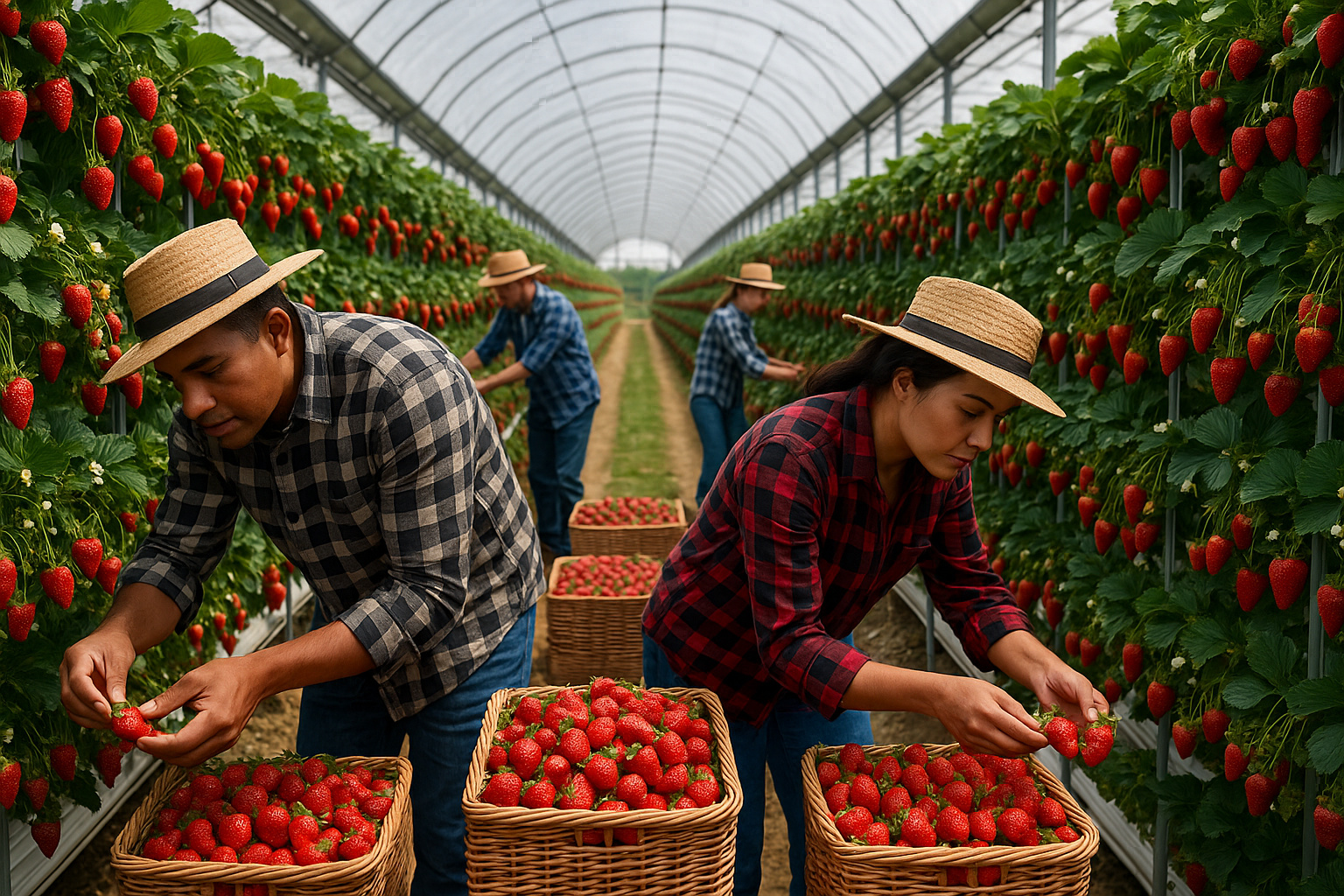
The strawberry, a delicate fruit and symbol of romance, has gained even more space in the hearts of Brazilians after the recent viral phenomenon of the “strawberry of love” on social media. As a result, producers saw their sales skyrocket in different states. However, few know that most of these strawberries come from a single place. The curiosity is that there is a high probability that the strawberry that arrives at your home and the one that reaches the tables of millions of Brazilians share the same origin: the Minas Gerais city of Pouso Alegre.
According to industry surveys, nine out of ten strawberries consumed in Brazil — whether fresh or processed — are grown in this region. This information was highlighted in agricultural sector reports, confirming that the city has transformed into an impressive hub of fruit production.
Pouso Alegre: The Heart of Brazilian Strawberries
The story of this production phenomenon began a few decades ago, when farmers in southern Minas Gerais sought alternatives that combined high demand and limited cultivation space. The fertile soil and climatic conditions of the region provided the ideal scenario. Among valleys and hills, the strawberry flourished not only as a fruit but as a symbol of economic and social transformation.
-
Rain gains strength in April, potentially exceeding 150 mm, placing the North, Northeast, and the coasts of the South and Southeast at the center of the heaviest forecast of the week.

-
A fish that survives out of water, crawls on land until it finds another river, and whose female lays 80,000 eggs at once is infesting rivers and lakes in Brazil, and no one can stop this invasion.

-
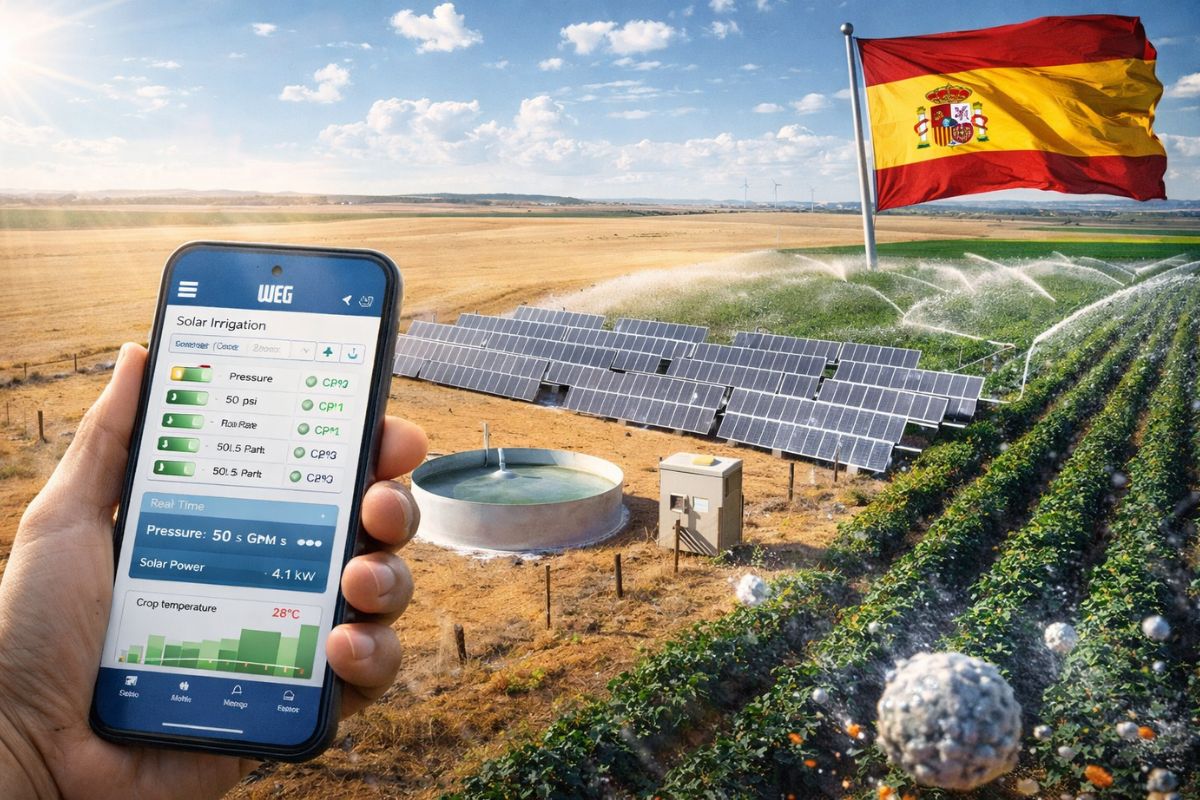
WEG took its technology to Spain to create a solar irrigation system that operates independently without needing an electrical grid, and now farmers control everything remotely via their mobile phones.
-
The US faces a meat crisis with fires, pests, and strikes, consumption rises and supply falls to the lowest level since 1952, creating a billion-dollar opportunity for Brazilian exports to grow in 2026.


In this context, Pouso Alegre has consolidated itself as the epicenter of strawberry production in Brazil. Today, it is estimated that the city is home to between 1,800 and 2,400 rural producers, responsible for about 90% of the state’s harvest. Entire families depend on this cultivation, while many properties have doubled their productivity in just four years.
Local producers report harvests that exceed 800 boxes of strawberries per month, each weighing about 1.2 kg. And this is not just any production: it is a true regional economic engine, with a primary GDP of around R$ 1.2 billion.
The Economic and Social Impact of “Red Gold”
The sector not only moves the economy but also sustains thousands of families. Approximately 15,000 workers depend on strawberry cultivation in Pouso Alegre, with 9,500 working directly in family farming, which represents 97% of local production.
Technology is another decisive factor for the city’s success. Farmers have invested in modern greenhouses, drip irrigation, fertigation with bioinputs, suspended cultivation, and artificial substrates, practices that have increased productivity and ensured superior quality strawberries: large, red, sweet, and resilient.
According to data from Embrapa, the expectation for 2025 is that the region will harvest 52,000 tons of strawberries, representing a 4% increase compared to the previous year and 27% of the total production of Minas Gerais, spread over an area of approximately 2,700 hectares.


Minas Gerais Leads National Strawberry Production
The prominence of Minas Gerais in strawberry production is undeniable. In 2025, the estimate is that the state will reach the mark of 109,000 tons, consolidating a leadership maintained since 2019. In comparison, in 2024, 184 tons were recorded, a number that left competitors like Paraná, Rio Grande do Sul, and São Paulo far behind.
In the southern Minas hub, where Pouso Alegre is located, the average productivity reaches 51,000 kg per hectare, an index considered stable but with projections for constant growth due to the intensive use of agricultural technology.
Even in the face of climatic challenges, such as a delay of up to a month in the 2024 harvest due to hot and dry spring weather, the region has shown resilience. A total of 173,000 tons of strawberries were harvested, which ended up driving prices up: a box of 1 kg was sold for as much as R$ 35 in regional markets.
Climate and Technology: The Secrets of Quality
The success of strawberry production in Minas Gerais is directly linked to the subtropical climate of the Serra da Mantiqueira, offering mild temperatures, good sunlight, and ideal conditions for cultivation. This scenario ensures strawberries that are sweeter, tenderer, and with vibrant coloring.
In addition to the climate, the quality water in abundance allows for the use of modern irrigation and management techniques, further enhancing productivity. Among the innovations used are fertigation systems and suspended cultivation, which reduce pests, increase efficiency, and preserve soil health.
According to an article published by Embrapa, this set of factors makes Pouso Alegre an example of agricultural excellence in Brazil, standing out as a reference for other production hubs.
Public Investments Strengthen the Sector
The city hall also recognized the strategic importance of the sector. Recently, R$ 47 million were invested in the paving of 50 km of rural roads, ensuring greater agility in the transportation of production and reducing losses during transit.
This initiative has further strengthened the region’s competitiveness, allowing strawberries to reach major consumer centers like São Paulo, Rio de Janeiro, Curitiba, and Belo Horizonte quickly and fresh.
Pouso Alegre: The “Red Gold” of Minas Gerais

More than just an agricultural hub, Pouso Alegre has transformed into a true rural ecosystem, where tradition, technology, and human labor combine to generate prosperity. The so-called “red gold” not only feeds millions of Brazilians but also supports families, drives the economy, and positions the municipality as one of the main fruit-producing centers in Latin America.
This success story shows how fertile soil, favorable climate, technology, and investment can transform an inland city into a national reference. The Minas Gerais strawberry is, therefore, a symbol of resilience, creativity, and a vision for the future.
Have you ever stopped to think that a simple strawberry carries so much technology, work, and history behind its production?





Está totalmente errado, Bom repouso, senador Amaral e Estiva produzem mais do q Pouso Alegre, pesquise mais antes de falar besteira