





 Portuguese
  English
  Spanish
  4 min of reading
  0 comments


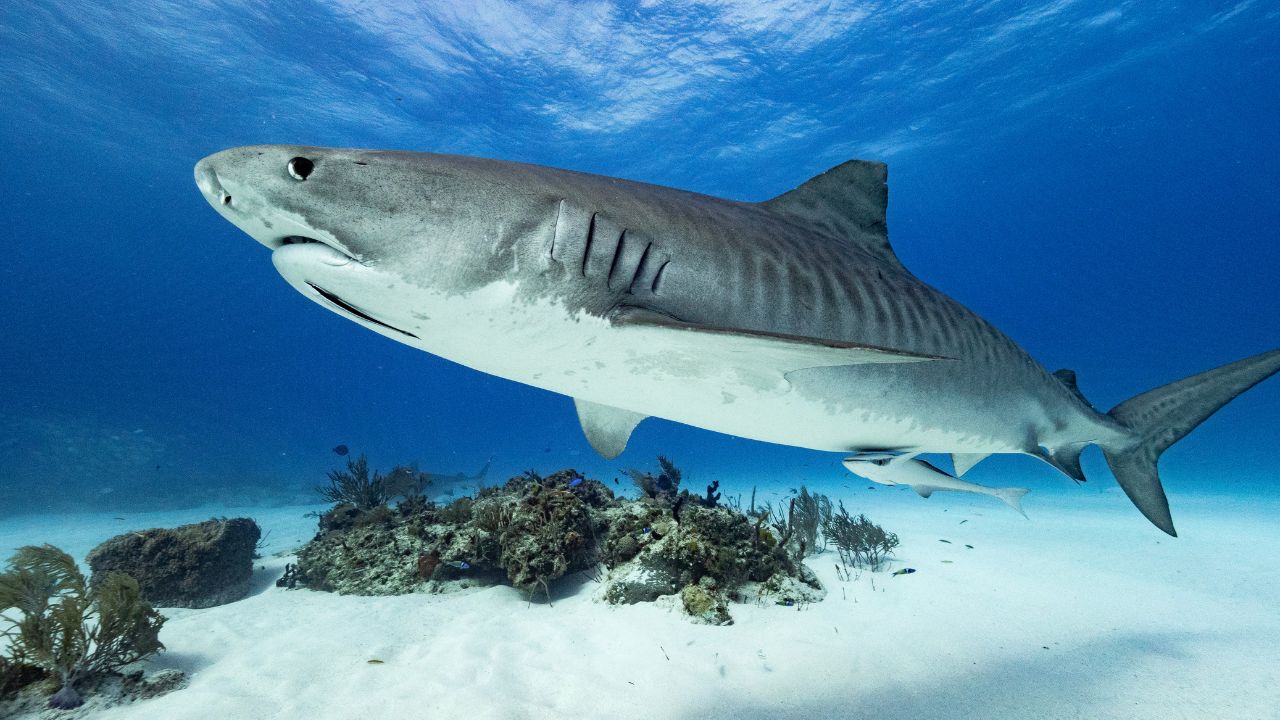
Scientists Study Why Norfolk Island Tiger Sharks Reach Extraordinary Sizes, Much Larger Than Usual for the Species, with Surprising Discoveries About Their Feeding and Migration in the Pacific.
Researchers discovered that tiger sharks in the waters near Norfolk Island, in the South Pacific, are growing far beyond what is expected for the species, reaching about 15 feet, well above the average of 8.9 feet.
The team, made up of scientists from Flinders University and James Cook University, studied about 40 of these sharks during expeditions in the warmer months, all in a mission that combines conservation and scientific curiosity.
At the heart of this research is the attempt to answer basic questions: why are these sharks so big and what attracts them to this isolated part of the ocean?
-
With a cost per shot close to zero, the DragonFire laser could change naval warfare in 2027 and provide British ships with nearly unlimited defense against drones.

-
A British startup creates tires that generate electricity in electric vehicles when passing over potholes, speed bumps, and cracks.

-
Scientists have created robots made with living cells that have their own nervous system, swim on their own, explore the environment, and self-organize without any genetic engineering, and now they want to do the same with human cells.

-
Students create a solar-powered ambulance that operates without a plug, without fuel, and still keeps medical equipment running in remote areas.

The answer, according to the scientists, may reveal more about marine ecology and the feeding patterns of apex predators.
Norfolk Island: A Hotspot for Tiger Sharks
The Norfolk Island, an Australian territory in the Pacific, has a long history of cattle farming.
Due to the lack of a safe method for disposing of carcasses, farmers often throw them into the sea, which initially led scientists to think that tiger sharks were there because of these food remains.
However, later analyses showed that this hypothesis was only part of the picture.
Although cattle carcasses were available, they made up only about 10% of these sharks’ diet, according to the researchers’ study.
The Surprising Diet of the Sharks
Investigating further, the scientists used a technique called stable isotope analysis — which identifies the types of food consumed by analyzing atoms present in tissues — and found that the main food of these sharks was not cattle meat.
Contrary to expectations, about 52% of the diet of tiger sharks in that area came from seabirds that nest on the island and end up in the water in large numbers at dusk.
This abundance of food may explain the above-normal growth observed in the sharks.


Hunting Strategies and Tiger Shark Behavior
Tiger sharks are opportunistic predators and may appear “slow,” but they use surprise to attack.
They approach the birds floating on the surface, using their wide snouts to suck prey from the water, making them efficient at this type of feeding.
This behavior explains why the abundance of seabirds can sustain larger-than-usual sharks compared to other regions.
In other words, the rich and constant food supply is a key factor for the growth of these predators.
Tiger Sharks: Migration and Lifespan Patterns
In addition to their diet, scientists also noted that tiger sharks do not stay year-round on the Norfolk Island.
They remain for about five months, mainly in the spring and summer, before migrating to other parts of the Pacific.
Shark tagging revealed that some of these animals travel approximately 600 miles to New Caledonia during the fall.
However, migration routes vary significantly, even heading toward Australia, Fiji, and Papua New Guinea.
Reproductive Mystery Still Unsolved
One of the questions that continues to intrigue scientists is whether the Norfolk Island also serves as a breeding ground.
Some researchers hypothesize that females gain weight in the food-rich waters before migrating to places like New Caledonia to give birth, in areas where the pups would have a better chance of survival.
Despite a pregnant female being identified at another point in the migration, researchers have yet to find a definitive “nursery” for these sharks, nor signs of mating among the females studied on Norfolk Island.

Implications for Conservation
Understanding why tiger sharks grow so much near this remote island is more than just scientific curiosity.
As these animals are listed as near threatened, discovering their feeding habits, migration routes, and breeding locations can be crucial for developing effective conservation strategies.
For now, scientists continue investigating, coming closer to answers that may explain not only the abnormal size of these sharks but also how to protect this vital species for the balance of marine ecosystems.
The study of tiger sharks around Norfolk Island reveals that natural phenomena can challenge expectations and transform our understanding of marine life.
Source: National Geographic








-

-

-

-

-

20 pessoas reagiram a isso.