





 Portuguese
  English
  Spanish
  3 min of reading
  0 comments


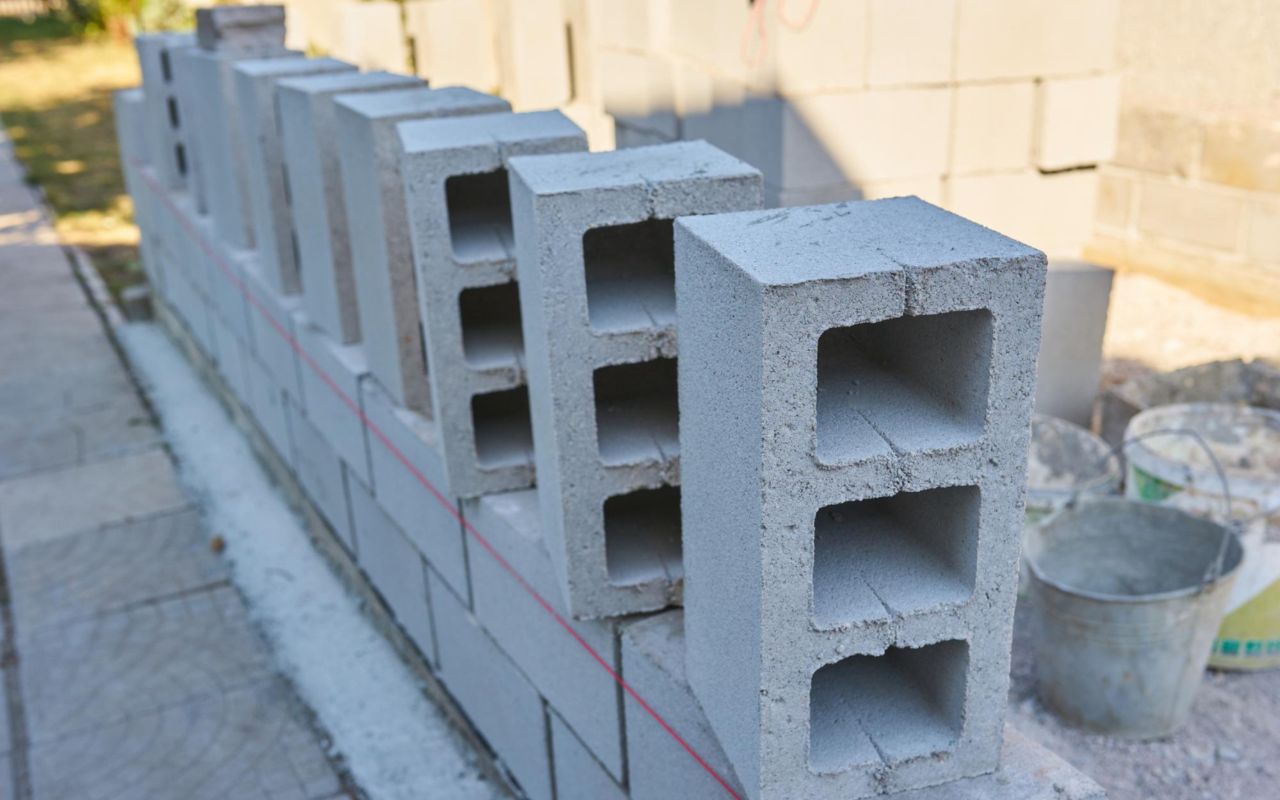
European Research Shows That Recycled Structural Concrete Can Maintain Safety for Up to 100 Years and Influence New Technical Standards.
The reuse of structural concrete is moving from an experimental idea to a concrete strategy for urban transformation.
New scientific evidence suggests that components from deconstructed buildings can be safely reused for decades, reducing costs, carbon emissions, and material waste in construction.
Technical Standards Begin to Change Before the Market
The relevance of the topic has already surpassed the academic environment. In Sweden, researchers are actively participating in the development of a new national standard aimed at the reuse of precast concrete.
-
The lack of welders, electricians, and operators becomes a structural threat in 2025, with the construction industry and manufacturing already suffering from delays, cost pressures, and labor shortages in Brazil.

-
Brazil and Paraguay are just 46 meters away from a historic union on the bioceanic bridge that promises to revolutionize trade between the Atlantic and the Pacific.

-
With 55 km over the sea, a cost of US$ 20 billion, and enough steel to build 60 Eiffel Towers, China’s largest project has connected Hong Kong, Zhuhai, and Macau in a colossal bridge that defies the logic of engineering.

-
A trick with joint compound transforms a Styrofoam ceiling into a plaster-like ceiling: leveled panels, wires and mesh at the joints, sand, paint, and change the environment while spending little today.


The proposal involves specific technical criteria to assess elements such as beams, slabs, columns, walls, and stairs before their reincorporation into new projects.
According to Kjartan Gudmundsson, head of the Sustainable Buildings Division at KTH Royal Institute of Technology, the goal is to replace generic rules with evaluations based on the actual performance of the material over time.
Construction Industry Concentrates Waste and Emissions
The growing interest in reusing concrete arises in a critical scenario. The construction industry is among the sectors that consume the most natural resources and generate solid waste.
Much of the concrete discarded at the end of building life still has sufficient strength for continued use but ends up being crushed due to a lack of reliable technical parameters.
In this context, reusing existing structures is viewed as an environmental and economic solution, especially in large urban centers.
Study Analyzed Real Buildings Before Proposing Models
To understand how far concrete can go, researchers dismantled two buildings located in Sweden and Finland.
The direct analysis of these structures allowed observation of how the material reacted after decades of exposure to different environmental conditions.
This real data served as the basis for developing a method that evaluates the durability of concrete more accurately than traditional approaches based solely on theoretical hypotheses.
Simulations Anticipate Up to a Century of Use
Based on the information collected from the dismantled buildings, the study conducted thousands of computational simulations.
The models considered internal, external, and intermediate environments, as well as scenarios with and without repair interventions.
The results indicate that when properly assessed, reused concrete can maintain its structural safety for up to 100 years, depending on exposure conditions and the type of maintenance adopted.

One of the central points of the study is carbonation, a chemical process in which carbon dioxide from the air reacts with concrete, reducing its alkalinity and exposing steel reinforcements to corrosion.
According to Arlind Dervishaj, a PhD student at KTH and the lead author of the research, understanding the rate of this process is essential to predict structural failures and determine whether an element can be safely reused.
Environment Defines the Durability of Reused Concrete
The study shows that the location where the concrete will be reinstated is decisive. Humid environments rich in CO₂ accelerate carbonation and reduce the material’s lifespan.
Meanwhile, internal and dry spaces tend to better preserve structural integrity.
A simple change in environmental context can significantly hasten the onset of corrosion, reinforcing the need for individualized assessments.
Among the analyzed solutions, surface treatments proved to be highly effective. Water-repellent or silicone-based coatings can reduce corrosion rates by up to 70%, delaying cracking and extending the use of reused concrete.
These repairs make reuse a safe, technical, and economically viable alternative.
New Perspective on the Life Cycle of Concrete
By considering factors such as storage, changes in exposure, repairs, and progress of corrosion, the study proposes a more realistic approach to the life cycle of structural concrete.
Thus, reusing concrete ceases to be an exception and becomes part of a circular economy model, capable of making cities more sustainable without compromising construction safety.
With information from Olhar Digital







-

-

-

-

-

6 pessoas reagiram a isso.