





 Portuguese
  English
  Spanish
  3 min of reading
  0 comments



The Search for More Efficient and Sustainable Energy Solutions Drives the Advancement of New Technologies. Now, Swedish Researchers Believe That Perovskite LEDs May Replace Traditional Lightbulbs, Offering Benefits Such as Lower Energy Consumption and Greater Durability.
Perovskite LEDs are emerging as a promising alternative to traditional lights.
With reduced costs, high efficiency, and potentially lower environmental impact, these new light-emitting diodes can change the way we illuminate homes and electronic devices.
What Are Perovskite LEDs?
Unlike traditional LEDs, which use expensive materials such as gallium nitride, perovskite LEDs (PeLEDs) are made from a mineral composed of calcium oxide and titanium.
-
Researchers in the U.S. have created a flying robot that transforms into a land vehicle while still in the air. The technology, based on aerodynamic transition, converts landing into a scene worthy of Transformers and redefines mobility between sky and ground.

-
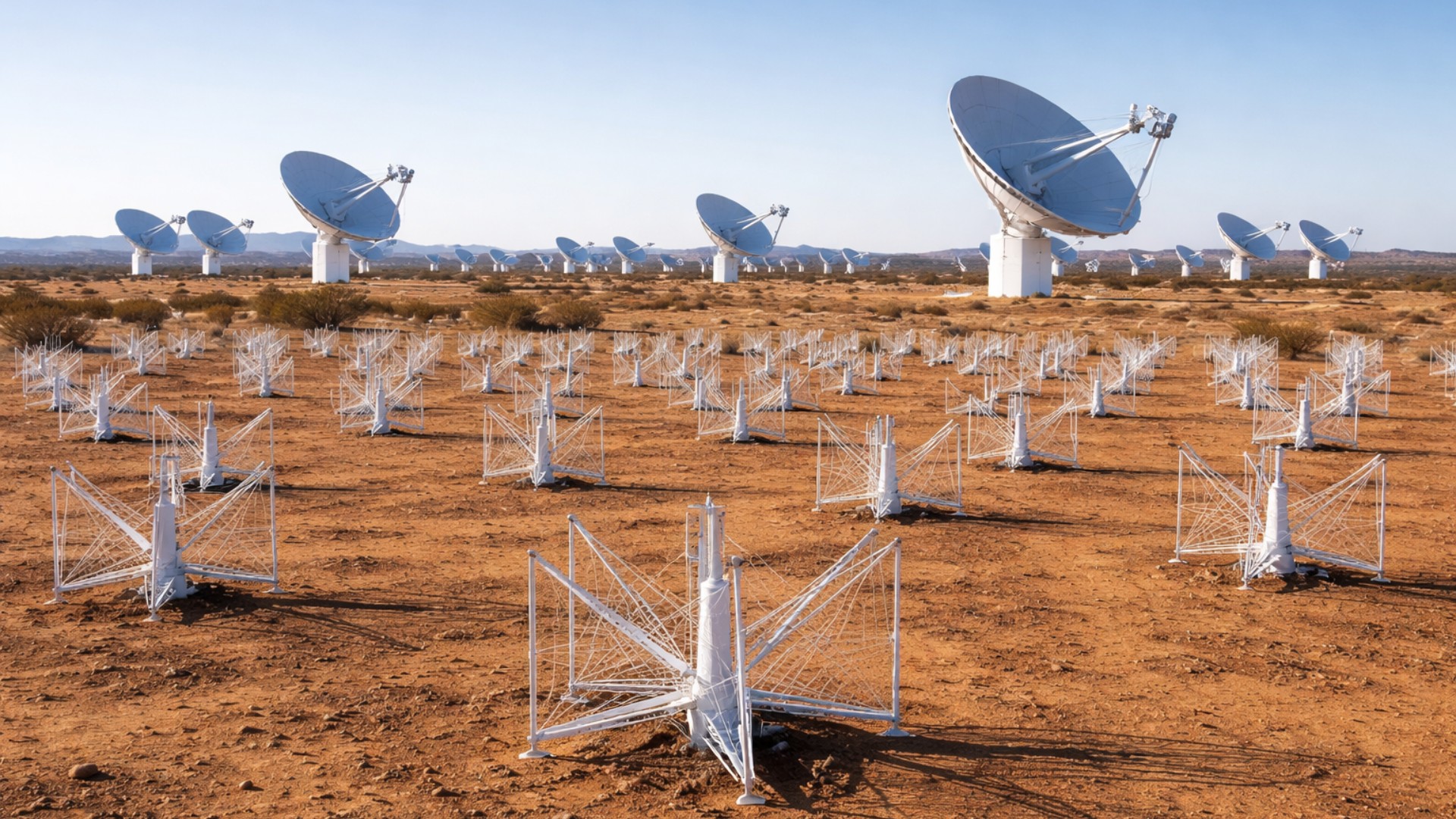
Spread across two continents, with 197 parabolic antennas in South Africa, 131,000 2-meter antennas in Australia, and a range of up to 150 km, the SKA begins to “listen” to the Universe on an unprecedented scale and accelerates the search for black holes, primitive galaxies, and nearly invisible radio signals.
-
Goodbye batteries: a new sensor created by Japanese scientists uses sweat as an energy source and points to a promising path for more sustainable devices, with greater autonomy and less need for frequent recharging.

-
The Brazilian Army inaugurated the assembly line for the Guaicurus armored vehicle with a contract for 420 units by 2033, and the same vehicle has already been tested in combat in Afghanistan and Lebanon by European armies.


This material is already known for its application in solar panels, but is now gaining attention in lighting and electronic displays.
PeLEDs have the potential to be cheaper and easier to manufacture, as well as offering vibrant colors. Feng Gao, a professor of optoelectronics at Linköping University in Sweden, states that this technology could represent the next generation of LEDs.
Benefits and Challenges
In order for PeLEDs to replace traditional LEDs, several challenges must be overcome.
Researchers evaluated 18 different types of PeLEDs in terms of environmental and economic factors. The tested devices cover various colors, such as red, green, blue, white, and infrared.
The results showed that PeLEDs have a similar environmental performance to organic LEDs (OLEDs). However, there are still areas for improvement, particularly regarding production and disposal.
Environmental Impact
A life cycle analysis of PeLEDs revealed that the greatest environmental impact occurs during the production phase, due to electricity consumption and the use of specific substances.
Organic solvents, such as acetone and isopropanol, have a significant weight on the environmental impact of manufacturing.
Experts suggest that advancements in production could reduce these impacts, making PeLEDs an even more sustainable option in the future.
Lifetime
To be commercially viable, PeLEDs need to last at least 10,000 hours. Currently, the best devices last only a few hundred hours.
Muyi Zhang, a PhD student at Linköping University, states that advancements are being made to increase this durability.
The longevity of perovskite LEDs will be a decisive factor for their large-scale adoption. If this issue is resolved, they could outperform traditional LEDs in terms of cost and efficiency.
Market Potential
Beyond lighting, PeLEDs can be used in electronic device displays, communications, and even medical equipment.
Recent studies have shown that these LEDs can be thousands of times brighter than OLEDs, expanding their applications.
It is estimated that in the future, the cost of PeLEDs could be around US$ 100 per square meter, making them competitive with other lighting and display technologies.
With continued investments, perovskite LEDs may become the predominant option in the market.
The study concludes that PeLEDs have significant commercialization potential in the long term. If their lifespan is extended, this technology could transform the way we use lighting in our daily lives.
Study published in Nature Sustainability.








Seja o primeiro a reagir!