





 Portuguese
  English
  Spanish
  6 min of reading
  0 comments


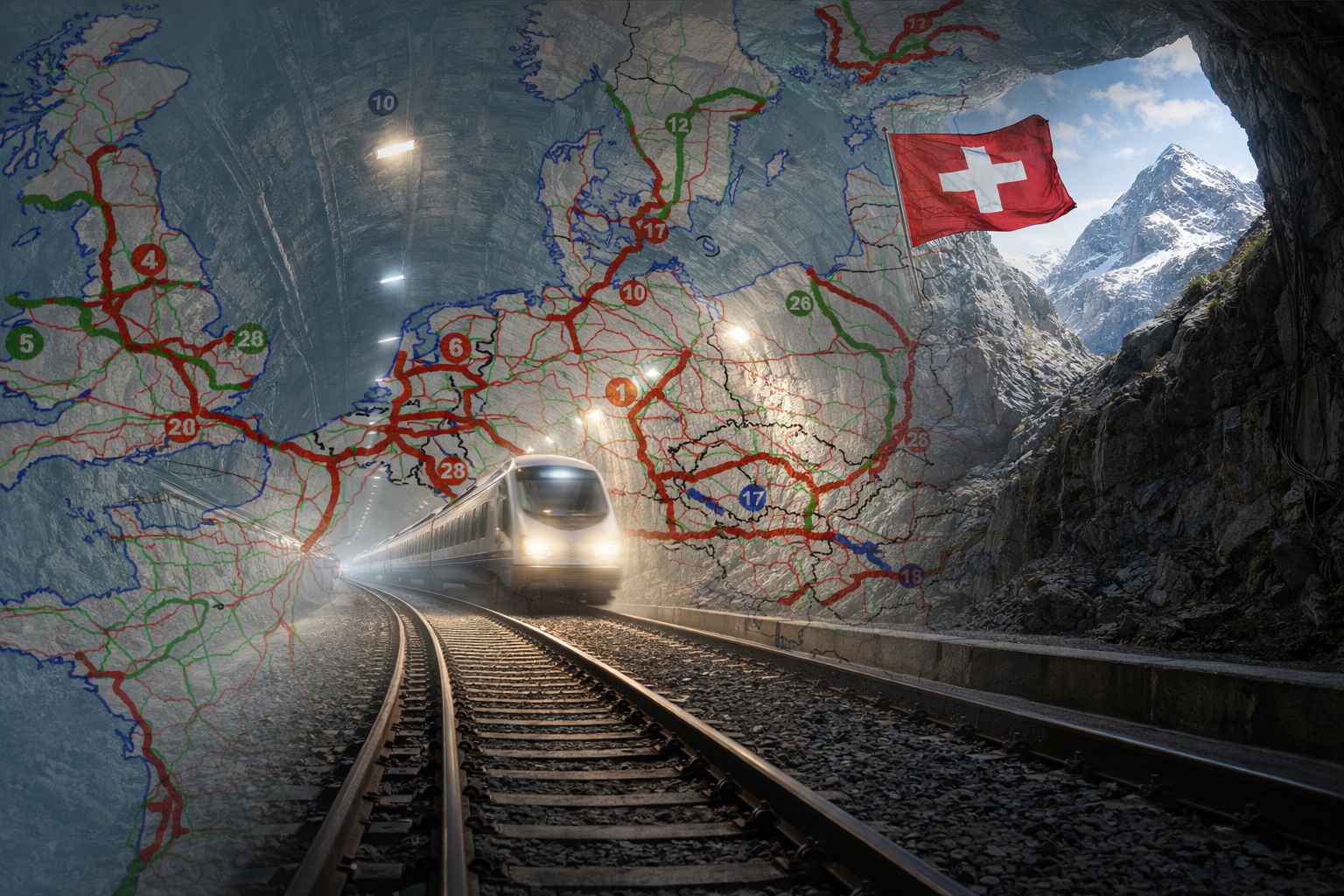
Switzerland Opens More Than 70 Km of Tunnels Under the Alps, Removes 28 Million Tons of Rock, and Adds 2.6 Million Days of Excavation to Change European Transport.
The romantic image of the train winding through Alpine valleys still exists, but today it coexists with something quieter, more precise, and colossal: a network of railway tunnels that runs underneath the backbone of the Alps. Over decades, Switzerland decided that relying on geography would not be a permanent option. The result was a transformation of European transport based on precision engineering, applied geology, and excavation volumes so large they compete with megaprojects in mining.
This change was not abrupt. It began as a national policy, became a continental strategy, and is now consolidating as critical infrastructure for the movement of goods between northern and southern Europe. At the center of this turnaround are two unavoidable technical elements: the construction of more than 70 km of base tunnels under the Alps and the removal of natural barriers that for centuries decided how goods circulated between countries.
What It Means to Cross the Alps from Below
The Alps are one of the densest and most massive mountain ranges on the planet. For rail transport, this has two direct consequences: ramps and curves limit speed, and additional traction is needed to overcome inclines.
-
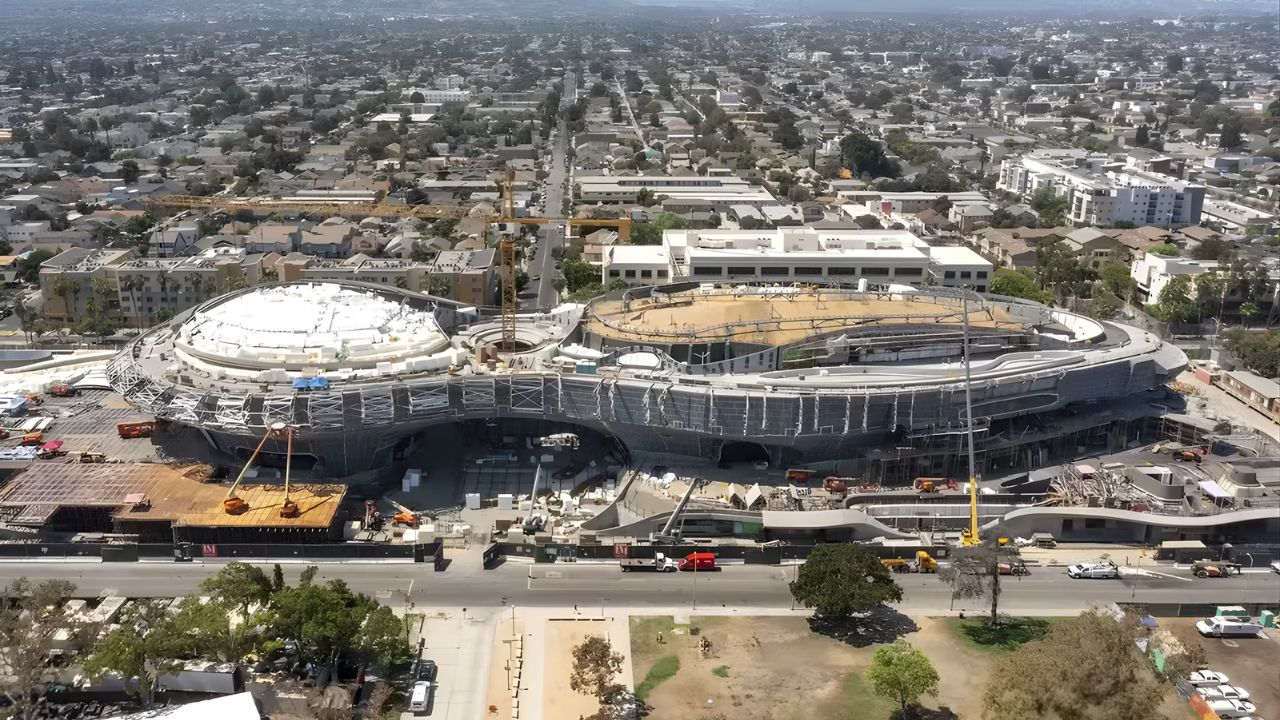
Created by George Lucas with over $1 billion, a futuristic museum in the shape of a spaceship with 1,500 curved panels is about to open in Los Angeles and will house one of the largest private collections of narrative art in the world.
-
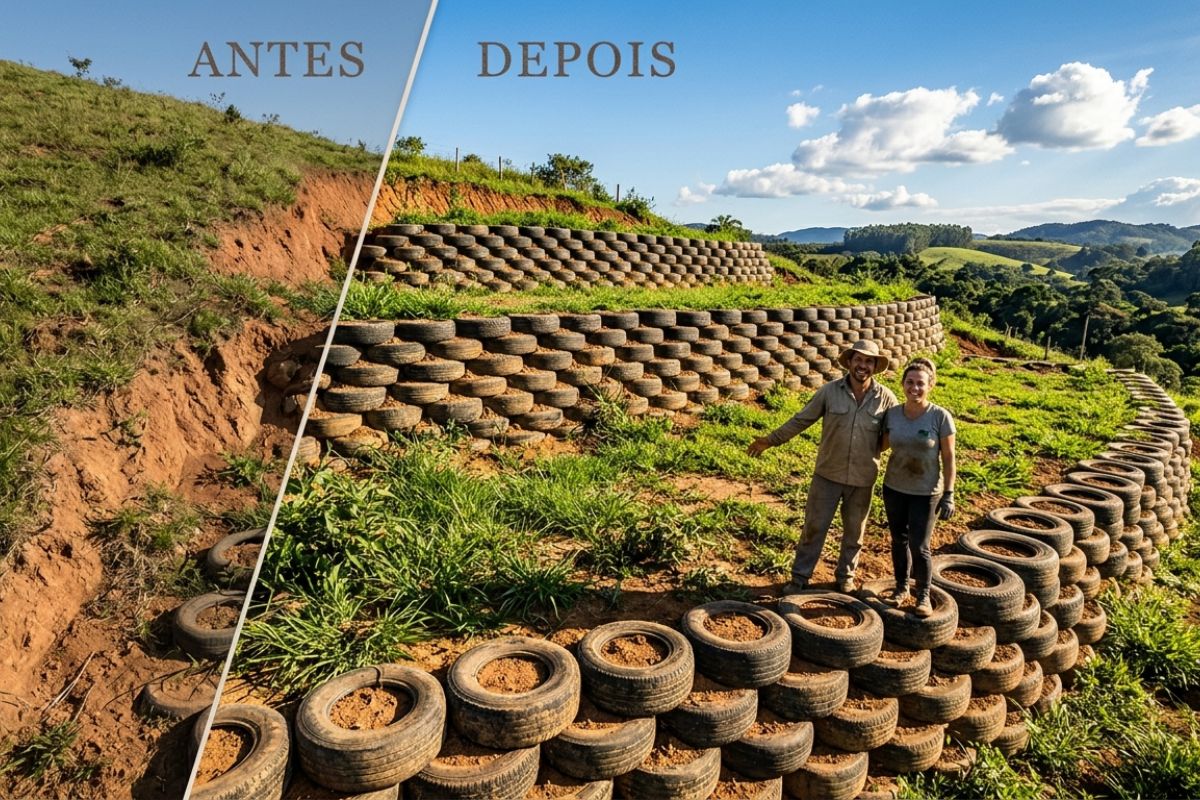
Couple shows how they built a retaining wall on their property using 400 old tires: sloped land turned into plateaus, tires are aligned, filled, and compacted with layers of soil, with grass helping in support and at almost zero cost.
-
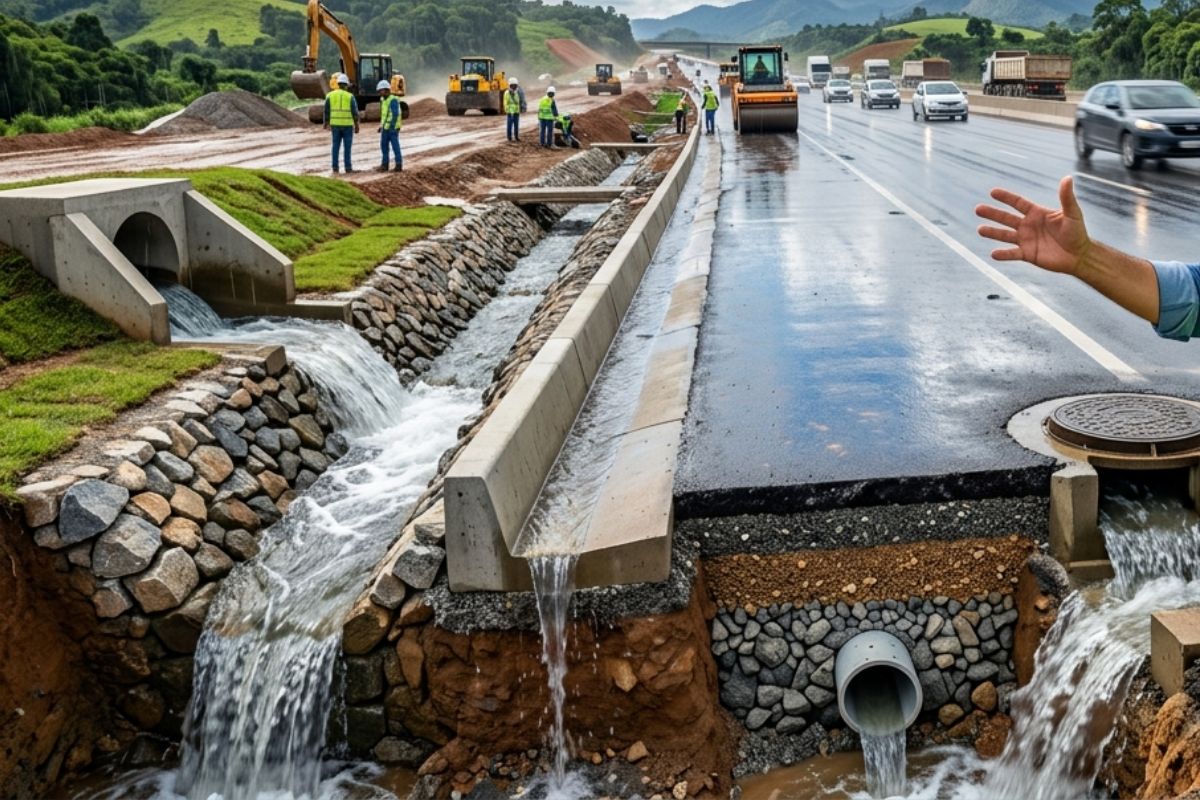
Engineer explains drainage during the rainy season: the difference between surface water and deep water, ditches, gutters, and water outlets on the road, as well as drains and drainage mattresses, to prevent erosion, aquaplaning, and flooding at the construction site today.
-
With 55 floors, 177 meters in height, a 15-meter walkway between the twin towers, ventilated facade, and 6,300 m² of leisure space, Ápice Towers already has one tower completed and another nearly at the top.


A base tunnel, on the other hand, is built as close to valley level as possible, allowing for almost straight and virtually flat lines, ideal for heavy freight trains and high-speed passenger trains.
It was exactly this logic that led Switzerland to approve projects allowing for the linking of Zurich, Milan, Bern, Lugano, and various cities in Central Europe without relying on zigzag routes through the mountains. Instead of climbing and descending the topography, the choice was made to bore through it.
70 Km Excavated, 28 Million Tons Removed, and 2.6 Million Days of Work
To understand the scale, one must look at the raw numbers. Between the Gotthard Base Tunnel (57.1 km) and the Ceneri Base Tunnel (15.4 km), Switzerland created a set of underground corridors that total more than 70 km, crossing massifs of metamorphic rock, fault zones, and geological layers that required different solutions in each sector.
The numbers that do not appear in tourist advertisements, but define what was done, are as follows:
• 28 million tons of rock removed in the excavation process
• 2.6 million days of work accumulated throughout the construction
• More than 9,000 workers involved in continuous shifts
• Subterranean temperatures that could exceed 40°C, requiring active cooling
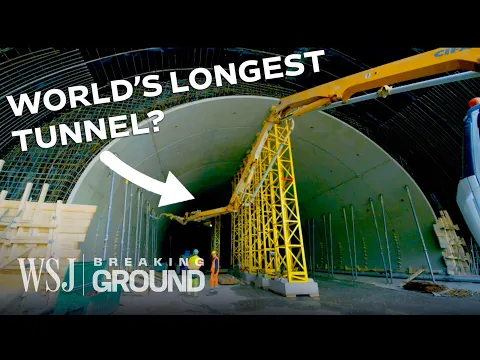

Turning these numbers into a concrete image helps to visualize: the 28 million tons removed is equivalent to around five Pyramids of Khufu or more than 2,800 Eiffel Towers in displaced material mass.
The 2.6 million days of work represent nearly 7,000 man-years, if performed by just one person, a scale that highlights both the human effort and the level of planning required.
Why This Network Changes European Logistics
The greatest impact cannot be measured in photos, but in time and cargo capacity. With the crossing from below, the Alps have begun to function less as a barrier and more as a connection. Cargo routes that previously required additional locomotives, speed reductions, and long maneuvers can now accommodate longer, heavier trains with less energy.
The most emblematic case is the north-south corridor, which links Rotterdam (Netherlands) to the ports of the Mediterranean, primarily Genoa (Italy). This axis is strategic for all of Europe because it concentrates transcontinental commercial flows coming from Asia.
When containers arrive in Rotterdam, the main historical bottleneck was precisely the Alpine crossing. With the infrastructure completed, this bottleneck diminishes, and Europe gains a concrete alternative to purely maritime routes.
When Engineering, Economics, and Geopolitics Meet
Although Swiss tunnels are technically Swiss, their impact is continental and their funding as well. The European Union classified the Alpine corridors as part of the Trans-European Transport Network (TEN-T) — a railway, port, and road network aiming to reorganize European transport by the mid-2040s.

The Swiss tunnel enters this plan as a logistical piece but also as an environmental instrument. The strategic objective is simple: reduce trucks on highways and transfer cargo to trains.
The fewer trucks crossing the mountains, the lower the CO₂ emissions, less congestion in narrow valleys, and less dependence on diesel in continental transport.
For Switzerland, there is a second component: internal environmental protection. The country voted in a referendum that heavy traffic should be diverted to railways whenever possible, preserving sensitive alpine areas. In other words, the tunnel is not just a technical project, but also a political decision.
Geology, Heat, and Pressure: What It Means to Bore Through an Alpine Massif
The popular imagination still associates tunnels with dynamite and excavators, but Alpine base tunnels are essentially geotechnical laboratories.
Depending on the excavation zone, tunnel boring machines (TBMs) up to 410 meters long were used, capable of continuously removing material while applying concrete segments to line the void created.

However, the challenge was not just excavation. In many sections, the alpine massif presents high pressures, fractured zones, geological faults, and water veins. This required drainage systems, soil freezing in unstable areas, and continuous geothermal monitoring.
In some sections, the natural temperature reached 45°C, necessitating the implementation of ventilation and cooling systems to keep crews operational.
These factors explain why the project consumed 2.6 million days of work, distributed among teams that operated 24 hours a day, with their own underground logistics: cafeterias, dormitories, clinics, dedicated energy systems, and stability controls.
The Practical Change for Passengers and Cargo
From the perspective of those using the system, the difference is simple and direct:
• Passenger trains can cross the Alps at over 200 km/h, reducing travel time between cities
• Freight trains can carry more weight, with less need for additional locomotives
• Winding and steep sections that limited transport since the 19th century have become optional
This transition fundamentally changes something in Europe: the position of Mediterranean countries in global trade. Italy, for example, is increasingly competing for the reception of containers coming from the Suez Canal, because now it can send them to central Europe using a continuous railway corridor.
The Symbolic and Cultural Value of This Work
Behind the engineering, there is a relevant cultural point: Switzerland viewed the mountain not as an untouchable obstacle, nor as a resource to be destroyed, but as a means to be reorganized. Instead of filling valleys, raising bridges, or expanding highways, the decision was to descend.
This philosophy has become part of Switzerland’s infrastructure identity: deep, silent, and long-term works, with gains that take time to materialize but that reshape the territory when they mature.
The alpine network is not yet complete. In the coming years, other elements of the TEN-T network are expected to come into service, connecting Spain, France, Germany, Hungary, Slovenia, and Italy through strategic railway corridors.
If the first phase made transport faster, the next aims to make the intercontinental system competitive against maritime transport.
Throughout the 20th century, the mountains decided how goods circulated across the continent. In the 21st century, tunnels will decide in their place.








-

-

-

3 pessoas reagiram a isso.