





 Portuguese
  English
  Spanish
  4 min of reading
  0 comments


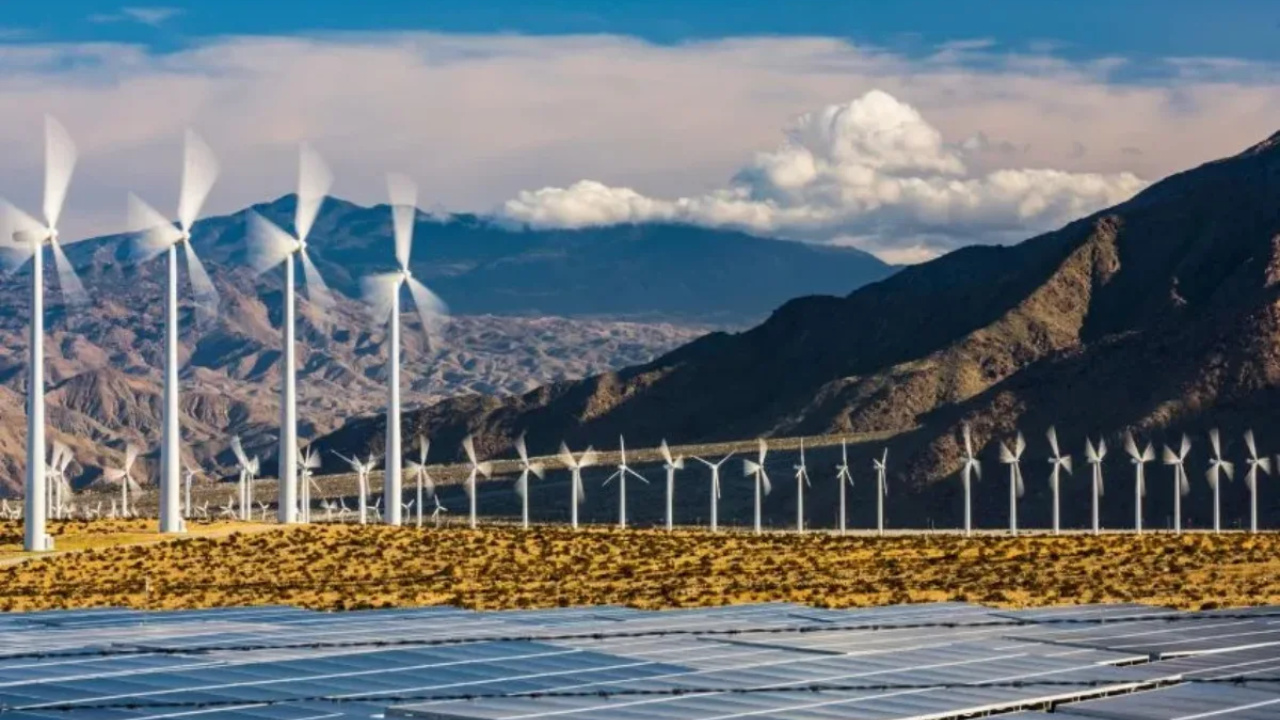
The Transition to Renewable Energies in China Advances, But Faces Market Obstacles, Geopolitical Disputes, and Industrial Overcapacity in Strategic Sectors.
China is going through a decisive period in consolidating renewable energies as a central axis of its energy matrix. By 2025, the country intensified reforms in the electricity sector, while also increasing technological investments and dealing with rising geopolitical risks. This movement occurs at a strategic moment, as the planning of the 15th Five-Year Plan, valid between 2026 and 2030, is under discussion.
As the world’s largest consumer and producer of energy, the country seeks to gradually reduce its dependence on coal. At the same time, it aims to ensure energy security, strengthen the national industry, and sustain economic growth. However, this balance has proven complex amid ongoing transformations.
End of Guaranteed Purchases Changes Logics of Renewable Projects
One of the most relevant changes occurred in February, when the Chinese government ended the guaranteed purchase model for wind and solar energy by the electricity grid. The measure requires new projects to sell electricity directly in the open market starting June 1.
-
A Canadian retiree creates a hydroelectric system on a real river, generating energy continuously throughout the day and demonstrating how the power of water can supply a house with stability even in a simple structure.

-
Petrobras reaffirms its commitment to the market and ensures that it will carry out the energy transition safely to maintain national sovereignty.

-
Researchers discover a possible hydrogen deposit of up to 46 million tons beneath an ancient coal basin, and the volume could exceed half of the entire global production.

-
China bets on the Fishery-PV model and transforms fish farms into giant solar plants, covering ponds with panels that generate energy while utilizing the same space for large-scale aquaculture production.


The decision is part of a broader reform aimed at increasing the efficiency and competitiveness of the electricity sector. According to a joint directive from the National Development and Reform Commission and the National Energy Administration, local governments are also prohibited from requiring storage systems as a mandatory condition for project approval.
Prior to this, such requirements were common. Although they contributed to grid stability, they raised costs and, in many cases, encouraged the use of low-quality equipment.
Market Reaction and Pressure on Energy Prices
Initially, the market reacted cautiously. Developers accelerated projects before the new rules took effect. As a result, China recorded a monthly record of solar installations in May.
At the same time, structural factors began to pressure energy prices. The continuous expansion of installed renewable energy capacity coincided with weaker industrial demand and falling coal prices. Additionally, the accelerated implementation of regional spot markets intensified volatility.
In September, the country advanced further by releasing its first national rules for electricity spot markets, reinforcing the transition to a market-oriented system.
Artificial Intelligence Gains Space in the Energy Sector
As the reforms progressed, the adoption of artificial intelligence gained new momentum. In January, startup DeepSeek launched an open-source language model that expanded access to technology for energy sector companies.
Shortly afterward, the State-owned Assets Supervision and Administration Commission announced plans to increase the use of AI in state-owned enterprises. By the end of March, over 500 operational applications were already using the technology, according to official data.
Companies in oil, gas, mining, and electric networks began employing AI to reduce costs, increase efficiency, and improve safety. Still, executives acknowledge that applications remain limited and have not yet altered predominant business models.
Technological Advancement Drives New Energy Solutions
In addition to digitization, the race for next-generation technologies has intensified. The battery sector gained prominence, especially with the growing focus on solid-state batteries, seen as an alternative to the limitations of lithium-ion batteries.
In the wind sector, innovative projects have also attracted attention. In July, Envision Group inaugurated the first phase of a project in Inner Mongolia that uses its own electricity grid, powered by renewable energies, for ammonia production. The model signals an attempt to reduce waste and costs in resource-rich areas.
Dispute Over Critical Minerals Intensifies International Tensions
In the geopolitical realm, critical minerals have become one of the main focuses of tension between China and the United States. In April, Beijing included seven medium and heavy rare earths on its export control list, a move interpreted as a response to tariffs imposed by Washington.
These minerals are considered strategic for sectors such as defense, aerospace, and advanced technology. In contrast, the US has begun requiring special licenses for the export of AI chips to China, affecting companies like Nvidia.
Despite a brief period of détente following negotiations in June, new restrictions and retaliations marked the second half of the year, maintaining uncertainty in global supply chains.
Overcapacity Pressures Green Industries
Internally, China’s so-called “Three New” industries — electric vehicles, solar panels, and lithium-ion batteries — faced a cycle of overcapacity and falling prices. The solar sector was the most affected.
Silicon prices, for example, plummeted almost 90% from the peak in 2022. Consequently, large companies in the sector reported significant losses in the first half of 2025.
In light of this scenario, the central government convened meetings with industry representatives to discuss measures against unfair competition and below-cost selling practices. Meanwhile, producers organized joint ventures to try to contain overcapacity.
Exports and Limits of Green Growth
Facing difficulties in the domestic market, renewable energy companies turned to overseas markets. Exports of electric vehicles and batteries showed more favorable performance. However, exports of solar cells fell by almost 10% in value.
Analysts point out that weak demand is a structural problem. In addition, cuts in subsidies and increased trade barriers in Europe and the United States add new uncertainties to the sector’s future.
Even so, the advancement of renewable energies remains central to China’s strategy. The challenge lies in aligning growth, economic efficiency, and energy security in an increasingly competitive and fragmented global landscape.






Seja o primeiro a reagir!