





 Portuguese
  English
  Spanish
  5 min of reading
  1 comment





A discrete set of tubes and connections on the wheels can be part of a system that maintains the ideal tire pressure in trucks and buses, even while in motion. The technology helps to reduce wear, consumption, and failures that turn into emergencies on the road.
Many people see a spinning metal tube near the hub of the wheel of trucks, trailers, and some buses and think it’s just a tire ornament, merely decoration. In practice, that is usually a sign that there is an automatic inflation and pressure control system working behind the scenes, without drawing attention.
The goal is simple and important: to maintain the correct tire pressure during operation, something that directly impacts safety, consumption, and the cost of a fleet.
In a sector where a single tire can stop a heavy vehicle in the worst place at the worst time, the aim is to prevent a “slowly deflating tire” from becoming a scare.
-
A strong earthquake in Indonesia affects houses and schools, causes panic, triggers a tsunami alert, and records a rise in sea level of up to 30 centimeters in some areas.

-
The Argentine government celebrates the lowest poverty rate in 7 years, but experts warn that the methodology has changed, real wages have fallen, unemployment has risen, and the number of people on the streets of Buenos Aires has increased by 57% since Milei took office.

-
7.8 magnitude earthquake in Indonesia frightens the population, triggers tsunami alert, and hits an island with over 200,000 inhabitants this Thursday.

-
Google will finally let you change that embarrassing Gmail address you created in your teenage years without losing any accounts, logins, or old emails: the feature is already available in the United States.


What Is CTIS and Why Does It Appear as a Spinning Tube on the Wheel? See the Video
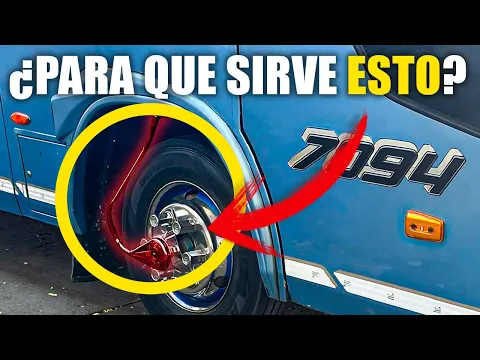

CTIS stands for a central tire inflation system, capable of monitoring and adjusting the pressure without needing to stop at a gas station, tire shop, or yard.
On the road, the most visible part is usually the connection between the fixed part of the axle and the part that rotates with the wheel, using specific connections and hoses.
This “tube” exists because air needs to cross an area that is rotating constantly, without leaking, and reach the valve of the tire under control.
How the System Adjusts Tire Pressure in Real Time
Inside, the system combines compressed air from the vehicle itself with valves and sensors that compare the actual pressure with a programmed target.
In typical heavy transport projects, the regulated air goes through a control center and follows inside the axle or through dedicated lines until it reaches the wheel assembly.
In the wheel, the key component comes in: the rotary joint, which allows air to be transferred from a stationary part to another in continuous rotation.
From there, the air travels through hoses to each tire, and when the system detects a drop below the target, it opens valves and restores the pressure.
In many systems, the lines remain depressurized most of the time and only receive air when the control is measuring or correcting, precisely to reduce wear and risk of leaks.
Why Incorrect Pressure Increases Accident Risk and Costs in the Fleet
Low pressure increases tire deformation, raises temperature, and accelerates wear, creating a scenario where failures become more likely.
Moreover, the dynamic behavior changes: steering becomes less precise, stability worsens, and the vehicle may require greater corrections, which is critical in heavy vehicles.
Entities and studies on efficiency indicate that tires out of the ideal range diminish performance and increase the chance of incidents on the road, especially on long trips.
And there is one point that no technology should erase: automatic systems help, but do not replace pre-trip inspection, because visible damage or a mechanical issue can exist even with “apparent” normal pressure.
Diesel Savings and Increased Tire Lifetime: What Data Shows and Where the Exaggeration Lies
The relationship between pressure and consumption is direct: a flat tire increases rolling resistance and forces the engine to use more fuel to maintain speed and load.
In analyses aimed at commercial transport, there are estimates of increased consumption in the range of 0.5% to 1.0% when tires operate with significant under-inflation, and also data indicating that a large part of the fleet runs with tires well below the target at some point.
In the technical literature, there are results indicating increases in consumption ranging from 2% to 5% in certain pressure drops, and research with trucks showing an inverse relationship between pressure and consumption, with measurable gains when the pressure is maintained within the correct range.
Manufacturers and manuals of automatic inflation systems typically highlight benefits such as fewer stops, less irregular wear, and greater maintenance predictability, but the exact percentages vary widely depending on route, load, climate, tire type, and maintenance discipline.
The practical consensus is that CTIS and similar systems tend to deliver more value when they prevent the “tire slowly deflating for weeks,” which is the type of problem that generates invisible fuel costs and shortens the tire’s life without fanfare.
Where the Technology Came From: The Army and Why It Gained Traction in Trailers and in the Field
The idea of adjusting pressure while in motion became famous in military applications, with reports of use in vehicles like the amphibious DUKW as early as the 1940s, allowing tire adaptation to different terrains.
Over time, the concept migrated out of the military environment and gained versions for civil operations where tire costs are central, such as long-distance trailers, mining, agriculture, and off-road applications.
Today, there are systems that work with the architecture of the axle and the wheel to deliver air to the tire, and there are also families of solutions known in the market as ATIS, commonly found in trailers and semi-trailers.
Adoption is growing precisely because it is a way to automate a detail that, in practice, often fails: perfect calibration across all tires, every day, in vehicles that travel thousands of kilometers.
If you’ve seen this tube on the wheel, do you think the technology is worthwhile or is it just another maintenance point that will leak? In your experience, does it save the operation, or could it “mask” issues and lead drivers to relax during inspections? Leave a comment sharing what you’ve seen on the road and in the fleet.








Artigo de **** isso exite a decadas