





 Portuguese
  English
  Spanish
 5 min of reading
  7 comments


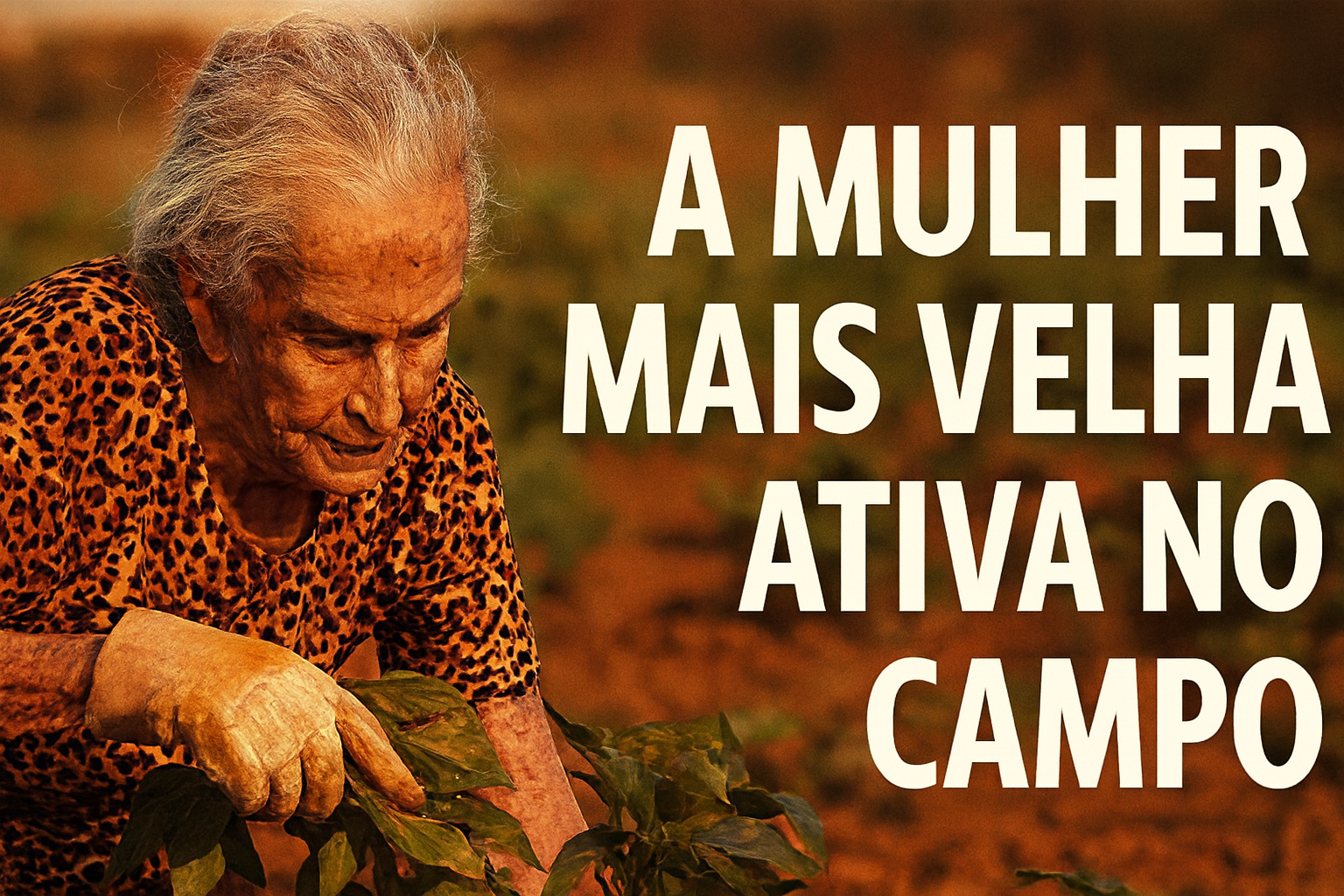


At 102 Years Old, Spanish Woman Active in the Brazilian Countryside Continues to Care for Her Garden Every Day and Preserves 80 Years of Agricultural History in the Interior of São Paulo.
In 2024, the routine of a centenarian woman gained attention once again in Andradina, in the interior of São Paulo, after records were shared by residents and rural organizations in the region. At 102 years, the Spanish Ana Juliana Rodrigues de Campos, affectionately known as Anita, was recognized by the local community as the oldest woman still active in the countryside in Brazil. The story, widely documented by local newspapers and groups working in the Timboré settlement, draws attention not only for her age but for the consistency with which she has maintained the same work rhythm for decades.
Anita was born in Galicia, Spain, in 1922, lived through her childhood during the post-war period in Europe, and immigrated to Brazil while still young, in search of stability and work. Throughout her life, she witnessed the transformations in agriculture, saw land conflicts in the Pontal do Paranapanema region, and became a well-known figure in movements related to Land Reform. Today, surpassing a century of life, she remains active on the small rural property where she lives, being seen daily in the garden that she herself planted and cares for — an activity that, according to neighbors, she rarely misses.
Routine in the Countryside at 102 Years Old of Anita
The garden maintained by Anita is the center of her routine. There, she performs tasks that many people would consider exhausting even for someone in their 50s. Every day, early in the morning, she goes to the main patch to water the plants, check the soil, and remove dry leaves.
-
These living root bridges and ladders are over 700 years old and help indigenous people survive in one of the rainiest regions in the world.

-
From sertanejo star to international investor: Ana Castela invests millions in a mansion in the USA, creates a themed accommodation in Orlando, and shows that the “boiadeira” also wants to grow away from the stage.

-
The 10 most stunning motorhomes in the world: a $3 million trailer with a rooftop nightclub and garage for a Ferrari, “palaces on wheels” with Italian marble, private cinema, and five-star hotel luxury for billionaires.

-
Trump wanted to spend $400 million on the White House, but the courts prohibited the million-dollar construction.


According to reports from nearby residents, she insists on doing everything manually, even with family nearby. “It’s her way”, they say. The activity includes meticulous care with herbs, roots, medicinal plants, and varieties of vegetables that she has cultivated for decades.

The work is not limited to cultivation. She participates in harvesting, guides soil preparation, and is part of a family farming model where every square meter of the property has cultural and historical value. Despite her advanced age, Anita does not delegate essential tasks. According to records from Timboré residents, she is present in the garden daily, even during hot periods, a common condition in northwestern São Paulo.
Her routine fuels an important debate among gerontology scholars: how do some people surpass 100 years while maintaining functional and cognitive autonomy?
Research conducted by the International Longevity Center (ILC-Brazil) shows that regular work, especially in natural and outdoor environments, contributes to higher levels of mobility, reasoning, and emotional balance in the elderly. Anita has become, unwittingly, yet another example of this phenomenon.
Participation in Land Reform and History in Timboré
The Timboré settlement in Andradina is one of the oldest in the region and has strong ties to rural movements. Anita participated in significant moments of this historical cycle. Local organizations recognize her role in community organization and support for groups that fought for land regularization over the past decades.
Although she no longer engages in activities related to meetings or mobilizations, her name remains associated with rural women’s resistance in the interior of São Paulo. Many residents claim she represents a direct bridge between generations, bringing memories of the region’s agricultural colonization, the pre-settlement period, and the consolidation process of small properties focused on subsistence production.


Anita’s resistance is not only in having survived adverse periods — but in continuing, even today, to preserve agricultural practices that have become rare. In an era of intense mechanization and advancing agribusiness, the garden she cares for daily has become a symbol of a way of life that silently resists.
Immigration and Adaptation to Brazil
Anita arrived in Brazil as a young woman, accompanying family members seeking land and opportunities following the European crisis of the mid-20th century. Settling in the interior of São Paulo required adaptation to a harsher climate, long periods of drought, and the typical soil of the Paraná River Valley region.
Community reports indicate that her journey in agriculture began in the 1950s when she initiated her first subsistence crops. Her mastery of planting, irrigation, and harvesting techniques improved over time, and part of this knowledge continues to be passed orally to new farmers in the region.
The medicinal plants cultivated in the centenarian’s garden — such as boldo, arnica, peppermint, and lemongrass — are frequently mentioned by neighbors as traditional remedies used by families living in the countryside for generations.
The Oldest Active Woman in the Countryside in Brazil
Anita’s recognition as the oldest woman active in the Brazilian countryside came from local records, regional publications, and community projects that mapped longtime residents still involved in agricultural activities. So far, there is no national public record of another woman age 102 or older working daily in a family garden.
This recognition began to circulate in networks of rural organizations, in reports from Andradina newspapers, and in institutional videos produced by the Timboré community. The case drew attention for its rare combination: extreme longevity, continuous agricultural activity, and a history of participation in social movements.
For many residents of the settlement, she is more than a historical figure — she is a living guardian of practices that have helped solidify family farming in part of the interior of São Paulo.
Tradition, Identity, and Future
Anita’s journey sheds light on a common phenomenon in rural Brazil: elderly individuals who remain active not out of necessity but due to a deep connection with the land. The agricultural environment, associated with structured routines, moderate physical effort, and community interaction, is often cited as a factor of longevity in studies on rural populations.
At 102 years old, Anita continues to perform tasks that maintain her autonomy and reinforce her identity as a farmer. She represents a generation that grew up amidst crises, crossed borders, faced climate changes, socioeconomic transformations, and yet maintained a daily bond with the land.
By preserving her garden, she also preserves a way of living and cultivating that is disappearing in Brazil. And for the Timboré community, witnessing this routine is to witness a living part of the country’s agricultural history.








Que lindo 🤩 isso me faz lembrar da vida eterna escrito na bíblia, porém não mais com as limitações que certamente a idade trás .
Minha avó é mas velha… Vai fazer 104 , no dia 7 de Janeiro. Ela usa redes social, whatsapp e ler vários livros e reza todos os dias… Faz tudo sozinha… Muita saúde e forte! Graças a Deus! 🙌
Traz reflexões sobre o sentido da vida que cada pessoa alimenta dentro de si. Um paradoxo para os dias atuais sobre o que significa qualidade de vida!!