





 Portuguese
  English
  Spanish
  4 min of reading
  0 comments


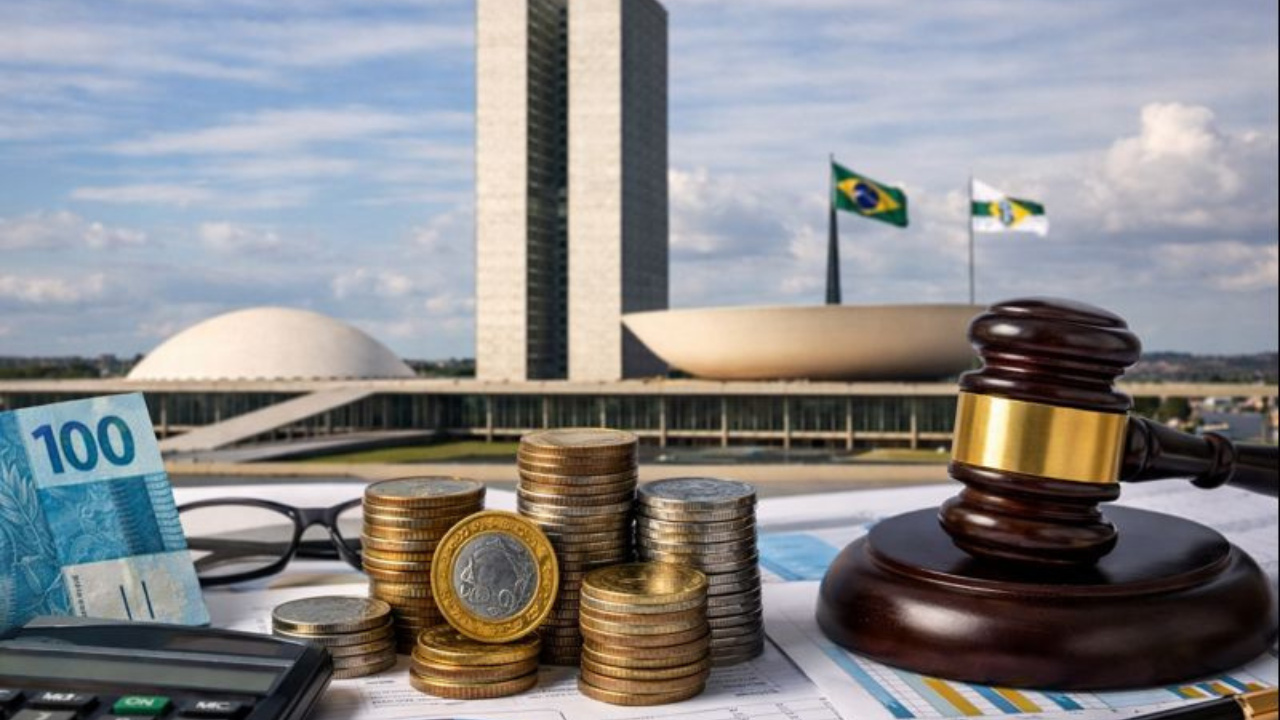
Approved in the Committee, the Federal Budget 2026 Foresees Fiscal Surplus, More Parliamentary Amendments, and Public Investments.
The National Congress made progress in the processing of the Federal Budget 2026 after the Joint Budget Committee (CMO) approved, on this Friday (19), the final report of the proposal, which now goes to the joint vote of the Chamber and the Senate.
The text establishes a fiscal surplus of R$ 34.5 billion, increases the volume of parliamentary amendments, and sets a historic floor for public investments, following the rules of the fiscal framework approved in 2023.
The government’s goal is to balance the accounts, preserve space for investments, and provide predictability to the flow of resources throughout the year.
-
The institute that trained the greatest aerospace engineers in Brazil has just opened its first campus outside São Paulo after 75 years: ITA Ceará will have R$ 445 million, new courses in energy and systems, and classes are expected to start in 2027.

-
Luciano Hang, owner of Havan, goes to Juiz de Fora after the tragedy in February, brings R$ 1 million, hands out R$ 2,000 cards, and donates up to R$ 15,000 to victims in the region.

-
The Brazilian passport allows legal residence in dozens of countries without the need for a prior visa, and most Brazilians are unaware that they can apply for residency directly upon arriving in nations in South America, Africa, and even Europe.

-
Petrobras sends a message to Brazilian truck drivers after fuel collapse and reveals plan to have 100% domestic diesel.

Fiscal Surplus Within the Rules of the Fiscal Framework
The report approved by the CMO projects a fiscal surplus of R$ 34.5 billion in 2026, an amount aligned with the requirements of the fiscal framework.
The rule provides a tolerance margin of 0.25 percentage points in relation to the central target.
In practice, this means that the government will formally meet the target if it ends the year with a primary result between zero and a surplus of up to R$ 68.6 billion.
Thus, the text ensures greater flexibility to deal with economic fluctuations without breaking the fiscal framework.
Moreover, the fiscal framework establishes clear limits for the growth of expenses, seeking to contain structural imbalances and reinforce the credibility of Brazilian fiscal policy.
Parliamentary Amendments Total R$ 61 Billion in the Federal Budget 2026
One of the central points of the Federal Budget 2026 is the forecast of about R$ 61 billion in parliamentary amendments.
Of this total, R$ 49.9 billion will be directly under the control of deputies and senators, through individual, bench, and committee amendments.
The largest portion of these funds will be allocated to mandatory amendments, whose execution is obligatory by the government. In 2026, approximately R$ 37.8 billion fall into this category.
Individual amendments, distributed among each parliamentarian, total R$ 26.6 billion, while state bench amendments reach R$ 11.2 billion.
Both have guaranteed payment throughout the financial year.
Difference Between Mandatory and Non-Mandatory Amendments
In addition to the mandatory amendments, the text reserves R$ 12.1 billion for committee amendments, which do not have mandatory execution.
In this case, the government can contingent or cancel the transfers if it assesses difficulties in closing the accounts at the end of the year.
This model reinforces the political weight of amendments in the budget and expands the role of Congress in the allocation of public resources, especially for regional works and projects.
Parliamentary amendments therefore represent a growing share of the Budget and function as a direct financing instrument for local demands.
Payment Schedule Provides Predictability to Parliamentarians
The approval of the text occurred after negotiations between Congress and the government, which resulted in the definition of a payment schedule for the amendments in the Budgetary Guidelines Law (LDO) of 2026.
Under the agreement, more than half of the mandatory amendments must be paid by the end of the first semester. The rule applies to individual and bench amendments, with priority for areas such as health and social assistance.
The Executive will have to pay 65% of the amount indicated in these modalities for these areas, which will concentrate most of the resources indicated by parliamentarians.
Public Investments Will Have a Minimum Floor of R$ 83 Billion
The Federal Budget 2026 also establishes a minimum floor of R$ 83 billion for public investments, corresponding to 0.6% of Gross Domestic Product (GDP), as stipulated by the fiscal framework.
The estimated GDP for 2026 is R$ 13.826 trillion, which reinforces the importance of this floor to support infrastructure and structural projects.
Investments are part of discretionary expenses, meaning they are not mandatory. In times of fiscal tightening, they are usually contingent.
For this reason, defining a minimum floor seeks to reduce stoppages and ensure the continuation of strategic works.
New PAC Will Be a Priority in Investments
According to the approved text, the government must prioritize projects of the New Growth Acceleration Program (Novo PAC).
Many of these works face budgetary restrictions and delays, making the reinforcement of public investments a sensitive point in the proposal.
The expectation is that the investment floor will help unlock infrastructure, housing, urban mobility, and sanitation projects, deemed essential for economic growth.
Total Budget Reaches R$ 6.5 Trillion
The Federal Budget for 2026 totals R$ 6.5 trillion. Of this amount, about R$ 1.8 trillion will be allocated to refinancing the public debt.
The expense limit for the Executive, Legislative, and Judicial branches was set at R$ 2.3 trillion, respecting the rules of the fiscal framework.
Personnel Expenses and Salary Adjustments
The report forecasts an increase of R$ 12.4 billion in personnel and social security expenses compared to the previous year.
Of the total, the government will allocate R$ 7.1 billion to adjustments and remuneration additions, while applying R$ 4.3 billion to creating new positions, functions, and bonuses.
“This increase reflects the intention of the Executive, as well as the other Powers and bodies, to promote the strengthening of careers and adopt salary policies more compatible with their institutional needs,” says the report.










Seja o primeiro a reagir!