





 Portuguese
  English
  Spanish
  5 min of reading
  0 comments


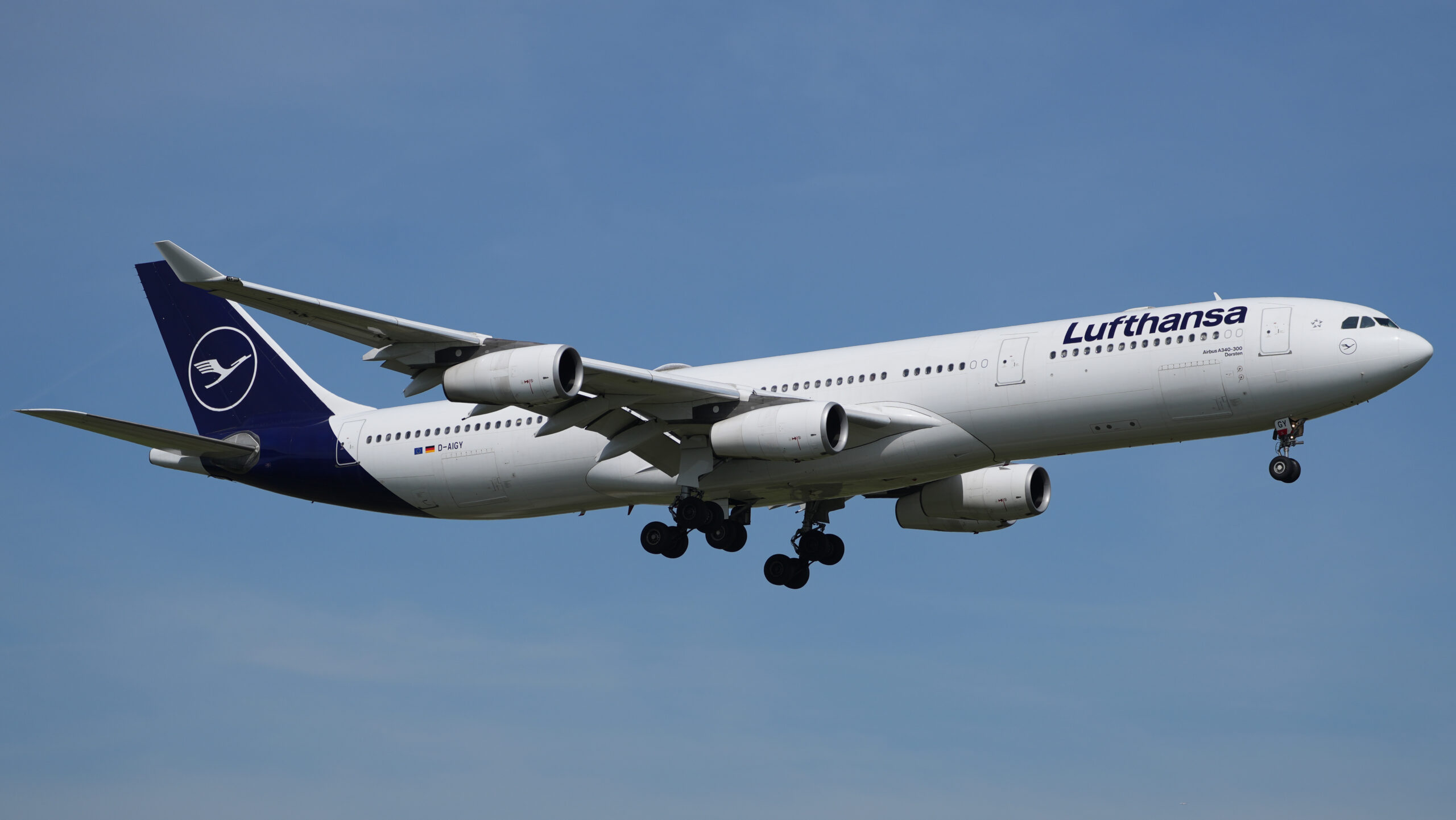
Know Why The Quad-Engine Airbus A340, Famous For Its High Fuel Consumption, Faded From The Scenery Of Large Airlines. Understand The History Of The A340 And How Modern Twin-Engines Like The A350 Changed The Industry.
The Airbus A340, known for its four engines and for operating long-haul intercontinental routes, became synonymous with robustness and autonomy. However, what was an advantage in the 1990s turned into a logistical and financial problem in the following decades. With a fuel consumption of up to 9 tons per hour, the model was gradually replaced by more efficient aircraft, such as the Boeing 787 Dreamliner and the Airbus A350 XWB. This article analyzes the history of the A340, its performance, the reasons for its decline, and how it represents a milestone in the evolution of long-haul commercial aviation.
The End Of An Era: Why The Airbus A340 Was Retired
Designed to dominate the skies on long-distance routes, the Airbus A340 had its first flight in 1991. It was the European manufacturer’s bet to compete with the Boeing 747 in a market where range and passenger capacity were priorities.
With versions that could fly more than 14,000 kilometers non-stop and carry up to 440 passengers, the A340 seemed set for success. But time showed that its greatest feature — the four engines — would also be its Achilles’ heel.
-
Iceland accidentally drilled into a magma pocket at 2,100 meters and revealed that the extreme heat beneath the crust could pave the way for a new source of continuous energy.

-
Discovery of a 15-kilometer labyrinth beneath the buildings of Rome raises alarm for collapses and reveals the largest underground network ever found in the Italian capital.

-
A rare storm phenomenon in the United States alerts meteorologists worldwide due to four different forms of water falling from the sky, which freeze immediately upon touching the ground, poles, cars, or trees.

-
He has been using a wheelchair for almost 10 years, lives alone, is independent, and decided to become a delivery driver for an app: Samuel makes up to 6 deliveries a day, covering routes of 1 km in his wheelchair and has even managed to do 2.5 km in a single run.


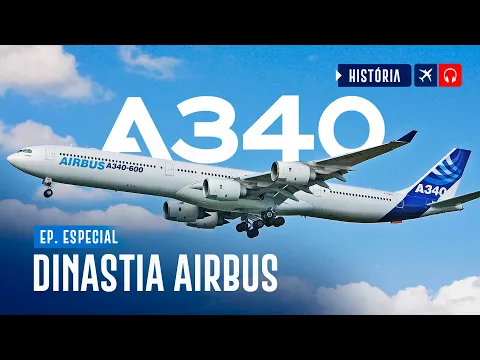

In today’s aviation era, marked by environmental concerns, operational costs, and efficiency, the quad-engine Airbus A340 has become a financially unviable model. Its extremely high fuel consumption, which can reach 9 tons per hour in cruise, has become an unsustainable burden for airlines seeking to operate with increasingly tighter margins.
The History Of The A340: An Ambitious Project By Airbus
The history of the A340 begins in the 1980s, when Airbus planned to expand its wide-body aircraft family. The model was developed in parallel with the A330, which shared fuselage and structural components.
However, unlike the A330, which uses two engines, the A340 was equipped with four CFM International CFM56-5C turbofan engines to meet the demands of transoceanic routes without the limitations of ETOPS (Extended-range Twin-engine Operational Performance Standards), which at the time restricted the operation of twin-engine aircraft on routes far from alternate airports.
The first version, the A340-200, was followed by the A340-300, A340-500, and A340-600 variants. The latter was the longest passenger aircraft in the world until the arrival of the Boeing 747-8 in 2012, measuring 75.3 meters in length.
Despite the innovation and exceptional range — the A340-500 could fly more than 16,600 km — the high operating cost soon became a disadvantage.
The Performance Of The Quadrimotor Airbus A340 And Its Numbers
The Airbus A340 excelled in several areas, especially in range and payload capacity. Among the most relevant numbers:
- Length: Up to 75.3 meters (A340-600)
- Capacity: From 261 to 440 passengers, depending on the configuration
- Maximum Range: Up to 16,670 km (A340-500)
- Average Fuel Consumption: Between 7 and 9 tons per hour
- Engines: 4 x CFM56-5C or Rolls-Royce Trent 500 (in the -500 and -600 versions)
- Cruising Speed: Mach 0.82 (about 871 km/h)
These figures highlight the aircraft’s potential, especially on long-range missions, such as non-stop flights between distant cities like New York and Singapore. However, the operating cost, primarily the expense of fuel and maintenance of four engines, was a critical factor in its devaluation compared to modern twin-engine aircraft.
The Environmental And Operational Cost Of An Aircraft That Consumes 9 Tons Of Fuel Per Hour
The Airbus A340 — an aircraft that consumes 9 tons of fuel per hour — became a symbol of an era less concerned with energy efficiency. In times of cheap oil and less environmental pressure, the high consumption could be justified by range and capacity. But the landscape has changed radically.
The average price of aviation kerosene (Jet-A) peaked at US$ 120 per barrel at times during the 2010s. This made it unfeasible to maintain aircraft that consume, on average, 72 tons of fuel on an 8-hour flight — an amount greater than the total weight of many regional jets.
Moreover, the demands for CO₂ emission reduction and the pressure for more sustainable aviation placed the A340 at a disadvantage. With four engines, the model generated significantly more emissions than competing twin-engine aircraft.
The Competition From Twin Engines: 787 And A350 Changed The Game
The beginning of the end for the Airbus A340 was decreed with the advancement of next-generation twin engines. The Boeing 787 Dreamliner, launched in 2011, brought to market an aircraft capable of flying more than 14,000 km with two efficient engines and up to 20% lower consumption than traditional quad engines.
Shortly thereafter, Airbus’s own A350 confirmed the trend. With versions that have a range of up to 16,000 km, Rolls-Royce Trent XWB engines, and a fuselage constructed with composite materials, the A350 combined range, comfort, and efficiency. Ironically, the success of the A350 sealed the fate of the A340 within Airbus itself.
The introduction of ETOPS 330 — allowing twin engines to fly up to 330 minutes away from any alternate airport — eliminated the main technical justification for the use of quad engines.
Airlines That Retired The Airbus A340
By 2024, almost all major airlines had retired the A340 from their fleets. Among the examples:
- Lufthansa, one of the largest operators, retired a large part of its fleet, keeping only a few units as reserves.
- Air France, Iberia, South African Airways, and Swiss also ended their operations with the model.
- Hi Fly, a Portuguese wet lease company, operated A340-300 and A340-500 units but also retired a significant part of the fleet due to high costs.
Currently, few A340s are still in regular operation, mostly used by air forces, charter VIP flights, or special cargo transport operations on long-duration flights.
Airbus A340: Legacy Of A Giant That Marked Aviation
Despite its premature end compared to what many expected, the Airbus A340 left an important legacy. It represented a technological leap in European aviation, allowed unprecedented routes, and showed that Airbus was capable of competing globally in the intercontinental aircraft segment.
The A340 was also a forerunner in modular design, sharing systems with the A330 and helping to consolidate Airbus’s family strategy. Its common cockpit facilitated cross-training of crews, reducing operational costs — a philosophy maintained in subsequent models.
The quad-engine Airbus A340 is an icon of modern aviation that faced difficulties in a scenario where efficiency is everything. Although it was essential for expanding the frontiers of long-haul air transport, its high fuel consumption made it a burden for airlines seeking economy and sustainability.
With technological advances in twin engines like the Boeing 787 and the Airbus A350, the model lost ground and was retired by most airlines. Still, the story of the A340 remains relevant, whether to understand the challenges of the aviation industry or as a landmark of an era where power and range were priorities above all.








Seja o primeiro a reagir!