





 Portuguese
  English
  Spanish
  4 min of reading
  0 comments



The New Global Innovation Index of 2025 Reveals How Some Metropolises Are Redefining the Concept of Smart City, with Advances in Clean Energy, Sustainable Mobility, Connectivity, and Digital Governance That Promise to Transform Urban Life Worldwide
Innovation is advancing at an accelerated pace. From artificial intelligence to autonomous vehicles and green energy, new solutions are shaping the future of cities.
The Global Innovation Index (GII) 2025, released by the World Intellectual Property Organization (WIPO), assessed 100 urban hubs that concentrate over 70% of the world’s patents and venture capital.
Based on investment, technological adoption, and socioeconomic impact, the ranking reveals the cities that best represent the advancement towards smarter and more sustainable societies.
-
These living root bridges and ladders are over 700 years old and help indigenous people survive in one of the rainiest regions in the world.

-
From sertanejo star to international investor: Ana Castela invests millions in a mansion in the USA, creates a themed accommodation in Orlando, and shows that the “boiadeira” also wants to grow away from the stage.

-
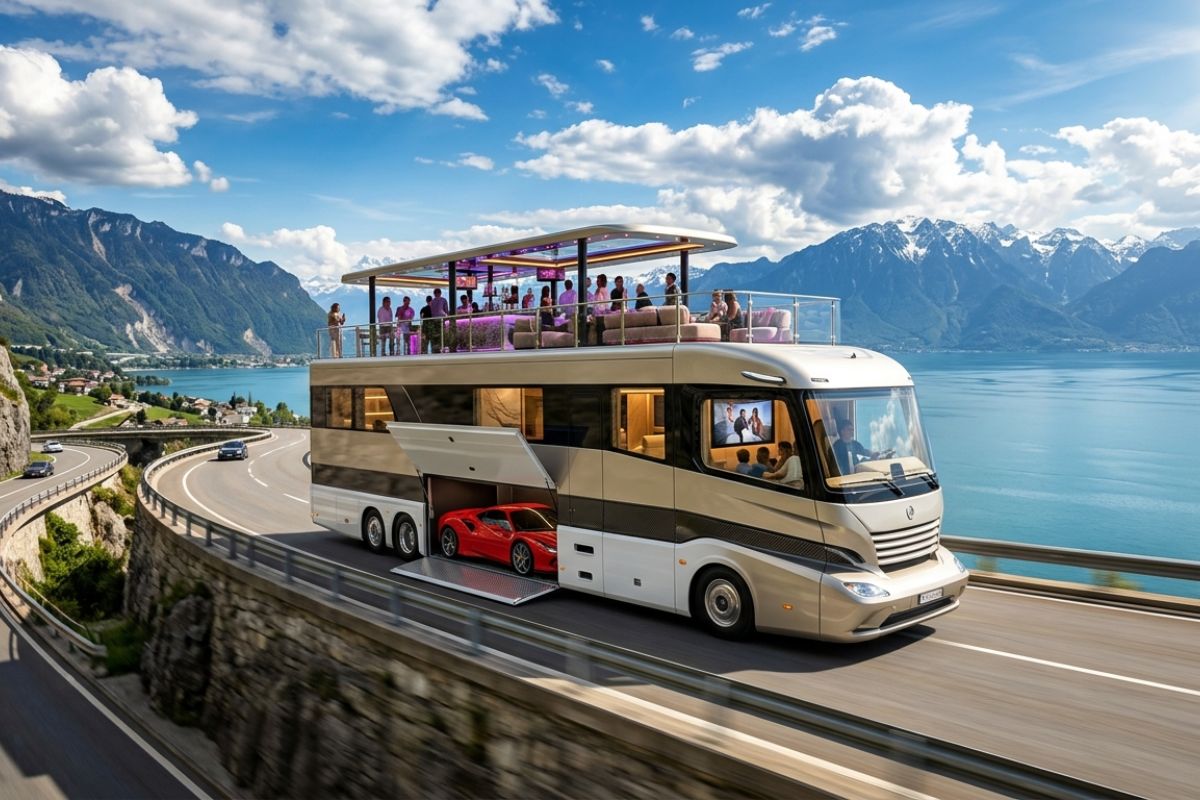
The 10 most stunning motorhomes in the world: a $3 million trailer with a rooftop nightclub and garage for a Ferrari, “palaces on wheels” with Italian marble, private cinema, and five-star hotel luxury for billionaires.
-
Trump wanted to spend $400 million on the White House, but the courts prohibited the million-dollar construction.


Zurich
Zurich leads with the Smart City Zürich strategy, launched in 2018, which modernizes urban management with data platforms. The Open Zurich program promotes transparency, allowing startups and public managers to collaborate to solve real problems.
Transportation stands out with the ZVV app, which integrates buses, trains, and electric scooters, making travel simpler and more connected. Furthermore, the city utilizes waste heat from factories for heating and cooling.
Augmented reality technology and digital twins assist engineers and architects in planning safer and more sustainable buildings, consolidating Zurich as a global model in smart urban planning.
Oslo
Oslo has held the second position in the ranking since 2019, maintaining the AAA rating. The Norwegian capital stands out for its green and inclusive urban development.
Named European Green Capital in 2019, it continues to expand ambitious environmental policies.
Currently, 40% of the vehicles in circulation are electric, and 90% of new car sales follow this trend.
The FutureBuilt program, with fifty projects, promotes low-carbon architecture close to transport hubs.
Hydropower represents about 60% of the city’s total consumption, and the Oslo Toll Ring system encourages zero-emission vehicles and funds new sustainable infrastructures.
Geneva
Geneva reinforces Swiss leadership in urban innovation with the Smart Canton project. The city invests in efficient infrastructure and advanced technology to achieve environmental goals.
With the TetraEner project, new constructions and renovations optimize the use of renewable energies. The Geneva Lac Nations links buildings to a hydraulic network that provides heating, cooling, and irrigation for green areas.
Additionally, the city uses LoRaWAN technology to monitor environmental conditions and enhance transport and energy.
Geneva also prioritizes citizen participation, green spaces, and quality education, becoming a model of balance between technological innovation and social well-being.
Dubai
Dubai features the largest advancement in the index, jumping from 12th to 4th place in 2025.
The city aims to become “the happiest and smartest on Earth,” betting on artificial intelligence and cutting-edge technology.
Its strategy is based on six pillars: economy, quality of life, governance, environment, people, and mobility. Intelligent sensors and cameras reduce congestion by up to 20%, while real-time traffic light control improves flow.
With the DEWA Smart Grid and Dubai Silicon Oasis, the city reinforces its commitment to clean energy and efficiency. These projects contribute to the United Arab Emirates’ goal of achieving 75% energy from renewable sources by 2050.
Abu Dhabi
Abu Dhabi is also advancing rapidly, rising from tenth to fifth place. The capital of the United Arab Emirates invests in technology and artificial intelligence to enhance public services and sustainability.
The Smart City Zayed Project, launched in 2024, deploys automated traffic, lighting, and parking solutions, initially tested in the Corniche area.
The digital platform TAMM integrates hundreds of government services, eliminating 90% of paper use. The city encourages electric and hybrid vehicles and builds smart charging networks as part of its Sustainable Energy Strategy, aligned with the national goal of net-zero emissions by 2050.
London
London combines sustainability with digital transformation. The Congestion Charge, contactless payments, and Ultra-Low Emission Zone are pillars of its urban model.
The city has installed over 2,000 km of cables in the subway, ensuring 4G connectivity and future 5G coverage in all stations and tunnels by the end of 2025.
Access to public data drives startups to create innovative solutions such as smart parking systems, electric vehicle charging, and environmental monitoring.
These projects reinforce London’s reputation as one of the largest urban laboratories on the planet.
Copenhagen
Copenhagen maintains an ambitious goal of becoming the world’s first carbon-neutral city, a target set back in 2009.
Its smart city policy prioritizes sustainability, quality of life, and economic growth.
The Danish capital is a symbol of sustainable mobility: 62% of residents use bicycles for daily commuting, taking advantage of a 400 km network of exclusive bike lanes.
Investments in the Copenhagen Connecting project are expected to generate 600 million euros in socioeconomic benefits, while digital solutions integrate urban services and reduce waste. Thus, the city combines technology, planning, and green culture to achieve tangible results.
The Global Innovation Index 2025 demonstrates how cities from different regions apply data and technology to improve urban life. The seven leaders represent distinct but converging models in the pursuit of efficiency, sustainability, and inclusion.
Zurich stands out for digital integration; Oslo and Geneva show how clean energy can shape the future; Dubai and Abu Dhabi symbolize the rapid advancement of the Middle East in innovation; London reinforces its position as a connectivity hub; and Copenhagen proves that it is possible to unite technology and carbon neutrality.
These examples show that the concept of “smart city” is not limited to automation but to the ability to use data and innovation to create more human, clean, and efficient urban environments.









-

-

4 pessoas reagiram a isso.