“Earth Looks Fragile And Delicate,” Says Apollo 11 Astronaut After Orbiting The Moon And Describing The Planet As “An Oasis In The Vast Nothing” Lost In Space, Revealing The Psychological Shock Of Those Who Have Seen Humanity From The Outside
“A Terra parece frágil e delicada”, diz astronauta da Apollo 11 após orbitar a Lua e descrever o planeta como “um oásis no vasto nada” perdido no espaço, revelando o choque psicológico de quem viu a humanidade de fora
3 pessoas reagiram a isso.
Michael Collins, of Apollo 11, Described Earth as Seen from the Moon as Fragile and Lonely, “an Oasis in the Vast Nothing.” The Account Resonates to This Day.
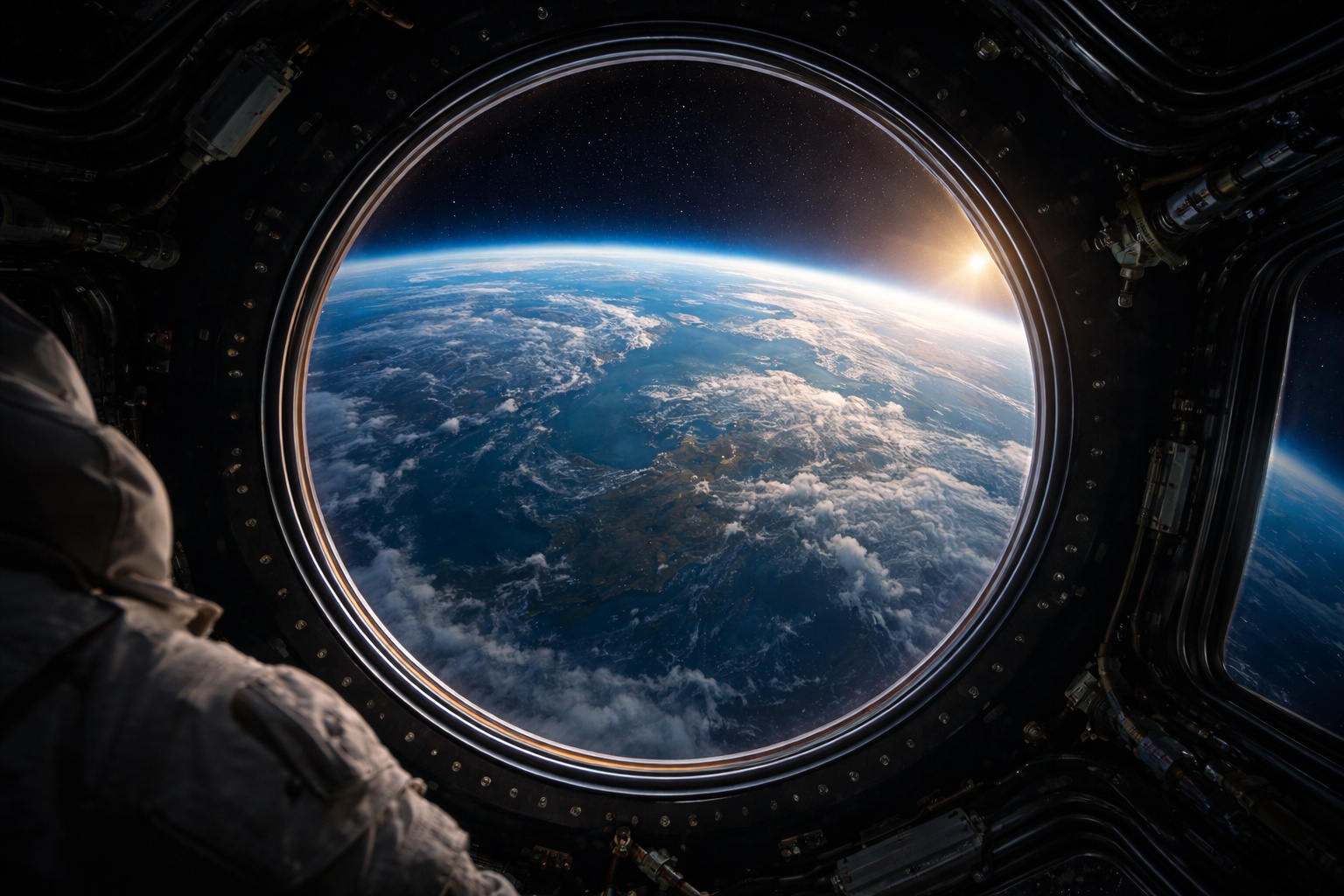
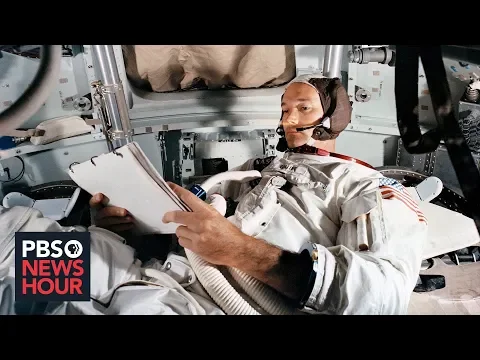
“Earth looks fragile and delicate. It is a small oasis in the vast nothing.” The phrase was said by Michael Collins, astronaut of Apollo 11, the historic 1969 mission that took Neil Armstrong and Buzz Aldrin to the lunar surface while he, alone, orbited the Moon inside the Columbia module. Unlike his companions who walked on the lunar surface, Collins had a moment reserved just for him: circling around a celestial body looking at the entire planet as a distant point enveloped in bluish light. It is from this extreme isolation that one of the most striking reflections ever recorded by an astronaut arises.
The View of Earth as No One Else Has Seen
Collins was nearly 400,000 kilometers away, completely separated from the planet and all of humanity. In describing what he saw, he claimed to feel something he could barely name:
“The Earth viewed from here is small, fragile. I see a shining sphere with a smooth surface, and that projects an attitude that makes me think it covers something fragile and delicate.”
This account appears in interviews, speeches, the documentary In the Shadow of the Moon, and mainly in his book Carrying the Fire (1974), a work considered one of the most intimate descriptions ever written about the space experience.
For the astronaut, Earth did not simply seem like a distant place — it seemed everything that exists. It was not just the place where we were born, it was the only habitable island in an ocean of darkness.
The “Overview Effect”: When the Astronaut Sees Humanity from the Outside
What Collins felt is now known as the overview effect, a psychological phenomenon described in astronauts who observe the planet from above and experience:
decreased importance of national identities
feeling of human unity
shock upon realizing the finiteness of Earth
difficulty in explaining in words what they felt
Collins experienced this even before the term existed. He did not see borders, did not see wars, did not see ideologies — he saw an entire planet trapped in silence, vulnerable and isolated.
This perspective created a sort of emotional paradox: while Armstrong and Aldrin became global symbols, Collins became the only living human completely separated from the rest of the species at that moment.
Absolute Loneliness: 48 Minutes Without Contact with Anyone
During each lunar orbit, Collins spent about 48 minutes on the far side of the Moon, without radio, without contact with NASA, without contact with Armstrong and Aldrin and without contact with any human being.
He describes the feeling in his book:
“I was called the most solitary man in history, but I did not feel loneliness. I felt anxiety for my colleagues on the surface. I felt peace looking at Earth, so small and vulnerable.”
This isolation was not just physical — it was existential. He had a complete view of the planet, but could not return to it until everything went right.
If Armstrong and Aldrin died on the Moon, Collins would have to return alone, carrying the greatest tragedy of space exploration. He knew this. And still, he remained calm.
Comparing Earth to the Rest of the Universe Changes Everything
Looking into the empty space, Collins repeated what other astronauts would confirm decades later: the Universe is indifferent, hostile, and empty. Earth, on the contrary, is warm, blue, alive, organized, and rare.
Collins stated that he did not see Earth as immense, but as finite and vulnerable, highlighting:
the thin atmosphere like “skin”
climatic fragility
life concentrated in one single point
Decades later, astronauts from space stations would confirm the same feeling while observing storms, wildfires, pollution, and geopolitical borders seen from space — human phenomena on a planet that does not know what division is.
The Phrase that Became the Synthesis of the Planet Seen from the Outside
In his book, Collins wrote one of the most reproduced phrases in recent decades:
“Earth is an oasis in the vast nothing. It looks so small and so fragile that you feel the urge to protect it.”
For him, the feeling was not nationalistic — it was planetary. He did not see the USA, Japan, Brazil, or Russia. He saw only the world.
When Science Meets Philosophy
Apollo 11 is a technological and geopolitical milestone, but Collins adds another aspect: the philosophical. The mission that demonstrated military and industrial superiority also showed us something that no war had ever shown before: the unity of human life.
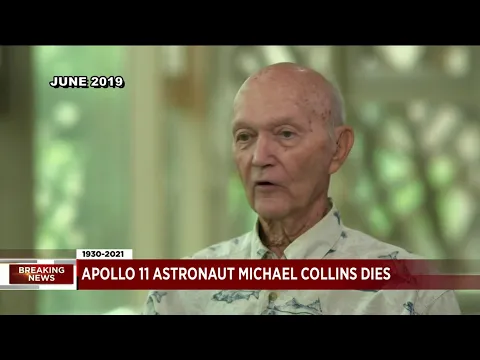
The astronaut cultivated this thought until his death in 2021, at the age of 90. In his last interviews, he stated that he did not believe people truly understood the value of Earth until they saw it from the outside — and that they might never understand.
The Historical Weight of This Statement
Few people have seen what Collins saw. And even fewer returned and were able to explain. When he states that Earth is fragile, it comes from someone who looked at the planet as an object suspended in the void, supported by an atmosphere thin as glass and alone in a Universe that does not forgive failure.
That is why his words are recalled in documentaries, climate institutes, astronomy groups, classrooms, and lectures on space exploration.
Collins did not have the grandiosity of Kennedy’s political speech. Nor the visual fame of Armstrong. Nor the media glamour.
But he had the most intimate account a human can have about the entire planet.
The Cosmic Legacy of Michael Collins
Today, when discussing:
climate collapse
geopolitical borders
space militarization
exploration of other planets
Collins’ statement resurfaces as a reminder: we are a single species trapped on a vulnerable blue dot.
And perhaps that is the greater message of Apollo 11 — not the flag on the Moon but the gaze toward Earth.
Collins summed it up this way:
“I did not feel American or European pride. I felt pride in being human.”
After 400,000 kilometers and 48 minutes of absolute silence, perhaps this is the only possible conclusion.
Quando você faz login pela primeira vez usando um botão de Login Social, coletamos informações de perfil público de sua conta compartilhadas pelo provedor de Login Social, com base em suas configurações de privacidade. Também obtemos seu endereço de e-mail para criar automaticamente uma conta para você em nosso site. Depois que sua conta for criada, você estará conectado a esta conta.
Não concordoConcordo
Eu concordo em criar minha conta
Quando você faz login pela primeira vez usando um botão de Login Social, coletamos informações de perfil público de sua conta compartilhadas pelo provedor de Login Social, com base em suas configurações de privacidade. Também obtemos seu endereço de e-mail para criar automaticamente uma conta para você em nosso site. Depois que sua conta for criada, você estará conectado a esta conta.
Formado em Jornalismo e Marketing, é autor de mais de 20 mil artigos que já alcançaram milhões de leitores no Brasil e no exterior. Já escreveu para marcas e veículos como 99, Natura, O Boticário, CPG – Click Petróleo e Gás, Agência Raccon e outros. Especialista em Indústria Automotiva, Tecnologia, Carreiras (empregabilidade e cursos), Economia e outros temas. Contato e sugestões de pauta: valdemarmedeiros4@gmail.com. Não aceitamos currículos!





 Portuguese
  English
  Spanish
  5 min of reading
  0 comments












-

-

-

3 pessoas reagiram a isso.