





 Portuguese
  English
  Spanish
  5 min of reading



The AL4 Transmission Marked Generations of Peugeot, Citroën, and Renault and Became Famous for Lockups, Overheating, and Recurring Repairs; Understand Why It Became a Legend and a Problem.
For two decades, few mechanical components have generated as much discussion in the Brazilian automotive market as the AL4 automatic transmission. Installed in popular models from Peugeot, Citroën, and Renault, it was born as a symbol of modernity, smoothness, and comfort at a time when automatic transmissions were still rare in compact cars. But what seemed to be an accessible evolution transformed into one of the largest technical controversies in the history of French brands in the country.
Today, the name AL4 provokes immediate reactions among mechanics and owners. For many, it has become synonymous with sensitive maintenance, overheating, sudden jerks, and repairs that seem never-ending. For others, it is merely a misunderstood transmission that requires specific care and the right fluids. But, regardless of the point of view, one thing is certain: the AL4 left deep marks on the market and became a legend — both for what it got right and what went wrong.
What Is the AL4 and Why Was It So Widely Used?
Launched in the late 1990s, the AL4 was designed by PSA in partnership with Renault and became the most widespread automatic transmission among the French in Brazil. It equipped models like the Peugeot 206, 207, 307, 308, 408, Citroën C3, C4, C4 Pallas, Renault Scénic, and even units of the Fluence in the early generations.
-
With a 293.5 cm³ engine and a range of up to 400 km with a 14.1-liter tank, the Honda CB 300F Twister 2026 has up to 24.7 hp, an initial price of R$ 25,150, and already exceeds R$ 29,000 in the Fipe Table.

-
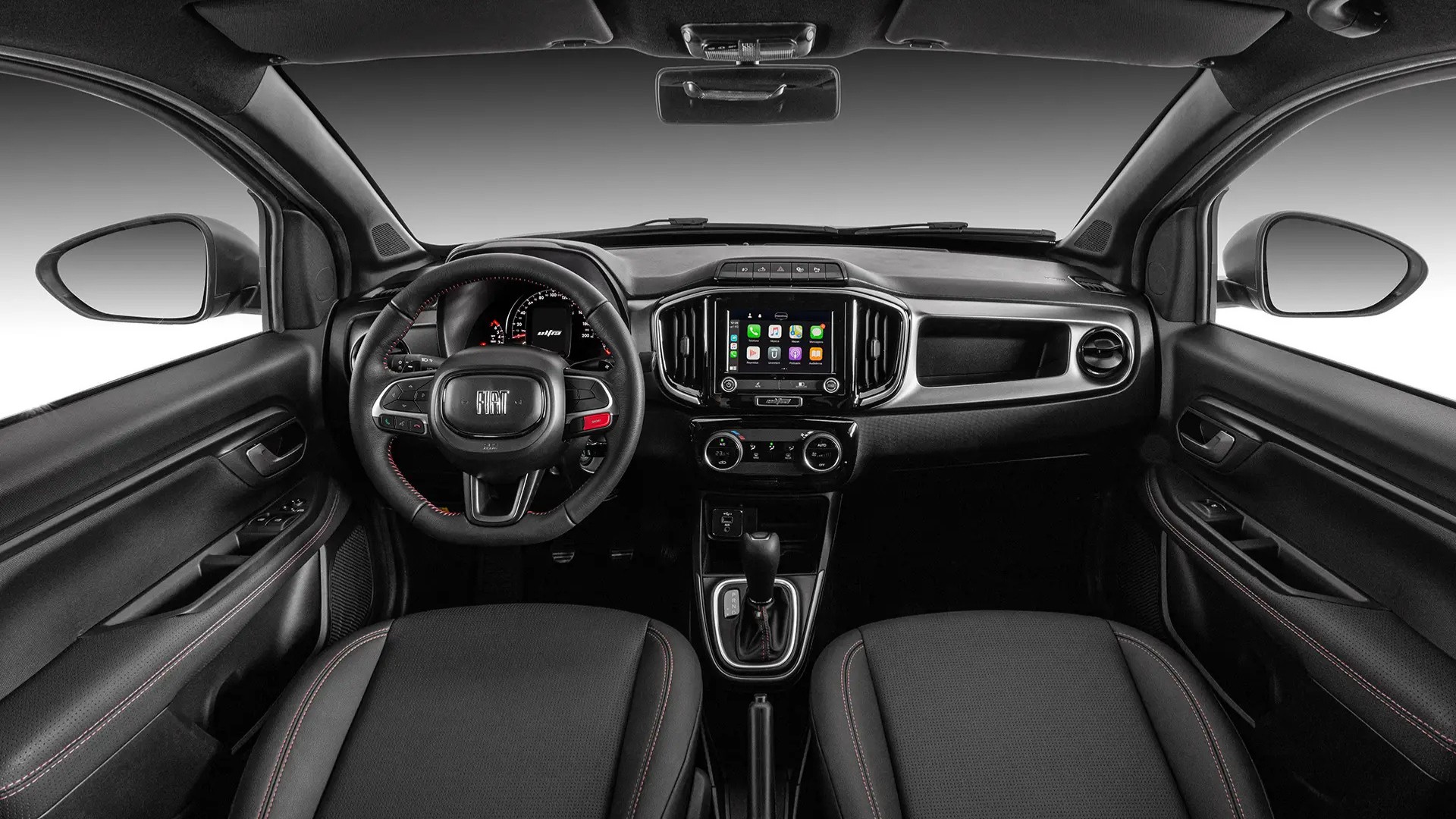
With a 1.3 engine, nearly 700 km of range, and Turbo 200, the Fiat model surpasses Polo, Tera HB20, and Onix, becoming the best-selling car in March; see the numbers for the Fiat Strada and others.
-
The Honda Fit has been discontinued for years, but the 2018 model is worth more today in the Fipe table than it cost brand new, proving that this used car, valued with a 1.5 i-VTEC engine and Magic Seat, only increases in price.

-
Volkswagen unveiled the 2027 Atlas with a 282-horsepower EA888 turbo engine, a 15-inch screen, massage seats, and a completely new interior to finally elevate the three-row SUV built on the MQB platform to a new level.


In theory, it was a robust, simple, and efficient unit, with four gears, a torque converter, and embedded electronics capable of adapting the shift behavior according to the driving style. In practice, it met exactly what consumers of the time wanted: comfort at an affordable price.


However, the scenario changed when repeated failures began to emerge, many of them occurring even before reaching 80,000 kilometers.
Overheating: The Number One Enemy
The most well-known problem with the AL4 is overheating. Being a compact transmission and having a valve body sensitive to heat, any rise in temperature beyond normal alters the viscosity of the fluid and affects the operation of the solenoid valves.
When this happens, classic symptoms appear:
- momentary loss of power,
- jerking during gear changes,
- warning light on the dashboard,
- and the infamous “safety mode,” where the transmission locks in a single gear to avoid further damage.
This behavior generated doubts and complaints for years. As the automatic transmission was still new among compact cars, many consumers were unaware that it was necessary to change the fluid periodically, as the factory itself advertised that the oil would be “lifetime.” Over time, it was discovered that the ATF should have preventive changes, contrary to the initial recommendation.
Problematic Solenoids and Recurring Repairs
The second Achilles’ heel of the AL4 is the solenoids. They control the hydraulic pressure within the gearbox and are responsible for shifting gears. A slight variation in resistance or internal failure is enough to provoke jerking, loss of smoothness, and, in more advanced cases, the transmission locking up.
Many workshops replaced solenoids, updated software, and fixed leaks only for the problem to resurface months later. This recurrence fed the bad reputation of the transmission and created a cycle where the owner never knew for sure if the repair would be permanent.
Leaks and Sensitive Sensors Complete the History
Another point that contributed to the AL4’s complicated reputation was leaks. The gearbox uses a side cover with a sensitive gasket and a seal that, over time, tend to allow small fluid losses.
As the ATF level directly influences the internal pressure, any reduction can trigger all the previously mentioned problems.

The transmission also relies on electronic sensors to monitor internal speed and temperature. In many models, these sensors begin to fail over time, and their replacement is usually labor-intensive, increasing maintenance costs.
Why Have Some Owners Never Had Problems?
Despite the negative reputation, there are owners who have driven more than 150,000 km without any serious damage to the AL4. This happens because durability is strongly linked to three factors: preventive fluid changes at appropriate intervals, avoidance of severe use in extreme heat, and maintenance only by mechanics specialized in French automatic transmissions.
Many of the problems that gained notoriety arose precisely because the early years of AL4 use were marked by insufficient guidance from manufacturers regarding fluid maintenance. When the transmission operated for long periods with degraded oil, failure became inevitable.
The Impact on the Used Market: Permanent Alert
Today, when searching for models equipped with this transmission in the used market, the attentive buyer follows the same logic: there are cars that work perfectly, but there are others that have already gone through three or four repairs that never solidified.
Therefore, experts recommend checking the complete maintenance history, presence of service invoices, and, primarily, pressure diagnostics before purchase.
Specialized workshops charge between R$ 3,000 and R$ 8,000 for complete repairs, depending on the level of damage. In more extreme cases, a complete gearbox replacement can reach R$ 10,000, making the cost-benefit risky for many older models.
Why the AL4 Became a Legend and Warning
The AL4 automatic transmission has become a classic case of promising technology that did not fully adapt to the Brazilian reality. It popularized automatic transmission among compact cars, offered comfort at affordable prices, and served as a foundation for the evolution of later French automatic gearboxes.
But it also carried with it a succession of recurring failures, unclear maintenance requirements, and repairs that often re-emerged. The result is a reputation marked by doubts, fears, and lengthy discussions among experts.
In the end, the AL4 became a symbol of a transitional phase in the industry when the market sought to generate comfort through accessible solutions but had not yet fully mastered the particularities of its own hydraulic and electronic systems.
Even after being discontinued, the transmission continues to be mentioned in workshops, automotive groups, and forums as a permanent alert: poorly communicated technology to consumers and neglected maintenance can transform any promising solution into a long-term problem.








Seja o primeiro a reagir!