





 Portuguese
  English
  Spanish
  4 min of reading
  0 comments


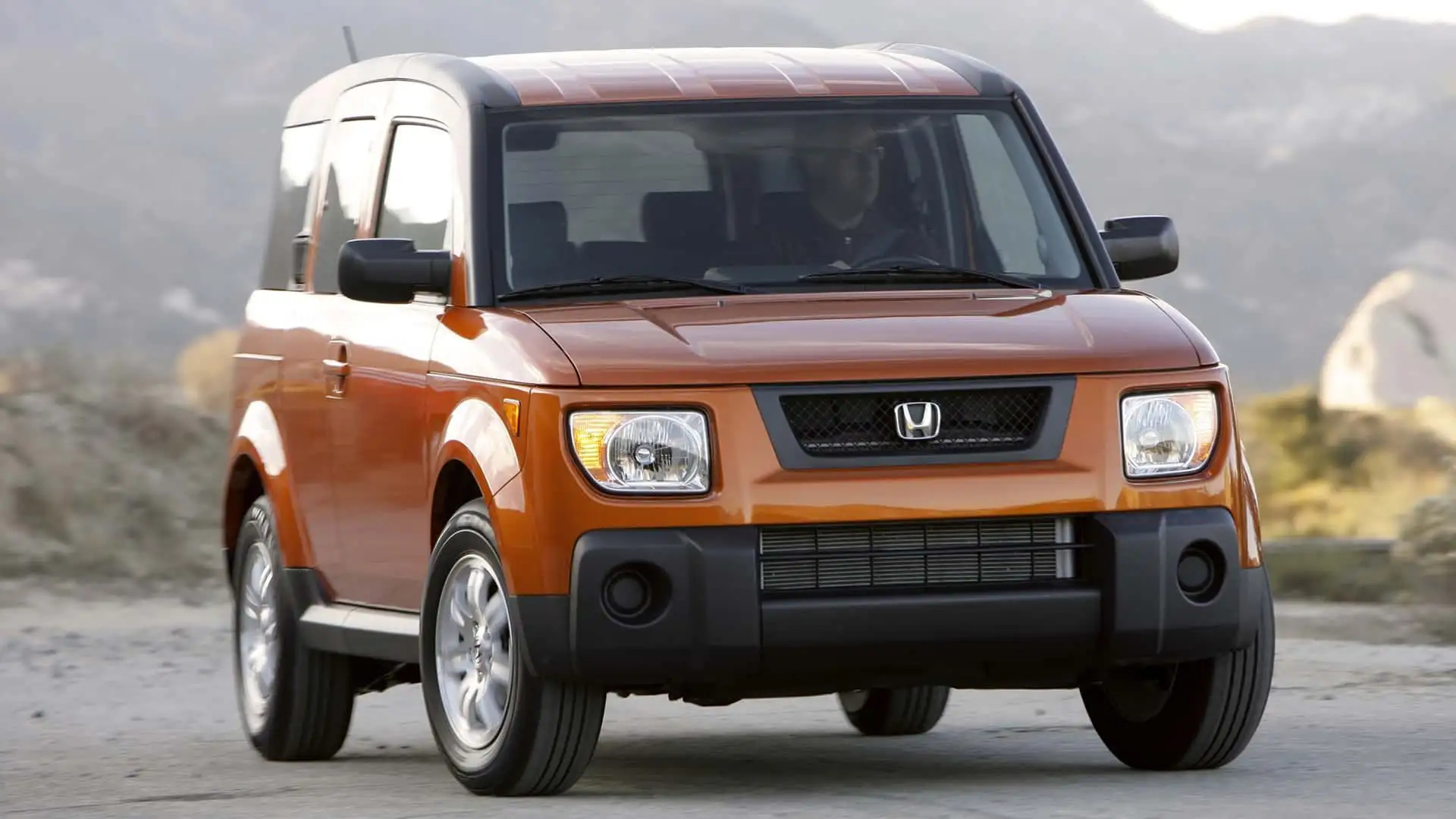
Honda Element Uses External Plastic Panels That Do Not Dent and Almost Do Not Rust, Making the SUV a Cult Icon Among Enthusiasts and Travelers.
In the automotive world, some models stand out for power, others for fuel efficiency, some for design… and a very small group for extreme durability. The Honda Element belongs exactly to this category. Launched in 2003 and sold until 2011, the compact Japanese SUV created for the North American market became a kind of “alternative urban tank”, a target for collectors, surfers, campers, and travelers who wanted a car almost impossible to destroy in daily use.
But what made the Element a legend was not the engine, nor the performance numbers.
It was its unusual body, designed with external plastic panels that do not easily dent and do not rust like a traditional can.
External Plastic Panels: The Secret of the Body That Does Not Dent
The Honda Element uses a combination of materials that would be too costly for a popular car today:
-
The car stored for 38 years: when opening the barn door, what appears is breathtaking and looks like a scene from a movie!

-
Fiat works miracles in the Brazilian market, lowers the price of its 0 km hatch to R$ 69,990, reestablishes the model as the cheapest car in the country, and reignites the battle against Kwid and C3.
-
Chevette with cooking gas: How the gas cylinder ends up being used in cars clandestinely and why this makeshift solution can result in leaks, explosions, damaged engines, and seized vehicles.

-
Fiat launches the new 2027 Toro hybrid with 48V, 176 hp, an electric motor of 15.5 hp, a 0.85 kWh battery, up to 7% fuel savings, 8% fewer emissions, and possible exemption from IPVA.

- External plastic panels on the doors, fenders, and lower body parts.
- Reinforced internal metal structure, responsible for safety.
This plastic coating, a durable polymer, similar to that applied in utility vehicles and service trucks, absorbed small parking impacts, door dings, and light touches without denting.
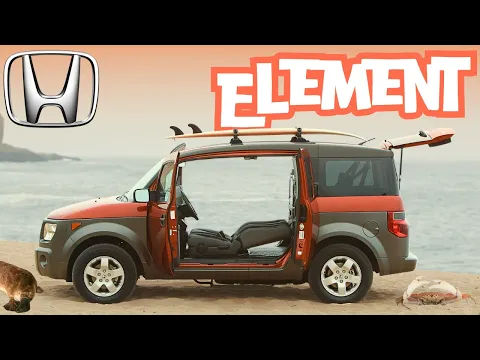

It Was Not Marketing. It Was Pure Engineering: The external panels worked like a “flexible skin”, which deformed and returned to position, reducing superficial damage.
For those living in big cities or near the beach, the benefit was immediate: less bodywork, less paint, less headache.
Almost Immune to Rust: The Advantage of Plastic Panels
While many SUVs of the same era suffer from corrosion after years exposed to sun, rain, or salt air, the Honda Element gained a reputation as the “car that does not rust”.
The explanation is simple:
- The external panels are plastic — they do not oxidize.
- The internal metal body is less exposed.
- Areas where rust bubbles typically form (fender edges, doors, and wheel wells) are protected.
This does not mean the car is totally immune to rust; the metal structure can always oxidize. But the Element does have unmatched resistance for a vehicle in this class.
In the U.S., where snow, salt, and ice destroy cars in a few years, the Element became a benchmark:
When all rust, it remains intact.
Square, Functional, and Extremely Practical Design
The look of the Honda Element has always divided opinions. Some find it strange. Others find it brilliant. The truth? For those who understand functional cars, it is practically perfect:
- Suicide rear doors (open backward) create a huge opening.
- Washable interior, with rubber flooring and rigid surfaces.
- Seats that convert into a bed, removable, foldable, and modular.
- Gigantic trunk, designed for sports and travel.
- High clearance, but compact dimensions.

It was designed to carry boards, dogs, backpacks, camping gear, and bicycles — all at once.
SUV for Adventurers, Surfers, and Travelers
In the U.S. and Canada, the Element became the official car of:
- Photographers
- Campers
- Surfers
- “Car camping” enthusiasts
- Pet owners (there were even “Dog Edition” versions)
The vehicle became a symbol of the concept “life utility vehicle”: a utility vehicle focused on lifestyle, not status.
And the Engine? Robust, Simple, and Durable
The Element used Honda engines from the K-Series family, known worldwide for robustness and longevity. The main ones are:
- 2.4 i-VTEC with 160 to 166 hp, depending on the year
- Manual or automatic transmission (U.S.)
- FWD or AWD configuration
It was not a sports car, but it was almost indestructible. There are reports of engines going over 300,000 km without opening.
Why the Honda Element Never Came to Brazil?
Despite being praised abroad, the Element was never officially sold in Brazil for three reasons:
- Exclusive production for the U.S./Canada
- Design considered “too different” for the Brazilian market
- High import costs
Today, some imported units occasionally appear in the country as absolute rarities.
Why Did It Become a Legend?
For three main reasons:
Absurd Durability
Plastic panels, less rust, robust engine.
Unique Internal Configuration
No current SUV offers such practical, washable, and flexible space.
Charisma of a “Different Car”
It looks like a mix of minivan, SUV, and utility vehicle — something only the Japanese would dare to do.
Current Situation of the Honda Element in the Market
The model is highly sought after in the U.S., with prices rising in recent years.
In Brazil, it is a collector’s item and rarely appears in classified ads for imported vehicles.
The Element was discontinued in 2011, but its community is so active that Honda has already received formal requests for a relaunch.









-

-

2 pessoas reagiram a isso.