Portuguese
  Spanish


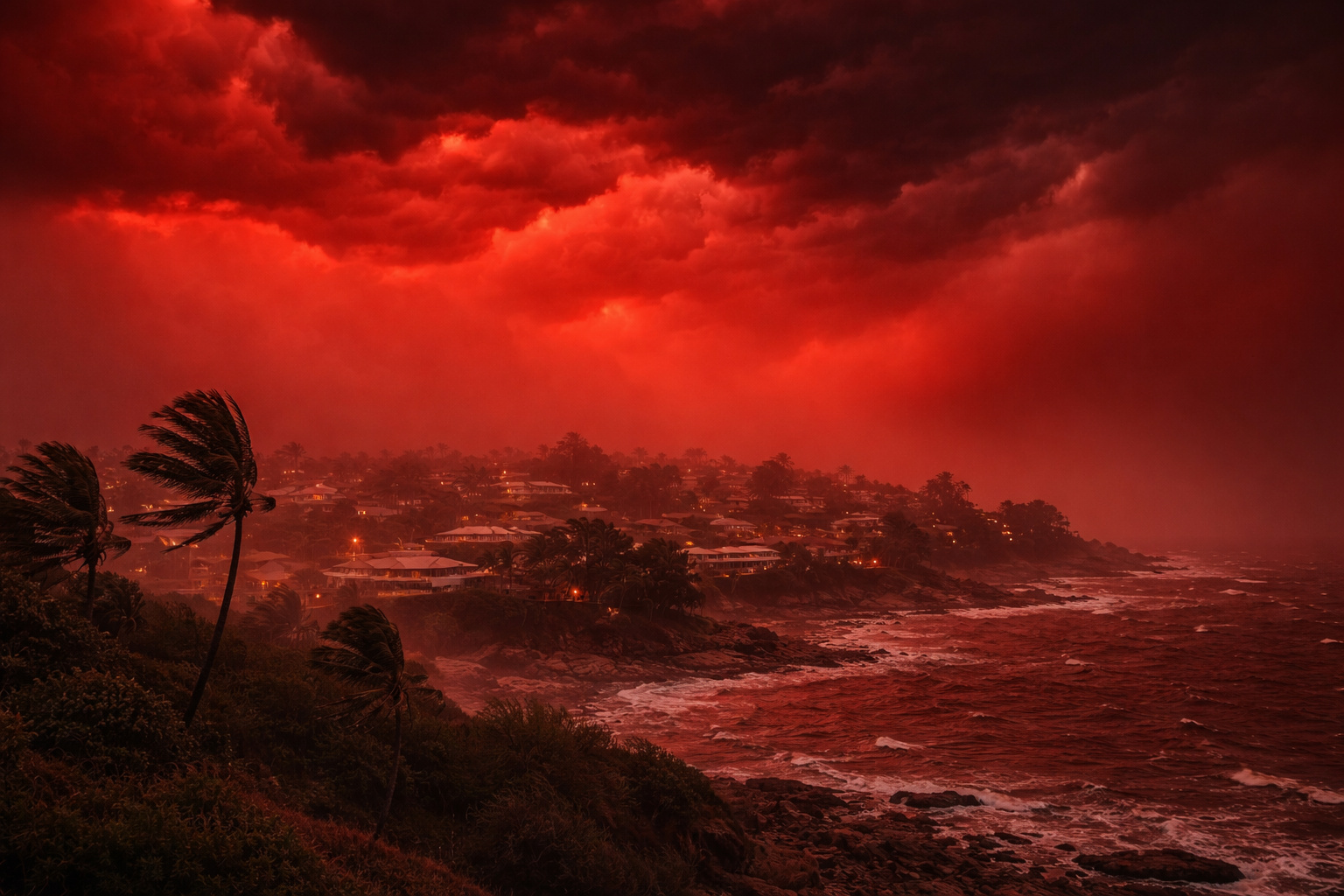

Red sky in Australia was caused by iron-rich dust driven by cyclone with winds of up to 250 km/h.
In March 2026, residents of Western Australia witnessed an atmospheric phenomenon that quickly gained international attention: the sky took on a deep red hue, covering entire cities with an unusual and visually striking tone. According to ABC News Australia, regions like Shark Bay and areas near Exmouth reported the phenomenon shortly before the arrival of tropical cyclone Narelle, when a dense cloud of dust engulfed the atmosphere. The event was also analyzed by international outlets. According to The Guardian, the intense winds associated with the cyclone lifted large amounts of iron oxide-rich dust from the arid soil of the region, especially from the Pilbara area, drastically altering the color of the sky.
The most relevant fact is that the phenomenon was not just visual. It served as a direct indicator of the intensity of the atmospheric system: extremely strong gusts transported fine particles for hundreds of kilometers, creating the red sky effect even before the arrival of rain.
How cyclone Narelle transformed the sky into a visible alert
Cyclone Narelle formed in the Indian Ocean and gained strength as it approached the western Australian coast. Classified as a high-intensity system, it generated extremely strong winds that interacted with the characteristic arid soil of the region.
-
Scientists Discover Unexpected Intelligence in Solitary Octopus During Jar-Opening Challenge

-
Brazilian Public School Students Develop Biofilter Using Arapaima Bones, Earn National Honorable Mention

-
The Axolotl: The Rare Amphibian That Can Regenerate Its Brain, Heart, and Limbs, Baffling Scientists Worldwide
-
Storm Chasers Get Too Close to Oklahoma Tornado, Record 128.8 mph Winds, and Attempt Drone Launch to Measure Pressure and Speed in Dangerous Operation


These winds lifted fine iron-rich dust particles, common in the desert areas of Western Australia. Once suspended in the atmosphere, these particles began to directly interfere with the way sunlight is scattered.
The result was a sky with a deep red hue, described by residents as resembling an apocalyptic scene.
This type of phenomenon occurs when particles in the atmosphere filter shorter wavelengths of light, allowing reddish tones to dominate the visible spectrum.
Iron-rich dust is the key to understanding the extreme coloration
The composition of the soil in the affected region is a determining factor for the intensity of the coloration observed. The presence of iron oxide, responsible for the reddish color of the earth, directly influences the hue of the lifted dust.
When these particles become airborne, they reflect and absorb light differently compared to dust from other regions.
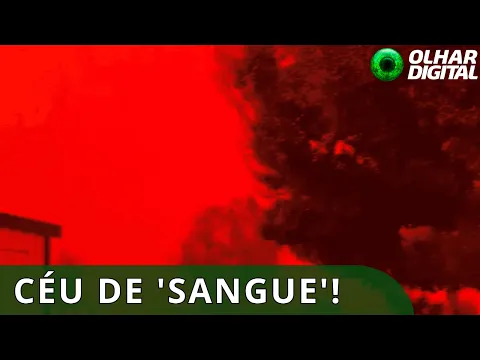

This effect intensifies the red coloration of the sky, making the phenomenon more visible and impactful than in other parts of the world.
Western Australia is known for its iron-rich soils, which contributes to the frequency of such occurrences, although rarely with such high intensity.
Extreme winds expand the reach of the atmospheric phenomenon
The winds associated with the cyclone played a central role in the magnitude of the event. Gusts close to 250 km/h were recorded, capable of transporting large volumes of particles over long distances.
This dust displacement not only altered the sky locally but also expanded the reach of the phenomenon to broader areas.
The combination of wind intensity and soil characteristics created a large-scale atmospheric scenario.
Additionally, the density of the dust in the atmosphere contributed to reduced visibility and changes in air quality.
Impacts on infrastructure begin even before the cyclone arrives
Although the red sky was the most visible aspect of the event, practical impacts began to be felt before the full arrival of the cyclone.
Affected regions reported power supply interruptions, structural damage, and halting of industrial activities, especially in the gas sector.
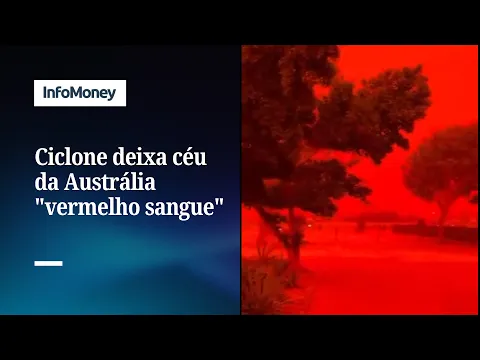
Strategic facilities were temporarily shut down as a safety measure, highlighting the severity of the situation.
The atmospheric phenomenon served as an early indicator of a climatic system capable of causing significant damage.
Tropical cyclones in Australia follow seasonal patterns, but intensity is concerning
The formation of tropical cyclones on the western coast of Australia is a relatively common phenomenon during certain times of the year. However, the intensity of systems like Narelle raises concerns.
Climate change and rising ocean temperatures are factors often associated with the strengthening of these events.
The occurrence of extreme winds and associated atmospheric phenomena reinforces the need for continuous monitoring and adaptation of infrastructures. The repetition of intense events can increase risks for populations and economic sectors.
Phenomenon is not unprecedented, but rarely reaches this scale
Although red skies have been recorded in different parts of the world, the intensity observed in western Australia in 2026 is considered unusual. Similar events occur in regions like the Sahara and the Middle East, where sandstorms also alter the color of the sky.
However, the specific combination of factors present in this case resulted in a more extreme and widely documented visual effect. The viral spread of images and videos contributed to the global perception of the phenomenon.
The change in the color of the sky is directly related to how sunlight interacts with particles in the atmosphere.
Larger particles tend to scatter light differently, allowing longer wavelengths, associated with the color red, to predominate.
This physical process, known as scattering, is responsible for transforming the sky into intense shades of red when there is a high concentration of dust. The density and composition of the particles are determining factors for the visual outcome.
Event highlights the importance of meteorological monitoring
The ability to predict and monitor systems like tropical cyclones is essential to reduce impacts.
In the case of cyclone Narelle, early warnings allowed authorities to take preventive measures, including evacuations and suspension of operations.
The phenomenon of the red sky, although impressive, also served as a visual indicator of the need for preparedness. Advanced monitoring systems play a crucial role in risk mitigation.

The red sky observed in western Australia in March 2026 was more than a visual spectacle. It represented the visible manifestation of a high-intensity climatic system capable of generating significant impacts on infrastructure and the economy.
The combination of extreme winds, iron-rich soil, and specific atmospheric conditions created a rare scenario that highlights the complexity and power of natural phenomena.
More than an isolated event, the episode reinforces the importance of understanding and monitoring the interactions between climate, environment, and society in a context of global changes.