





 Portuguese
  English
  Spanish
  6 min of reading
  0 comments


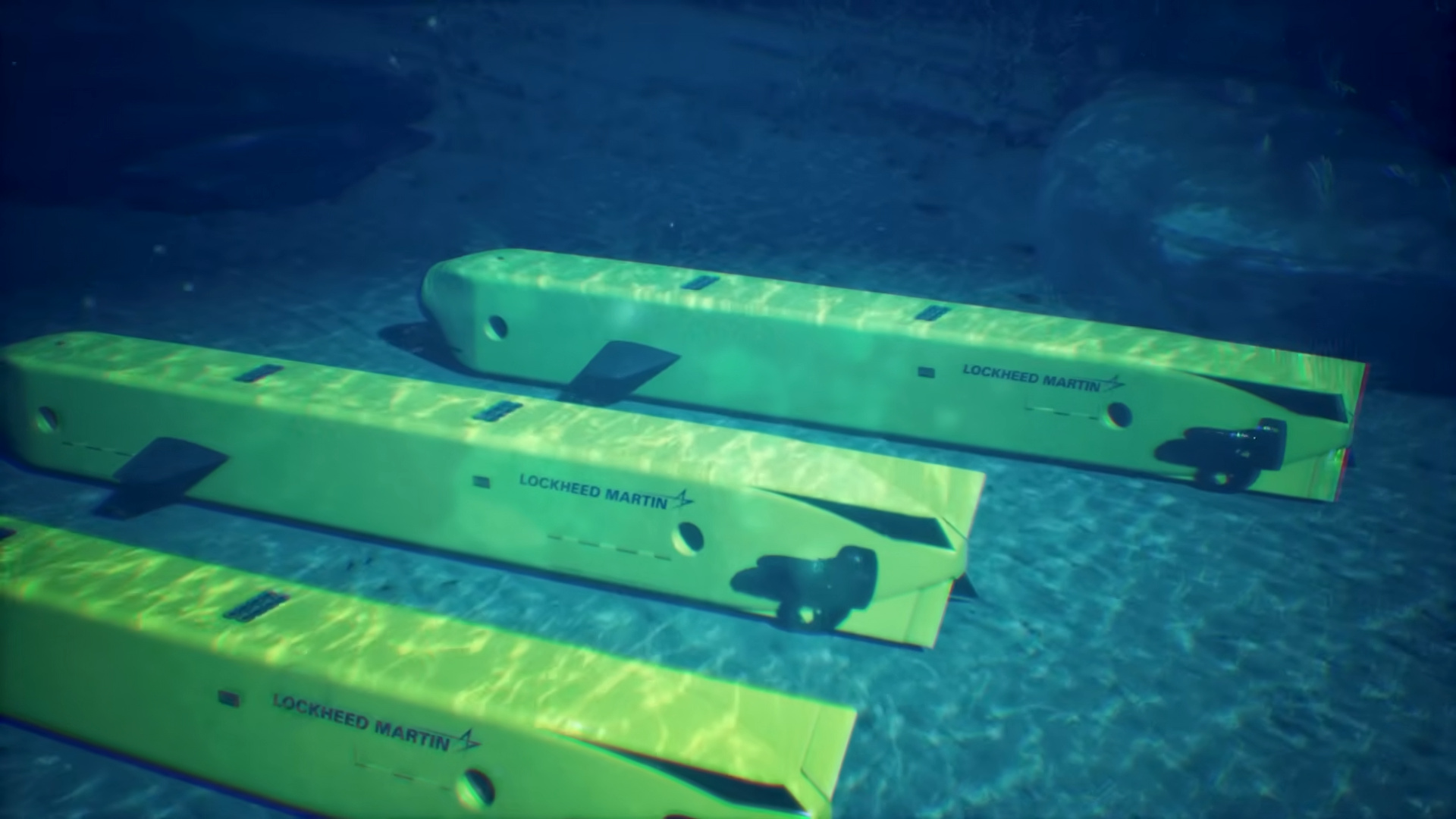
Lockheed Martin revealed to the world a submersible vehicle that clings to the hull of ships like a parasite, recharges itself, launches torpedoes, aerial drones, and electronic decoys, and does all this without a single human on board. Meet the LampreyMMAUV!
Imagine a military device the size of a large cabinet that attaches itself beneath a warship like a lamprey attaches itself to a shark. It rides along, stealing power from the movement of the water. When it reaches the battlefield, it releases itself, dives into the depths, and begins to spy, deceive, and attack entire fleets all on its own, without remote control, without a crew, and, according to its creators, without any sonar being able to detect it.
This device exists. Its name is LampreyMMAUV, short for Lamprey Multi-Mission Autonomous Undersea Vehicle, and it was officially revealed by Lockheed Martin on February 9, 2026.
The Name Says It All: A Military Parasite from the Deep
The lamprey is a jawless fish, nicknamed the “vampire fish”. It attaches itself to larger animals with a sucker-shaped mouth full of teeth, feeding on the host while traveling protected. Lockheed Martin has transformed this concept from nature into undersea warfare technology.
-
The German “steel monster” weighing 55 tons fires up to 10 projectiles per minute at over 40 km and avoids counterattacks on the battlefield by moving quickly to escape enemy attacks; meet the Panzerhaubitze 2000.

-
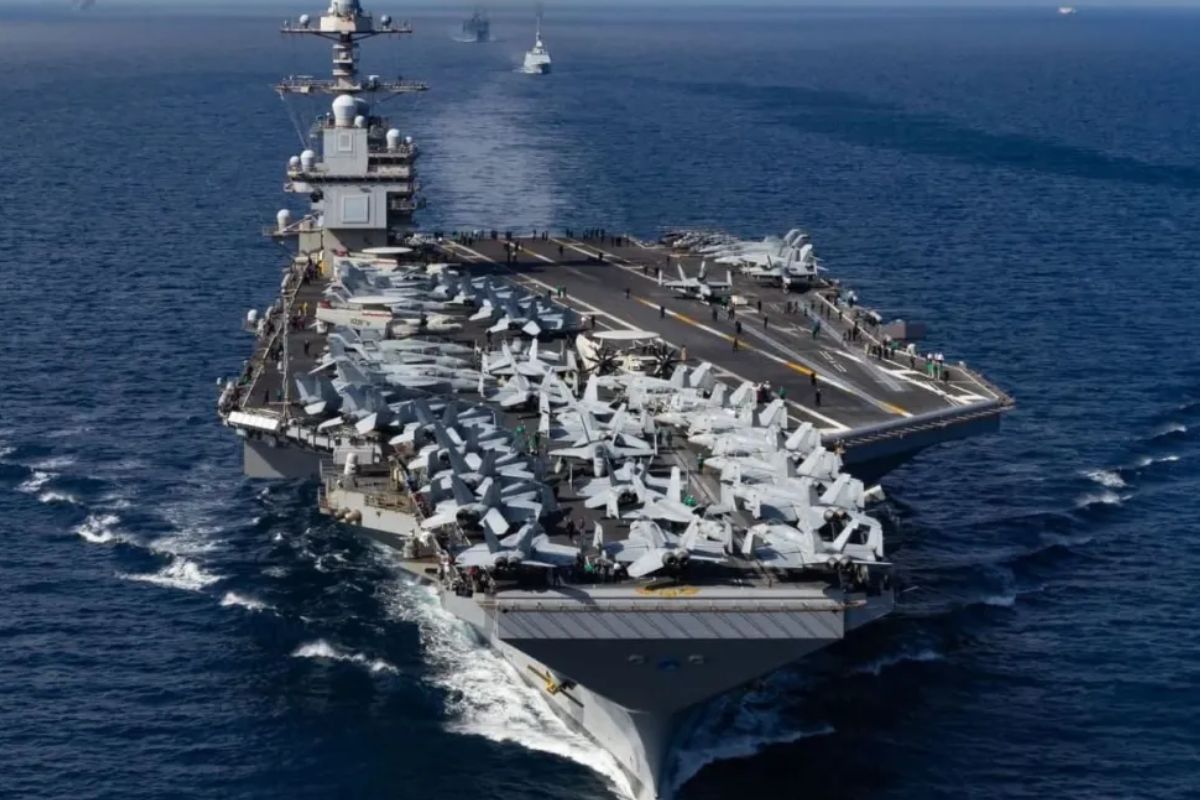
USS Gerald R. Ford, the largest aircraft carrier in the world, returns to sea after a fire in the laundry in the Red Sea; repaired in Crete, it resumes missions of Operation Epic Fury against Iran.
-
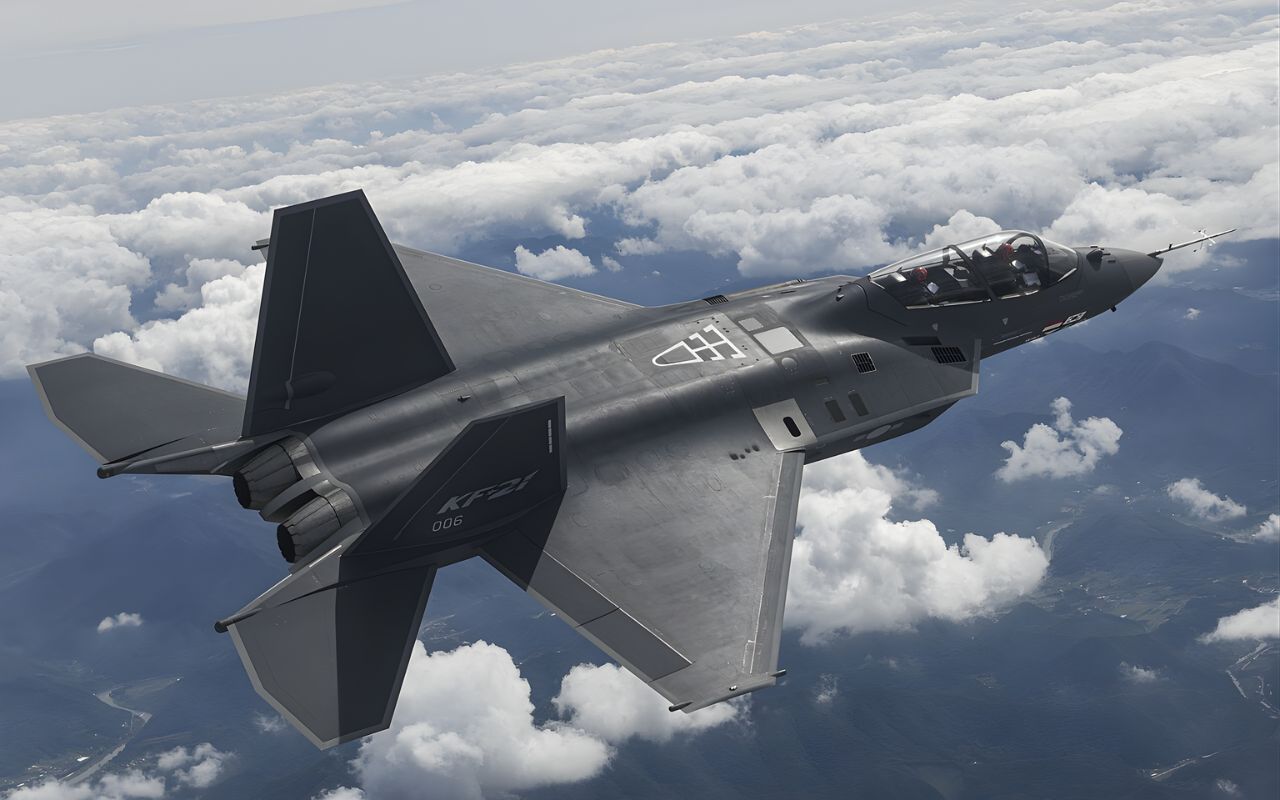
Military power: South Korea’s new KF-21 fighter jet will be a key component in replacing the aging aircraft of the air force, placing the country on the map of air military powers.
-
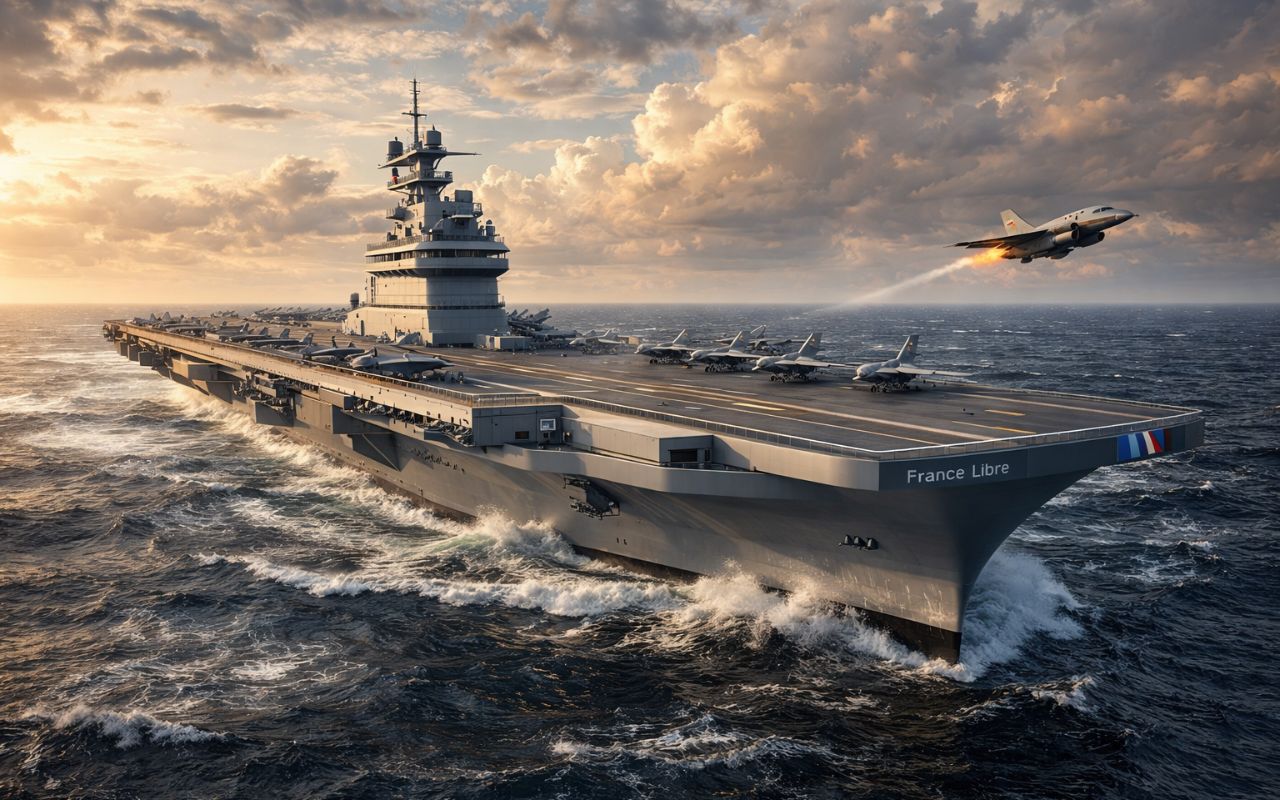
With 310 meters, 80 thousand tons, and capable of operating for 45 years, the new nuclear aircraft carrier France Libre will be the largest in France and will enter service in 2038.

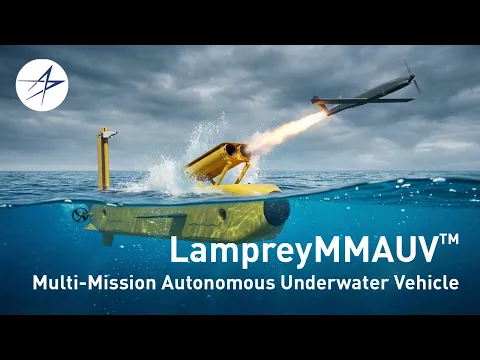

The LampreyMMAUV has an anchoring system that allows it to attach to the hull of any surface ship or submarine, without the host ship needing any modifications.
Once attached, it activates its internal hydro generators, which function like small turbines powered by the movement of the water.
Result: when the submersible drone arrives at the operational zone, its batteries are 100% charged and ready for the mission.
This solves the biggest problem of autonomous submersible vehicles: battery autonomy. While other drones spend a significant amount of charge just to reach their destination, the Lamprey arrives with full energy—because it traveled for free.
A Cargo Compartment That Carries Everything
The design of the LampreyMMAUV is rectangular and modular, with a cargo compartment of 24 cubic feet (about 680 liters) of internal space. This space can be configured to carry practically anything that the mission requires:
- Light Torpedoes for anti-submarine warfare
- Launch Tubes for Aerial Drones (UAVs) for surveillance or attack
- Electronic Decoys that confuse enemy sonars and radars, creating ghost targets
- Sonobuoys, Passive Radio Frequency Sensors, and Sonars for intelligence gathering
- Equipment for Installation on the Ocean Floor, turning the seabed into a permanent sensor network

The architecture is open and modular, meaning that new types of cargo can be developed and fitted without redesigning the entire vehicle. Lockheed Martin calls this a “plug-and-play” design.
Two Game-Changing Naval Operation Modes
The Lamprey operates in two distinct modes that can be switched depending on the command’s needs:
Assured Access Mode: the drone silently infiltrates contested areas, gathers intelligence, conducts persistent surveillance, and, if necessary, performs precision attacks. It’s the spy mode—invisible, patient, and lethal when it needs to be.
Sea Denial Mode: here, the Lamprey transforms into a machine of controlled chaos. It launches electronic decoys to confuse enemy sensors, deploys decoys that simulate the presence of submarines or ghost ships, and can carry out direct kinetic attacks. The goal is to prevent the enemy from moving freely in a specific area of the ocean.
A single vehicle that spies AND attacks. That hides AND deceives. That collects data AND launches torpedoes. This versatility in a compact and autonomous platform is what makes the LampreyMMAUV different from anything previously seen in undersea warfare.
It Does Not Just Gather Information, It Transmits It in Real Time
The LampreyMMAUV has a retractable mast that allows communication both on the surface and in underwater environments. With this system, the drone can transmit everything it detects directly to allied ships, other unmanned vessels, or even aircraft.

In a conceptual video released by Lockheed Martin, the scenario shown is revealing: the Lamprey detects an enemy ship, transmits the coordinates to an F-35 Joint Strike Fighter flying over the area, and the fighter jet launches a missile at the target, all without the F-35 pilot needing to find the ship on their own. The submersible drone acted as the invisible eyes of the operation.
This transforms the concept of naval warfare. It is no longer a submarine against another submarine. It is an integrated network where a small robot at the bottom of the sea can guide an airstrike thousands of meters in altitude.
The Military Math That Is Frightening: One Ship, Dozens of Lampreys
One of the most disturbing implications of the LampreyMMAUV is the scale. As it attaches to the hull of any vessel without modifications, theoretically a single warship or submarine can carry multiple Lampreys stuck to its hull.
Upon reaching the operational zone, the mother ship releases them all. Each dives to a different position, executes its mission, spies, attacks, deceives, and when finished, can return to the ship to be collected and recharged. The cycle repeats.
This means that any allied ship essentially becomes a sub-drone carrier. A destroyer that previously operated alone can now unleash a ghost fleet of autonomous robots around it, multiplying its presence and combat power without putting a single additional life at risk.
Internally Funded: Speed Without Pentagon Bureaucracy
One detail that caught the attention of military analysts: the LampreyMMAUV was internally funded by Lockheed Martin, without relying on U.S. government contracts for its initial development.
“The modern battlefield demands platforms that hide, adapt, and dominate,” said Paul Lemmo, Vice President and General Manager of Sensors, Effectors, and Mission Systems at Lockheed Martin. “The LampreyMMAUV was internally funded, allowing us to iterate at the speed of light and deliver to the Navy a true multi-mission weapon that detects, disrupts, deceives, and engages on its own.”

This decision for self-funding allowed the company to bypass the slow acquisition cycles of the Pentagon and develop the vehicle with startup agility—something rare in defense programs that often take decades and consume billions.
The Global Context: Why It Matters Now
The launch of the LampreyMMAUV does not occur in a vacuum. Undersea warfare is undergoing a silent revolution. In the Ukraine War, unmanned surface vehicles have already attacked Russian ships, helicopters, and even fighters, demonstrating that maritime drones can change the balance of an entire war.
China is aggressively expanding its submarine fleet and capabilities in the South China Sea. Russia maintains one of the largest submarine fleets in the world. And the United States needs solutions that allow coverage of entire oceans without relying solely on billions of dollars each for manned submarines.
The Lamprey represents a different philosophy: instead of few costly manned assets, dozens or hundreds of cheap, disposable, autonomous robots that can be everywhere at once. It’s the logic of aerial drones applied to the ocean floor.
What We Still Don’t Know
Lockheed Martin has not revealed full specifications for the LampreyMMAUV. So far, no data has been disclosed regarding maximum operational range, submerged speed, maximum operating depth, weight, exact dimensions, or estimated unit cost.
What is known is that the vehicle has already undergone exercises and tests at sea, proving its autonomous maneuvering and surveillance capabilities. It is not a concept on paper; it is real hardware that has already operated under real conditions.
The Ocean Floor Will Never Be the Same
Lockheed Martin has over 35 years of experience developing autonomous underwater vehicles. But the LampreyMMAUV represents something different: it is not just another swimming drone. It is a platform that hides, travels for free, arrives fully loaded, spies without being seen, launches air and underwater attacks, deceives enemy sensors with electronic ghosts, and then returns home.
If it delivers on its promises, the Lamprey is not just a new weapon. It is a new category of warfare—where the ocean floor transforms into an autonomous, invisible, and permanent battleground.
And the most frightening part: you will never know it’s there.









-

Uma pessoa reagiu a isso.