





 Portuguese
  English
  Spanish
  5 min of reading
  0 comments


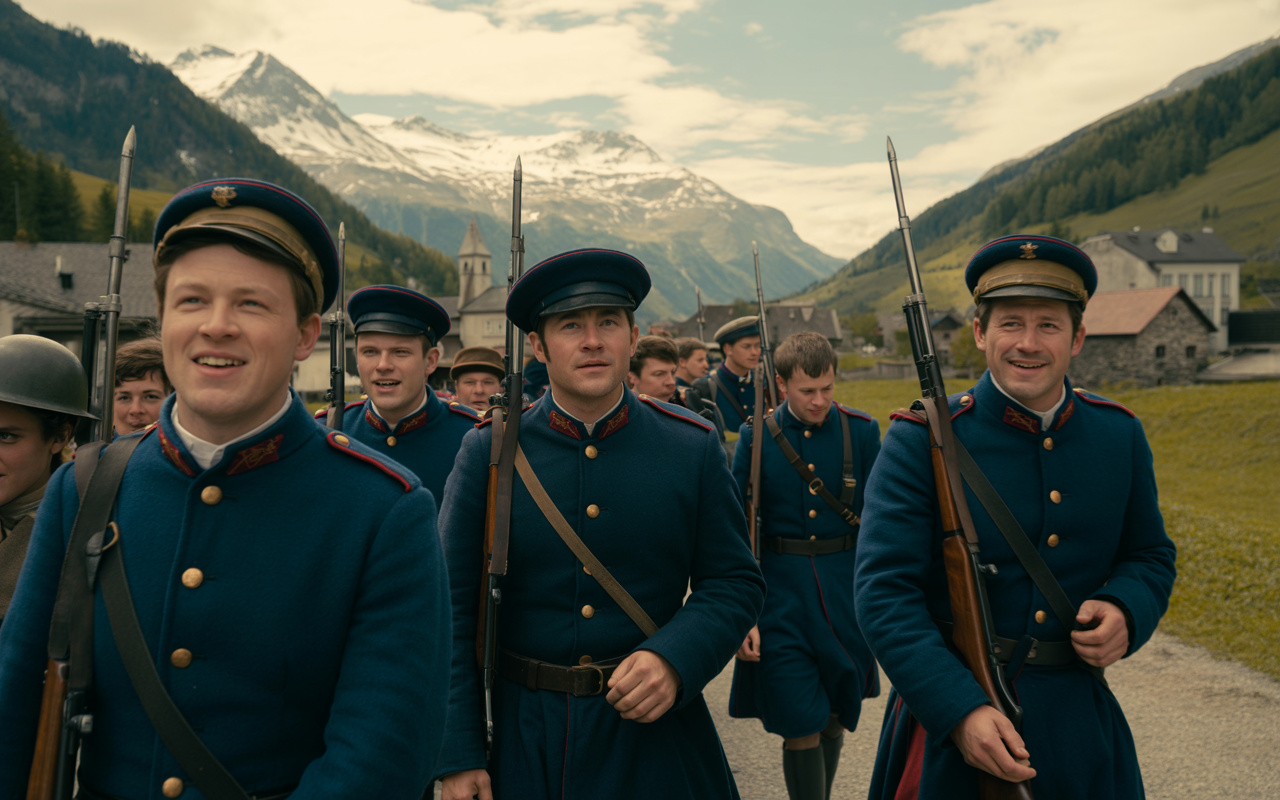
In 1866, Liechtenstein Sent 80 Soldiers to the Austro-Prussian War and Returned with 81, Without Casualties, in One of the Most Curious Episodes in Military History.
Amid the wars that shaped the map of Europe in the 19th century, one story passed almost unnoticed by the major manuals of military history. It is the episode in which Liechtenstein, one of the smallest countries on the continent, sent 80 soldiers to a conflict and returned with 81, without recording any injuries, deaths, or missing persons. The mysterious addition was a man who joined the contingent on the way back, creating one of the most peculiar historical anecdotes of the period.
This was not an epic battle, nor a decisive military feat, but rather a demonstration of how micro-history, the stories of small countries, can be as fascinating as the accounts of great empires, battles, and treaties.
Liechtenstein in the Nineteenth Century: A Principality Among Giants
The story begins with the political context of Central Europe in the mid-nineteenth century. Liechtenstein was and continues to be an alpine principality landlocked between Austria and Switzerland, with a small territory and an essentially agricultural economy.
-
With just joint compound, white glue, and pigment, you can make a homemade paint that yields double the conventional amount, saves up to 70%, and leaves the wall with a finish that no one would believe wasn’t store-bought paint.

-
Home environment can influence the brain, mood, and well-being: studies indicate an increase of up to 15% in productivity, a reduction of 12% in stress with plants, and a direct impact of the circadian rhythm on the 24 hours of the day.

-
A Brazilian millionaire couple restores a farm over 150 years old in the interior of São Paulo and transforms the historic property with Portuguese tiles, antique furniture, and new spaces into a refuge that blends tradition, comfort, and sophistication.

-
Submerged city in a lake in Minas reveals intact streets, preserved vehicles, and houses after more than 60 years, impressing divers.


During that period, the country was part of the German Confederation, a grouping of German-speaking states created by the Congress of Vienna in 1815. This bloc did not have unified leadership but was politically dominated by the Austrian Empire, the main rival of the Kingdom of Prussia.
It was in this environment of constant tensions that the Austro-Prussian War of 1866 arose, also known as the Seven Weeks’ War. On the Austrian side, several smaller principalities were dragged into the conflict, including Liechtenstein.
For a tiny country like the principality, declaring war did not mean mobilizing armies of thousands of soldiers, but rather deploying a small local force to carry out military tasks and demonstrate loyalty to the Austrian cause.
The Austro-Prussian War and the Unlikely Liechtenstein Mobilization
In 1866, when the war broke out, Liechtenstein put into action what it could call its “army”: 80 soldiers, a number that corresponds to the maximum available military force.
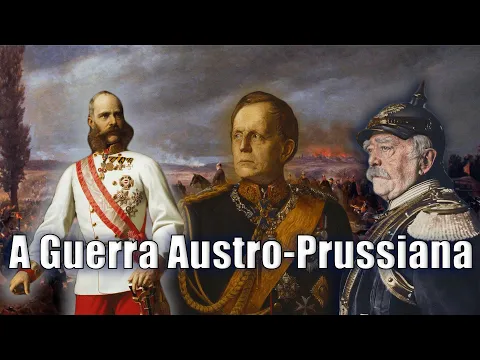

These men were not sent to large battlefronts. The mission of the detachment was to protect strategic areas of the Brenner Pass, an important alpine region for controlling military flows between Austria and the Kingdom of Italy, the latter an ally of Prussia in that conflict.
The tasks assigned to the contingent included:
- blocking and monitoring passages
- patrolling routes
- supporting Austrian troops
- communication and escort
In other words, it was a military role compatible with the size and capabilities of the principality.
It is important to highlight that Liechtenstein did not directly participate in large battles. The war itself was short and decisive, ending with a Prussian victory and the weakening of Austrian power in Europe. The curious detail comes at the moment of the withdrawal.
The Return That Entered History: 80 Left, 81 Returned
Among military historians and geopolitics enthusiasts, the most cited episode of this conflict is the fact that the 80 soldiers who left returned with 81.
According to historical records, no one died, no one deserted, and no one was injured. The new man who accompanied the soldiers back to Liechtenstein is said to have joined the group during the journey. Sources are not entirely unanimous about his origin, but there are two main versions:
- He was an Italian, who sympathized with the soldiers and decided to accompany them to the principality
- He was an Austrian officer, who served as a liaison between the troops and integrated into the battalion on the return
The consensus is that the episode is real: there were no casualties and there was an addition of one man. The fact did not change the course of the war, but became part of the gallery of historical curiosities because it may be the only documented case of an army that returned larger than when it left.
After the War: The End of the Army of Liechtenstein
The most impressive thing is what happened afterward. After the conflict and the political reconfiguration of Germany, the parliament of Liechtenstein initiated an internal debate about the necessity and costs of maintaining an army.
The war of 1866 made it clear that:
- the country did not have the means to influence continental conflicts
- maintaining active military forces was expensive
- internal security could be ensured in other ways
- diplomatic alliances were more effective than arms for a microstate
As a result, in 1868, just two years after the troop’s return, the principality officially abolished its army. Since then:
- Liechtenstein has no armed forces
- security is ensured by an internal police force
- the country adopts permanent neutrality
- subsequent European conflicts, including the two World Wars, were avoided
Today, Liechtenstein is one of the few countries in the world without an army, alongside microstates like Monaco and the Vatican.
Why Is This Episode So Remarkable for Military History
The episode of the “80 who Returned 81” is not significant because it altered European geopolitics, but because it challenges expectations about what war is and how states act in it.
It shows that:
- war is not fought only by great empires
- microstates also participate in history
- conflicts can generate unexpected outcomes
- military decisions can shape national identities
- pragmatism can prevail over force
For Liechtenstein, the history serves as a symbol of identity, historical humor, and the preservation of neutrality.
Among military history enthusiasts, the case has become a reference in lectures, books, and debates, precisely because of its statistical uniqueness: a troop that not only returned intact but expanded.
This small episode in History is not just a curiosity but a lens to observe a different type of protagonism. While the great empires of the time invested in armies, ships, and military railways, Liechtenstein concluded that the best strategy was to not engage in a game for which it was unprepared.
The phrase “80 left, 81 returned” summarizes a logic that few countries understood in that century: victory is not just about winning battles, but avoiding those that do not need to be fought.







Seja o primeiro a reagir!