





 Portuguese
  English
  Spanish
  4 min of reading
  0 comments


The Perdido Platform Operates at 2,450 M in the Gulf of Mexico and Is One of the Deepest Structures in the World — A Landmark of Global Offshore Engineering.
In the heart of the Gulf of Mexico, hidden beneath deep waters and extreme conditions, a giant metallic structure defies the limits of offshore engineering. Its name is Perdido, and it is considered one of the deepest oil platforms in the world — installed at an impressive 2,450 meters below the surface. Operated by Shell, with participation from Chevron and BP, Perdido is not just a production facility: it is a landmark of the oil and gas industry. Facing abyssal pressures, violent maritime currents, and almost surreal logistical challenges, this floating platform has become a symbol of human capability to extract resources in increasingly extreme locations.
The Deepwater Production Base
Perdido is located in the Perdido Fold Belt, about 320 km from the Texas coast, in one of the most promising areas of the Gulf of Mexico. The structure acts as a central production platform for three subsea fields: Great White, Silvertip, and Tobago.
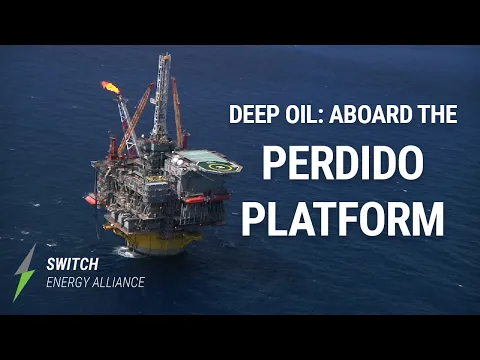

Installed in 2010, it operates at a depth of 2,450 meters (8,000 feet) of water — equivalent to stacking nearly eight Eiffel Towers between the surface and the ocean floor.
-
Lula reveals a masterstroke by Petrobras to undo a deal made by Bolsonaro, which involves the return of an important refinery that currently produces less than half of what was expected and makes Brazil dependent on international diesel.
-
A study confirms that the natural gas sector will reduce greenhouse gas emissions in Brazil by 0.5% and accelerate the energy transition by 2026.

-
Petrobras implements a severe adjustment and confirms a 55% increase in the price of aviation kerosene with a proposal for installment payments for the companies.

-
The rise in oil prices could ensure an extra revenue of R$ 100 billion for the Federal Government, indicates a recent economic study.

Not coincidentally, it holds the record for the deepest production platform with piping in the world, surpassing previous records set off the coast of Brazil and West Africa.
Engineering a Giant: What Is a Spar?
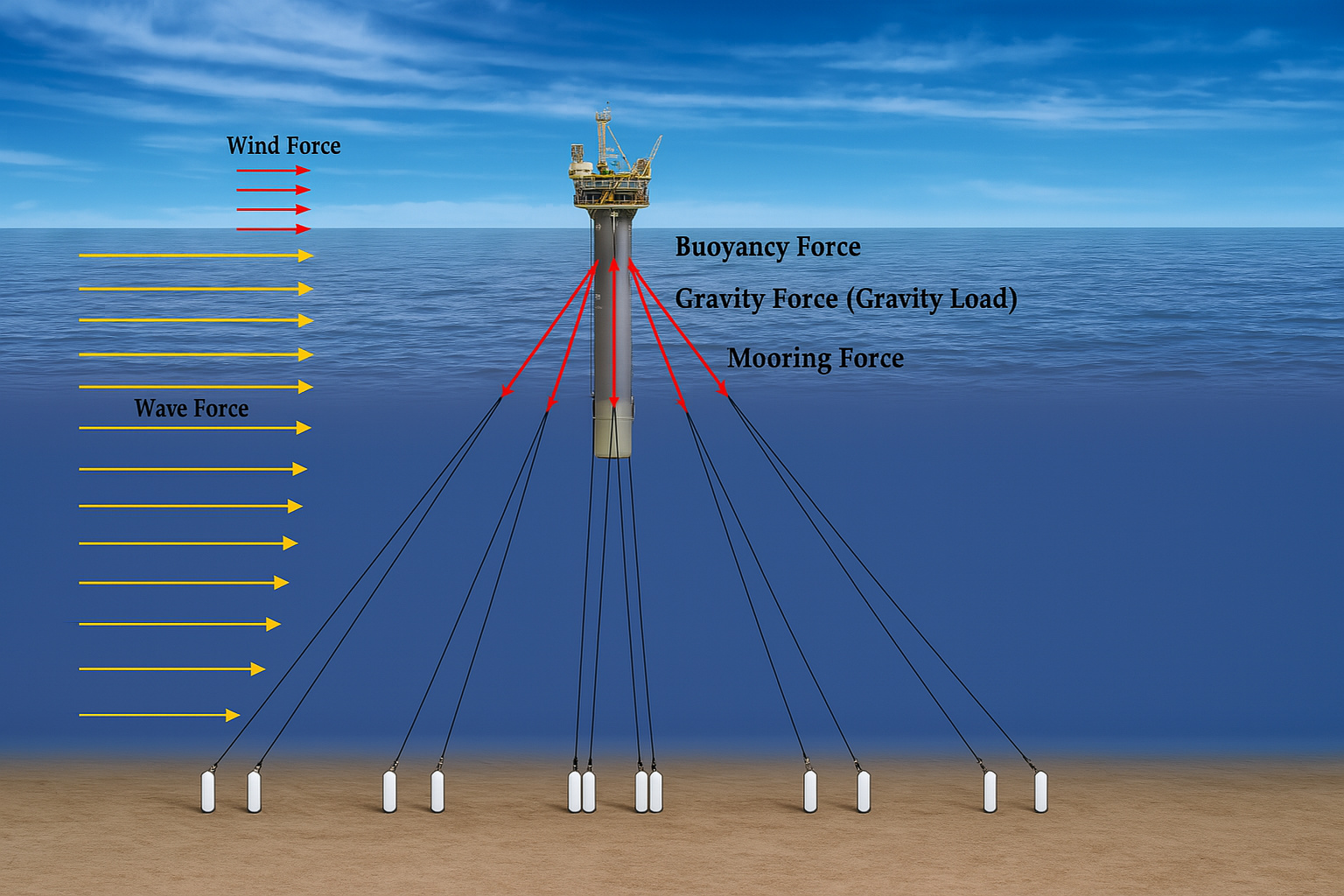
Unlike traditional fixed platforms, Perdido is classified as a spar, a type of floating structure vertically anchored to the seabed. It features a cylindrical hull that is 170 meters tall (of which about 40 meters are above the surface), filled with ballast for stability.
The spar is ideal for ultra-deep waters, as it allows vertical and horizontal movement without compromising the structure’s integrity, even under aggressive sea currents.
Its hull was built in Pascagoula, Mississippi, and then towed into position with the help of specialized ocean tugs. The installation operation required years of planning, 22 high-precision anchorings, and a series of dynamic tests — an engineering feat comparable to assembling a 40-story building offshore.
Capacity and Operation
The Perdido platform has a production capacity of approximately 100,000 barrels of oil per day and 6 million cubic meters of natural gas. To evacuate this production, it is interconnected to a network of subsea pipelines that connect the wells to processing and export systems.
The nearby wells are among the deepest ever drilled in the Western Hemisphere, with sections exceeding 9,000 meters of total depth, including water column and reservoir.
Moreover, Perdido has underwater separation and compression modules, which help pump hydrocarbons to the platform, overcoming the brutal pressure of the seabed — exceeding 250 atmospheres, or the equivalent of 2,500 tons per square meter.
Life Aboard: 24 Hours a Day in One of the Most Isolated Environments on the Planet
About 150 to 200 workers live on the platform in 14-day shifts. Aboard, there are dormitories, dining halls, gyms, and recreation areas — all to ensure a minimum level of comfort in an isolated location subject to intense weather changes and with helicopters as the only means of rapid access.
The monitoring of operations is done by intelligent sensors that detect vibrations, leaks, corrosion, and structural displacements, all in real-time. Shell has also implemented digital twin technology to simulate failure scenarios and anticipate maintenance.
Environmental and Operational Challenges
A platform installed in such deep waters faces constant challenges:
- Hurricanes and tropical storms, frequent in the Gulf of Mexico region. The structure is designed to withstand waves of up to 15 meters and winds exceeding 200 km/h.
- Complex maintenance, as any underwater intervention relies on ROVs (remotely operated vehicles) or specialized divers.
- Environmental risk management, with strict protocols to prevent leaks or accidents — especially after the Deepwater Horizon disaster in 2010.
A Living Laboratory for the Offshore Industry
Today, Perdido is a reference for new ultra-deepwater platforms in Brazil (pre-salt), Africa, the Gulf of Guinea, and Southeast Asia. Many of the technologies tested on it — such as heated lines, submersible pumps, and hybrid structures — have been adapted for fields in Brazil’s pre-salt, for instance.
With over a decade in operation, it is still considered a benchmark of offshore engineering, being studied by universities, research centers, and energy companies worldwide.
The Search for Oil in Extreme Locations Is Not Over
Even with the advancement of renewable sources, offshore exploration in deep waters remains an important pillar of the global energy matrix. The oil extracted from fields such as Great White and Silvertip has low sulfur content (sweet crude), which facilitates refining and improves profit margins.
With global energy demand still on the rise and the natural decline of mature onshore fields, structures like Perdido will continue to be essential to bridge the energy gap of the next 30 years — especially as the energy transition moves at an uneven pace across the planet.






-

Uma pessoa reagiu a isso.