





 Portuguese
  English
  Spanish
  6 min of reading
  0 comments


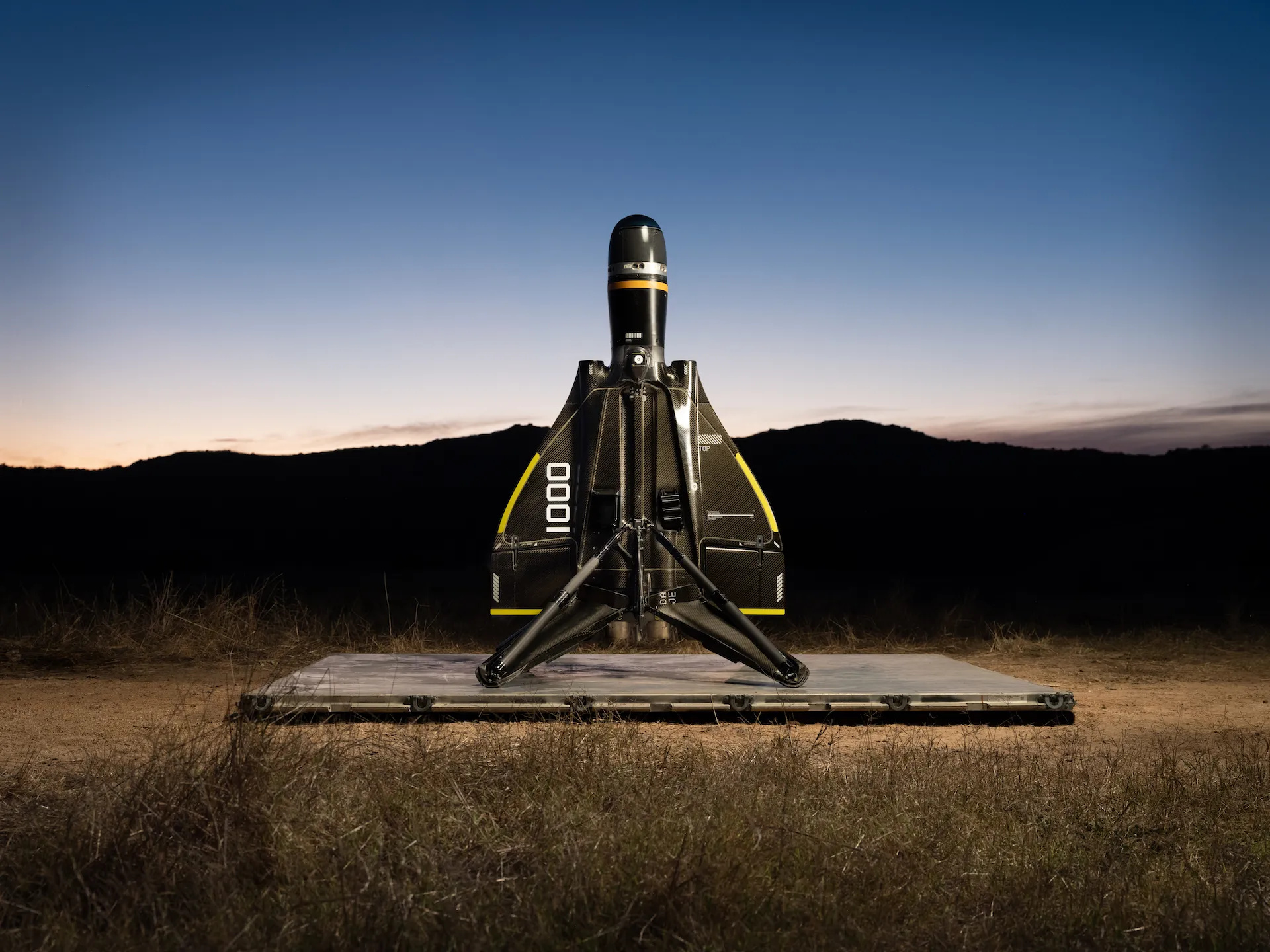
After Spending Millions to Take Down Cheap Drones in the Red Sea, the U.S. Tests the Roadrunner, Anduril’s System That Promises to Change the Cost Equation of Modern Air Defense.
In October 2023, the U.S. Navy destroyed several Houthi drones in the Red Sea. The missile used to take down each one cost US$ 2.1 million. The downed drone cost US$ 2,000. U.S. Undersecretary of Defense William LaPlante went to the Senate and said the obvious out loud: “If we’re taking down a $50,000 drone with a $3 million missile, that’s not a good cost equation.” It was January 2024 when defense company Anduril Industries put into operational evaluation a system that aims to solve exactly this problem. Its name: Roadrunner.
The Problem the Pentagon Couldn’t Solve: Million-Dollar Missile vs. $2,000 Drone
Since October 2023, the U.S. Navy has spent more than US$ 1 billion on munitions to intercept Houthi drones and missiles in the Red Sea. The SM-2 missiles used in the mission cost US$ 2.1 million each. The SM-6s, US$ 3.9 million.
The Houthi drones they take down cost between US$ 2,000 and US$ 50,000 each, many made with parts purchased online.
-
The German “steel monster” weighing 55 tons fires up to 10 projectiles per minute at over 40 km and avoids counterattacks on the battlefield by moving quickly to escape enemy attacks; meet the Panzerhaubitze 2000.

-
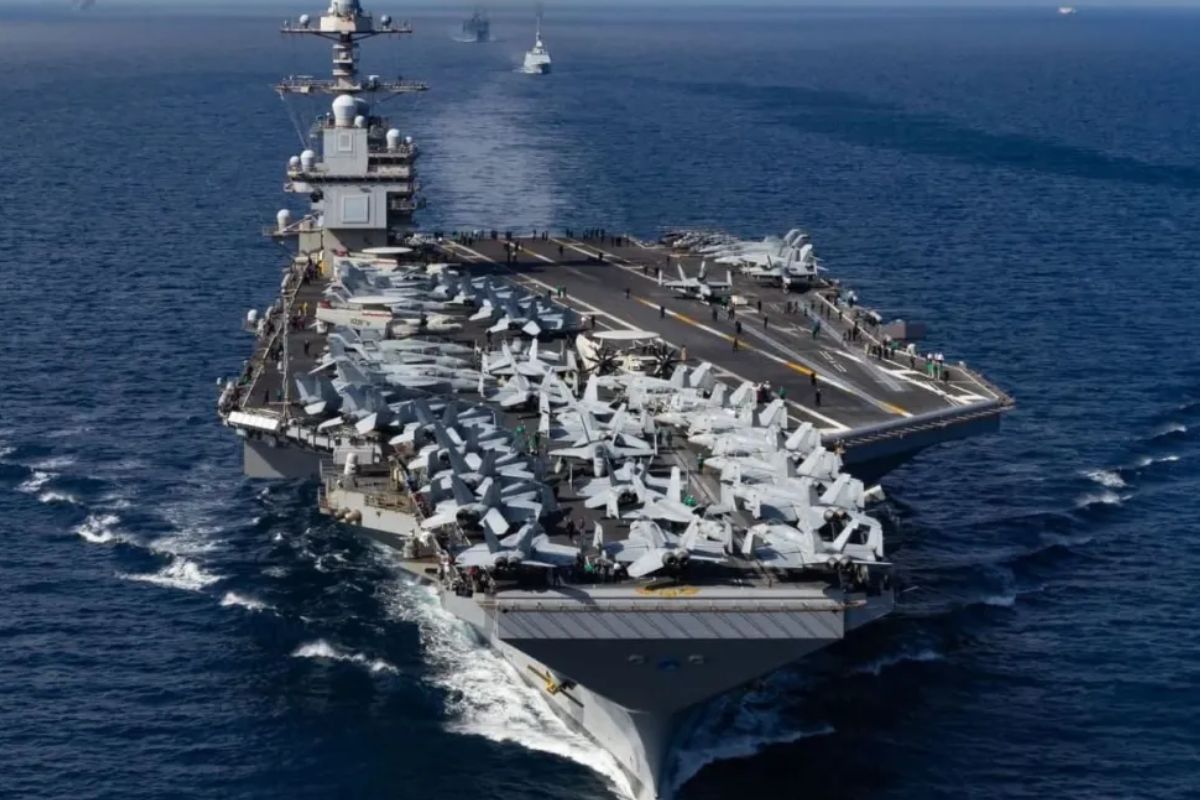
USS Gerald R. Ford, the largest aircraft carrier in the world, returns to sea after a fire in the laundry in the Red Sea; repaired in Crete, it resumes missions of Operation Epic Fury against Iran.
-
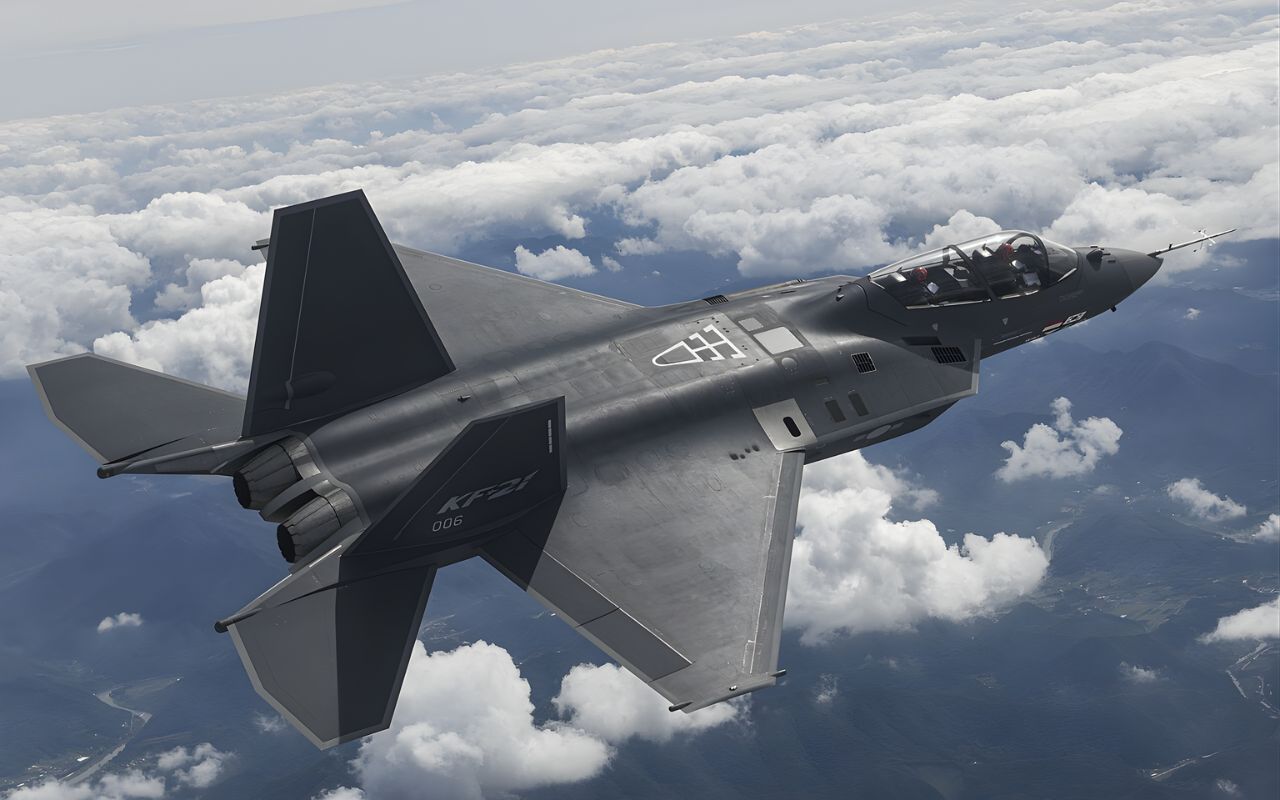
Military power: South Korea’s new KF-21 fighter jet will be a key component in replacing the aging aircraft of the air force, placing the country on the map of air military powers.
-
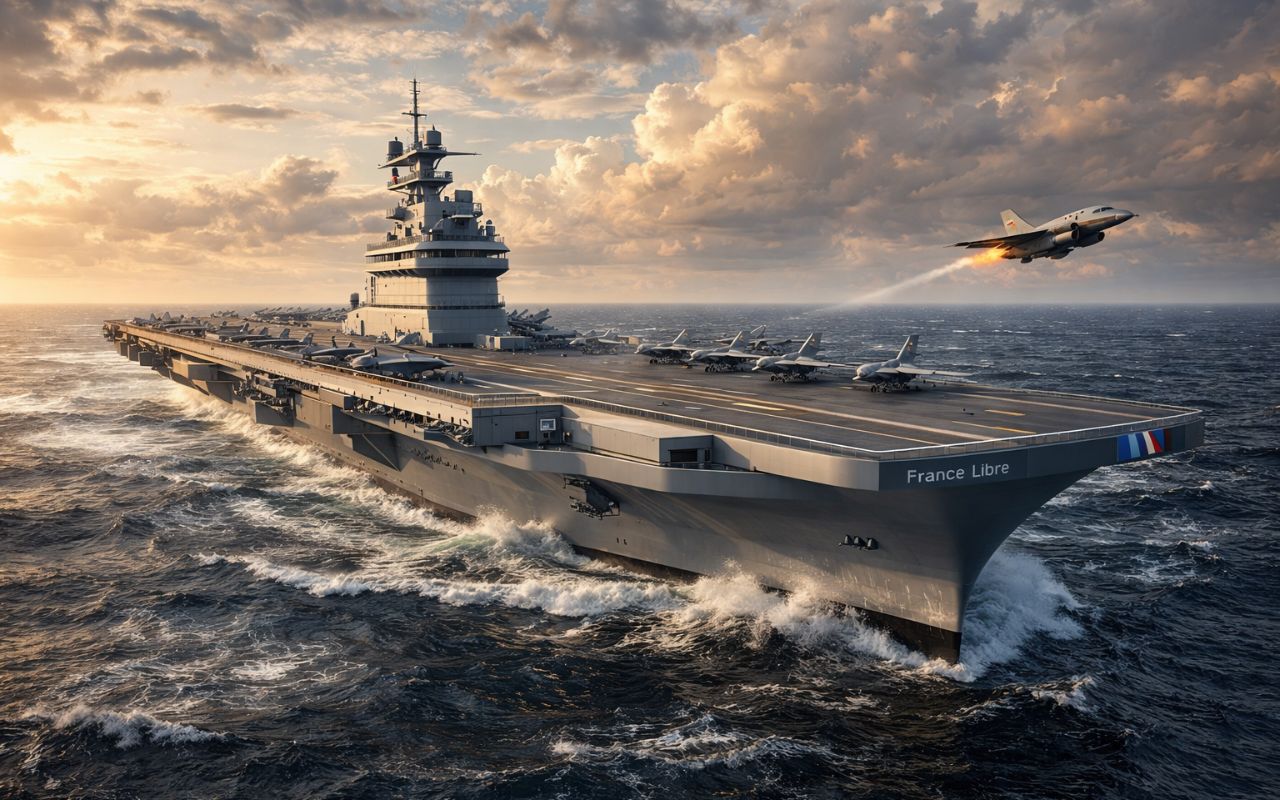
With 310 meters, 80 thousand tons, and capable of operating for 45 years, the new nuclear aircraft carrier France Libre will be the largest in France and will enter service in 2038.

This cost asymmetry has a technical name within the Pentagon: “the wrong side of the cost curve.” And it is not exclusive to conflicts with the Houthis.
In Ukraine, low-cost Russian Lancet drones bring down armored vehicles valued in the millions. In the Middle East, Iran launched over 300 drones and missiles against Israel in a single night in April 2024, most intercepted, but at a defense cost much higher than the cost of the attack.
The logic is brutal: those attacking with cheap drones can force the defender to spend a fortune to protect themselves. The Roadrunner was built to invert this logic.
What Is the Anduril Roadrunner: Drone, Missile, or Boomerang?
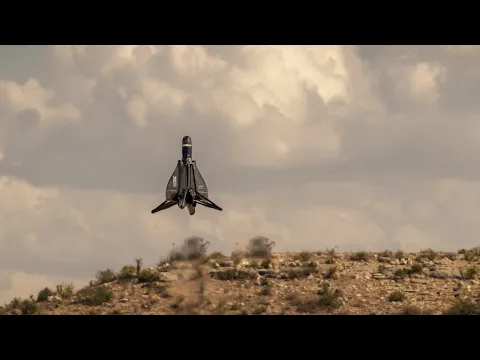

The Roadrunner is all three things at once and it’s exactly what makes it different from anything else in the U.S. military inventory.
Technically, it is an autonomous aerial vehicle powered by two turbojet engines, developed in-house by Anduril. The company designed an entirely new engine because none available on the market met the requirements for size, cost, and power needed.
According to Palmer Luckey, founder of Anduril, this engine is the most power-dense — volumetrically speaking — ever built.
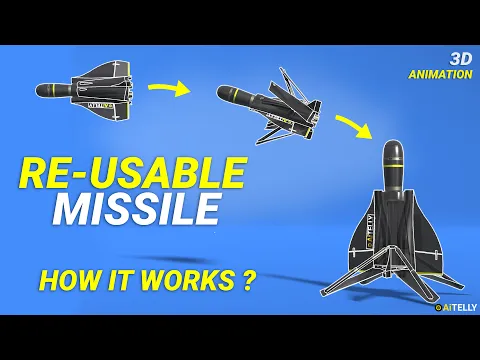
The vehicle is about 1.5 meters long. It vertically launches from a launch box called “Nest” that can be positioned on land, on ships, or distributed across a protected area. It flies at high subsonic speed, patrols the designated airspace, and identifies threats with onboard sensors and processing.
Here comes the part that doesn’t exist in any other system in the world. If the Roadrunner identifies a confirmed threat — drone, cruise missile, low-performance aircraft — it closes the distance and detonates its high-explosive warhead against the target.
If there is no threat, or if the target was false: the Roadrunner lands vertically on its tail, is refueled, and is ready for the next launch.
The Los Angeles Times called it “an innovative combination of AI-powered drone, bomb, and boomerang.”
Why Reusability Changes Everything in the Antidrone Defense Calculation
An antidrone defense system has a structural problem that goes beyond the cost per shot. If a threat approaches and you are unsure if it is real or a decoy, you need to decide: launch the interceptor or wait? If you launch and it’s a false alarm, you’ve wasted an expensive missile. If you wait too long, the real drone gets past the defense.
The Roadrunner eliminates this dilemma.

An operator can launch multiple Roadrunners at the first sign of danger — with “an abundance of caution”, in Anduril’s own words, without the psychological and financial cost of wasting expensive munitions on false alarms.
If all return without engaging a real target, the cost was just the fuel.
Anduril claims that a single operator can manage multiple Roadrunners simultaneously and that the systems communicate in a network to distribute targets among themselves — reducing the total number of units required to cover an area.
For naval defense, the company projects a kill probability of over 90% for threats in direct defense of vessels and over 70% for area coverage along maritime routes.
The Contracts: $250 Million and Deployment on U.S. Warships
In October 2024, the Pentagon formalized a $250 million contract to acquire more than 500 units of the Roadrunner-M.
It has not been disclosed which branch of the armed forces will receive the units, but Anduril confirmed that the system has been in operational combat evaluation since January 2024.
In March 2025, the U.S. Navy announced plans to equip some Arleigh Burke-class destroyers with Roadrunner-M, the same ships that spent hundreds of millions on SM-2 and SM-6 missiles taking down cheap drones in the Red Sea.
Before that, in 2022, the U.S. Special Operations Command (SOCOM) had contracted a $1 billion antidrone system from Anduril, with a portion of $12.5 million specifically allocated to the Roadrunner program.
This suggests, according to analysts, that the Roadrunner might already be operationally used by the most secretive operators of American forces in high-threat environments — long before any official announcement.
How Much It Costs and Why It Matters
Anduril does not disclose the exact price of the Roadrunner. But Palmer Luckey publicly confirmed that the current cost is in the “hundreds of thousands of dollars” per unit, a fraction of the US$ 2 to 4 million missiles that the Navy currently uses for the same mission.
And the company projects that the price will fall as production scales up.
The assembly line is already operating at Anduril’s headquarters in Costa Mesa, California. By the public announcement of the system in December 2023, the company had already flown dozens of Roadrunners in tests — with some units accumulating dozens of flights.
The business model is different from the traditional defense industry standard: Anduril developed the Roadrunner with its own resources, without an initial government contract. It presented the finished product and sought buyers afterward — a still-rare approach in a sector dominated by decades-long development contracts.
What the Roadrunner Can and What It Cannot Do Yet
The Roadrunner-M was designed to intercept a wide range of aerial threats.
Luckey described the spectrum: at the lower end, Iranian Shahed-type drones, the same ones that Russia uses by the hundreds against Ukraine. At the upper end, Groups 4 and 5 aircraft, reaching large manned aircraft.

The idea is to fill the gap between effective low-cost antidrone systems against commercial quadcopters, but useless against cruise missiles, and highly expensive Patriot missiles designed for sophisticated ballistic threats, not for cheap drones.
What is still unclear: the exact range of the system is classified. The ability to operate in swarm with full autonomy is still under development; the company acknowledged that “we are at the beginning of this journey.”
And there is a parallel controversy: in September 2025, a leaked U.S. Army report described the joint command and control platform of Anduril with Palantir as having “very high risk” due to data security failures. Both companies rejected the report.
Why the Roadrunner Represents an Era Change in Antidrone Combat
The problem the Roadrunner seeks to solve is not new. What is new is the scale of the problem.
In 2024, the Houthis launched drone attacks almost daily for months. Russia fired hundreds of Shaheds against Ukraine in a single attack. Iran launched over 300 munitions in one night against Israel.
The defending side has always spent more than the attacking side. But the cost difference has never been so extreme, so systematically exploited, and so difficult to sustain as it is now. The Roadrunner does not solve the problem by itself.
But it is the first time a defense system has been designed with reusability as a central function — not as an optional bonus, but as a design premise.
If it works at the promised scale, it changes the calculation that currently favors those attacking with cheap drones. And if it doesn’t work, the Pentagon will continue spending US$ 3 million to take down each $2,000 drone — while the adversary smiles and makes the next batch order.









-

2 pessoas reagiram a isso.