





 Portuguese
  English
  Spanish
  5 min of reading
  8 comments


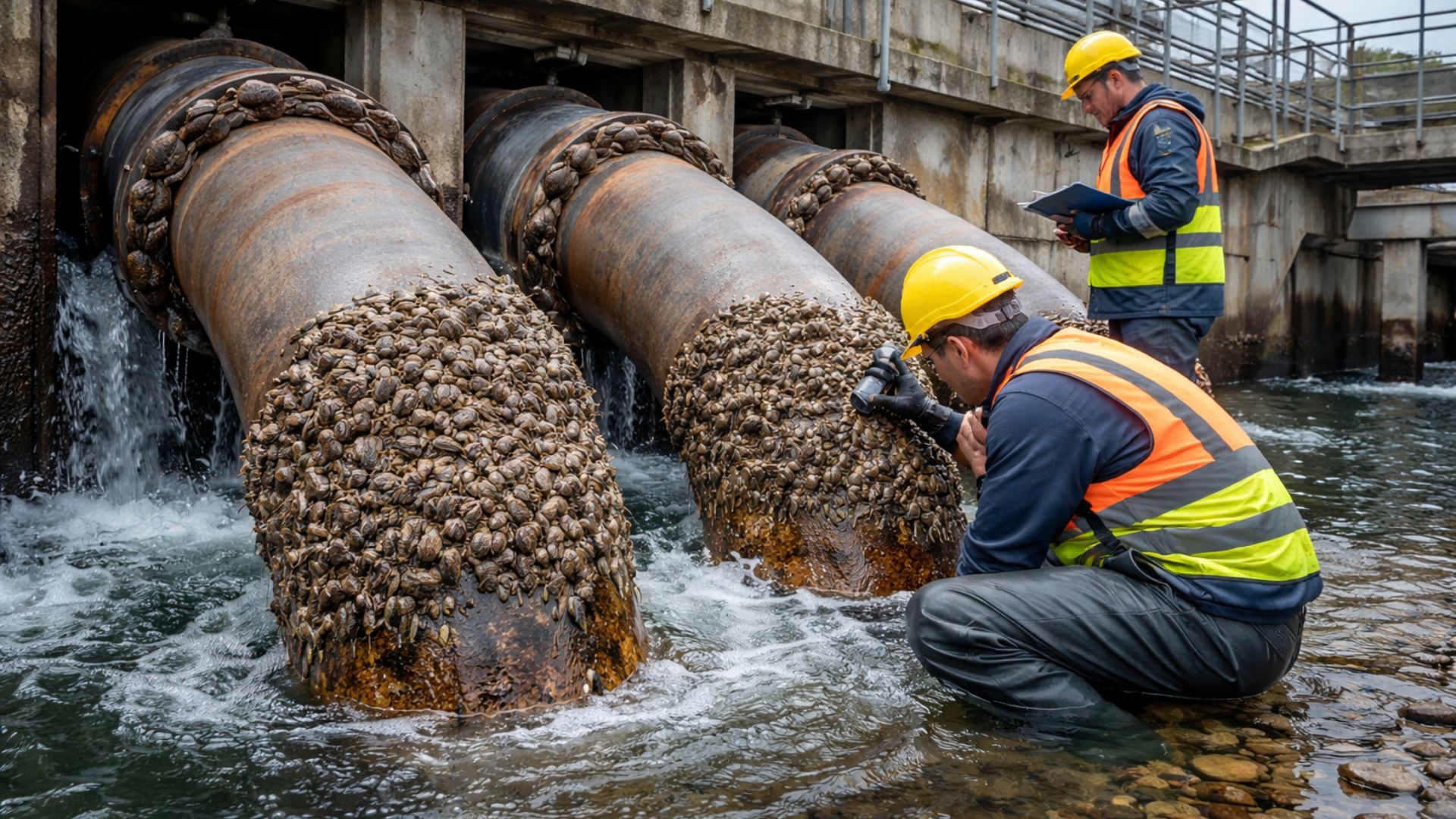


Invisible Costs Pressure Supply Systems, Demand Frequent Maintenance, and Expose Ongoing Impact of Invasive Species on Critical Infrastructure, Operational Efficiency, and Financial Planning in the Water Sector in the United Kingdom.
The UK water industry spends over £8 million per year to deal with invasive species that compromise infrastructure, including mussels that attach to submerged structures and can clog pipes and reduce flow rates in intakes and internal networks.
Although this cost weighs on day-to-day operations, it often goes unnoticed by those who only perceive supply when there is an interruption or a rate increase.
Over time, the problem has gained another scale as different water systems began to record colonizations capable of altering technical routines.
-
The eggshell that almost everyone throws away is made up of about 95% calcium carbonate and can help enrich the soil when crushed, slowly releasing nutrients and being reused in home gardens and vegetable patches.

-
This farm in the United States does not use sunlight, does not use soil, and produces 500 times more food per square meter than traditional agriculture: the secret lies in 42,000 LEDs, hydroponics, and a system that recycles even the heat from the lamps.
-
The water that almost everyone throws away after cooking potatoes carries nutrients released during the preparation and can be reused to help in the development of plants when used correctly at the base of gardens and pots, at no additional cost and without changing the routine.

-
The sea water temperature rose from 28 to 34 degrees in Santa Catarina and killed up to 90% of the oysters: producers who planted over 1 million seeds lost practically everything and say that if it happens again, production is doomed to end.

Invasive mussels, such as the zebra mussel, form dense colonies on hard surfaces.
In practice, this means accumulation on water intake screens, tunnels, valves, pipes, and treatment plant components, with gradual obstruction and loss of flow efficiency.
Recurring Operational Costs in the Water Supply Sector
In the annual account mentioned by industry entities, the expense recurs because spot removal does not prevent recolonization.
Water UK, which represents companies in the sector, has already stated in a communication that the industry invests over £8 million per year to confront invasive animals and plants that damage infrastructure and pressure daily operations.
In materials linked to the University of Cambridge, the estimate of £8 million per year appears associated with the impact of pipes clogged by zebra mussels and the effort to unblock them using less hazardous methods.

One of the academic communications about tests of a technology called BioBullets also describes that the method has been evaluated by seven water companies in trials aimed at reducing blockages in pipes.
The economic effect, for those operating supply systems, is not limited to an isolated event.
When the species spreads through rivers, lakes, and reservoirs, occurrences become distributed and are no longer treated as exceptions.
Thus, each intake point with a history of infestation tends to require more frequent monitoring, inspections, and recurring interventions, as organisms reattach after cleanings.
Impact of Invasive Mussels on Flow and Efficiency of Systems
The most sensitive point, in general, is where the infrastructure interacts directly with the environment.
Intakes, screens, and meshes function as the first physical barrier before water proceeds to transport and treatment.
Mussels can attach to these surfaces and create layers that restrict passage.
With reduced flow, pumping and transport systems need to operate outside the ideal, which requires engineering adjustments and can increase maintenance and energy costs.
On the other hand, removal work is not a simple routine cleaning.
Interventions in submerged areas, confined environments, or critical structures require safety protocols, planning for interruptions, and coordination to avoid additional risks.
Even when there are no long interruptions, costs arise in terms of labor hours, equipment use, logistics, disposal of removed material, and, in some cases, the need to repeat the procedure throughout the year.
Meanwhile, part of the financial burden remains hidden in daily operations, as it does not present itself as new construction or network expansion.
This represents a continuous expense to maintain the functioning of a service that, for the public, should simply occur without noise.
This characteristic gives the issue relevance, as pressure on essential systems arises from the accumulation of small but persistent costs.

Invasive Species and Economic Loss in the United Kingdom
The annual cost to the water sector is just one aspect of a broader issue.
In the United Kingdom, communications and public documents frequently cite that the economic impact of invasive species in the country was estimated at over £1.8 billion per year.
A briefing from the British Parliament highlights that this estimate was calculated in 2010 when discussing the environmental and economic effects of these species.
On another front, communications from the British government regarding the discovery and monitoring of the quagga mussel also mention the overall cost of invasives to the economy.
These materials point directly to the risk of clogged pipes and impacts on water quality.
The official approach emphasizes the need for monitoring and cooperation to prevent dissemination and reduce damages.
It is worth noting that the figure of £1.8 billion does not refer only to mussels.
Nonetheless, it helps contextualize why the issue is treated as a matter of public management and infrastructure, beyond biodiversity.
By affecting sectors such as utilities, transport, and supply, the pressure becomes economic and operational, reflecting on long-term planning and costs.
Control Technologies and Prevention Challenges

For the water sector, containment involves both technology and governance.
Some solutions seek to reduce attachment within pipes or eliminate already established colonies, considering environmental requirements and the type of asset.
In the case of BioBullets, the University of Cambridge describes a technology developed to act in pipes with zebra mussels.
The tests were conducted in partnership with water companies in the United Kingdom and focused on reducing costs and risks from alternative methods.
Besides control tools, prevention appears as a central axis because dispersion can occur with the involuntary help of human activities.
When a species establishes itself in a new body of water, fully reversing the situation tends to be difficult.
Hence, cleaning, inspection, and care protocols to avoid transfer between systems often integrate public strategies for addressing the issue.
Even with coordinated actions, the scenario that unfolds for operators is that of a recurring and permanent cost.
Monitoring, intervening, reducing risks, and repeating the cycle become part of the routine to keep water flowing to taps within the required parameters.
This expense, being operational and continuous, is not always perceived outside the technical environment, although it is directly linked to the efficiency of the system.
If the fight against invasive mussels has already become an annual expense to keep water circulating without obstructions, how much longer can supply networks absorb this repeated cost before consumers notice the impact on the service and on their bills?







É comestíveis?
Já temos um tratamento físico e sem nenhum tipo de dano ao meio ambiente, empresa BRASILEIRA TEM A TECNOLOGIA E JA TRABALHA EM DIVERSAS USINAS HIDRELÉTRICAS NO COMBATE AO MEXILHÃO DOURADO (LGM ENGENHARIA E TECNOLOGIA D’ÁGUA) COM SEDE EM BSB.
Nós da LGM engenharia e tecnologia d’água já operamos a anos, em várias frentes de trabalho, seja companhias de água ou UHE’s em todo território nacional, com um equipamento eficiente e que não gera resíduos para os sistemas