





 Portuguese
  English
  Spanish
  4 min of reading
  1 comment


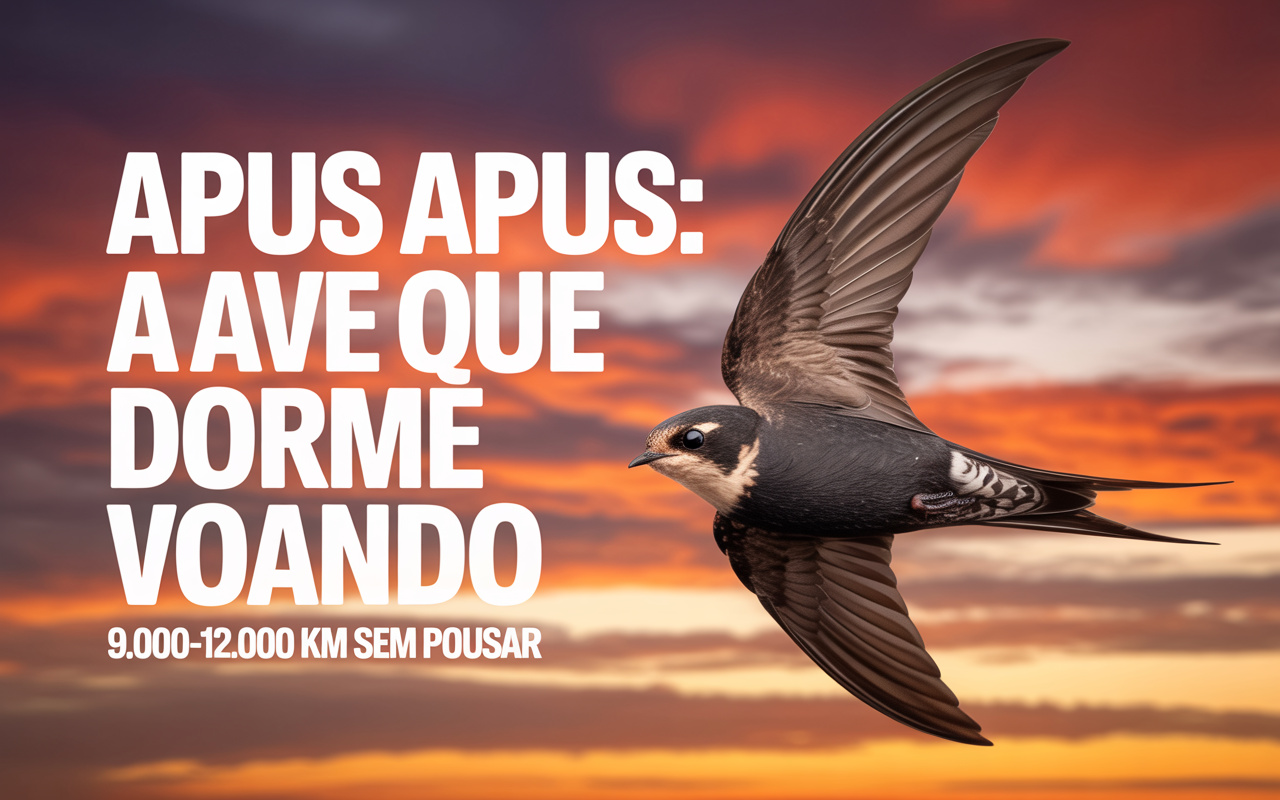


Capable of Flying for Up to 10 Months Without Landing and Migrating Over 12,000 km, the Apus Apus Sleeps While in Flight Using Only Half of Its Brain.
The Apus apus, known as the common swift, represents one of the most extreme limits ever documented in animal physiology. Unlike most birds, which rely on frequent resting on the ground or branches, this species has undergone such a radical adaptation that it has practically eliminated the need to land for most of its adult life. Studies using geolocation tracking have confirmed that individuals of this species can remain airborne for between nine and ten consecutive months, crossing entire continents while feeding, mating, and sleeping in mid-air.
This behavior is neither a narrative exaggeration nor an isolated curiosity. It is directly linked to a rare combination of body aerodynamics, extremely efficient metabolism, and a neurological mechanism known as unihemispheric sleep, in which only half of the brain rests at a time. This adaptation allows the animal to maintain motor control, spatial orientation, and minimal awareness while resting.
Continuous Air Migration Between Europe and Africa Totals Up to 12,000 Kilometers
The Apus apus primarily breeds in Europe and spends its non-reproductive period in Sub-Saharan Africa. The distance between these regions varies depending on the route, but modern measurements indicate annual journeys between 9,000 and 12,000 kilometers.
-
What if the Sun disappeared suddenly? Simulation shows Earth in darkness within minutes, extreme cold, and rapid collapse of life on the planet.

-
A 2,400-year-old iron foundry has been discovered in Senegal with 100 tons of slag, 35 furnace bases, and signs of nearly eight centuries of continuous metallurgical activity.

-
Four humans are flying towards the Moon inside the Orion capsule launched by the SLS rocket, and on April 6, Artemis II will disappear behind the far side of the Moon without communication with Earth for nearly an hour.

-
Worlds covered by water, atmospheres filled with hydrogen, and the possibility of life beyond Earth: ocean planets are rewriting the map of cosmic search and forcing scientists to rethink where to look.


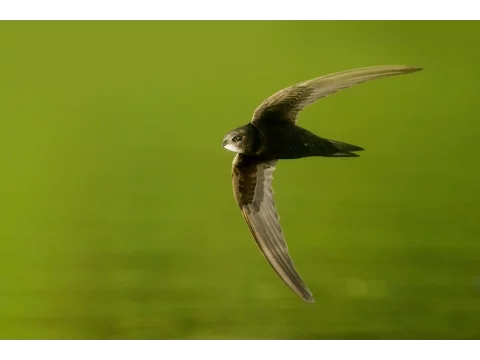

What is most impressive is that much of this journey occurs without prolonged stops, something virtually unprecedented among terrestrial birds.
During migration, the common swift utilizes thermal currents and high-altitude winds to drastically reduce energy expenditure. It flies at high altitudes during the day and descends at night, adjusting the speed and angle of its wings for stability. This strategy allows it to cross deserts, seas, and areas without any resting points, turning the sky itself into a functional habitat.
Unihemispheric Sleep Allows for Brain Rest Without Losing Control
The central point that makes this behavior possible lies in the functioning of the Apus apus brain. Unlike the bilateral deep sleep typical of mammals and most birds, the common swift utilizes unihemispheric sleep.
In this state, only one cerebral hemisphere rests while the other remains active, maintaining essential functions such as balance, navigation, and response to environmental stimuli.
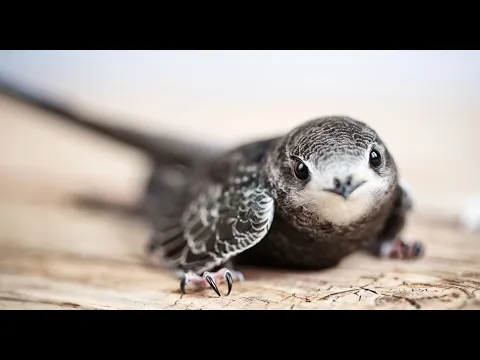
This mechanism had already been observed in dolphins and some aquatic birds, but in the Apus apus it reaches an extreme operational level.
The animal alternates the resting hemisphere over time, ensuring sufficient neural rest without compromising flight ability. Brain activity sensors and movement patterns have confirmed that these sleep episodes occur repeatedly during flight, especially during nighttime or stable gliding periods.
Aerodynamic Body and Metabolism Adjusted for Continuous Flight
The anatomy of the Apus apus is practically designed exclusively for the air. Its long and narrow wings have a high aspect ratio, reducing drag and increasing efficiency in sustained flight.
The compact body, coupled with highly developed pectoral muscles, allows for long periods of continuous flapping without significant fatigue.
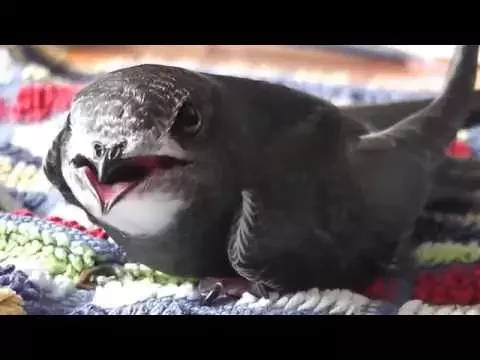
Metabolically, the common swift has an extremely efficient energy conversion rate. It feeds exclusively in flight, capturing insects carried by air currents, which eliminates the need to land for foraging.
Water, nutrients, and energy are obtained almost entirely during aerial movement, redefining the concept of continuous locomotion in the animal kingdom.
Staying in the Air for Up to 10 Months Redefines the Concept of Habitat
By spending up to ten consecutive months in the air, the Apus apus practically abandons the ground as a functional environment.
Landing occurs almost exclusively during the reproductive period when it is necessary to access cavities in buildings, rocks, or artificial structures for nesting. Outside this short interval, the sky becomes its only living space.
This behavior drastically reduces exposure to terrestrial predators and expands access to food resources distributed over large areas. At the same time, it imposes extreme physiological challenges such as constant muscle maintenance, hydroelectrolytic balance, and precise control of energy expenditure.
The fact that the species thrives in this regime shows how far natural selection can push an organism when flight ceases to be merely a means of transportation and becomes a permanent way of life.
What Science Learns by Studying the Apus Apus
The common swift has become a natural model for studies on sleep, neuroplasticity, energy efficiency, and flight biomechanics.
Understanding how the brain tolerates long periods of partial activity without cognitive impairment can help advance research on sleep disorders, extreme fatigue, and even long-duration human operations such as aviation and space missions.
Furthermore, the aerodynamic control and metabolic efficiency of the Apus apus inspire studies in aerospace engineering, particularly in the development of long-endurance drones and sustained flight systems with minimal energy consumption.
A Bird That Challenges the Known Limits of Biology
The Apus apus is not just an efficient migratory bird. It represents an extreme case where sleep, locomotion, and survival merge into a single continuous system.
Capable of covering up to 12,000 kilometers, staying in the air for almost an entire year, and sleeping in mid-flight with only half of its brain at rest, the common swift redefines what it means to live in motion.
Few animals illustrate so clearly that, in nature, biological limits are not fixed. They are continuously pushed to the extent that the environment allows and, in the case of the Apus apus, that limit seems to literally be in the sky.







Se llama golondrina en uruguay