





 Portuguese
  English
  Spanish
  5 min of reading
  2 comments


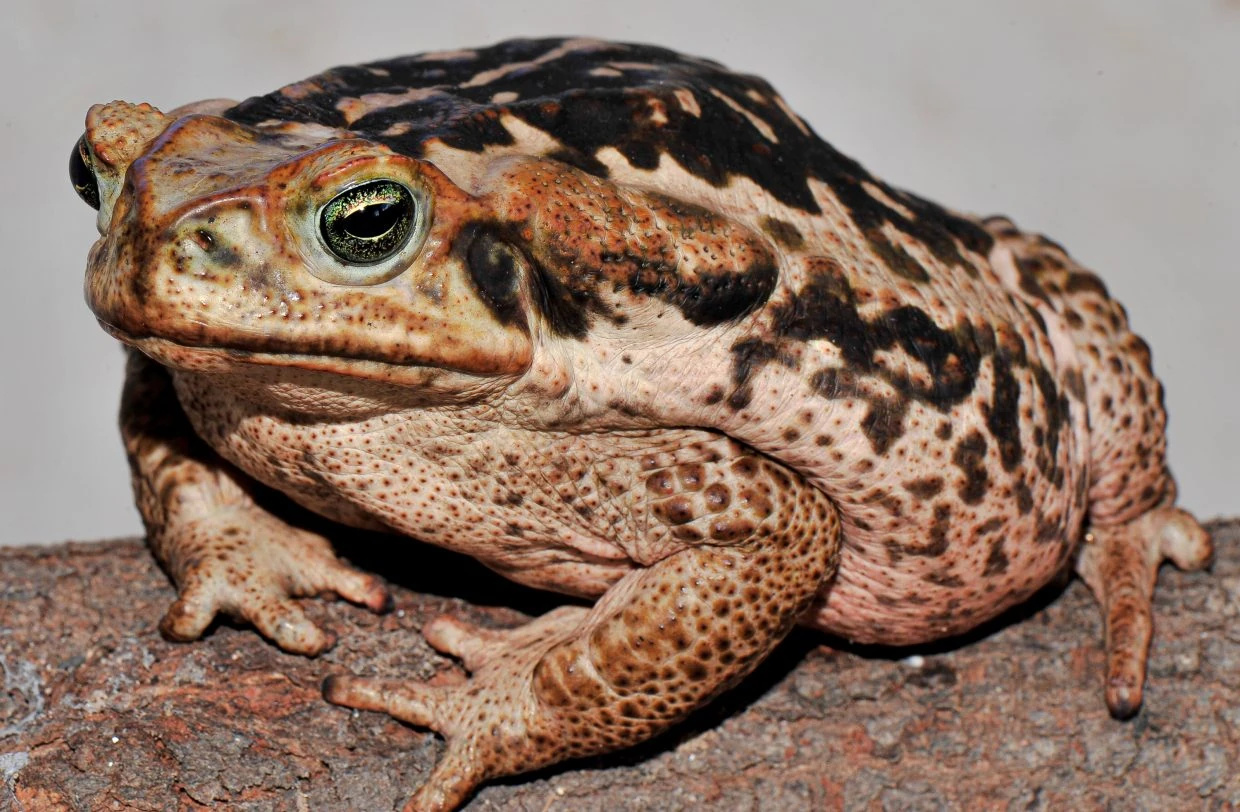


Cane Toad (Rhinella marina), Common in Brazil, Became a Pest in Australia: Lethal Toxin, Accelerated Spread Since 1935, and Decades of Struggle.
Many people look at a large toad and think “it’s just an amphibian”. The problem arises when this amphibian carries a chemical weapon embedded in its skin, reproduces rapidly, and enters an ecosystem that never learned to deal with it. That’s precisely why the cane toad, Rhinella marina, went from a common species in parts of the tropical Americas to one of the most studied cases of biological invasion on the planet.
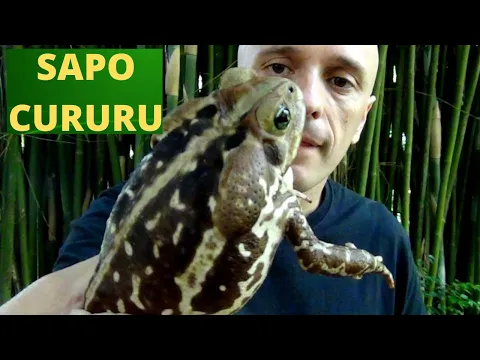
In Brazil, “cane toad” is a common name used for large toads in various regions and can vary by species, but Rhinella marina exists in South America and is documented in the country. In Australia, it became famous for another reason: since its introduction, it not only spread but also began to poison native predators, disrupting entire ecological chains.
Rhinella marina, the “Cane Toad,” and What Makes It Different
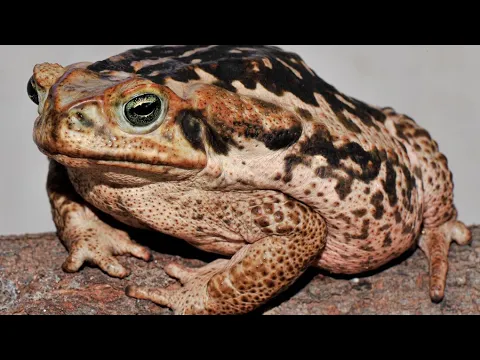

The Rhinella marina is a robust, terrestrial toad with prominent parotoid glands behind its head. It is in these glands that the detail that changes everything lies: a mixture of toxins (commonly referred to as bufotoxin) that can kill or incapacitate predators that try to bite or swallow it.
-
How an innovative city combines high technology, well-being, and sustainability to become the largest reference in clean energy on the planet.

-
Couple buys 1846 church in ruins for R$ 660,000, invests R$ 3.2 million in renovations, transforms it into a millionaire mansion, and even preserved a historic cemetery with over 300 graves.

-
He started running at 66 years old, broke records at 82, and is now a subject of study for having a metabolic age comparable to that of a 20-year-old, in a case that is intriguing scientists and inspiring the world.

-
Oldest tree on the planet reappears after 130 years of searches: Wattieza, 385 million years old, was 10 meters tall and had no leaves or seeds; Gilboa fossils in New York solved the mystery in 2007.


What makes this impressive is that the toxin does not “appear” only in adults. Reports and reviews about the species highlight that eggs, tadpoles, juveniles, and adults can have toxic components, which complicates control efforts and increases ecological risk when the animal settles in a new region.
And there is a cruel side effect: many Australian predators are programmed to attack amphibians and small vertebrates, but they did not evolve alongside such a toxic toad. This turns normal hunting behavior into a “fatal mistake.”
Australia, 1935, and the Start of a Decision That Went Out of Control
The story that became a global lesson begins with an attempt to solve an agricultural problem. In 1935, the cane toad was introduced in Queensland, Australia, as a way to combat pests related to sugarcane. The logic seemed simple: release a generalist predator, and it would reduce the insects attacking the crop.
In practice, biology did not adhere to the human script. The most frequently cited historical record in Australian sources points to the introduction in 1935 and describes how the initiative ended up becoming an ecological disaster because the toads did not control the pests as expected and found conditions to expand.
From there, the part that is most shocking starts: it is not a “slow” invasion. The species spread across northern Australia and continues to be treated by state agencies as an invasive animal with environmental and health risks, including impacts on native wildlife and also pets and people when there is contact with toxins.
The Toxin That Takes Down Predators and Creates a Domino Effect in Nature
The debate begins when you understand the scale of the impact. It is not just “one more animal”. The primary pathway of ecological damage highlighted by scientific reviews is toxic ingestion: predators attack the toad, receive a lethal dose, and populations can decline in newly invaded areas.
Research and reviews report deaths and declines in predators such as some varanid lizards (goannas), predatory marsupials like the northern quoll, and even freshwater crocodiles in regions where the cane toad advances.
And then the domino effect comes into play: when an important predator disappears, prey and competitors change their behavior and abundance. Studies show alterations in processes such as carcass removal and dynamics of other animals in invaded environments, indicating that the invasion does not “stop” at the toad; it reconfigures the ecosystem.
In other words: the toad does not need to “dominate” everything by itself. It just needs to take down key pieces of the board.
Why It Is So Difficult to Contain and Why Decades Have Not Resolved It
Here lies the part that frustrates even experts: containing cane toads on a continental scale is different from controlling a pest in a neighborhood. State agencies and technical reports are often blunt: broad eradication is extremely difficult, and measures are typically more effective at a local scale, focusing on reducing impacts and protecting vulnerable species.
This happens for three main reasons.
The first is pure biology: an amphibian that reproduces quickly and uses bodies of water for tadpoles finds countless “landing spots” in warm, humid environments.
The second is logistics: capturing, fencing off, or removing individuals requires continuous effort and coordination over vast, often remote areas.
The third is that the toad’s defense system works “too well”: even when a native predator tries to incorporate it as food, it dies before learning.
New Strategies: Teaching Predators, Editing Tadpoles, and Trying to Turn the Tide
Although it seems impossible, what is happening now is a shift in mindset: instead of trying to “erase” the toad from the map, science has started to focus on “shielding” native wildlife.
A real and recent example is taste aversion training. From 2019 to 2022, researchers tested a strategy to make freshwater crocodiles associate toads with a bad experience and thus avoid eating the invader when it arrives.
Results published in scientific journals show dramatic drops in mortality in treated areas when the invasion occurred, suggesting that preparing predators could save entire populations.
Another front is even bolder: genetic engineering as a conservation tool. There are projects exploring resistance to the toxin in threatened native species, like the northern quoll, precisely because it is extremely vulnerable to the cane toad when it tries to attack it.
And perhaps the most “science fiction” idea is to alter the toad itself instead of focusing on the predator. In 2025, researchers discussed creating genetically modified tadpoles to remain juvenile and become hyper-cannibalistic within breeding facilities, devouring eggs and reducing the recruitment of new toads. This proposal still requires caution and social debate, but it shows the level of technical desperation that the invasion has generated.
What This Story Teaches About Biological Invasions and “Simple” Decisions
The cane toad is almost a perfect case study of how good intentions can create a problem larger than the original. An animal introduced to protect agricultural production turned into a mortality agent for native predators and a driver of complex ecological changes.
And this raises an uncomfortable but necessary question: if a decision made in 1935 still costs dearly nearly a century later, how many other “quick fixes” today could be planting the next environmental crisis without us realizing it right now?
If you had to choose, does it make more sense to spend energy trying to eliminate the invader… or transforming the ecosystem to resist it?







O teju réptil e a traíra peixe comem o sapo cururu e não morre com a sua toxinas.
I was diagnosed with Parkinson’s disease four years ago. For over two years, I relied on Levodopa and several other medications, but unfortunately, the symptoms kept getting worse. The tremors became more noticeable, and my balance and mobility started to decline quickly. Last year, out of desperation and hope, I decided to try a herbal treatment program from NaturePath Herbal Clinic.
Honestly, I was skeptical at first, but within a few months of starting the treatment, I began to notice real changes. My movements became smoother, the tremors subsided, and I felt steadier on my feet. Incredibly, I also regained much of my energy and confidence. It’s been a life-changing experience I feel more like myself again, better than I’ve felt in years.If you or a loved one is struggling with Parkinson’s disease, I truly recommend looking into their natural approach. You can visit their website at www. naturepathherbalclinic .com
info@ naturepathherbalclinic .com