





 Portuguese
  English
  Spanish
  4 min of reading
  4 comments


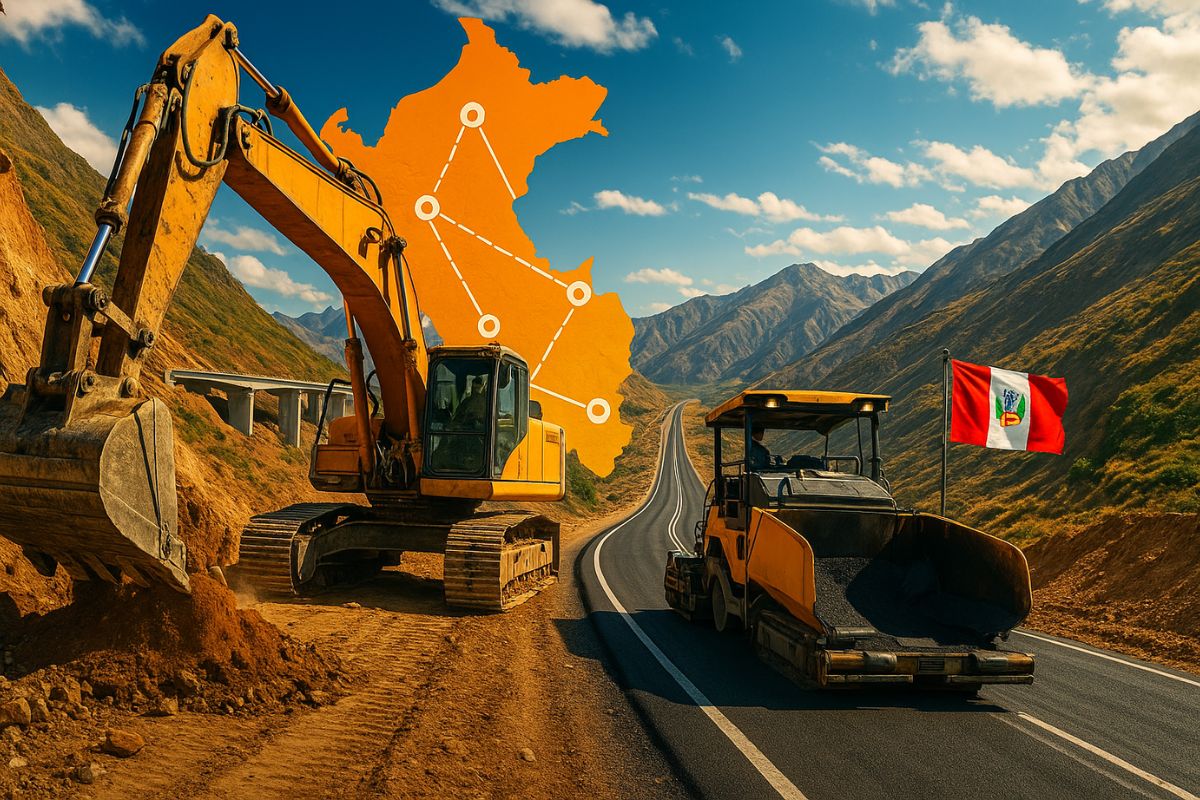


Project of Giant Highway Construction Will Modernize Nearly 1,000 Km, Connect Five Departments and Bring Economic and Social Development to Previously Isolated Areas.
The construction of the giant highway in the Andean region of Peru is already underway and marks one of the largest infrastructure initiatives in the country. With an investment of approximately US$ 1.5 billion, the project of the Longitudinal Highway of the Sierra, Section 4, was planned to connect Apurímac, Ayacucho, Huancavelica, Ica, and Junín, enabling faster movement of people and goods and unlocking the productive potential of these areas. The central proposal is to transform forgotten regions through territorial integration, job creation, and reduction of logistical costs.
This giant highway construction is not just a road project. It is a long-term intervention, planned for 25 years, which includes the construction of new sections and rehabilitation of existing roads, totaling 965 kilometers of improvements. The expected outcome is a safer, more modern network capable of strengthening domestic trade, tourism, and access to public services.
What Is Being Built
The project of the Longitudinal Highway of the Sierra focuses on modernizing a strategic route that connects mountainous areas to the Peruvian coast. Construction and recovery works will be carried out along nearly 1,000 kilometers, ensuring better pavement quality, signaling, and safety.
-
These living root bridges and ladders are over 700 years old and help indigenous people survive in one of the rainiest regions in the world.

-
From sertanejo star to international investor: Ana Castela invests millions in a mansion in the USA, creates a themed accommodation in Orlando, and shows that the “boiadeira” also wants to grow away from the stage.

-
The 10 most stunning motorhomes in the world: a $3 million trailer with a rooftop nightclub and garage for a Ferrari, “palaces on wheels” with Italian marble, private cinema, and five-star hotel luxury for billionaires.

-
Trump wanted to spend $400 million on the White House, but the courts prohibited the million-dollar construction.


The construction of the giant highway was designed to make traffic more efficient for residents, rural producers, and transporters. Due to its location in mountainous areas, the plan involves specific engineering solutions for challenging terrain and for preserving sensitive ecosystems.
Integration for Previously Isolated Regions
One of the central points of the project is regional integration. The new infrastructure will connect departments that currently have limited access to one another, facilitating movement between the Andes and the coast.
With the construction of the giant highway, towns and smaller cities will have a direct route to markets, ports, and public services. This means that producers from rural areas will be able to transport their products more quickly and at lower costs, strengthening agricultural productive chains and small industries.
Development, Jobs, and Tourism
The investment of US$ 1.5 billion has a strong social component. The execution of the works and associated services is expected to generate thousands of direct and indirect jobs over the 25 years of the concession. The highway will serve as a catalyst for urban and rural development, attracting investments and improving basic infrastructure in the surrounding areas.
Additionally, the expanded connectivity is likely to boost tourism in cultural and natural areas that are underexplored, creating new opportunities for local communities.
Logistical Gain and Cost Reduction
The modernization of the route will reduce travel time between important regions of the country and make the transportation of goods more predictable. With the construction of the giant highway, the Peruvian government aims to decrease logistical costs for agricultural and mineral products, increasing competitiveness and internal circulation.
This benefits both large producers and small farmers who rely on well-maintained roads to access distribution centers and larger cities.
Safety and Project Management
The project outlines high standards for operation, maintenance, and oversight throughout the concession period. As the highway crosses mountainous areas and sensitive biodiversity regions, attention will be needed to environmental mitigation practices and dialogue with local communities.
Constant maintenance and monitoring by regulatory bodies are essential to avoid delays and ensure that the benefits actually reach the estimated 1.6 million inhabitants considered the target audience.
Challenges of the Work in a Mountainous Region
Building in remote and rugged terrain is one of the biggest challenges. It is necessary to reconcile infrastructure advancement with environmental protection and the daily lives of populations living along the highway.
Even so, the government believes that the construction of the giant highway is the quickest way to break the historical isolation of these regions and integrate the interior into the national economic flow.
The Longitudinal Highway of the Sierra, Section 4, demonstrates how a road project can go beyond asphalt and become an instrument of development.
With territorial integration, jobs, and easier access to services, Peru is trying to correct regional inequalities through planned long-term infrastructure. Now the effectiveness of the project will depend on continuous execution, road maintenance, and respect for local communities.
What do you think should be the priority in a giant highway construction like this: national economic integration or first addressing the needs of those who have lived for decades in the most isolated areas?








Tem de aproveitar e conectar Pucalpa com cruzeiro do sul
Os dois.
Boa tarde.
Por que o governo Federal não termina a BR 020 uma das mais importante do Brasil?